The Independent's journalism is supported by our readers. When you purchase through links on our site, we may earn commission.
How to actually use a gua sha
Experts reveal what a gua sha actually does and if you should be using one.
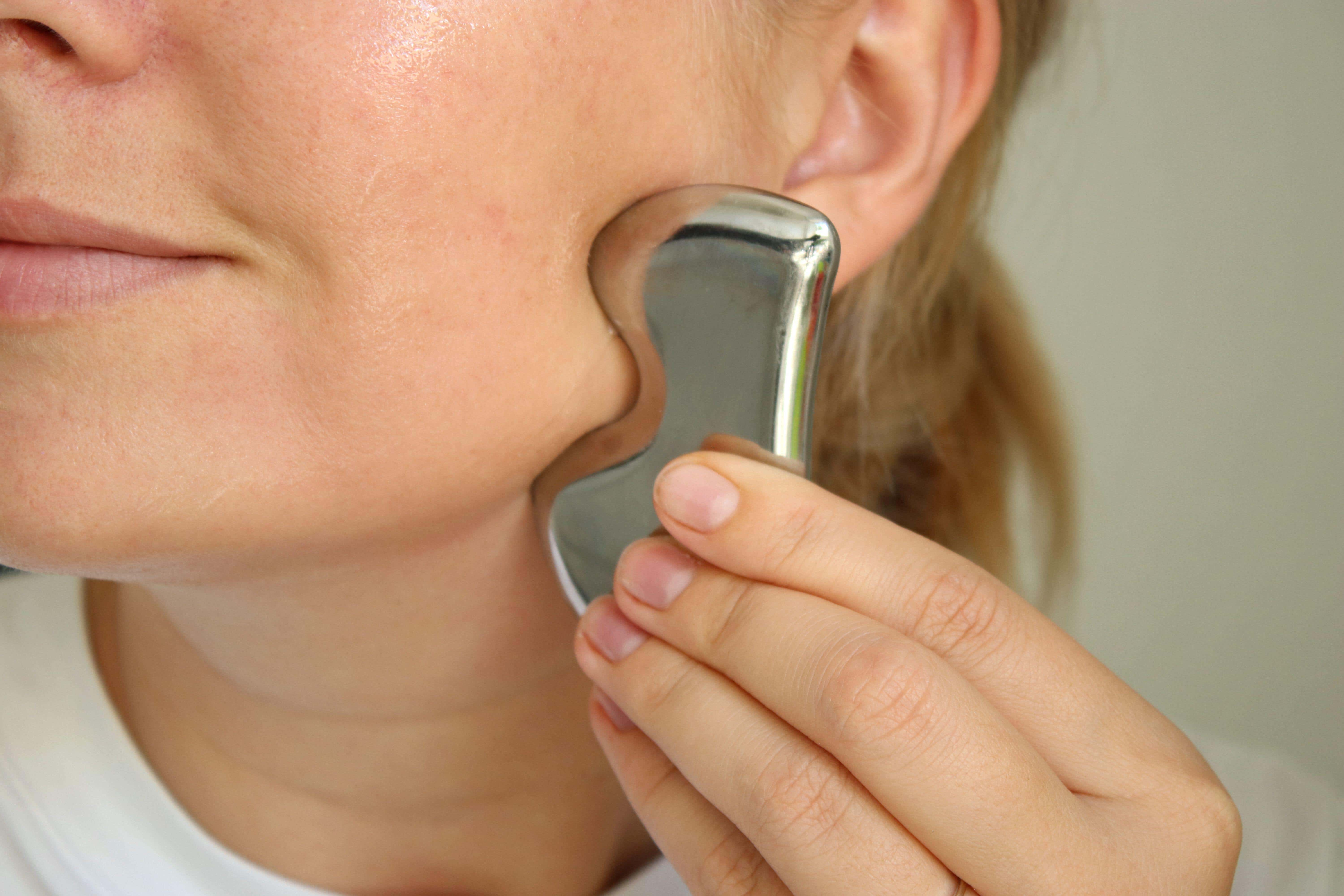
Facial massaging tools have become stalwarts in celebrity skincare routines.
The so-called gua sha tool is a standout, promising sculpted cheekbones and a brighter complexion with just a few strokes. But while social media often presents them as a miracle fix, experts say the benefits are more subtle – and technique matters.
What does gua sha actually do?
“From a dermatological perspective, the main benefits of facial gua sha are improved lymphatic drainage, temporary reduction in puffiness and enhanced circulation,” explains Dr Susan Mayou, consultant dermatologist at the Cadogan Clinic.
The gentle scraping motion helps encourage the movement of lymphatic fluid, which can reduce facial swelling and create a more defined appearance in the short term. Increased blood flow can also give the skin a healthier-looking glow.
Head facialist Izabela Pawlitka at skincare company Dr David Jack says the treatment also helps relax facial muscles. “[Gua sha] mainly works by stimulating microcirculation, increasing blood flow and oxygen to the skin for a healthy glow.”
However, expectations should be realistic. “There is limited high-quality clinical evidence to show that gua sha produces long-term structural changes in the skin such as increased collagen or permanent lifting,” says Mayou, “most of the observed benefits are short-term and cosmetic.”
How should you prepare your skin?
Like every beauty expert preaches: preparation is key. The skin experts stress that gua sha should never be used on dry skin.
“The skin should always be well-lubricated before gua sha,” advises Mayou, “this is essential to prevent dragging or micro-trauma.”
A facial oil, serum or moisturiser should be applied generously so the tool can glide smoothly.
Pawlitka says that the product choice is flexible. “It doesn’t have to be a facial oil – a serum or moisturiser works just as well. The important thing is that the skin isn’t being pulled.”
Mayou also advises ensuring the tool is properly cleansed before use and avoiding treatment over broken skin, active acne or areas of inflammation.
Those using strong retinoids or exfoliating acids should pause for a few days before using gua sha, and it is best to wait at least two weeks after injectable treatments such as Botox or fillers.
Neal’s Yard Remedies Rehydrating Rose Facial Oil, £30
Naturium Vitamin C Complex Serum, £22, Boots
What is the correct technique?
When it comes to pressure, less is more.
“The pressure should be light to moderate […] enough to move the skin slightly, but never enough to cause pain or deep redness,” says Mayou.
The tool should be held almost flat against the face, around a 15-degree angle, and moved outwards and upwards following the natural contours of the face.
Pawlitka suggests holding the tool at roughly a 45-degree angle but similarly emphasises that it should glide, not scrape. “Use medium pressure – it should feel relaxing but not painful – and always glide in upward and outward strokes.”
Facial gua sha should not cause bruising. “Facial gua sha should not leave marks – unlike traditional body gua sha, bruising is not the goal,” Mayou says.
Repeating each movement five to 10 times on each side of the face is usually sufficient.
Sarah Chapman Skinesis The Facialift, £30.59 (was £34), Face the Future
How often should you use it?
For most people, three to five times a week is enough to see cosmetic benefits such as reduced puffiness and improved skin appearance, according to Mayou.
A session does not need to be lengthy. “Five to 10 minutes is more than adequate to achieve lymphatic drainage and circulation benefits,” she says.
Overuse or prolonged sessions may increase the risk of irritation without offering additional results.
Pawlitka recommends using it two to three times a week. “I’m not a fan of daily use as it can overstimulate the skin, leading to irritation, redness or inflammation,” she explains.
Does the type of tool matter?
Jade, rose quartz and stainless steel tools are all widely available, but experts say the material makes little difference to the outcome.
“In terms of skin physiology, the material of the tool makes very little difference to the biological effect.
“The benefits come from the massage technique rather than the stone itself,” Mayou says.
Jade and rose quartz are often associated with cooling properties, while stainless steel is non-porous, durable and easy to clean. Pawlitka notes that stainless steel can also be chilled or warmed more easily for temperature-based effects.
Ultimately, hygiene and technique are more important than the type of stone used.
While gua sha may not deliver permanent lifting, used correctly it can offer a temporary glow, reduced puffiness and a moment of relaxation – as long as it is done gently and consistently.
Pai Aventurine Gua Sha Massage Stone, £24
Bloom Accessories Stainless Steel Gua Sha, £8, M&S
Bookmark popover
Removed from bookmarks