The Independent's journalism is supported by our readers. When you purchase through links on our site, we may earn commission.
Why is Britain falling out of love with cheddar cheese?
Our love affair with cheese is long established, but supermarkets now offer a huge range and producers from Suffolk to Somerset are creating delicious new examples that deserve to join the classics, writes Hannah Twiggs

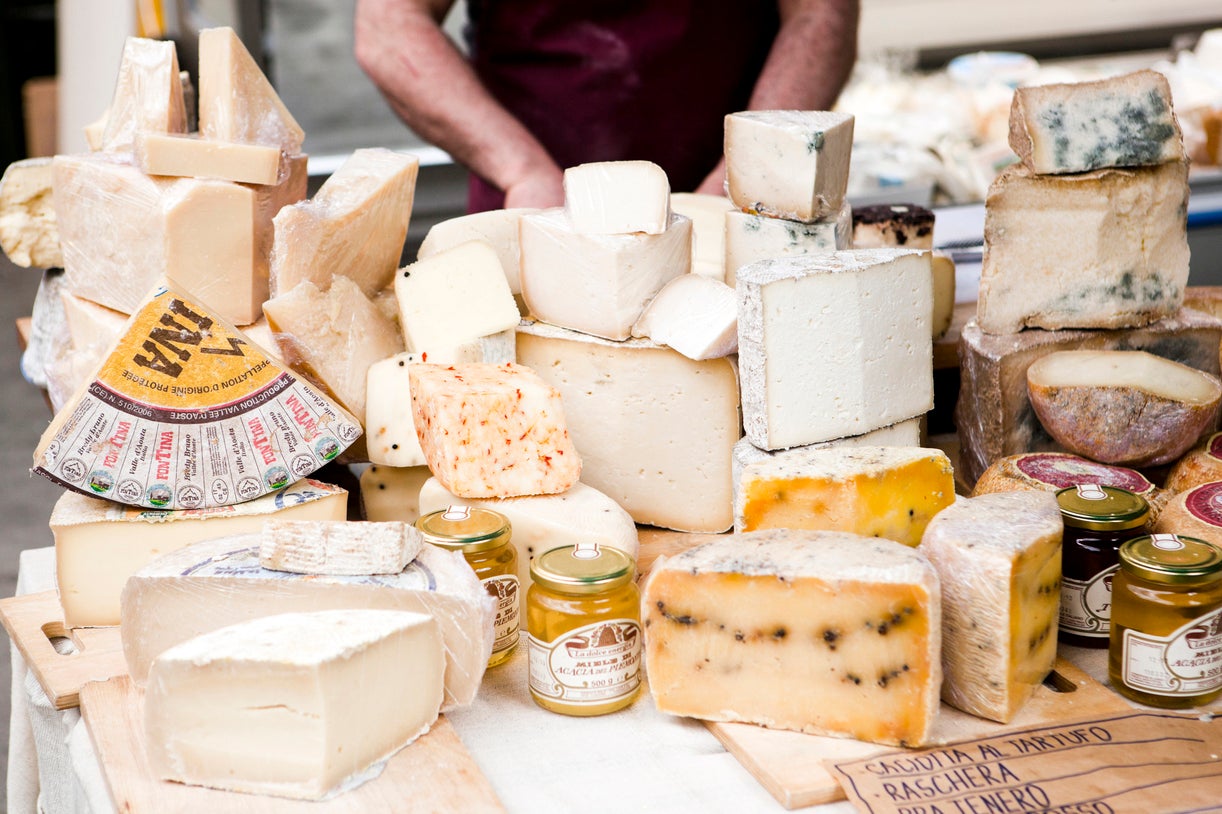
Britain has long been the punchline of the joke when it comes to food. If it’s not bland or stodgy – think cauliflower cheese, scotch egg and crumpets – it’s imported. In fact, we’re the fourth biggest country for food imports, behind Vietnam, Japan and Thailand. But things are changing. A sense of culinary breadth and national identity is sweeping the country, and cheese is leading the charge.
Walk down the cheese aisle at a supermarket today, and you could imagine you were in Brittany or Provence. Gone are the days when shelves from Shrewsbury to Slough groaned under the weight of great bricks of cheddar and red leicester, those workhorse cheeses that have anchored our ploughman’s lunches and cheese on toast for decades, while solitary wedges of stilton lurked further back for the more adventurous.
Today, you’re more likely to find a selection of brie, ossau-iraty, morbier, something with truffle in it, St Felicien, chaource and comté. Tesco recently reported that continental and artisan cheeses are the fastest-growing areas of the market.
“This is a trend we first noticed during lockdown as people weren’t able to go out to restaurants; they were trading up to fancier cheeses when shopping,” says head cheese buyer Charlotte Gramlick. “But that trend has become even more pronounced now during recent harder times with people entertaining more at home and that has led to shoppers treating themselves to new cheeses as well as picking up their classic favourites like cheddar and stilton.”
So the demise of cheddar isn’t quite upon us – sales only rose 4 per cent compared to 23.2 per cent for feta, 27.4 per cent for halloumi and 17 per cent for burrata, according to Ocado – and the cheese is enjoying new life in its artisanal format, with brands like Pitchfork and Montgomery’s, both from Somerset, flying off the shelves. (Like parmesan, the provenance of cheddar is protected under EU law. It can only be made in Somerset, Devon, Dorset and Cornwall.)
But clearly British taste in cheese is changing. TikTok is awash with more than 460 million videos on cottage cheese, baked and whipped feta and grated halloumi. Mild cheddar? No thanks. We want something softer, stronger and, more importantly, stinkier.
“The whole market has been working to encourage consumers to eat more cheese as our Italian, French and Spanish counterparts would, but rather than saying ‘eat this cheese, rather than eating that cheese’, there’s more encouragement to eat both cheeses, to have variety on your cheeseboard and have a range of cheese in the fridge at all times,” says Catherine Mead, owner of Lynher Dairies, in Truro, which produces cornish yarg.
Yarg, a semi-hard cheese that’s wrapped in locally foraged nettles, is one of the more than 750 cheeses produced in the UK that are enjoying new-found fame in the cheese renaissance. It’s mushroomy, lemony, creamy and crumbly, and has been scooping awards since Lynher Dairies first started producing it in the Eighties.
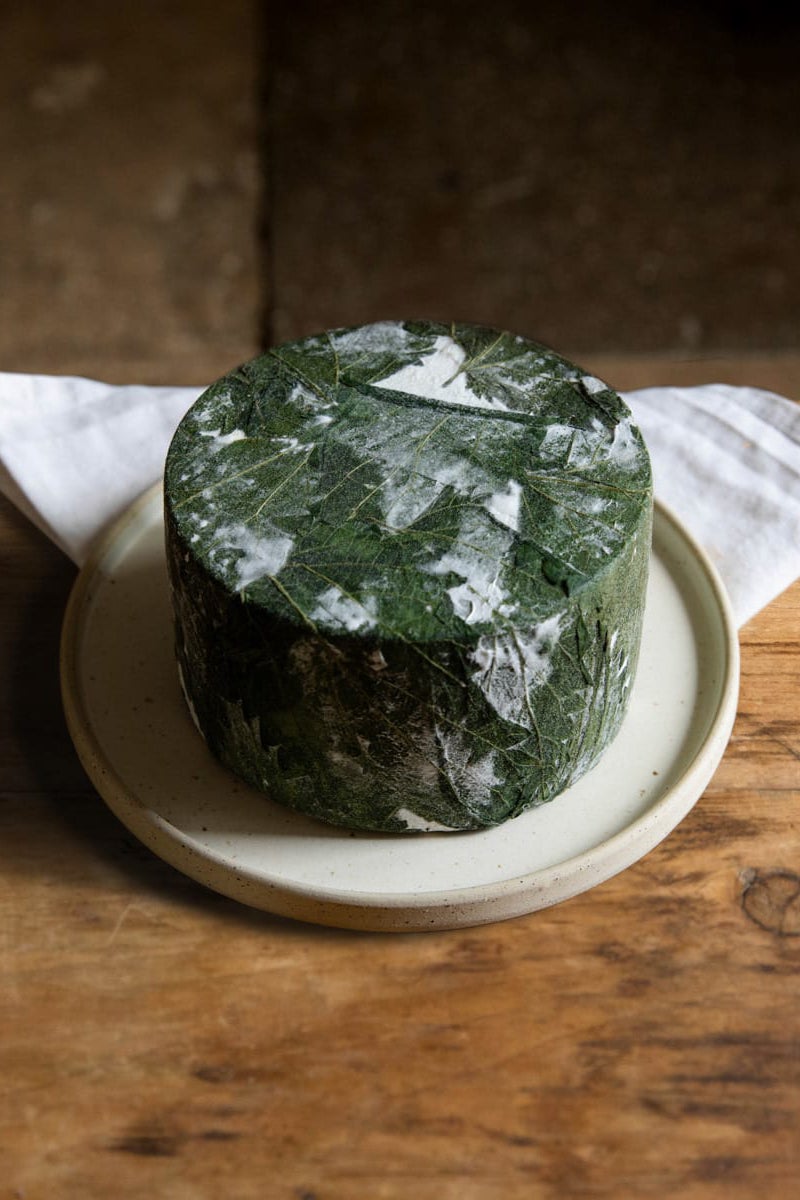
“It was one of the early new British cheeses that were made somewhat in response to very limited availability of specialist cheese,” says Mead. Back then, cheddar reigned supreme, and only a handful of artisan and family-run producers were churning out (quite literally) the continental-style cheeses we’re familiar with today. “Milk prices were absolutely terrible at that time [dairy farmers blamed the Tories, the Tories blamed Labour, and so on and so forth] and it was widely recognised that diversification could be a route to a better price.”
It also came at a time when, like now, there was a sense of culinary nationalism sweeping Britain. “We had a market that was fairly inundated with imported specialist cheeses, so there was clearly an interest in a range of cheese,” says Mead. “We wanted to buy products made in Britain, we wanted to know more about provenance and integrity and having food that was made close to home.” Sound familiar? 2024 is the new 1980.
It might surprise you to learn that great British cheeses like cornish yarg, which feel new, have been around for nearly half a century, but Mead says the artisan cheese industry has grown exponentially in the past two-and-a-half years, when the market was more volatile owing to the knock-on effect on input prices from the Russia-Ukraine war. “Yarg sales have gone from nothing to 200 tons a year,” says Mead. “We’re getting good at what we do. And some people might say, ‘Well, you’ve been doing it a rather long time, you know, 40 odd years’, but that’s nothing in the cheese world.”
Lynher Dairies make their cheese from over 2 million litres of milk a year that comes from a herd of Ayrshire cows, a Scottish breed known for its efficient grazing and milk production. “We farm them in such a way that they tend to do anything between 11 and 14 lactations, so they’re far older than the average hard-working dairy cow,” which are typically slaughtered after three or four lactations.
Lynher Dairies have even started selling the beef from their ex-dairy cows as there is an appetite among consumers to buy more sustainable meat from animals that have lived longer, happier lives.
We’re getting good at what we do. And some people might say, ‘Well, you’ve been doing it a rather long time, you know, 40 odd years’, but that’s nothing in the cheese world
Jonny Crickmore, farmer and producer of another award-winning artisan British cheese, baron bigod, says the environmental and animal welfare benefits of artisanal cheese could also explain its sudden growth. “Why buy cheese? Because it’s a great source of protein that isn’t meat,” he says. “People are more consciously trying to reduce their meat consumption. Obviously, I’m biased towards cheese but you’re not killing the animal. You only kill an animal once to eat it. Whereas with cheese, you’re working with an animal. The animal has a life and maximises the use of all the pastures in the UK.”
The rise of the vegan movement a few years ago saw many people turn their backs on the dairy industry on ethical grounds. But now, “people are settling back into a less plant-based diet, and more a plant and animal protein-based diet, and that’s possibly one reason why we’re seeing cheese grow,” he says.
The health benefits of cheese have also long been misunderstood. Contrary to its rap sheet of high saturated fat and salt levels, it’s packed with surprising health perks. Milk proteins found in cheese can reduce blood pressure, and certain constituents can decrease the amount of fat we absorb, moderating blood lipids, including cholesterol. Fermented dairy foods like cheese also offer benefits through their impact on gut microflora. So indulging in our creamy, crumbly favourites might actually be doing our bodies a favour.
Crickmore says cheese is leading the way for the revival of good food in the UK. “It has changed massively in the last 40 to 50 years. When you think back to the Eighties, you either had supermarket blocks of cheddar, or if you wanted really good cheese, you had to go to specialist cheese shops that imported from France,” he says. He points to Neal’s Yard Dairy, which was founded in Covent Garden in 1979, as a driving force behind good quality British cheese. “Gradually, as the years have rolled by, new people have entered the industry, such as ourselves.”
Crickmore’s Fen Farm Dairy in Suffolk started making baron bigod around 15 years ago. It’s the British equivalent of a brie de meaux, a French cheese made from raw cow’s milk (regular brie uses pasteurised milk) that has been protected under EU law since 1980. Crickmore was “really frustrated with the dairy industry. There were a lot of two-for-one offers and discounts on milk, and it really put dairy farms under pressure. I wanted to be able to do something else about it, rather than being forced to have our prices dropped. And we just kind of came across cheese as an idea.” They started selling their raw cow’s milk at the gate, and the locals lapped it up. They realised they could turn it into brie de meaux, and even imported 17 Montbéliarde cows over from France to do the job.
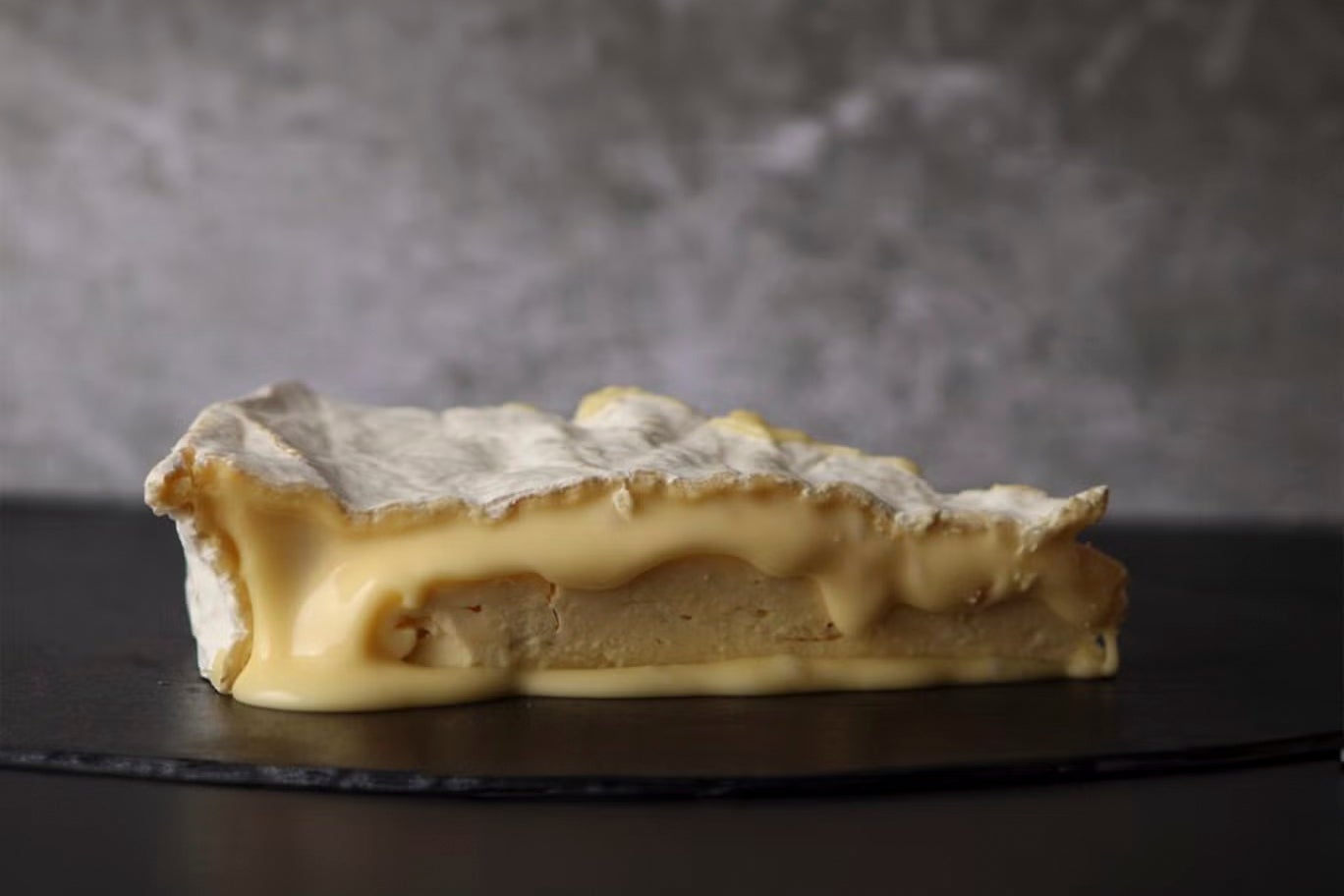
What started as a last-ditch rescue operation has gone from the preserve of the gastronomically righteous to a cheese with worldwide acclaim. Baron bigod was named Best British Cheese by Fine Food Digest, inspired a storyline on The Archers and even had the late Queen ordering it in. Now, “some days we don’t have enough milk to supply all our customers for the cheese. I would never have believed it.”
But, Crickmore says, “The British palate is changing. Our taste buds are changing and we’re discovering new flavours and different styles of cheese. And that’s growing, it’s catching on. Because it’s quite addictive, cheese, isn’t it? Once you try it, you want more.
“Addictive in a good way, of course,” he quickly adds.
Though cheese rehab is probably a way off, we are consuming and producing more cheese in the UK than ever before. Many of our best cheeses compete in the World Cheese Awards, which take place every autumn. “You have 4,500 entries from 38 countries with 350 judges from goodness knows how many countries. Every country and every type of cheese is there under the microscope,” says Mead. “And the British cheeses do really, really well against all those other very established cheeses, like gruyere, parmesan, emmental, brie de meaux, mozzarella, gorgonzola.” Cornish kern, Lynher Dairies’ other cheese, came 12th last year.
“You could say, ‘You would say that, wouldn’t you’, but I think our sector is to be congratulated on just how far we’ve managed to take it and how good we are at making cheese. I do think we get credit for it, but you can’t say it enough, really.”
Britain is steadily nudging the crown from our European cheese-making counterparts, proving that it’s no longer a game of catching up. We’re not just participating in the global cheese conversation; we’re shaping it, one wheel at a time.
Join our commenting forum
Join thought-provoking conversations, follow other Independent readers and see their replies
Comments
Bookmark popover
Removed from bookmarks