The nation’s harvest is in trouble again – and this is how it’s going to change your supermarket shop
Britain’s second-worst harvest on record is more than a warning – it’s already changing what we eat and what our food costs. Emma Henderson speaks to the farmers on the front line of climate chaos about how extreme weather is reshaping our diet and shopping habits


The nation’s harvest is in trouble – again. After months of scorching heat followed by sudden deluges, Britain’s farmers are watching once-reliable crops wither, shrivel or rot in the ground.
From Lincolnshire wheat fields to Somerset cider orchards, growers say the weather has turned against them – and it’s beginning to show up on the shelves, exposing just how fragile our food system has become in the face of climate chaos.
Scrolling through his phone photos, chef, zero-waste pioneer and keen forager Doug McMaster is desperately trying to find pictures from blackberry picking a few years ago to show the date the bushes were fruiting compared to this year. “I’ve been seeing blackberries five weeks earlier than in the previous four or five years,” he explains as he finds the evidence.
Many blackberries were out in hedgerows in July, and by September were shrivelled, unable to get enough water. It’s been the pattern of the year: crops have come early, caused by the unusually dry and sunny weather beginning in March and April, now recorded as the hottest spring in a century. In other words, nature’s clock is off – and the knock-on effect is already being felt from wild hedgerows to commercial farms.
Harvest for agricultural, vegetable and fruit producers usually starts from late August and runs into October, and even November for some crops. This rhythm – as old as farming itself – has been thrown off course. This year, across the board, it began two weeks earlier thanks to the hottest summer ever on record, according to the Met Office, with four heatwaves and much of the centre of England suffering from drought.
Combined, it means the 2025 harvest is the second worst on record, after 2020, with 2024 in third place, according to a recent survey from the Department for Environment, Food and Rural Affairs (Defra). “The harvest is worse than was expected,” says Tom Lancaster, land, food and farming analyst at the Energy and Climate Intelligence Unit (ECIU). It follows on from last year’s incredibly wet harvest, which also affected planting, leading to low-quality and quantity crops, and farmers losing £1bn in arable crop income last year, according to Defra.
“We have now seen three of the five worst harvests on record this decade after extreme weather, telling a story of escalating climate impacts that farmers are unable to cope with. This is what farming with climate change looks like, as extreme weather wrecks harvests, hits farm incomes and reduces our food security,” Lancaster says.
The data is stark, but the reality is even starker: fewer crops, lower yields and a growing reliance on imports for everyday staples. The wheat yield was particularly bad this year, too. “It was about seven tonnes per hectare, which is well down on the 10-year average. Spring barley and spring oats also had low yields due to limited rain when they were drilled,” he explains.
Colin Chappell, an arable farmer in northern Lincolnshire and part of the Nature Friendly Farming Network, says “we did okay”. He laughs, but it’s the kind of weary laugh that comes from surviving by a thread. His middling optimism is only because of last year’s incredibly low bar. “For me, it was an unmitigated, absolute catastrophic disaster. I was just relieved to get to this point as I hardly grew anything last year.”
For Chappell, the extremes have become personal. This year, his farm was flooded on 5 January in shin-deep water. Still, he says, “it’s probably what saved us”, as the soil retained more moisture for longer due to the better environmental practices he’s been following.
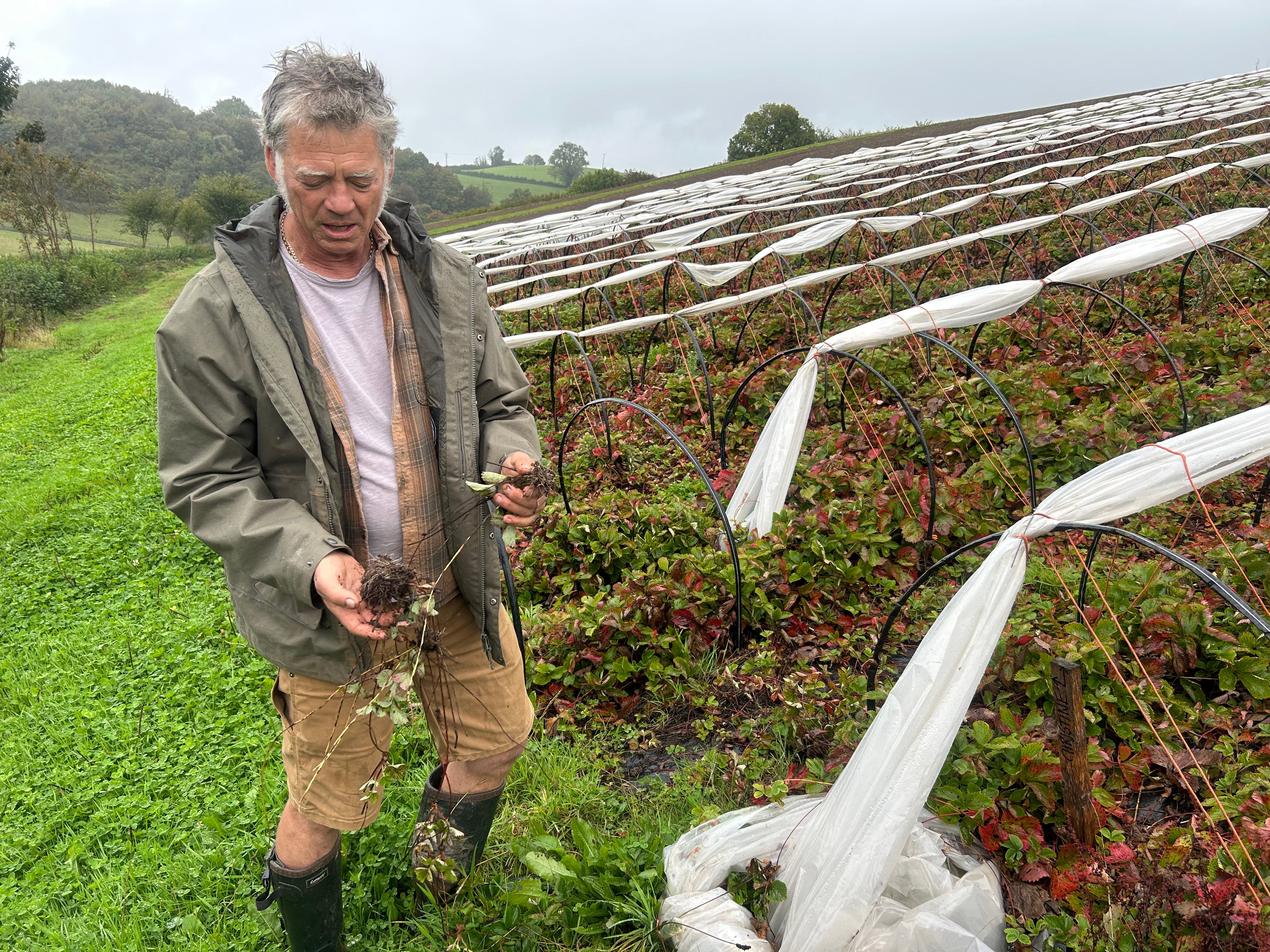
The extreme weather is made worse, he explains, as “our safety net is gone”, pointing to farmers’ subsidies reduced (though he thinks they’re not the answer, describing them as a “blunt instrument”), as well as ending environmental stewardship schemes and the SFI (sustainable farming incentives, which pay farmers to work in a more environmentally-friendly way) scheme, which closed in March. “This government in particular doesn’t seem too bothered about environmental measures, either,” he adds.
His frustration echoes across rural Britain, where many farmers feel politically abandoned and financially cornered. It leaves him and others feeling “underwhelmed and undervalued… there’s a lot of farms for sale. We’re not investing as a farm any more. I’m not buying any machinery, I need to shed labour, that means the local rural community is suffering, too… I just need to save that money,” Chappell says.
In the short term, lower wheat yields mean the UK is “more reliant on imports”, Lancaster says. “Historically, we’re 95 per cent self-sufficient,” which dropped to 79 per cent last year. That means the flour for your bread and pasta could increasingly come from abroad, even as British farmers struggle to make ends meet. To fill the gaps, wheat is being imported from Germany and Canada, as they have high protein content.
“The UK having a bad harvest doesn’t move the dial on the commodity price. So, UK farmers have the worst of both worlds, in that they’ve had a really poor harvest, and lots have less and less cereals to sell, and at a low price, certainly lower than previous years,” Lancaster adds.
The longer-term impact is much bigger. “Farmers are used to ironing out the bad years with good years… but, if you’re just mounting up loss after loss, then ironing out doesn’t really work as you can only withstand those sorts of losses for a certain period of time,” says Lancaster. For many, that period is fast running out.
A lot of projections will be telling farmers they’ll be losing money by sowing crops this autumn. I asked a farmer recently whether they’d drill their crops this autumn, as the risk is now so high, they replied saying, ‘What else are we going to do?’
In the South West, things have been more positive for Devon vegetable farmer Guy Singh-Watson. He’s the founder of Riverford, an organic veg box delivery company, which has been employee-owned since 2018. He now runs his own smaller organic farm, Baddaford, growing perennial soft fruits and seasonal vegetables such as artichokes and the similar cardoon.
“We had good dollops of rain through May and even into June, though probably less than optimal,” he says. “We were getting a bit nervous about running out of water,” but thankfully, their reservoir saved them. “We’re still counting the cost of the 2013 harvest, where it didn’t stop raining for about 18 months. We lost so much money that we’re still earning it back,” he says.
Four decades on the land have given Singh-Watson a long view of change – and a deep unease. He’s seen the effects of the climate crisis. “Now, when it’s very dry or turns wet, it seems to get stuck. Whereas in my early years as a grower, you could see the depressions rolling in off the Atlantic – you’d get 36 hours of dampish weather, followed by a week of dry weather,” he says.
“That pattern we’ve grown to expect is largely gone, and it has made it very difficult… you have to be much, much more careful,” he explains. The extreme weather and the inability to plan make it harder to not only “run an economically viable business, but to be a good custodian of the soil”, he adds.
Even success brings new problems. This year, everything has run early, but it’s manageable as long as it still happens in the planned sequence, as they don’t want similar produce going into the Riverford boxes. “We don’t even like putting a broccoli and a cauliflower in together and usually alternate,” he explains. Even at the start of October, he says, “we’re already selling purple sprouting broccoli, which is very early. Normally, we don’t expect to start picking the variety until November.”
Out on the farm, Singh-Watson gestures to crates of neatly stacked, grey-blue-skinned squashes – beautiful but telling. They’ve been harvested a month earlier than usual.
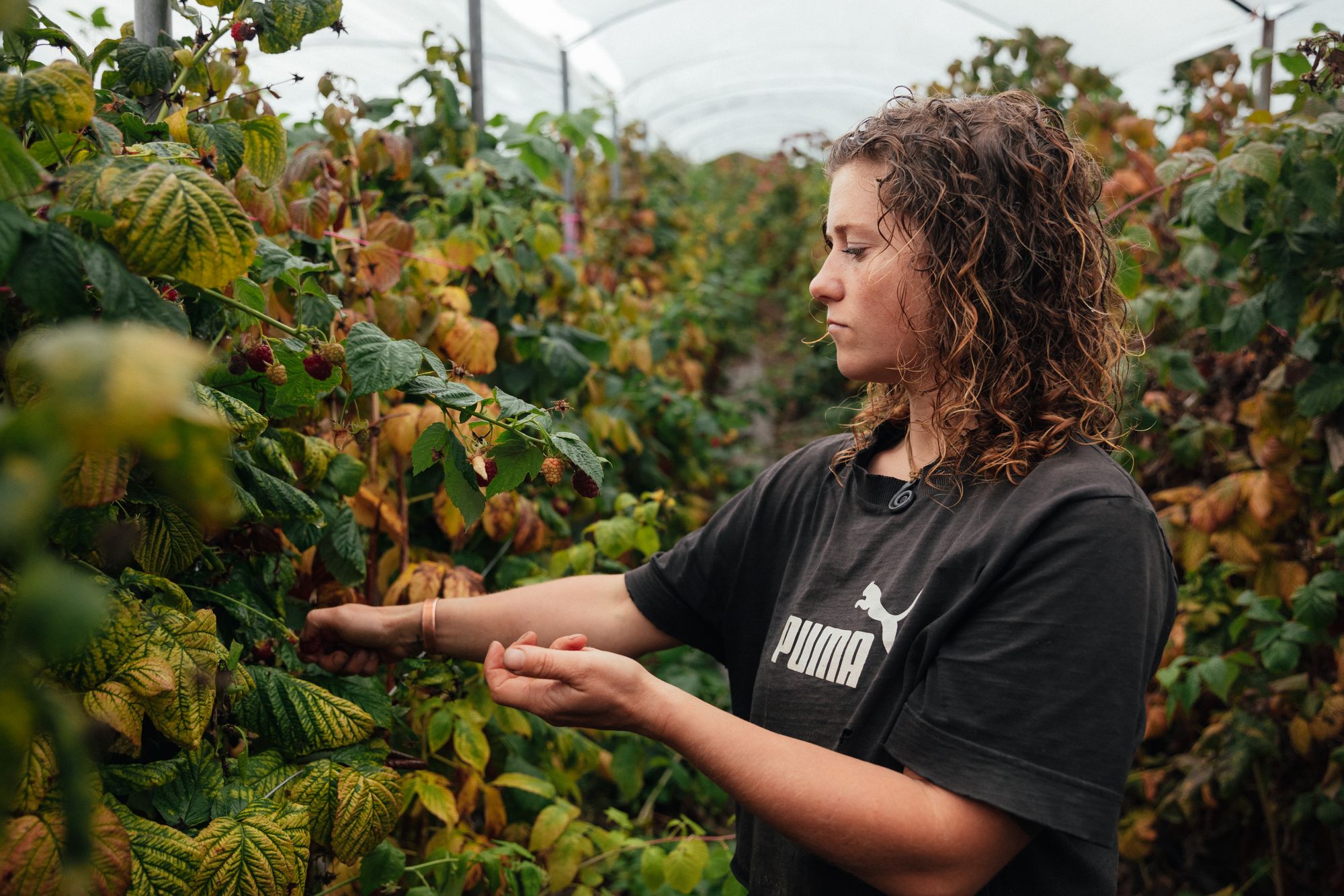
But it’s not come without its issues. Maddie Canvin, farm manager at Baddaford, explains it was difficult when all the soft fruits came early, and at once, despite being different varieties designed to be harvested at different times. “The most astounding early crop was blackberries, which were five weeks early,” she says.
They have six acres of strawberries and as they’re delicate with a short shelf life, they need to be picked quickly, but not in [the] rain. “In one week, I had to find 20 extra people to help harvest,” only manageable by pulling in favours. “At the end of May, we’d usually have harvested 2,000 punnets, but this year it was 11,000,” she says. “It was hard, and we did experience some over-ripening in some of our fields,” resulting in a loss. She’s already decided that next year, she’ll have 50 people ready for harvest.
In other parts of the country, the story is similar: adaptation on the fly. Market grower Tom Booth at food hub Bowhouse in Fife says lots of their legume crops grow for a shorter period in the summer, reducing their income by about 25 per cent. “We are seeing more mildew on crops, which is an indicator of water stress,” he adds.
As well as veg, English vineyards have harvested very early. David and Lexa Bailey took over Wraxall vineyard in 2021, one of the UK’s oldest vineyards. “We face absolutely due south and finished the harvest one whole month earlier,” David says, which ended around 20 September. The smaller fruit and bunches mean less juice – but higher sugar. In winemaking terms, it’s a mixed blessing: fewer bottles but better quality.
Like any grower, he’s worried about what next year will bring, especially as “changes on vineyards take about five years”, so it’s much harder to adapt quickly to extreme and unpredictable weather.
Also in Somerset, cider maker Charlie Inns and cellar master Luke Benson at The Newt estate say their cider apple orchards look very different from last year, which was tough for the trees.
This year, “the trees didn’t have enough moisture to hold on to the apples, so they went into defence mode and started dropping very, very early”, says Benson. Standing in the orchards, you can see the toll: apples scattered like confetti across the ground. Without cold weather or a frost, it’s been bountiful, but the team doesn’t have the infrastructure to collect all the apples. “Usually, we do two or three sweeps of the orchards, but this year we’re picking them up as quickly as we can,” he adds. Anything too late to be picked up can be enjoyed by sheep that periodically graze among the orchards, too.
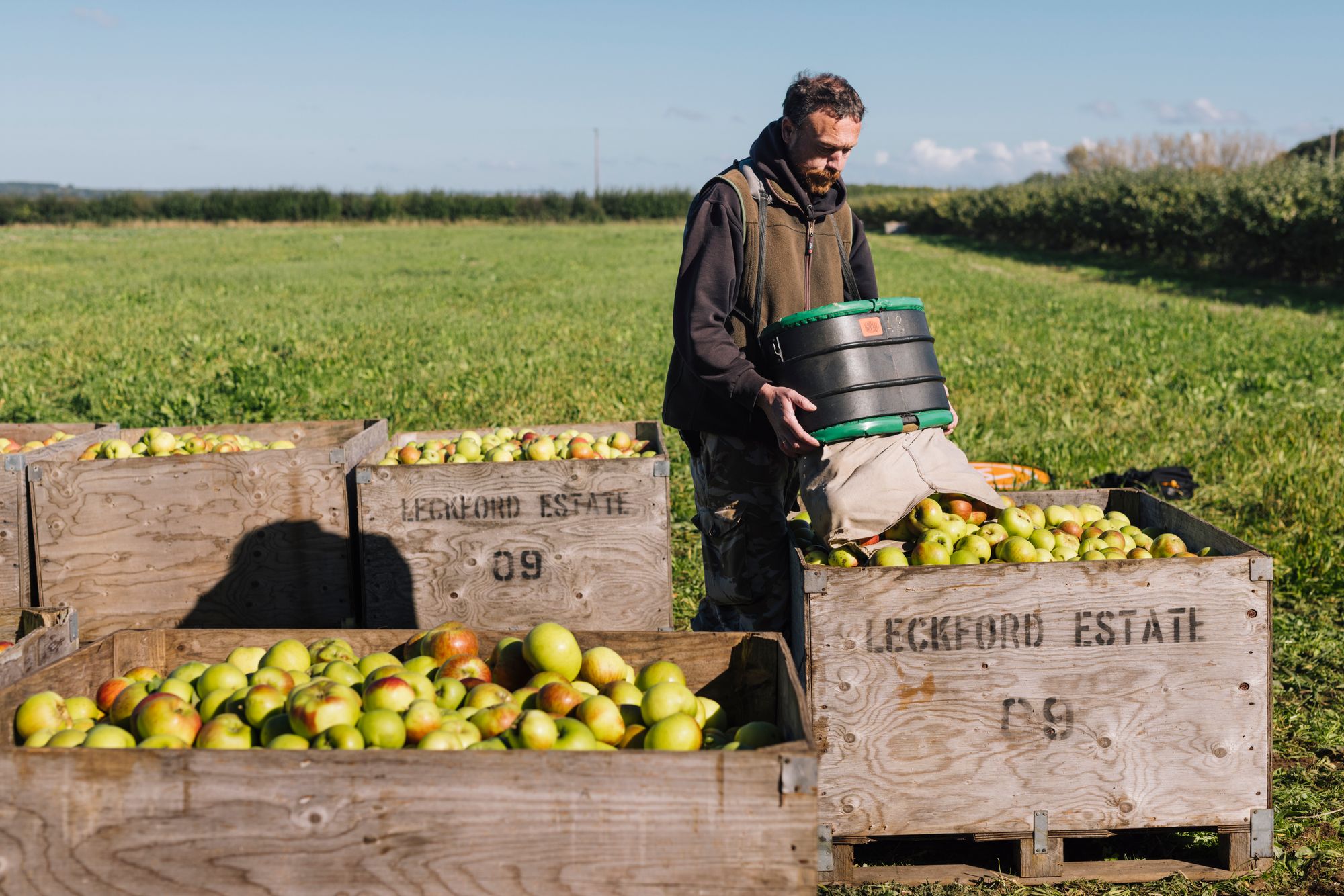
The prolonged sunshine has increased the apple’s sugars, which could result in “some quite alcoholic ciders for this vintage coming”, explains Benson. “If you do get sugar levels above 8.5 per cent, there’s tax implications on that,” he adds, pushing it up into the wine category, plus, he says, “it could also alienate a few drinkers as well”.
Over in Hampshire, at Leckford Farm, which is owned by Waitrose and supplies the supermarket, Colin Pratt says their Cox apples also did well this year. But says “our conference pears are a different story. We would normally expect double the amount of pears, but sadly, the hot summer wasn’t very enjoyable for them.”
That’s the pattern of the season: winners and losers, often on the same farm, even the same tree. Despite technology improving weather predictions, it still can’t be controlled. Instead, the only solution is to make long-term improvements, while hoping to keep afloat in the meantime.
“There’s a lot of evidence that green farming schemes can help farmers in the shorter term,” Lancaster says, and many hope they will reopen again. There are currently 37,000 farmers benefitting from the SFI scheme, which is “providing a lifeline to many arable farmers” from the past two harvests.
Many farmers “previously not interested in regenerative agriculture are now convinced it’s the way forward, after seeing how their fields subjected to some of these measures have dealt with the extreme weather better than other fields that haven’t”, he adds.
“A lot of projections will be telling farmers they’ll be losing money” by sowing crops this autumn, he says. “I asked a farmer recently whether they’d drill their crops this autumn, as the risk is now so high, who replied saying, ‘What else are we going to do?’”
It’s a bleak but honest sentiment. For farmers, there is no option but to keep going – to plant, to hope, to adapt. For the rest of us, it’s a reminder that the food on our plates begins in fields at the mercy of a changing climate.
As Lancaster puts it, this is what farming with climate change looks like: not distant, not theoretical – but happening now, in every loaf of bread, every pint of cider and every punnet of strawberries that ripened too soon.
Join our commenting forum
Join thought-provoking conversations, follow other Independent readers and see their replies
Comments
Bookmark popover
Removed from bookmarks