Jeremy King is right about badly behaved diners – but he’s wrong about banning influencers from restaurants
Jeremy King’s complaints about disruptive diners ring true – but by banning influencers from his establishments, he is missing the point, writes Hannah Twiggs. Restaurants have a behaviour problem, not a creator problem

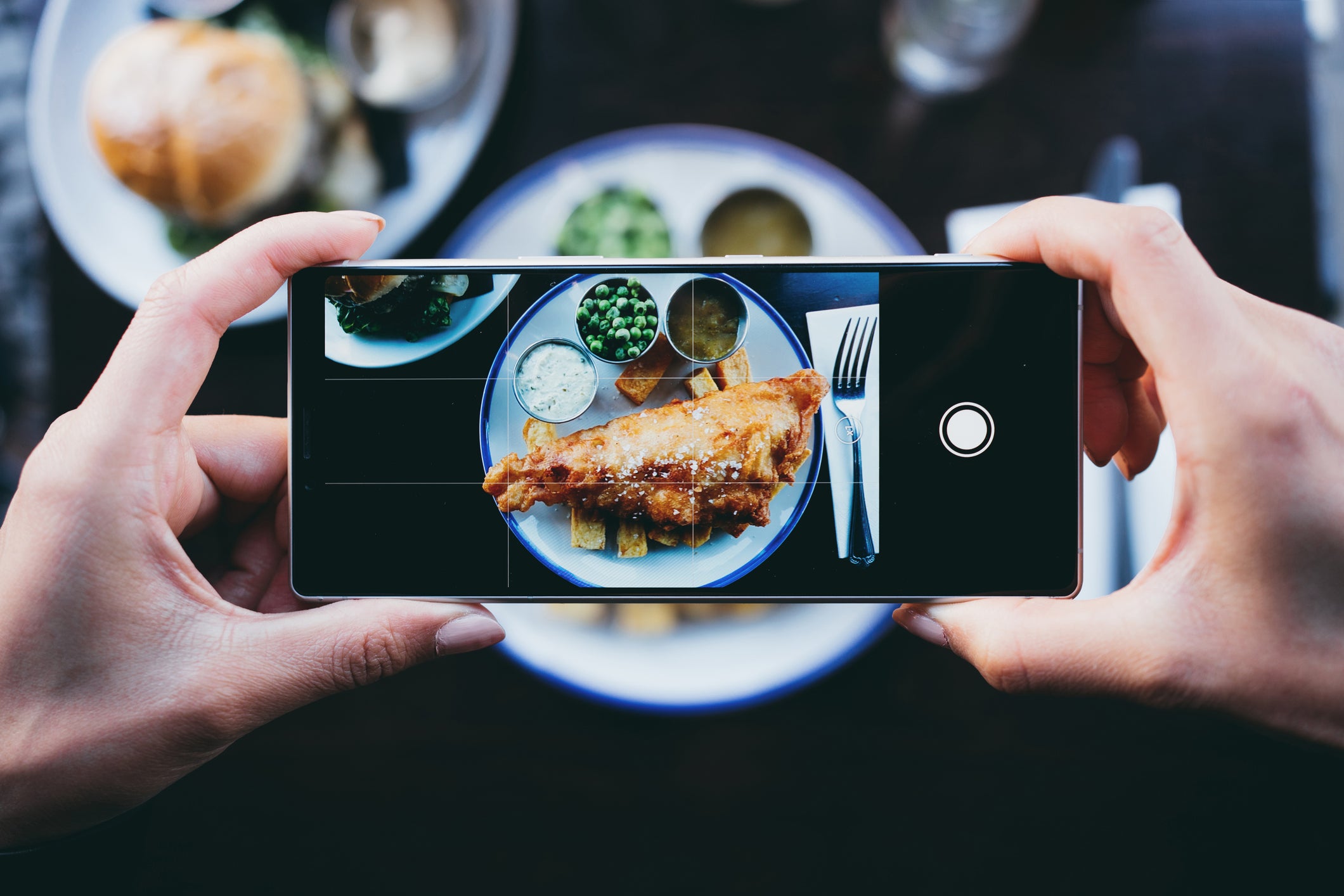
Jeremy King’s recent broadside against influencers – published in The Standard with the weary authority of a restaurateur who has seen every dining fad come and go – struck a nerve this week because it described something many diners have seen first-hand.
King said he had seen guests treating his restaurant, The Park in London, less as somewhere to dine than somewhere to perform. Influencers arriving with suitcases of outfits. Photoshoots staged in the lavatories. Groups blocking facilities while filming. Staff forced into the awkward role of bystanders as the dining room became, in effect, a set. Not fleeting irritations but repeated patterns of behaviour which, he argued, disrupted service and unsettled other guests.
His response was equally direct. A sign at reception now makes the house position clear, warning against disruptive filming practices – ring lights, tripods and anything liable to disturb other diners. In other words: come to eat, not to shoot content.
King is not alone in attempting to draw boundaries around modern dining behaviour. At his sushi omakase counter, Endo Kazutoshi has banned phones entirely. “Atmosphere is not decoration. It is discipline,” he explains. “Phones introduce distance. Even a small screen can become a wall.”
Borough Market has introduced restrictions on when and how filming can take place. Chris D’Sylva, founder of London restaurant Dorian, keeps a logbook of diners’ behaviour and has publicly declared he will not be offering complimentary meals in exchange for influencer coverage – a stance delivered, inevitably, via social media.


On one level, the frustration is entirely understandable. Restaurants are carefully choreographed spaces. They run on timing, flow and the fragile illusion that every guest is sharing the same experience. Few diners would argue that blocking lavatories for a photoshoot or leaving dishes to go cold while camera angles are perfected – with flash – enhances the atmosphere. It is, plainly, irritating.
But the leap from condemning bad behaviour to banning “influencers” as a category is where the argument begins to wobble.
The difficulty is that “influencer” is not a behavioural trait. It is an occupation, and an increasingly common one at that. Social media creators now occupy a peculiar position in the dining ecosystem: commercially powerful, culturally unavoidable, yet still treated in some quarters as frivolous interlopers rather than working media figures.
“For many people, influencer content and videos are what people see first when they are exposed to a new restaurant and this is what entices them to go,” restaurant PR Hannah Lovell tells me. “It even works on me. If I see multiple people on socials at the same restaurant, it does entice me to go. Creators have the power to convert bookings, for sure.”
This is less an ideological defence of influencer culture than a description of how diners now behave. Visibility precedes judgement. Reels have replaced newspaper columns as the first encounter with a restaurant. Even I am guilty of looking up a restaurant on social media before deciding to visit, checking their tagged posts to see what other people have said about it. Whatever one thinks of this shift, it is already deeply embedded in consumer decision-making.
Nor does the caricature of creators rampaging through dining rooms with blinding lights capture the whole picture. Many operate with a degree of discretion bordering on invisibility. “I usually capture my videos unannounced to showcase the experience in a relaxed manner, showing realistically what it’s like to dine at the restaurant,” says Rebecca Casserly, also known as @BoopFoodie, with an audience of over 145,000 across Instagram, TikTok and YouTube. “I aim as much as possible to not show any other restaurant guests in my videos, usually book an early or late table so I can film while it’s quiet, and ask for a window seat so I can avail of natural lighting.”
Many influencers care deeply about food, but restaurants are not places where they can behave as they please.
She’s been doing this for years, knows how to capture content without causing a fuss and can’t remember a time when a restaurant has complained. “One Michelin-star restaurant in the countryside couldn’t believe it when I posted a video of their restaurant,” she tells me. “They were so grateful for the beautiful review and support, particularly during these tough times.
“We try to keep it as low-key as possible. I would hate to ruin someone else’s dining experience.”
Her account might not persuade hardened sceptics, but it punctures the idea that all creators are agents of chaos. For some, this is simply their job.
Restaurant operators, notably, often describe a reality that is far less apocalyptic than the rhetoric implies. “Influencers have been a big part of our journey,” says Flora McTeare, co-owner of the newly opened Khao Bird in London. “Yes, you occasionally get the odd annoying person, but by and large, we’ve had a very positive experience, and influencer content can sometimes be equally as impactful as mainstream media, giving you access to a community all over the world of food fanatics.”
For India Morris, founder of hospitality agency Pear, it’s a targeting problem rather than a cultural menace. “Influencers have their place in the hospitality industry,” she says, but a lack of understanding means the relationship can be tricky on both sides. “The right influencer can increase bookings as long as they’re brand-appropriate and actually interested in what they’re talking about. We like to use the term ‘key opinion leaders’ … those with loyal local networks and followers that trust what they say. This is so key when localising brands into a new city.”
That final point is easily overlooked in a London-centric debate. King is discussing the capital, a city with dense restaurant coverage, legacy critics and an entrenched food media class. Elsewhere, the dynamics are not remotely the same. In cities such as Manchester, where there is no equivalent residential food press operating at scale, social media figures and locally trusted voices often play a far more decisive role in shaping where people actually book. The likes of Eating With Tod, whose social media audience dwarfs the readership of the top 10 British newspapers put together, are no longer fringe curiosities but central players in how restaurants achieve visibility.

Seen from that vantage point, the question is not whether they should exist, but how relationships are managed without eroding the dining experience.
Which returns us to the more coherent distinction. “Being old, I remember this same discussion taking place when influencers started taking their professional cameras into restaurants, using flash and tripods,” says Hugh Richard Right, a restaurant PR and communications expert. “The issue isn’t really ‘should influencers be banned?’ It’s how you communicate to influencers – many of whom are absolutely lovely people who care deeply about food – that restaurants are not places where they can behave as they please, and that other people are affected by their behaviour.”
But, he says, it’s important to distinguish between accidental “bad behaviour” and concerted, planned, inconsiderate behaviour of the kind seen at The Park. “The former is part of everyday life and can be managed; it’s the latter that’s the problem. The likes of Eating With Tod are, to an extent, ‘professionals’ now, who seek to work with the restaurants they feature. As with so many issues, it’s about not tarring all influencers with the same brush.”
This is the crux of it. Restaurants have always navigated disruptive diners: the hen dos, the long, raucous lunches, the birthday cakes wheeled in, the twentysomething girl diners posing for selfies, the 70-year-old mums deploying flash to read the menu. Smartphones did not invent inconsiderate behaviour; they just supplied new props.
None of this absolves creators who genuinely disrupt dining rooms. A restaurant is perfectly entitled to regulate filming, restrict equipment or intervene when behaviour affects other guests. That is ordinary hospitality management.
Banning influencers, by contrast, mistakes a symptom for a diagnosis. It targets who people are, rather than what they do, while ignoring how unevenly and irreversibly food media, marketing and restaurant discovery have already changed.
Join our commenting forum
Join thought-provoking conversations, follow other Independent readers and see their replies
Comments
Bookmark popover
Removed from bookmarks