Generation Ozempic: how do you feed people who aren’t hungry in 2026?
As Marks & Spencer launches a nutrient-dense range for GLP-1 users, and junk food advertising disappears from TV, Britain’s appetite is being quietly rewired, says Hannah Twiggs

Christmas 2025 slipped past with a quiet but telling shift. Between the usual festive excess, television ad breaks looked different: fewer burgers and chocolates, more apples, carrots and “everyday” food. Not because Britain has suddenly turned virtuous, but because broadcasters had already begun adapting to the junk food advertising ban that came into force this week. Regulation, not appetite, was doing the heavy lifting.
This follows a year of near-constant contradiction, one where wellness and indulgence didn’t take turns so much as talk over each other. No- and low-alcohol went mainstream just as Gen Z, once held up as the sober generation, began drinking at higher rates than those before them. Fibre was rediscovered and protein shrugged off years of heart-health suspicion to roar back onto the table. Ultra-processed food was cast as the great dietary villain of the age, yet “posh” ready meals, from luxury lasagnes to £195 beef Wellingtons, dominated headlines towards the end of the year.
At the same time, indulgence didn’t retreat: American dining is firmly back on trend, with more US imports set to open here this year, maximalist comfort food thriving alongside functional snacks and mini portions. The result was less a clean shift than a cultural pile-up; a kind of low-level food schizophrenia that made it hard to pin down what, exactly, Britain was meant to be eating or drinking at any given moment.
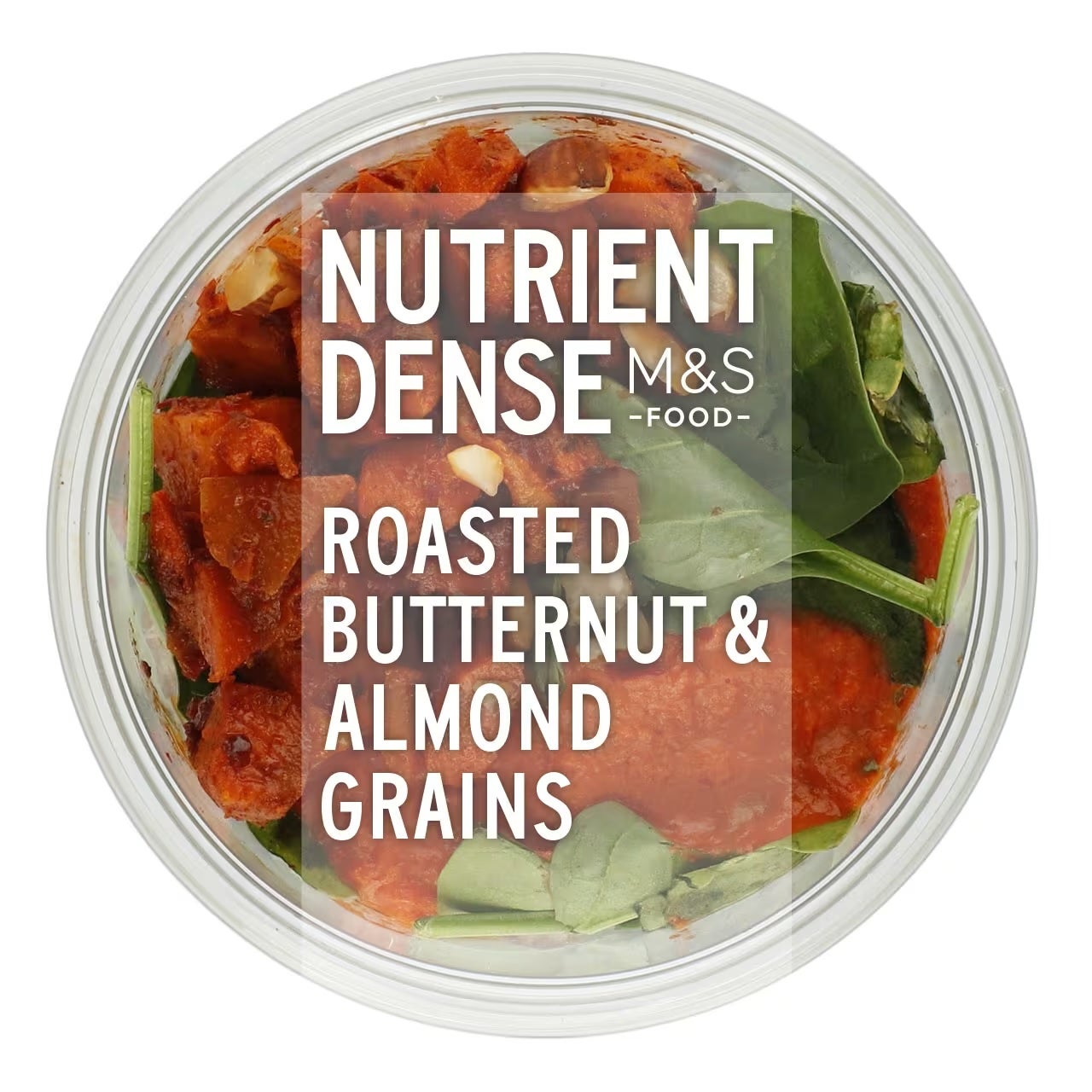
But one of the biggest food stories of 2025 was the rise of weight-loss drugs, which have become almost mainstream. Which brings us neatly to Marks & Spencer. This week, the supermarket launched a new “nutrient-dense” food range explicitly designed for people using GLP-1 weight-loss drugs – medications that suppress appetite and slow digestion, making eating feel optional rather than urgent.
There’s no coyness in the language. “We know the use of GLP-1 medications is growing, so it’s more important than ever to ensure that even if people are eating smaller portions, we help provide them with the right level of nutrients,” said Annette Peters, head of food innovations. “We have challenged ourselves to make products that are denser in nutrients than calories, so every single mouthful is packed full of more of the good stuff we all need.”
It’s a strikingly sensible quote, which is precisely why it feels significant. This isn’t diet food dressed up as lifestyle aspiration, nor a euphemistic nod to “wellness”. It’s a clear acknowledgement that a meaningful chunk of the population is eating less, more slowly and often without much enthusiasm, and that food needs to adapt accordingly.
The range itself is resolutely ordinary, which is perhaps the point. Think compact salads and grain bowls, yoghurt-style breakfasts, seeded breads and protein-forward meals designed to be filling without being heavy. Nothing extreme, nothing alien, nothing that requires a glossary. People on GLP-1s still eat; they still want food that looks like food. These products are simply designed to deliver more fibre, protein and micronutrients per mouthful, without the bulk or calorie load that can feel overwhelming when appetite is dulled.
And despite M&S’s unusual frankness, there’s nothing here that couldn’t just as easily apply to anyone watching their weight, managing blood sugar or simply trying to eat better. In that sense, slapping “GLP-1” on the press release feels less like a medical intervention than a marketing moment – an honest one, perhaps, but still a reminder that this is the kind of food we’ve been told we should be eating all along.
For decades, the food industry has been built around desire. Cravings. Indulgences. The idea that appetite is abundant and needs managing, restraining or redirecting. Low-fat and low-calorie ranges assumed you still wanted to eat… just not that. Sugar-free, gluten-free, low-salt, low-GI, vegan, menopause-friendly and gut-health products all followed the same logic: appetite is there, but it needs guidance.
GLP-1 culture quietly breaks that assumption. When hunger itself becomes unreliable, the design brief changes. Food stops being about pleasure or temptation and becomes something closer to nutritional insurance: small, dense, efficient, just enough to tick boxes without overwhelming the person eating it.
M&S’s move isn’t radical at all. It’s inevitable.
And it’s not as if supermarkets are the first to clock this shift. Restaurants got there earlier, partly by accident, partly by economics. Portions have shrunk while prices have risen. Luxury dining has leaned into intensity over volume: oysters instead of pasta, caviar instead of pudding, broths and spoonable things that deliver impact without bulk. Even the much-talked-about “Ozempic menus” cropping up in certain restaurants aren’t really new inventions. They’re simply high-value, high-nutrient plates for diners with limited appetite.
What makes this moment feel different, though, is its potential for permanence. Food trends come and go. We’re already being told that 2026 will be the year of mini-portions and snackification, of functional food and drink, of fibre’s comeback and nutrient density over sheer volume. At the same time, maximalism hasn’t disappeared: American diners, indulgent nostalgia and comfort food still dominate menus and social feeds.
But GLP-1 use doesn’t behave like a trend. These drugs are typically taken for years, not months, and sometimes indefinitely. Meanwhile, regulation continues to reshape the environment around them – from advertising restrictions to access limits – quietly favouring foods that can be framed as healthy, functional and justifiable. Snackification may peak. Fibre may fade again. But the sizeable group of people eating less, and needing food designed accordingly, probably won’t.
We know the use of GLP-1 medications is growing, so it’s more important than ever to ensure that even if people are eating smaller portions, we help provide them with the right level of nutrients
There’s something faintly – and unavoidably dystopian – about all this. It’s hard not to think of that scene in The Hunger Games, where party guests drink a potion that makes them vomit so they can carry on eating: a culture so obsessed with consumption that it bypasses the body entirely. In the real world, a weekly injection that dulls hunger, quiets food noise and effectively hacks the metabolism so you can eat without anxiety doesn’t feel like a sci-fi leap so much as an eerily plausible update. Something imagined barely two decades ago now feels less like fiction and more like a rough first draft of the present.
A friend on the drug recently put it to me: “Now I’m microdosing. I just jab when I’ve had a binge-eating week.” That says a lot about how far eating has drifted from instinct, and how comfortably we’re learning to outsource appetite altogether.
Still, it would be a mistake to frame M&S’s move as cynical or sinister. If people are eating less, ensuring they get enough fibre, protein and micronutrients is a pragmatic response – arguably even a responsible one. Obesity remains one of the UK’s most pressing public health challenges: millions of adults live with obesity, it’s linked to heart disease, type 2 diabetes and certain cancers, and it costs the NHS billions each year.
For many people, particularly those with clinically high BMIs, GLP-1 drugs are not a vanity shortcut but genuinely life-changing; life-saving, even. Strip away the hyperbolic headlines and edge-case misuse, and there’s a serious argument that these medications could improve population health and ease long-term NHS spend. The unsettling part, then, isn’t the product itself; it’s how logical all of this feels.
Because once you start down this road, it’s hard to see where it ends. Food for your gut. Food for your hormones. Food for your blood sugar. Food for menopause. Food for Ozempic. Food for sleep, focus, stress, steps and screen time. Food for people who’ve already eaten, but feel they probably should again.
Once upon a time, food was for people who were hungry. In 2026, hunger feels increasingly optional – at least for those in the Western world who can afford it.
Good old M&S, then. Feeding Britain, even when Britain isn’t especially interested in lunch.
Join our commenting forum
Join thought-provoking conversations, follow other Independent readers and see their replies
Comments
Bookmark popover
Removed from bookmarks