Carbs and frozen food are back: How Waitrose turned into middle-class ‘Iceland’
After years of cauliflower posing as rice and frozen food being frowned upon, Britain’s poshest shoppers are loving real carbs again and have turned the freezer into the new pantry. Hannah Twiggs dives into Waitrose’s latest food and drink report and looks at why the frozen and bread aisles have become a gourmet destination


For the past decade, the British middle classes have tried – often unsuccessfully – to pretend they don’t like carbohydrates. Bread was rationed like contraband. Pasta required an apology. Potatoes were whispered about with the kind of guilt normally reserved for extramarital affairs and long-haul flights.
But this era of carb shame appears to be over. Quietly, steadily and with the unmistakable confidence of a supermarket that knows its customers better than they know themselves, Waitrose has declared carbs officially back. And not just back: booming.
In its Food & Drink Report 2025-26, Waitrose reports sales of canned and jarred beans are up 45 per cent. Organic oat flour is up 79 per cent, wholemeal up 42 per cent, dark rye up 25 per cent. The supermarket has even launched Ottolenghi x Bold Bean Co Queen Black Chickpeas, because in 2025, even chickpeas need a designer collaboration.
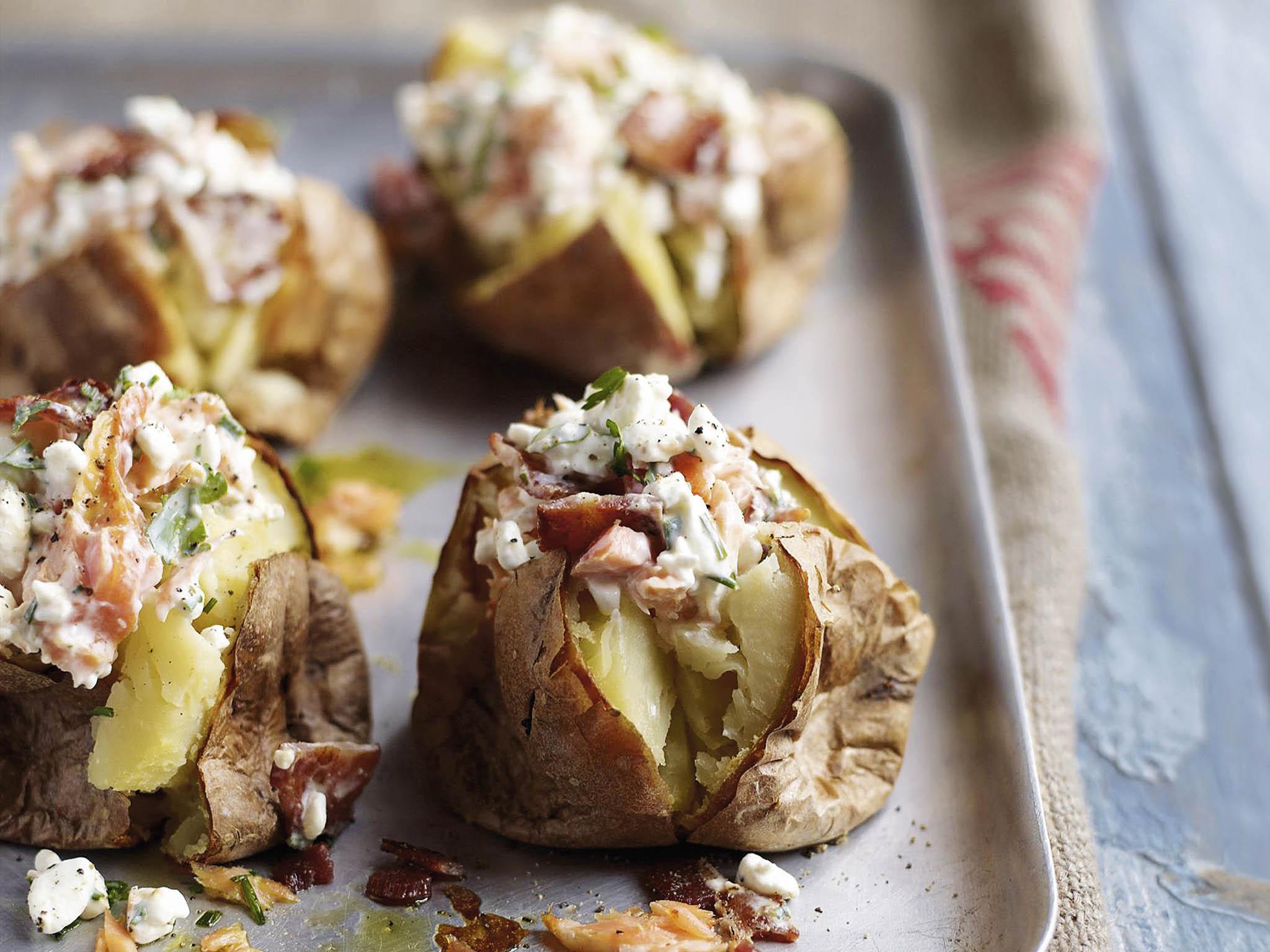
The carb comeback’s undisputed monarch? The jacket potato. Sales of large potatoes are up by more than a third, while jacket potato searches on the supermarket’s website have rocketed 178 per cent. After years of cauliflower posing as rice and courgette pretending to be pasta, Britain now wants the real thing – and wants it with toppings.
“Fibre is the new buzzword in terms of nutrition,” says Dr Joanne Lunn, health and nutrition lead at Waitrose. “As people become more aware of the link between fibre, good gut health and satiety, they are also recognising its benefits as an economical and environmentally friendly option.”

.jpeg?quality=75&width=230&crop=3%3A2%2Csmart&auto=webp)

Protein isn’t going anywhere, she says, but “this marks a definitive move away from the strict, low-carb diet trends of the past and a move towards a more balanced intake of macronutrients”.
In other words, the anti-carb era is done. This is the age of the fibre-maxxing middle class.
Fibremaxxing: the middle class discovers a new religion
Ask Waitrose shoppers how much fibre they should eat, and only 21 per cent know the recommended 30g a day. Most of us are eating 20g or less, which makes the nation’s new fixation with #fibermaxxing slightly surreal.
On TikTok, the hashtag has been used more than 157 million times – devoted to the art of eating as much fibre as humanly (and sometimes impractically) possible. According to the report, people are “fibre layering”: adding linseeds, chia seeds, dried fruit and psyllium to anything that stays still long enough. Breakfasts have become structural engineering projects.
Waitrose is now baking fibre into everything. Literally. The supermarket says to “look out for products which incorporate more fibre through vegetables, grains or legumes”, including burgers with added vegetables and brownies made with beans. There’s a High Fibre Blueberry and Almond Ball coming in January, a Fibre Boost Super Plant Blend Fruity Mix, and a Protein Boost Super Plant Blend Savoury Mix that features – because why not – seaweed, Waitrose’s new “superhero” ingredient.
If fibre once conjured bran flakes and bowel chats, it now comes in the form of Waitrose Beetroot Crispbreads – each one packing 2.7g of fibre, “the same as eating three to four prunes”.
This is what makes the 2025 carb comeback different: it is not reckless. It is not nostalgic. It is earnest, functional, fibre-first. The starchier the better.
The return of real carbs
Carbs aren’t just back – they’re being fetishised. People are turning to “speciality bread flours” like rye, seeded and spelt to “diversify their diets”. Sales of plant-based proteins are falling; dairy and grains are rising.

And nothing symbolises this more than the jacket potato, which Waitrose calls a “low-cost nutritional giant”.
It’s easy to understand the appeal. A potato contains no additives. It delivers around 5g of fibre, or 16g when topped with baked beans. It can be cooked in an oven, microwave, air fryer, or, according to TikTok, a slow cooker. It is comforting, cheap and endlessly adaptable.
The nation agrees. It isn’t just Waitrose customers ordering them; Subway has launched a jacket potato menu, and people queue across Preston and Tamworth for viral TikTok vendors Spud Bros and Spudman.
Once the food of students, now the food of wellness girlies.
How the freezer became the new pantry
But if carbs are back, the real twist is where people are buying them: the freezer aisle. Long the final resting place of forgotten peas, the freezer is now, according to Waitrose, a “gourmet destination”.
This reinvention is staggering. All Butter Cinnamon Swirls are up 322 per cent. Yes, 322 per cent. That is not a trend. That is a movement. Frozen garlic cubes? Up 178 per cent, because apparently we are too busy, stressed or spiritually depleted to chop. And the luxury ready-to-prepare carbs are booming: No 1 Triple Cooked Chips, Wagyu Roast Potatoes, Four Cheese Potato Gratins. All “smart staples”, according to Waitrose frozen food product developer Tim Daly, are ideal for the kind of household that would never admit to “buying frozen food” but isn’t above quietly filling the drawer with some choice picks.
This is what one might gently call “Iceland for the middle classes”. Same concept, different branding. Wagyu instead of waffles. Duchess potatoes instead of frozen hash browns.
.jpeg)
It is convenience without compromise, or at least, without the appearance of compromise. The freezer has become the modern pantry, but with the moral safety blanket of “premium”.
You could fill a freezer entirely with Tru Fru frozen berries, viral mochi balls, artisan ice creams and ready-made sourdough garlic bread and feel not like you’ve given up, but ascended. It is the rush of cheap eats, made expensive.
The farm-shop effect
Underlying all this is Waitrose’s so-called “Farm Shop Effect” – the idea that in tough economic times, shoppers still cling to small luxuries.
This explains why 60 per cent of customers keep at least six condiments in the fridge. But instead of piccalli think, Korean bibimbap sauce, Tajín, Gymkhana’s tandoori marinade, sriracha sprinkles, hot honey, chilli pesto (now Waitrose’s “bestselling” pesto).

Extra virgin olive oil is up 14 per cent, too – not for cooking, but “drizzling over a salad or dipping with sourdough”, according to Waitrose oil buyer Charlotte Kissane. Burnt butter is “the next big thing” because of its “high-impact flavour with low effort”, says innovation chef Will Torrent.
Carbs are not just carbs anymore. They’re a canvas. A jacket potato is not simply beans and cheese, but kimchi, caviar, shawarma chicken with tahini – Waitrose-approved cultural fusion.
We are eating pasta again, but only if it’s drizzled with £12 olive oil.
The quiet hand of GLP-1
But there’s another force shaping this new middle-class menu – one Waitrose is unusually candid about: the influence of GLP-1 drugs, the Mounjaro/Ozempic wave already reshaping how Britain eats.
The supermarket found that 57 per cent of customers sometimes replace a meal with snacky foods. Waitrose trend manager Emilie Wolfman calls it “a transformation of the snacking scene”, where people now want snacks that are “nutrient-dense, often high in protein, and with fewer additives, but more complex flavours.”
Today’s carbs are smaller, denser, fibre-first. It is perfectly possible to be both pro-carb and pro-Mounjaro. Just take half the portion and cover it in tahini.
What the carb comeback really means
Taken together, the Waitrose report paints a clear picture: Britain is quietly rewriting its food culture. Not rejecting wellness – just reframing it.
Ultra-processed foods are out. Fibre is in. Carbs have been forgiven. The freezer is chic. Condiments are a personality type. Pork is back. Faux meat is fading. GLP-1 snacks are rising. TikTok trends are the new seasonal menu changes.
For the first time in years, people are happily eating bread, roast potatoes, brownies, pasta, beans, and jacket spuds again, as long as they can explain the fermentation process and are prepared to drizzle something artisanal on top.
Join our commenting forum
Join thought-provoking conversations, follow other Independent readers and see their replies
Comments
Bookmark popover
Removed from bookmarks