Menu anxiety? No problem – AI is here to choose your dinner for you
As Just Eat rolls out an AI voice assistant to help users choose what to have for dinner, Hannah Twiggs asks what it means when we outsource not just cooking and ordering, but the decision itself – and whether convenience has finally gone too far

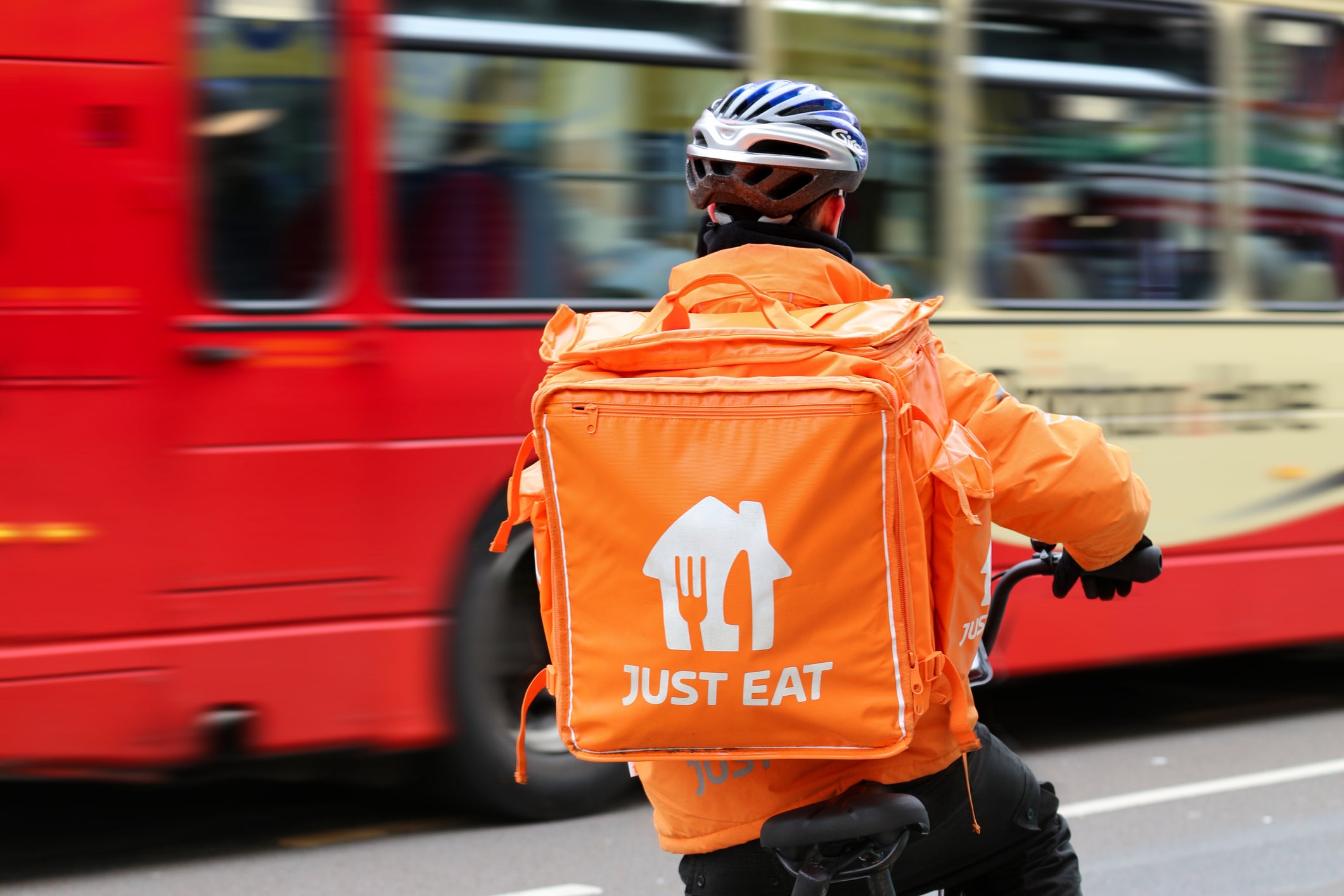
Cooking dinner used to be the hard part. Then came takeaways – the quiet admission that you couldn’t be bothered to chop an onion or wash a pan – ordered from plastic menus at fluorescent-lit counters, handed over to harried parents and eaten out of foil containers. After that, takeaways came to you, summoned by an app and delivered straight to your door, without even having to speak to another human being. Now, even that final sliver of effort is being automated.
This week, Just Eat announced the launch of an AI voice assistant designed to help users decide what to order, framing it as a cure for “menu anxiety” and “choice overload”. The pitch is simple: talk to the app, describe your cravings, however vague and rambling, and let the algorithm think for you.
Just Eat says this flexibility is the point: users can ask for anything from a “precise order for a Greggs sausage roll” to “a rambling stream of consciousness”, with the assistant designed to “deliver accurate, meaningful answers”.
In practice, when I tried it the experience felt less like a mind-reading concierge and more like educated guesswork. When I asked for “something healthy but filling”, the assistant nudged me towards a familiar ecosystem of salad chains, juice bars and protein bowls. Later, when I said I was hungry but didn’t really know what I fancied, it offered to narrow things down: something light, like a salad, or something more substantial, such as a vegan burger? I’m not vegan, and it had no way of knowing whether I was or not. But “vegan”, here, seemed to function less as a dietary choice and more as shorthand for healthy. I chose the latter. The recommendation was Thunderbird Fried Chicken.
On one level, this outcome makes perfect sense. Food delivery apps are vast, noisy places, filled with thousands of options that all start to blur into one another when you’re hungry and tired at seven-thirty on a Tuesday evening. Just Eat says its new assistant is designed to “cut through the noise” and make ordering “more intuitive than ever before”. According to its chief technology officer, Mert Öztekin, “This custom-built conversational assistant represents a major step forward, making our service more intuitive and accessible. We are harnessing the power of AI to empower everyday convenience.”
But the framing feels a little too neat. Menu anxiety isn’t really about menus. It’s a softer, more marketable stand-in for something broader: a creeping uncertainty about food itself.
We have never been more informed about what we should be eating, nor more confused about how to actually eat it. One minute, we’re told to avoid ultra-processed food at all costs; the next, we’re reassured that not all UPFs are bad. We’re encouraged to eat more protein, but left to debate whether that should come from steak or seitan. Fibre has enjoyed such a glow-up that jacket potatoes are being framed as aspirational. Carbohydrates, once vilified, have been quietly rehabilitated. All this unfolds within food systems that reward speed, consistency and convenience above all else. Add cost-of-living pressures, long working days and a cultural obsession with optimisation, and it’s little wonder that people no longer trust their gut. Instead, they trust data.



Into this confusion steps the algorithm, clipboard in hand, the referee in a broken food culture. Just Eat’s AI mediates between what we think we ought to want, what we actually want, and what the platform wants to sell. Crucially, it does this while being entirely unable to taste, smell or experience hunger itself.
There’s something quietly absurd about outsourcing desire to a machine that’s never tasted a thing in its life. The irony is hard to ignore. Ultra-processed food exists to remove effort from cooking. Delivery apps remove the effort from accessing it. Now, AI removes the effort from choosing it. If takeaway was already the shortcut, what does it say about us that we now need a shortcut to the shortcut?
To be clear, this isn’t a moral judgement on laziness. It’s about exhaustion. Work bleeds into evenings, health advice is relentless and contradictory, decision fatigue is real and food decisions have quietly become loaded with consequence: nutritional, emotional, even moral. In that context, handing over the reins might feel like relief. Just Eat is right that for some users, particularly those with accessibility needs, language barriers or cognitive overload, a conversational assistant could be genuinely useful. The company emphasises that the feature is designed to be inclusive and accessible, and that’s important.
If takeaway was already the shortcut, what does it say about us that we now need a shortcut to the shortcut?
But there’s a difference between helping people navigate choice and normalising the idea that choice itself is the problem. Algorithms don’t simply reflect preferences. They shape them. Recommendation systems tend to favour what is predictable, repeatable and data-rich, which often means chains over independents, familiar dishes over unfamiliar ones, and foods that perform well within a platform’s ecosystem. Ultra-processed foods, by their nature, are optimised for exactly this environment.
Just Eat doesn’t claim its AI will make healthier choices for you, only faster, easier ones. But intuition, traditionally, is something learned through experience. It’s built through cooking, tasting, eating with other people, and getting it wrong. When that feedback loop is replaced by what you ordered last time, what people like you tend to choose, what makes the most money, intuition starts to look a lot like habit with better branding.
The bigger question is where this ends. If we’re comfortable letting AI decide what we order at home, how far does that logic travel? Algorithmic sommeliers? Table-side prompts nudging diners towards dishes they’re statistically likely to enjoy? A future where “what’s for dinner?” is answered not with a craving, but a polite suggestion from Siri?
Just Eat presents its assistant as a natural evolution of ordering, the “next step” in convenience. And perhaps it is. But it also marks a subtle shift in authority. The voice telling us what to eat next doesn’t have a mouth, a stomach or a memory of taste. Only a record of our past decisions.
Menu anxiety might be the headline, but it’s also a mask. Beneath it sits a more uncomfortable truth: many of us no longer trust ourselves to answer a basic human question without technological assistance. And while an AI assistant might make dinner easier in the short term, it’s worth wondering what we lose when eating becomes just another decision optimised out of existence.
After all, convenience was meant to give us time back – not remove us entirely from the act of choosing how, and what, we eat.
Join our commenting forum
Join thought-provoking conversations, follow other Independent readers and see their replies
Comments
Bookmark popover
Removed from bookmarks