From butter pumpkin tortelli to Stanley Tucci’s beloved spaghetti alla Nerano - the only pasta recipes you’ll ever need
From silky pumpkin tortelli and slow-simmered ragù to bubbling aubergine parmigiana and Stanley Tucci’s beloved spaghetti alla Nerano, Hannah Twiggs rounds up the 15 best warming pasta recipes to cook right now

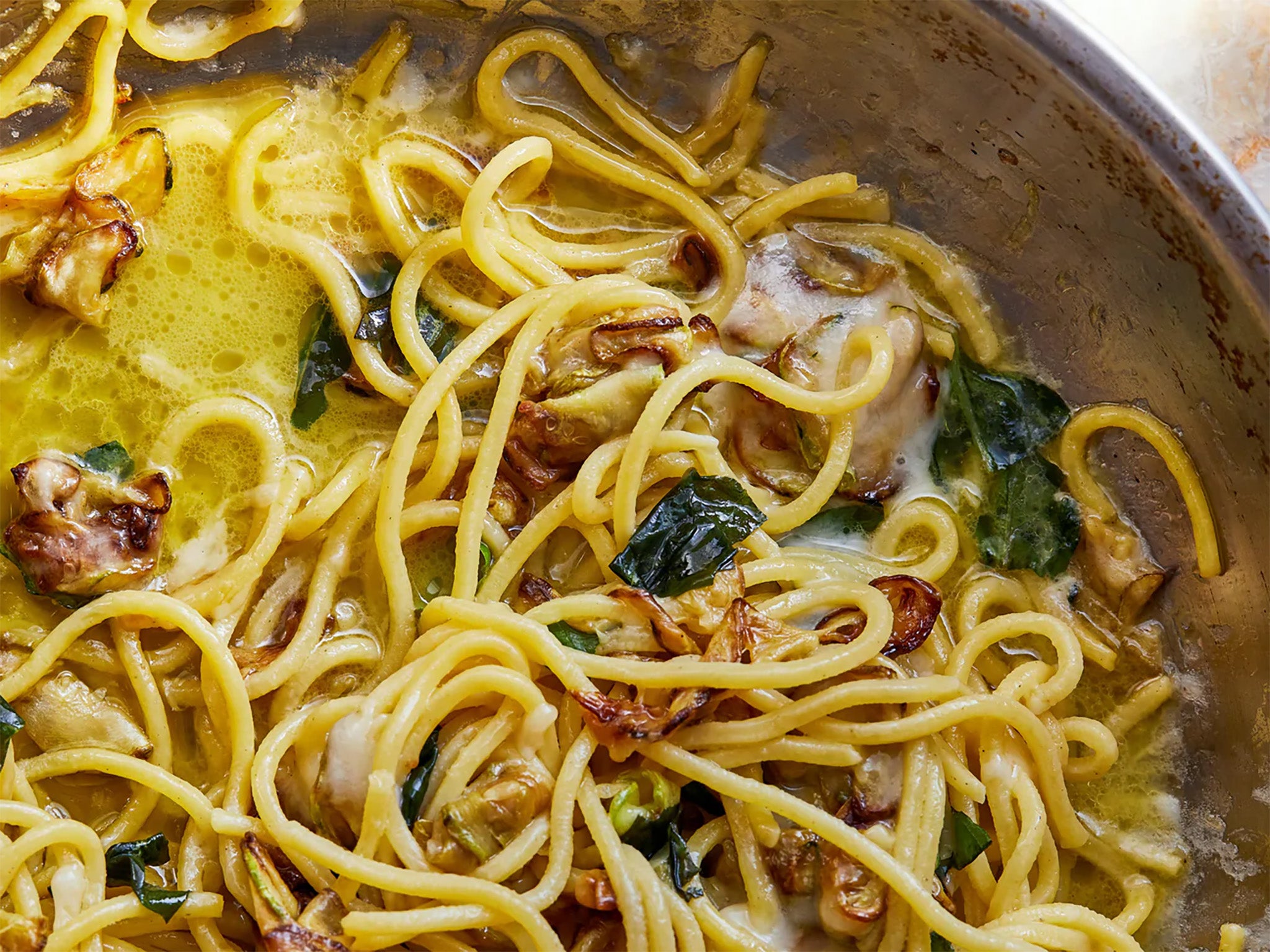
There’s something about this time of year – when the evenings start to draw in and the last of the summer sun competes with the first autumn chill – that makes a bowl of pasta feel like the only answer.
Not the limp, midweek kind that’s more about speed than flavour, but the sort of dishes that speak of comfort and craft: slow-simmered ragùs, silky sauces, pillowy tortelli and bubbling trays of parmigiana.
In Italy, pasta has always been more than fuel – it’s a celebration of the season. Courgettes might be clinging on for spaghetti alla Nerano, wild garlic sauces still find their way into tagliatelle, while earthy mushrooms and truffles creep onto menus as autumn arrives.
The beauty of pasta is its adaptability: the same dough that’s rolled into delicate cappelletti one week can be cut into rustic pappardelle the next, ready to catch every drop of a rich beef or lamb ragù.
Here, we’ve gathered some of our favourite pasta recipes from chefs, restaurants and Italian traditions – the kind you’ll want to cook when the weather can’t quite make up its mind.
From Paul Ainsworth’s brown butter pumpkin tortelli to Chris Leach’s cacio e pepe and Stanley Tucci’s beloved spaghetti alla Nerano, these are dishes designed for this in-between season, when comfort and freshness collide. Whatever shape or sauce you choose, pour yourself a glass of wine, put a pan of water on, and let pasta work its magic.
Brown butter pumpkin tortelli, crisp sage and parmesan, crushed biscotti

“I have fond memories of making tortelli with Angela Hartnett,” says Paul Ainsworth, “when we teamed up to raise money for two charities close to our hearts. Angela’s is The London Air Ambulance, which played a huge role in saving the life of her husband, and my good friend, Neil Borthwick.
“For me, it’s the Cornwall Air Ambulance, for which my wife, Emma, and I are ambassadors. We organised a fundraiser at Caffè Rojano, and Angela made tortelli as a starter.
“My tortelli now regularly features on the Caffè Rojano menu. I like to serve it with traditional fresh pesto or, when it’s in season, wild garlic pesto. Other pasta shapes are also brilliant with this filling – try ravioli, cappelletti, tortellini and ripiena.”
Serves: 4
Ingredients:
For the pesto:
50g pine nuts
150ml olive oil
1 garlic clove, finely chopped
80g basil, leaves and stalks
50g parmesan
Sea salt
Cracked black pepper
For the filling:
600g peeled and chopped
Crown Prince pumpkin
2 tbsp olive oil
1 sprig of thyme, leaves picked
35g ricotta
60g parmesan, finely grated
15g biscotti biscuits, crushed
1 tbsp sherry vinegar
1 tbsp lemon juice
For the pasta:
225g ‘00’ pasta flour, plus extra for dusting
1 tbsp extra virgin olive oil
2 whole eggs
3 egg yolks
To garnish:
25g unsalted butter
8 sage leaves
20g parmesan
10g chives, chopped
10g basil leaves, torn
4 biscotti biscuits, crushed
Method:
1. Preheat the oven to 150C fan.
2. To make the pesto, lightly toast the pine nuts in a dry non-stick pan, then add the oil and garlic and leave to cool. In a food appliance with a blade attachment, or a blender, add the basil and Parmesan with some salt and pepper, then pour over the cooled oil and nut mix. Blitz until fine.
3. To make the pasta filling, place the diced pumpkin in a bowl. Add the olive oil, some sea salt, cracked black pepper and the thyme leaves and mix well, then spread the pumpkin out on an oven tray. Bake the pumpkin for about 1½ hours, until really soft. Transfer the pumpkin to a bowl and crush with a fork, leaving some texture, then leave to cool. Once cool, add the ricotta, Parmesan, biscotti, sherry vinegar and lemon juice and season to taste with sea salt and cracked black pepper.
3. Now make the pasta. Using a food appliance with a blade attachment, or a blender, add the flour, a pinch of sea salt and olive oil to the bowl. In a separate bowl, add the eggs and egg yolks and whisk together. Turn on the appliance and slowly add the eggs to the flour to form a dough. You may not need all the egg – the dough should come together without being too dry or too wet. Turn the dough out onto a floured surface and knead well for 5 minutes, then wrap in clingfilm and place in the fridge for 1 hour to rest.
4. Twenty minutes before you are ready to make your tortelli, take the pasta dough out of the fridge. Lightly flour a work surface and, with a rolling pin, roll out the dough until you have a rectangle that’s no wider than your pasta machine, roughly 20 x 10cm. Now feed the dough through a pasta machine several times, reducing the thickness of the pasta until it is 2mm thick. Lay lengths of pasta on a work surface and spoon or pipe the pumpkin filling onto the bottom third, leaving the edge clear, then fold over nice and tight like a sausage roll.
5. To create the tortelli shapes, make indentations along the roll of pasta, 5cm apart, with your floured fingers. Using a pasta wheel or fork, cut along these indentations to make individual shapes and remove any trapped air.
6. Fill a deep-sided pan with water, season with salt and bring to the boil. Add the tortelli and blanch for 2½ minutes, then lift out of the pan and drain on kitchen paper.
7. Take a large frying pan and melt the butter over a high heat until foaming and nutty brown. Add the tortelli and gently cook on each side. After a minute or so, add the sage leaves, then finish with a squeeze of fresh lemon juice. Remove the pasta and the crisp sage leaves and drain on kitchen paper.
8. To serve, spoon some pesto into the middle of each bowl. Place the tortelli on top of the pesto and spoon over some of the lemony brown butter from the pan. Grate over some parmesan, add the chopped chives, torn basil and crushed biscotti. Enjoy!
Recipe from ‘For the Love of Food’ by Paul Ainsworth (Pavilion Books)
Spaghetti alla Nerano (Stanley Tucci’s favourite pasta dish)
If you’ve seen Stanley Tucci’s Searching for Italy series, you might’ve caught the man himself waxing lyrical about a seemingly humble dish of spaghetti with courgettes – or zucchini to the Italians. In a picture-postcard scene, Stanley samples the dish at a cliffside restaurant with views of the sea, before confidently claiming it’s “one of the best things he’s ever eaten”. The dish in question? That’d be spaghetti alla Nerano.
Spaghetti alla Nerano is a dish of pasta, fried courgettes and cheese that hails from the southern Italian region of Campania. More specifically, the dish’s origins can be traced back to one woman and one Campanian village. That woman is Maria Grazia, who created the dish at her namesake restaurant, Mariagrazia, in 1952. Hidden away in the picturesque fishing village of Nerano, on the sun-kissed Amalfi coast, the restaurant (and the recipe) have been passed down the generations – and both are still going strong today.
The dish itself is a lesson in how to make simple ingredients sing; the original recipe involves little more than pasta, courgettes, Provolone del Monaco cheese and basil. Provolone del Monaco is a buttery, somewhat spicy cow’s milk cheese that’s typical of the Sorrento region, but it’s much harder to find than regular Provolone in the UK. If you can’t find either, a mix of Pecorino and Parmigiano Reggiano cheese works well.
Serves: 4
Prep time: 10 minutes | Cook time: 30 minutes
Ingredients:
400g spaghetti
6 medium courgettes (roughly 1kg), sliced into thin rounds
Handful of fresh basil leaves, torn
200g Provolone (or 100g each of Pecorino and Parmigiano Reggiano), grated.
500ml sunflower oil, for frying the courgettes
50g butter
Salt and pepper, to taste
Method:
1. Heat the sunflower oil in a large, high-sided frying pan. You want the oil to be hot, so test it by dropping in a single disc of courgette and checking if it sizzles.
2. Once the oil is suitably hot, add your sliced courgettes and deep-fry until golden (you might need to do this in batches depending on the size of your pan).
3. Remove your courgette rounds with a slotted spoon and drain on kitchen paper, then put them in a bowl and leave to cool to room temperature.
4. Next, bring a pan of well-salted water to the boil and start cooking your pasta – aim for a couple of minutes less than the packet instructions.
5. While the pasta is cooking, put a frying pan on medium and heat your cooled courgette, stirring occasionally and adding a couple of ladles of pasta water.
6. Once the courgettes start to soften, add the butter and stir until it melts, breaking the courgettes up with the back of a wooden spoon as you go.
7. Once your pasta is al dente, drain it (reserving some more pasta water) and add to your pan of courgettes, along with most of the cheese.
8. Remove your pan from the heat and toss to combine, adding more pasta water if you need (you’re looking for a silky sauce that coats your pasta).
9. Season to taste, then serve sprinkled with more cheese and some torn basil leaves.
Recipe from pastaevangelists.com
Tagliatelle with wild garlic sauce

Serves: 2
Ingredients:
For the wild garlic sauce:
200g wild garlic
50g olive oil
For the tagliatelle:
200g tagliatelle
20g butter
Wild garlic sauce
½ lemon
Pinch chilli flakes
Black pepper to taste
Grated parmesan
Method:
1. Wash the wild garlic. Put a large pot of water on to boil and season generously with salt.
2. Blanch the wild garlic for 2 minutes, drain and blend with the oil into a smooth paste.
3. Cook the pasta to your liking, and when ready, drain the pasta, reserving some of the pasta water.
4. In a pan, heat the butter, add the wild garlic sauce and toss the pasta in this sauce, adding a little pasta water if necessary. Add a squeeze of lemon and taste, adjusting the seasoning and lemon until it tastes good to you.
5. When the pasta is sauced, divide among two plates and sprinkle with dried chilli flakes, a few cracks of black pepper and grate some parmesan over each plate to finish.
Recipe from Chris Leach, co-founder of Manteca
Mafaldine al tartufo
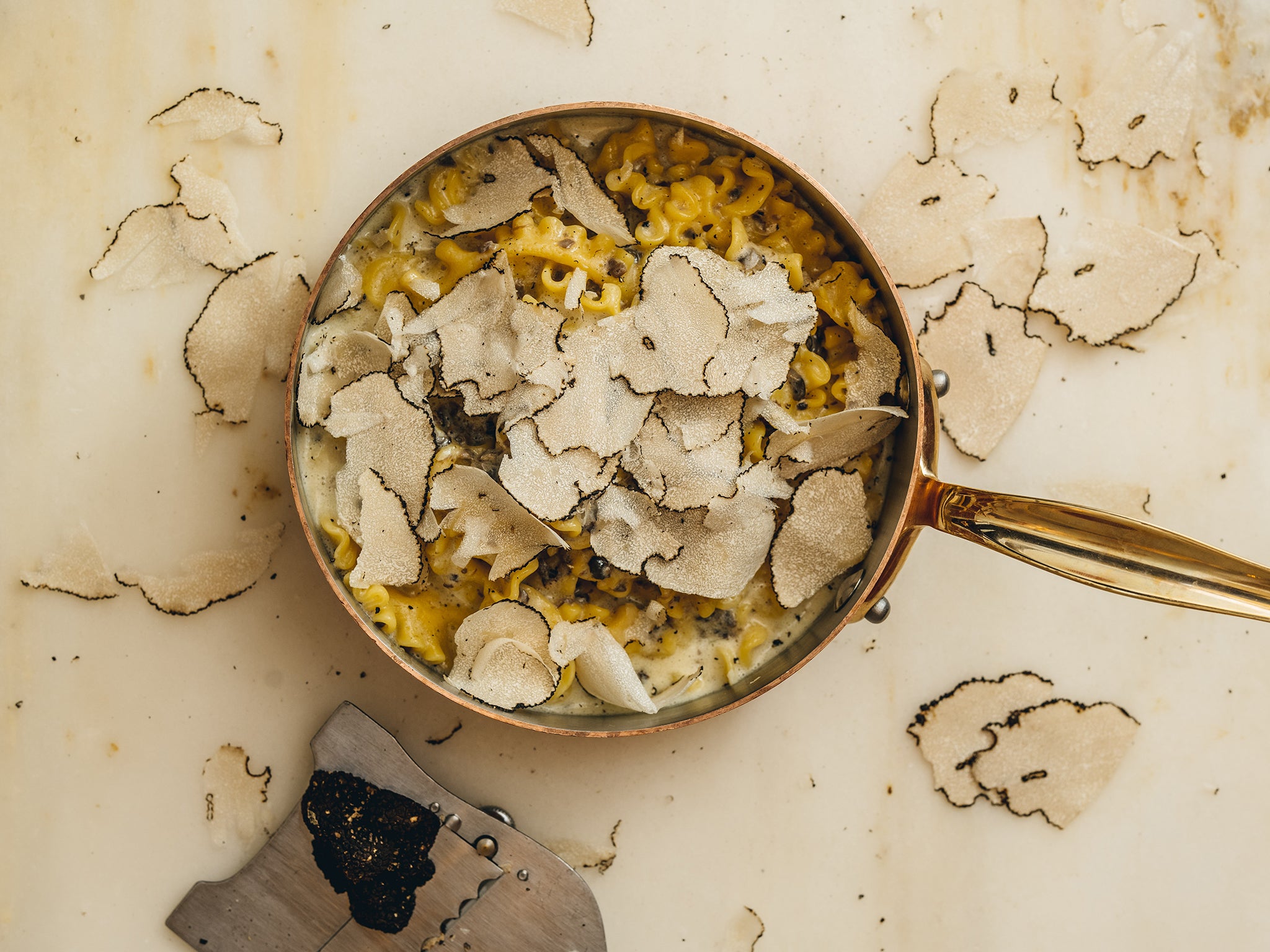
Serves: 2
Ingredients:
400g mafaldine, linguine or tagliatelle
70g parmesan
20g butter
2 tbsp truffle oil
½ shallot
20g autumn black truffle
200g button mushrooms
30ml white wine
80g mascarpone
Method:
1. Melt the butter with the truffle oil in a frying pan. Add the shallot and half of the finely chopped truffle, then the minced/chopped mushrooms.
2. Let it brown for a few minutes, then deglaze with white wine, stirring well with a wooden spoon.
3. Let it simmer on a low heat for 10 minutes, and then stir.
4. In another saucepan, cook your pasta in boiling salted water, until it’s a little less than al dente.
5. Mix the mascarpone with the truffle cream in another saucepan and heat gently.
6. Add the pasta, grated parmesan and a little bit of cooking water, if necessary.
7. Serve immediately, garnishing with fine slithers of the remaining truffle (you can use a peeler for this).
Recipe from Big Mamma
Linguine bottarga
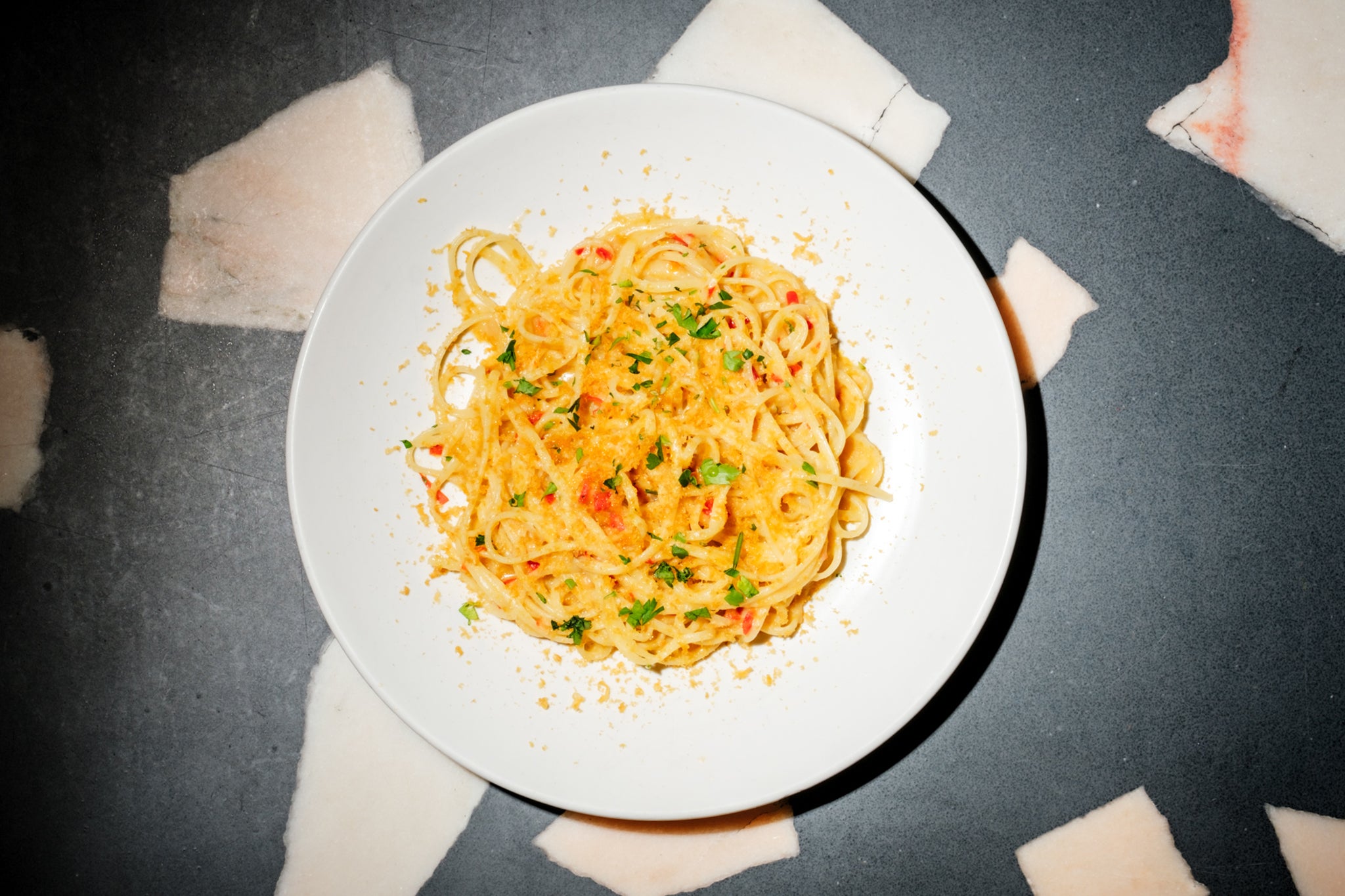
Bottarga is a typical Sardinian ingredient made from cured and dried grey mullet roe. When grated and stirred through hot pasta, it creates a bright yellow, deeply savoury sauce that is extremely popular in Sardinia, and you’ll soon see why.
Serves: 4
Ingredients:
500g linguine
2 tbsp olive oil
2 red chillies, deseeded and finely chopped
1 garlic clove, chopped
50g bottarga, peeled
100ml extra-virgin olive oil
2 big handfuls of parsley, chopped
A few pinches of Aleppo chilli, to serve
Method:
1. Bring a pan of salted water to the boil and cook the pasta to al dente according to packet instructions.
2. Meanwhile, warm the olive oil in a wide pan over a low heat and gently fry the garlic and chilli for 2-3 minutes until the garlic is just beginning to colour on the edges.
3. Take off the heat and grate in the bottarga.
4. Drain the pasta, reserving a cup of pasta water. Return the bottarga pan to a low heat and add some of the pasta water, stirring until the bottarga has melted into a thick sauce. Slowly add the extra-virgin olive oil, stirring constantly to create an emulsion. Season lightly, then add the hot pasta and parsley and stir well until every strand of pasta is coated. You may need to add more pasta water.
5. Transfer to plates, sprinkling each one with some Aleppo chilli before serving.
Recipe from Stevie Parle, chef-owner of Pastaio
Beef shoulder ragù and pappardelle with chimichurri

“It doesn’t get more signature Caffè Rojano than this dish,” writes Paul Ainsworth. “When my wife, Emma, and I knew we were going to be launching Caffè Rojano, we went to Rome and visited lots of trattorias. Interestingly, what we noticed there was a serious amount of pasta compared to a thimbleful of bolognese! Growing up as a kid in our house, my dad was adamant that it was minimum spaghetti with a boatload of bolognese. Here, I’ve gone 50/50.”
Serves: 4
Ingredients:
2 tbsp olive oil
1.5kg beef shoulder (feather blade)
1 onion, peeled and cut into quarters
1 carrot, unpeeled and cut lengthways
1 leek, cut lengthways, then in half
2 garlic cloves, crushed
4 sprigs of thyme
4 sprigs of rosemary
1 bay leaf
½ tbsp tomato purée
50ml red wine vinegar
500ml red wine
2 litres beef stock
50g parmesan
Sea salt
Cracked black pepper
For the overnight tomatoes:
14 vine-ripened cherry tomatoes, halved
2 garlic cloves
1 tbsp olive oil
½ tbsp sherry vinegar
Sea salt
Cracked black pepper
For the pasta:
3 egg yolks
2 eggs
1 tbsp extra virgin olive oil
225g ‘00’ pasta flour, plus extra for dusting
For the chimichurri:
60g flat-leaf parsley, stalks included
60g coriander, stalks included
15g oregano, leaves picked
1 garlic clove, peeled
½ tsp chilli flakes
1 tsp ground cumin
80ml olive oil
60ml cider vinegar
For the pangrattato:
250g stale bread, torn into small pieces
75g unsalted butter
4 garlic cloves, finely chopped or grated
4 sprigs of thyme, leaves picked
Zest of ½ lemon
Method:
To make the overnight tomatoes:
1. The night before you want to serve the dish, preheat the oven to its lowest setting – around 50C fan.
2. Place the cherry tomatoes on a baking tray. Slice the garlic cloves as thinly as you possibly can, then top each tomato half with a sliver of garlic. Season lightly with sea salt and cracked black pepper, then lightly drizzle the sherry vinegar all over the tomatoes. Place the tray in the preheated oven and go to bed. Wake up the next morning to the best-smelling kitchen and little red jewels of flavour.
When you’re ready to cook:
1. Preheat the oven to 150C fan.
2. To make the beef ragù, place a large casserole over a medium heat and add the olive oil. Season the beef all over with salt, then carefully place in the pan and brown all over, turning every 20 seconds until you have a lovely piece of browned meat. After about 4–5 minutes, remove the beef from the pan and place on a tray.
3. Leave the casserole on the heat, add the onion and carrot and cook the vegetables in the beef fat for 2 minutes. Now add the leek, garlic, thyme, rosemary and bay leaf and cook for a further 2–3 minutes. Next, add the tomato purée and cook for another 2 minutes, stirring continuously. Now add 25ml of the red wine vinegar and deglaze all the lovely flavours off the bottom of the pan. Pour in the red wine and reduce until it has been absorbed into the vegetables. Add the beef stock and bring everything to a simmer, then return the beef to the cooking liquor. Place a piece of baking paper on top and use a small plate to help keep the meat submerged. Cover with a lid and cook in the oven for about 2½ hours.
4. The best way to test if the beef is cooked is by inserting a small knife through the middle. If it’s soft and the knife goes through easily, the beef is ready.
5. Remove the beef from the oven but leave the lid on the pan until the beef is cool enough to touch. Then, transfer the beef to a plate and strain the cooking liquor through a sieve into another saucepan. Turn up the heat to high and reduce the cooking liquor until you get a thick, gravy-like sauce.
6. Once the sauce is reduced and thick, take it off the heat and set it aside to cool for 20 minutes while you pick the beef into small pieces. Now add the sauce, bit by bit, to glaze and coat the meat. It will more than likely not need all the sauce, but you can use the rest for so many things and it freezes really well. Stir through the remaining 25ml of red wine vinegar, then taste and check the seasoning.
7. To make the pasta, whisk the eggs, egg yolks and extra virgin olive oil together. Now add the flour and a pinch of salt to a food appliance with a blade attachment and pulse for just 2–3 seconds to combine. Turn the appliance on and slowly add the egg mixture. Stop once the flour and eggs start to form a crumb, turn the machine off and pinch the mixture together. If it forms a dough in your fingers, it’s ready. If it is still crumb-like, add some more egg mixture. Once the dough starts to come together, turn the machine off, empty the contents onto a lightly floured surface and knead the dough for 4-5 minutes to form a ball of pasta. Wrap the pasta in clingfilm and leave to rest in the fridge for 30 minutes.
8. Unwrap the dough and, with a rolling pin, roll it out until it is thin enough to start to roll through a pasta machine. Depending on your pasta machine, I take my pasta down a notch each time until I reach setting 3 or 4. Cut the pasta into 30cm sheets, attach the tagliatelle cutter and roll each sheet through the pappardelle cutter. (If you don’t have a pappardelle cutter, you can cut the pasta into 30cm x 4cm ribbons by hand.) Place your pappardelle on a clothes hanger and hang it up to dry for around 20 minutes.
9. To make the chimichurri, add all the ingredients to a liquidiser and blitz until smooth.
10. To make the pangrattato, add the stale bread to a food appliance with a blade attachment, or a blender, and lightly pulse until coarsely broken down. Place a large frying pan over a medium heat, add the butter and heat until the butter is golden and foaming. Add the broken stale bread, garlic, thyme leaves and a pinch of sea salt and cook until the bread is golden and crisp. Just before removing from the pan, add the lemon zest and have a final taste, adding a little more salt if needed. Transfer the crisp crumbs to a tray lined with kitchen paper to remove any excess fat, ready for serving.
11. Fill a deep-sided pan with water, season with salt and bring to the boil.
12. Cook the dried pasta for 2 minutes. While the pasta is boiling, warm the beef ragù in a shallow casserole-style pan and stir through the overnight tomatoes. Once the pasta is cooked, drain in a colander and then add to the ragù, gently turning to coat the pasta in the sauce but being careful not to overmix.
13. Remove the pan from the heat, spoon over some of the chimichurri dressing and the toasted pangrattato, then place in the middle of the table with the Parmesan and a grater, and let people grate their own.
Recipe from ‘For the Love of Food’ by Paul Ainsworth (Pavilion Books)
Aubergine parmigiana
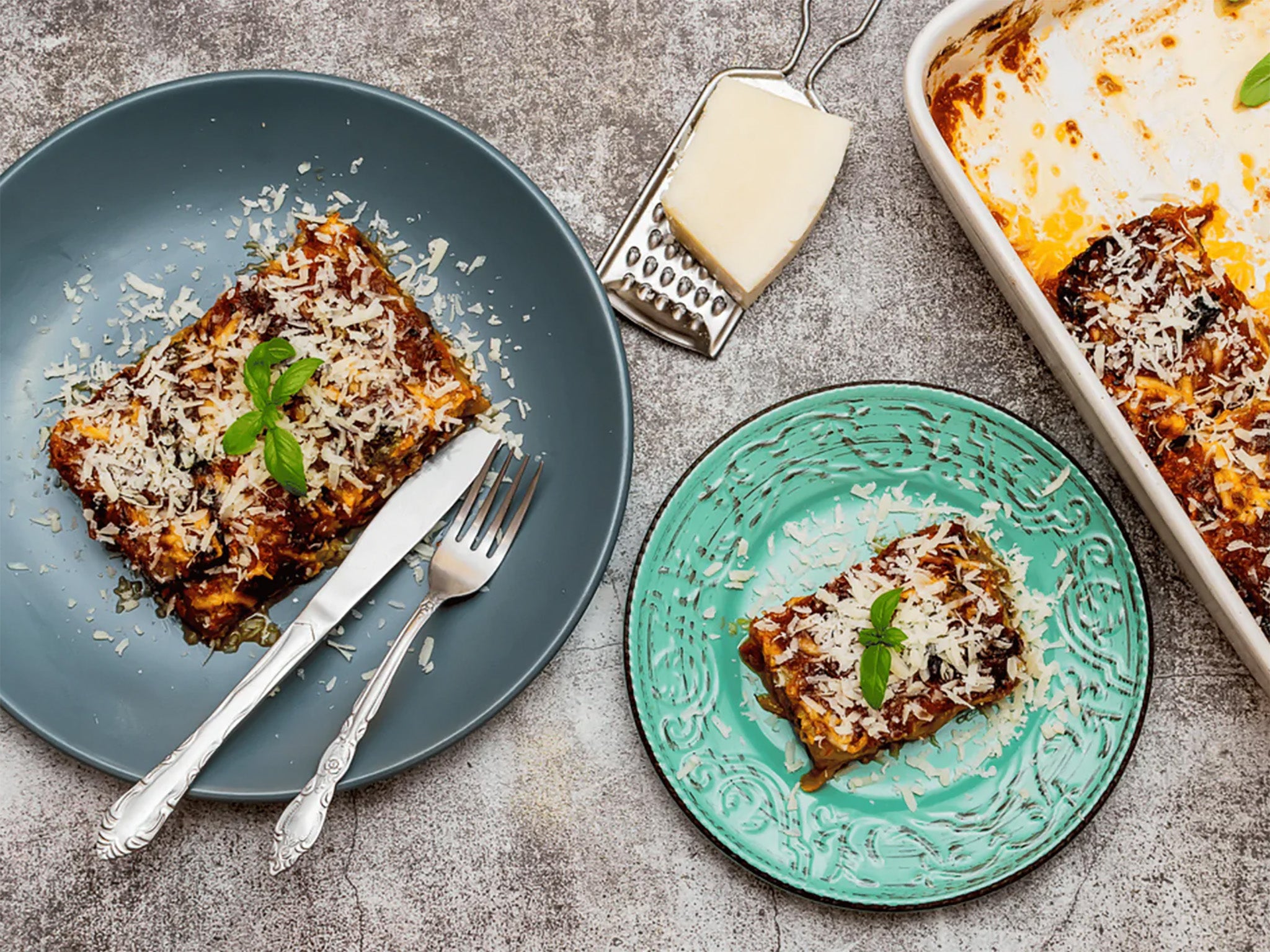
Looking for comfort? Reach for layers. Only today, they’re not in the form of a worn-in jumper or fluffy fleece, but layers of golden fried aubergine, melting mozzarella and smooth tomato sauce. Aubergine parmigiana – or parmigiana di melanzane to the Italians – is a true comfort classic, and for good reason.
From just a handful of ingredients, some gentle frying and a healthy hit of Italian cheese, comes a warming dish rich in savoury flavour. In contrast to many other comfort foods, aubergine parmigiana is also low-carb (and no less delicious for it). It’s very easy to make too, with the only real effort coming from frying the aubergine slices in batches (a crucial step, so don’t rush it).
Like many classic Italian dishes, the origins of parmigiana di melanzane are contested. The regions of Campania and Sicily both claim to have birthed it, but we like to think of aubergine parmigiana as a collaborative effort; it was likely that it did first emerge from the island of Sicily, where Arab colonisers first introduced the aubergine to Italy. The dish was then improved on in Naples with the addition of milky mozzarella.
Serves: 4-6
Prep time: 20 minutes | Cook time: 1 hour
Ingredients:
4 large aubergines
100ml olive oil, for frying and drizzling
300ml homemade tomato sauce or shop-bought passata
300g mozzarella (two balls)
150g parmesan, grated
15g fresh basil leaves, torn
50g breadcrumbs, fresh or dried
Chef’s tip: If you want to make this dish vegetarian, just swap out the parmesan for a vegetarian alternative.
Method:
1. Prep and fry the aubergines: drain the mozzarella and cut into thin slices. Slice the aubergines into 5mm rounds. In a deep frying pan, heat two inches of oil until hot. Fry your aubergines in batches until golden on both sides. Remove from the pan and drain on a baking tray lined with kitchen roll.
2. Assemble your parmigiana: in a large rectangular baking dish (Pyrex is perfect), make a layer of aubergine slices, overlapping them as you go. Cover your aubergine base with a thin layer of passata, then top with a quarter of the mozzarella, parmesan and basil. Repeat the layers in this pattern (aubergine, sauce, cheese) until you’ve used it all up, (don’t worry if you end on a layer of aubergine). Top with a final dusting of parmesan, a scattering of breadcrumbs and a drizzle of olive oil.
3. Bake your parmigiana: preheat your oven to 180C (160C fan/gas mark 4). Once hot, bake your parmigiana for 30 minutes, or until golden. Remove your parmigiana from the oven and leave to rest, before serving warm.
Chef’s tip: If you have time to get ahead, your parmigiana will benefit from being left to sit for 4-12 hours after the first bake. This intensifies the flavours and helps the parmigiana layers to firm up. When you’re ready to eat, simply reheat at 180C (160C fan/gas mark 4) for 10-15 minutes, then slide under a hot grill for a few minutes until the top is a riot of golden bubbles.
Recipe from pastaevangelists.com
Tonnarelli cacio e pepe

Serves: 2
Ingredients:
20g freshly ground black pepper – or use a mix of peppercorns – black, pink, even szechwan
40g futter
60g grated Pecorino Romano plus more to finish
200g tonnarelli or spaghetti
2 lemon
Method:
1. Bring a large pan of water to the boil. Salt until the water tastes highly seasoned – but not like the sea! Cook according to the packet instructions or a couple of minutes for fresh pasta.
2. Start the sauce a few minutes before the pasta is ready. Toast the black pepper in a dry pan until fragrant, but do not let it burn – about a minute. Add the butter and a big ladle full of pasta water and let boil together until emulsified.
3. Add the pasta to the boiling emulsification with the cheese. Toss rapidly until well combined and all the pasta is coated, then add a little squeeze of lemon juice. Divide the pasta among two plates and grate more fresh pecorino over the top and a last grind of fresh pepper.
Recipe from Chris Leach, co-founder of Manteca
Homemade tagliatelle with porcini
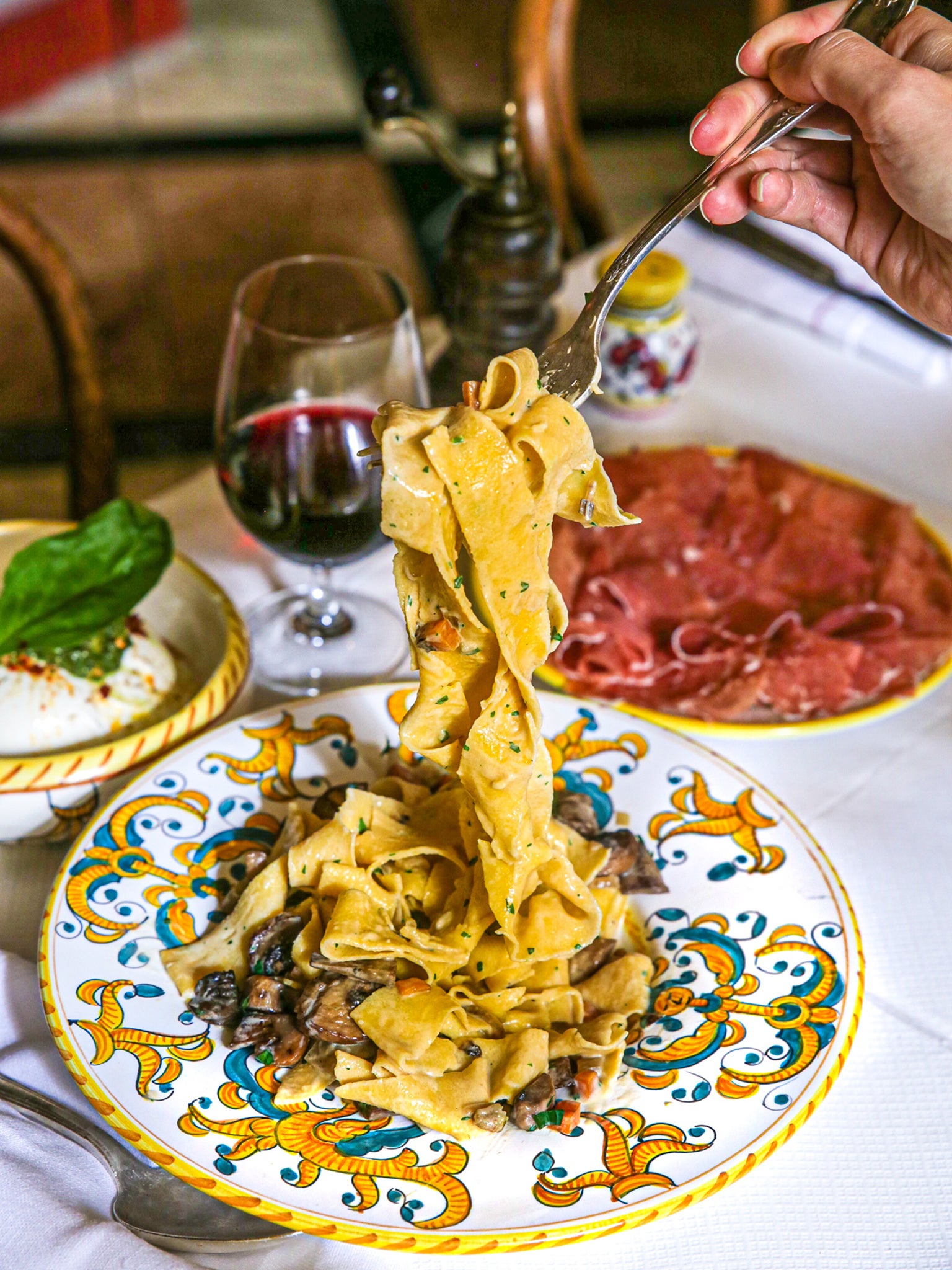
Serves: 2
Ingredients:
For the pasta dough:
500g flour
5 eggs
Salt
For the sauce:
400g porcini
1 garlic clove
40g olive oil
150ml vegetable stock
35g unsalted butter
15g parsley
Salt and pepper
Method:
1. On a clean work surface, make a mound with the flour and create a well in the centre. Put the eggs into the well and gradually mix the flour into the centre to combine. Gradually add the flour from around the sides until all the flour is mixed and you have a smooth ball of dough.
2. Put the pasta dough in the fridge to rest while you make the sauce.
3. Finely chop the garlic. Slice the porcini mushrooms finely. Add the olive oil and butter to a frying pan, and melt. Add the garlic and mushrooms, slowly cooking till soft. Add the stock and slowly simmer till reduced, then add the chopped parsley (reserving some to garnish).
4. In the meantime, using a pasta machine or rolling pin, roll out the pasta until 2mm thick. Using a knife, slice the pasta into thick ribbons of tagliatelle. Leave to slightly dry on a baking sheet dusted with flour.
5. When ready to serve, put a pan of salted water on a rolling boil. Cook the pasta till al dente (approx 2-3 minutes), remove and add straight to the frying pan with the stock and porcini. Cook tossing together, adding any pasta water to loosen. Serve immediately, with some additional chopped parsley and fresh Parmigiano.
Recipe from Big Mamma
Courgette conchiglie
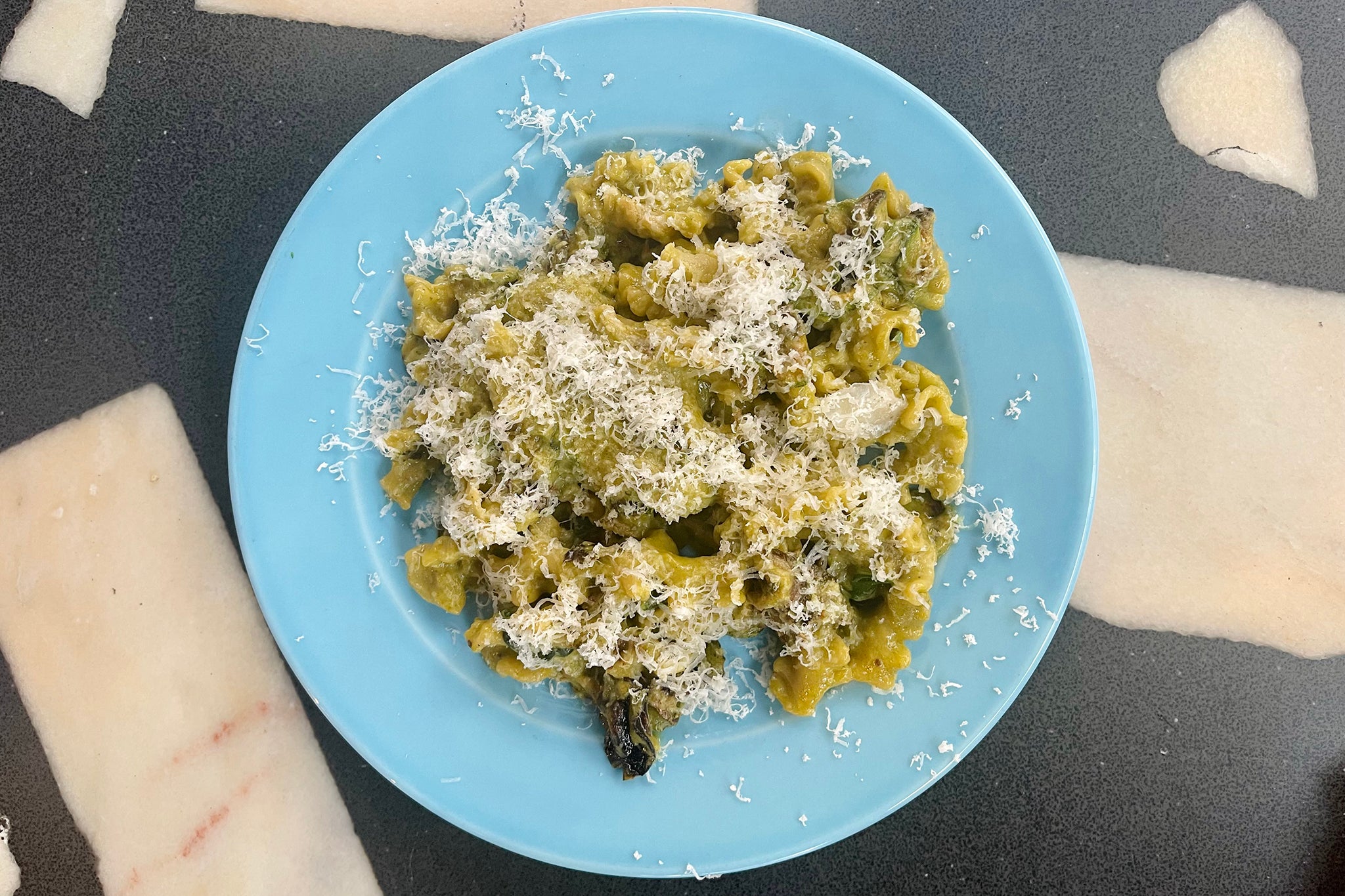
A great summer pasta dish that is packed with courgettes and light, summery herbs. Slow-cooked courgette, called zucchini trifolati, is found in kitchens across Italy and is a lovely, simple way to eat them. They’re also delicious with a piece of fish or a pork chop.
Serves: 4
Ingredients:
80ml extra virgin olive oil
4 garlic cloves, roughly chopped
800g Grezzina courgette, roughly chopped into 2-3cm chunks
500g conchiglie
2 big handfuls of basil leaves, roughly chopped
2 big handfuls of mint leaves, roughly chopped
80g grated Parmesan
80g Provolone
Method:
1. Place your widest pan (with a lid) over a medium heat and add the oil and garlic. Once the garlic just begins to sizzle, add the chopped courgette and some seasoning and stir well so the courgettes are coated in oil. Continue to fry, stirring, for 8-10 minutes until the courgettes begin to take some colour, then turn the heat down to low and place the lid on top.
2. Leave to simmer for another 10-12 minutes, or until the courgettes are completely soft. Meanwhile, bring a pan of salted water to the boil and cook the pasta according to packet instructions. Drain, reserving a cup of the cooking water.
3. Transfer the pasta to the courgette pan and stir in the herbs and Parmesan, along with a big splash of pasta water to loosen the sauce. Stir well until the pasta is nicely coated.
4. Transfer to plates, grate over the Provolone and serve.
Recipe from Stevie Parle, chef-owner of Pastaio
Chicken strozzapreti

“This dish was on the first menu I wrote for Caffè Rojano and was an absolute hit,” writes Paul Ainsworth in For the Love of Food. “The magic lies within the sauce; there’s something so warm and comforting when the garlic, crème fraîche and red pesto mix together. The sauce coats the chunks of chicken and the strozzapreti pasta. Writing this book has inspired me to bring it back to the Caffè Rojano menu, which has been met with much delight.”
Serves: 4
Ingredients:
250ml chicken stock
150g red pesto
25g confit garlic paste (see below)
60g sweet chilli sauce
40g crème fraîche
1 tbsp lemon juice
100g unsalted butter
2 tbsp olive oil
4 medium chicken breasts, skinned and cut into large dice
15 cherry tomatoes, halved
300g dried strozzapreti pasta
3 spring onions, thinly sliced
1 red chilli, thinly sliced
15g flat-leaf parsley, chopped
5 large basil leaves, torn
Sea salt
Cracked black pepper
For the confit garlic:
10 garlic cloves, peeled
200ml olive oil
Method:
1. First, make the confit garlic. Place the garlic cloves in a saucepan with the olive oil and a pinch of sea salt. Heat the oil over a low heat to about 70-80C and cook the garlic for 2 hours until soft and tender. Remove the garlic from the oil and mash it to a paste with a fork, then set aside.
2. To make the pasta sauce, add the chicken stock, red pesto, confit garlic paste, sweet chilli sauce, crème fraîche and lemon juice to a saucepan and bring to a simmer, whisking as you go. Now whisk in the butter, season with salt and pepper and set aside.
3. Place a large frying pan over a high heat and add the olive oil. Season the diced chicken with salt and pepper, add to the hot pan and colour the chicken all over. Add the cherry tomatoes, followed by the pasta sauce, then turn down the heat.
4. Fill a deep-sided pan with water, season with salt and bring to the boil. Add the strozzapreti and cook according to the instructions on the packet. Once the pasta is cooked, strain in a colander until it’s nice and dry. Add the spring onions to the chicken pasta sauce with the red chilli, followed by the cooked pasta, and stir through.
5. Finish with the parsley and basil and check the seasoning. Serve in a bowl in the middle of the table.
Recipe from ‘For the Love of Food’ by Paul Ainsworth (Pavilion Books).
Spaghetti alla chitarra with lamb and red pepper ragu
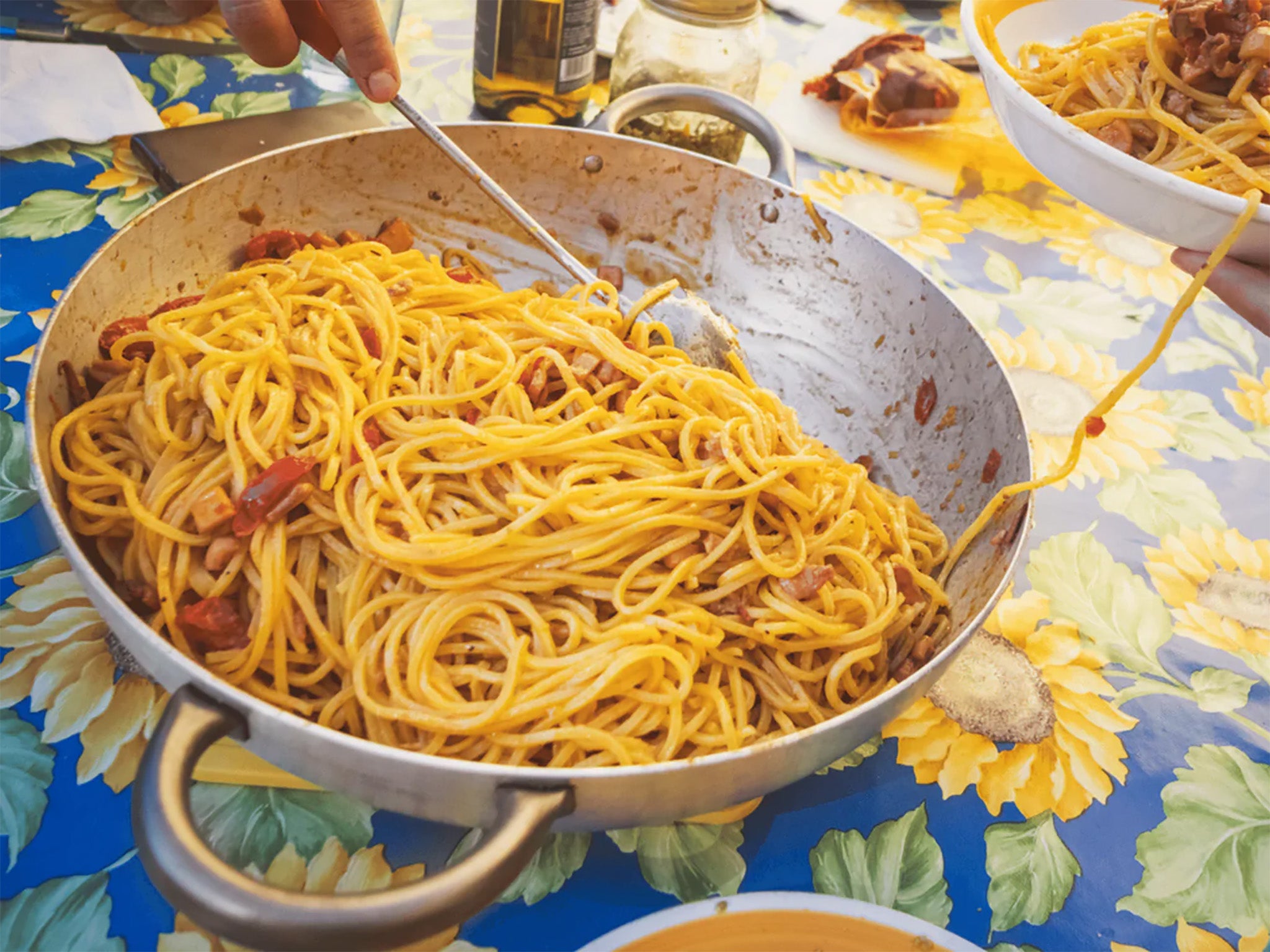
Spaghetti alla chitarra – which translates to “guitar spaghetti” – is so named because it’s made by pushing a sheet of pasta dough onto a wooden pasta cutter lined with guitar-like wire strings. The chitarra cuts the dough into long strands that resemble a thicker, squarer spaghetti – qualities that make this pasta shape an ideal partner for creamy sauces and chunky meat ragú.
Traditionally made from a fresh flour and water dough, spaghetti alla chitarra is a typical shape of the central Italian region of Abruzzo, as well as its neighbour Lazio (where it’s instead known as tonnarelli). In Lazio, you’ll often find this shape paired with cacio e pepe, but in Abruzzo it’s more commonly served alongside the region’s famous lamb ragú.
Abruzzo’s rocky, mountainous interior is prime sheep-rearing country, and you won't go far without spotting a flock of hardy sheep roaming the craggy hillsides. It’s no surprise then, that the Abruzzese love to eat lamb. Arrosticini – skewers of lamb roasted over an open fire – are a big favourite, but this lamb ragú with red peppers is the area’s signature pasta sauce. The sweet peppers cut through the rich lamb perfectly, creating a sauce that’s good all year round.
Serves: 4
Prep time: 15 minutes | Cook time: 2 hours
Ingredients:
400g spaghetti alla chitarra, fresh or dried
400g lamb shoulder, cut into small cubes
2 large red peppers, deseeded and cut into thin strips
3 cloves of garlic, thinly sliced
1 tin of peeled plum tomatoes
500ml lamb or chicken stock
125ml dry white wine
2 tbsp olive oil
3 bay leaves
Salt and pepper, to taste
50g grated pecorino, to finish
Method:
1. Put a large saucepan over a medium heat and add the olive oil. Once hot, add the lamb and fry until evenly browned.
2. Add the garlic, bay leaves and a pinch of salt, then fry until the garlic is golden (be careful not to let it burn). Pour in the wine and let it reduce by about half.
3. Add the tomatoes and red peppers, breaking the tomatoes up with the back of a spoon. Pour in half of the stock, stir and bring to a simmer.
4. Cover and reduce the heat to low, then let everything bubble away for 1½-2 hours, until the lamb is tender. Add more stock if it starts to look dry.
5. Boil a large pan of water. Salt well, add the pasta, stir, then cook until al dente (3-4 minutes for fresh, 2 minutes less than the packet instructions for dried).
6. Drain the pasta, reserving some cooking water. Transfer the pasta to your pan of ragú and toss until well coated, adding a splash of pasta water to loosen.
7. Divide between bowls, season with salt and pepper and top with a generous handful of pecorino. Buon appetito!
Recipe from pastaevangelists.com
Strozzapreti alla norcina
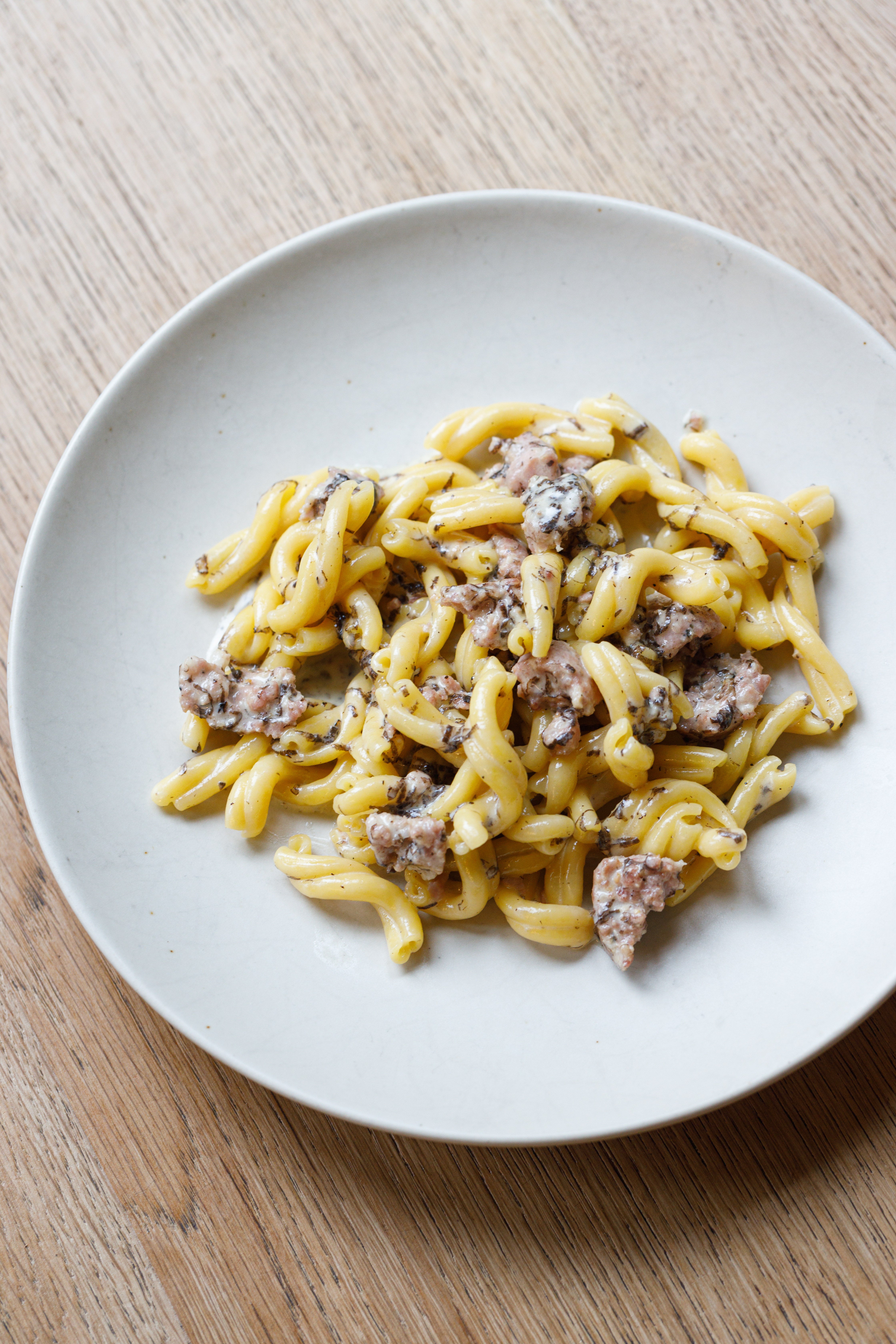
Serves: 2
Ingredients:
200g strozzapreti or similar short pasta
25ml olive oil
100g pork sausage
1 garlic clove
75ml dry white wine
50ml double cream
15g preserved black truffle
60g grated parmesan
1 small black truffle (if using)
Method:
In a pan, heat the oil, crush the garlic clove and break up the sausage into small chunks and get some colour on the sausage. When the sausage is cooked, remove the garlic clove and add white wine and reduce by half. Add the cream and preserved truffle and put on a gentle simmer.
Cook the pasta to just under your liking and add to the sauce, turn the heat up slightly and toss the pasta with the cheese until fully coated.
Plate the pasta over two bowls and finish with fresh truffle if using.
Recipe from Chris Leach, co-founder of Manteca
Torciglioni alla Genovese
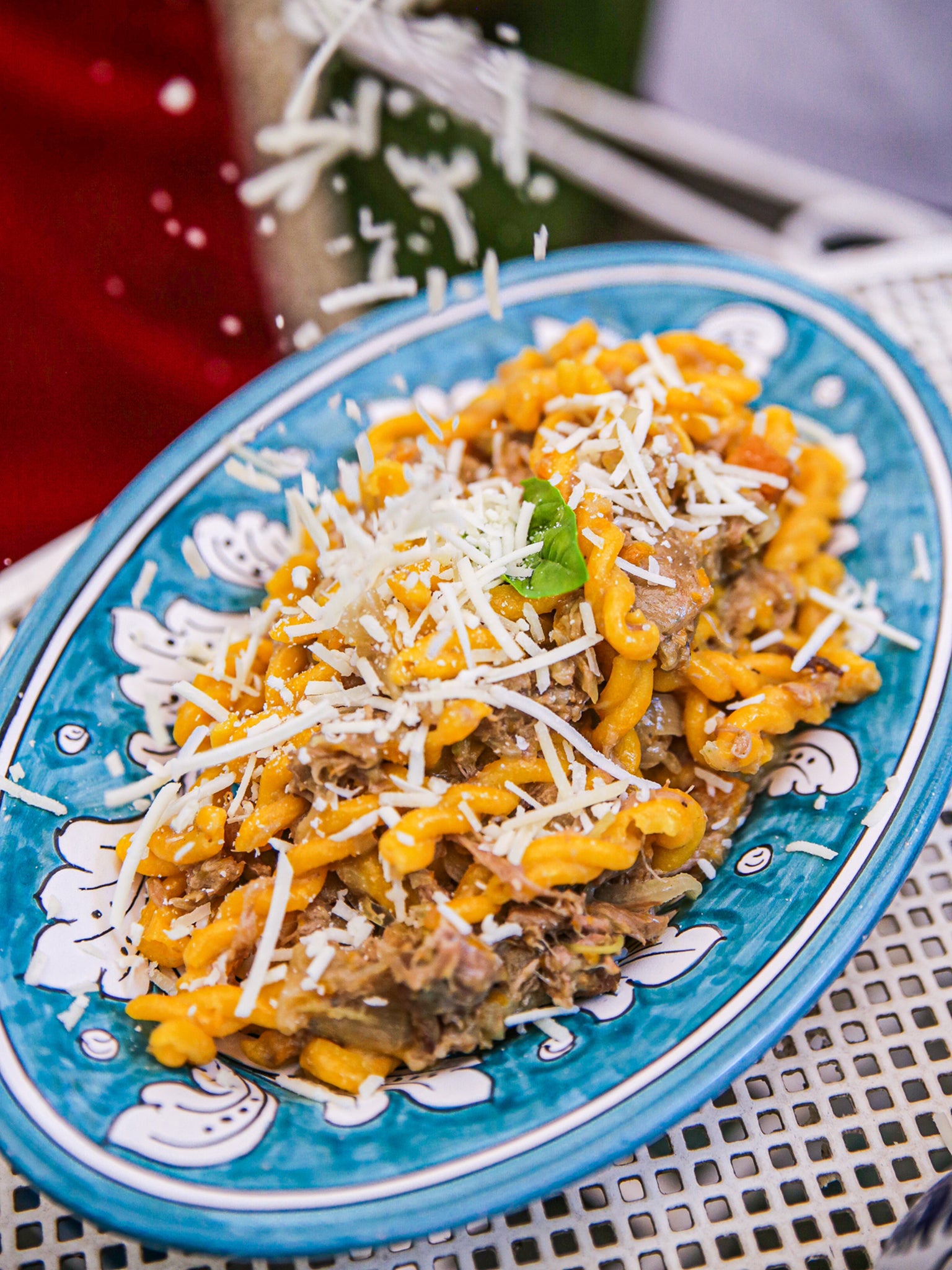
Serves: 2
Ingredients:
500g lamb shoulder (cubed)
3 yellow onion
1 carrot
1 celery
60ml wine
1 bay leaf
50ml oil
Salt and pepper
Parmigiano
Method:
1. First, finely slice the onions.
2. Heat the olive oil in a large pot on a medium-low heat and add the onions, carrot, and celery.
3. Slowly saute the onions for 10 minutes keeping them on a low heat so they don’t brown.
4. Meanwhile, sprinkle salt and pepper over the lamb and add to the pot with the bay and parsley, let the meat brown for a minute or two. Add the wine and cover the pot and leave on a medium-low heat for 3 hours, checking and stirring every so often to make sure it isn’t sticking.
5. After 3 hours, uncover the pot. Leave to simmer uncovered for another hour, until the sauce is reduced. Then shred the lamb.
6. Once cooked and the sauce has reduced, cook your preferred pasta (we use homemade spiral pasta – torciglioni!) and toss with the sauce.
Recipe from Big Mamma
Pasta with pesto with potatoes and green beans
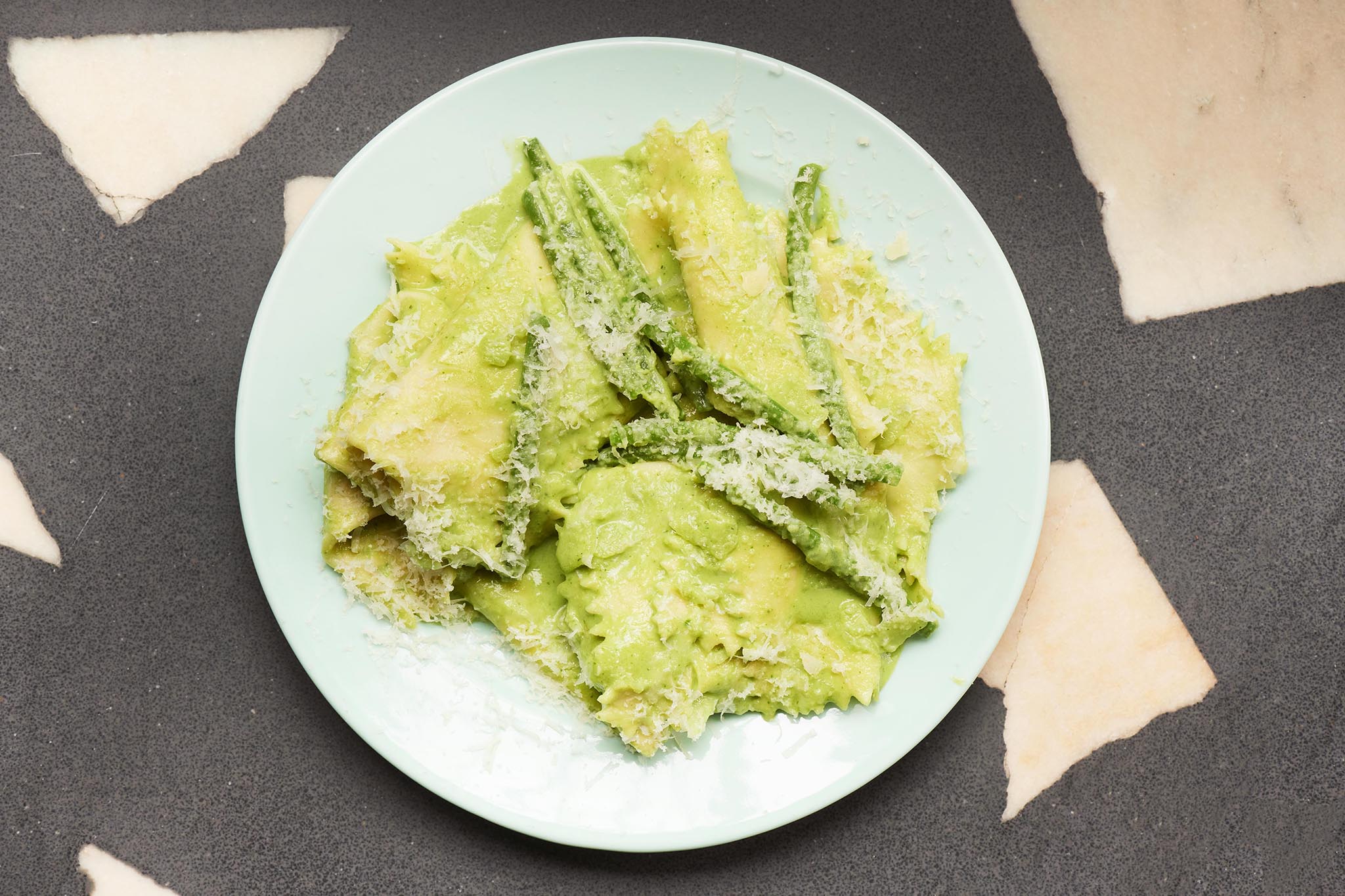
This is a very typical Ligurian way of serving pesto and is a brilliant way of adding texture and interest to a very simple dish. Try to find Italian basil as it will make all the difference to the flavour and fragrance of the sauce.
Serves: 4
Ingredients:
40g green beans, trimmed and tailed
120g waxy potatoes, peeled and thinly sliced
400g casarecce or penne
For the pesto:
2 bunches of basil, leaves picked
1 small garlic clove
35g pine nuts
125ml olive oil
80g ricotta
30g grated Parmesan, plus extra, to serve
Method:
1. To make the pesto, place all the ingredients in a blender and blitz until smooth. Have a taste and adjust the seasoning. Put to one side for a moment.
2. Bring a deep pan of salted water to the boil and very briefly blanch your green beans in salted boiling water for 3 minutes (they’ll still be quite crunchy).
3. Scoop out the beans and put to one side for a moment, then add the pasta to the boiling water. Cook to al dente according to packet instructions, adding the potatoes and pre-cooked beans for the final 2 minutes. Drain, reserving a cup of the pasta water.
4. Return the pasta, potatoes and beans to the pan with 8 tablespoons of pesto (save the rest for another meal), and add a few splashes of pasta water so you have a nice consistency.
5. Transfer to plates and sprinkle with a little extra Parmesan before serving.
Recipe from Stevie Parle, chef-owner of Pastaio
Join our commenting forum
Join thought-provoking conversations, follow other Independent readers and see their replies
Comments
Bookmark popover
Removed from bookmarks