The Independent's journalism is supported by our readers. When you purchase through links on our site, we may earn commission.
15 warming soup recipes from Tom Kerridge, Rick Stein, Hugh Fearnley-Whittingstall and more
As the days draw in, there’s no better time to dust off your biggest pot. Hannah Twiggs gathers recipes from some of Britain’s best cooks – from Kerridge’s fridge-raid minestrone to Thorisson’s French onion and Pang’s quick laksa – to prove that soup season is back, and better than ever

There’s a moment every October when the sky turns pewter, the heating mutinies and the nation collectively remembers the point of a saucepan. Call it the unofficial start of soup season – the most forgiving, frugal and frankly smug way to eat well when the weather gives up. This year we’ve gone big, lining up bowls from heavy hitters and home comforts alike, the sort you can make on a Monday and live off ’til Thursday.
Tom Kerridge gets us clearing the crisper with a fridge-raid minestrone that proves ratios matter more than rules. Melissa Hemsley’s “rescue” noodle soup does what it says on the tin, turning roast-dinner remnants and store-cupboard standbys into something that actually feels restorative.
For those chasing velvet textures without the dairy, Hugh Fearnley-Whittingstall blends roasted alliums and cauliflower with cashews for a white soup that eats like luxury. Ella Risbridger’s not-quite-chao xa ga is exactly the tonic you hope chicken soup will be – bright, gingery, alive. And if autumn still clings to summer, Nathan Outlaw’s green gazpacho with crab and walnuts brings a chilled, clean hit.
We’ve kept the classics: Mimi Thorisson’s French onion is deeply, properly oniony; Rick Stein’s Provençal vegetable soup lands with basil, garlic and olive oil. There’s swagger too – Jeremy Pang’s lightning-fast laksa, Gigi Grassia’s gochujang number with crispy chickpeas, Matt Tebbutt’s briny, saffron-tinted fish soup, Antoni Porowski’s miso-soba hack that saves the noodle water.
Batch cooks get a win from The Batch Lady’s super greens, midweek heroes from Nagi Maehashi’s coconut lentil stew, plus a jewel-toned beetroot bowl from Gill Meller.
Big pans, bigger jumpers, minimal faff. Grab a ladle – soup season starts here.
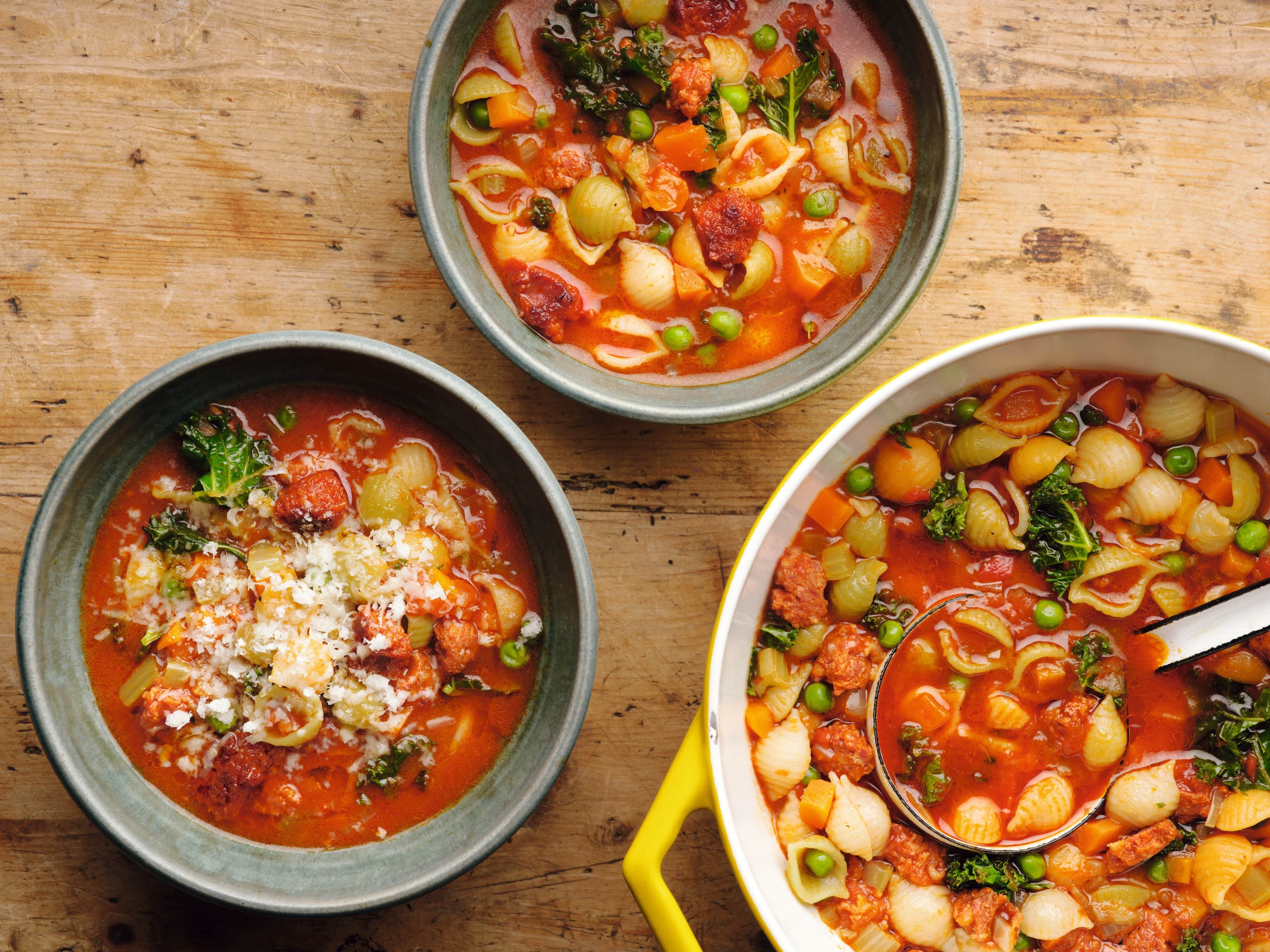
Fridge raid soup
This filling minestrone is a great way to avoid food waste and clear out the fridge before your next supermarket delivery arrives – and hopefully save some cash in the process.
“Swap the chorizo for bacon, add beans or lentils, use only veg – anything goes,” says Tom Kerridge. “If you roughly follow these ratios of veg, chicken stock and pasta, it will always taste delicious.”
Serves: 4
Ingredients:
1 tbsp olive oil
3 cooking chorizo sausages, sliced
1 large onion, diced
2 large carrots, diced
3 celery sticks, diced
2 tbsp thyme leaves
1L chicken stock
400g tin chopped tomatoes
150g small pasta shapes or orzo
150g frozen peas
2 large handfuls of kale, roughly chopped
Salt and freshly ground black pepper
To finish:
Extra virgin olive oil
Finely grated Parmesan
Method
1. Heat the olive oil in a large saucepan. Add the chorizo slices, let them slowly render in the oil and cook for around five minutes or until they just begin to caramelise. Add the onion, carrots and celery and sauté for a further five minutes or until softened.
2. Add the thyme, chicken stock and tinned tomatoes and bring to the boil. Reduce the heat to a simmer and cook for five minutes before adding the pasta. Stir well and simmer for 12 minutes or until the pasta is almost cooked.
3. Toss in the frozen peas and kale, stir well and season with salt and pepper to taste. Simmer for a few minutes until the kale is tender.
4. Ladle the soup into warmed bowls. Add a drizzle of extra virgin olive oil and a sprinkling of Parmesan, then serve.
‘Real Life Recipes’ by Tom Kerridge (Bloomsbury Absolute, £26).
Rescue noodle soup
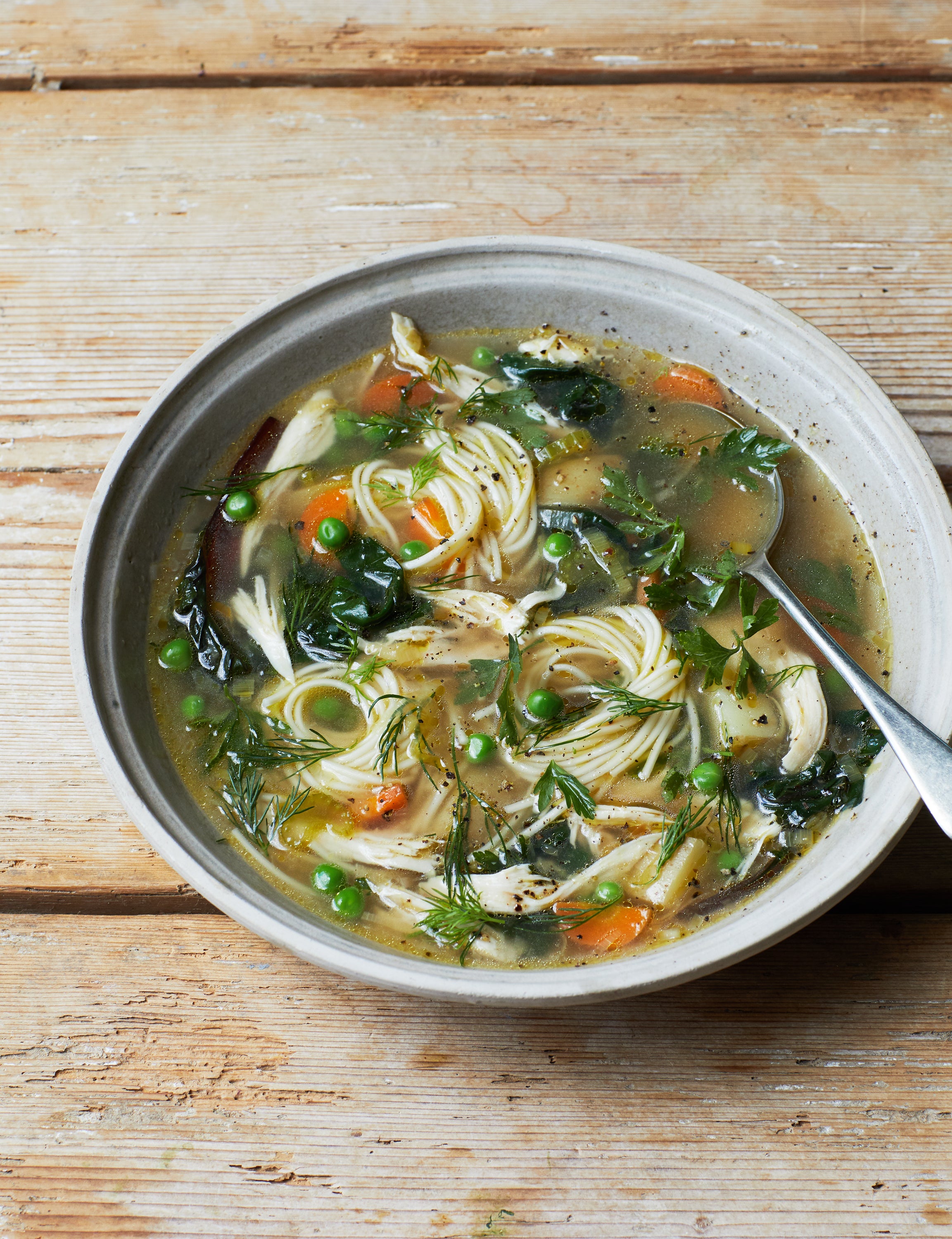
“There’s nothing quite like a warming bowl of homemade soup to make you feel a thousand times better,” says food writer Melissa Hemsley. “If I’ve had a Sunday roast chicken, I make this on a Monday to get a great boost of vegetables in.
“It’s based on store cupboard and freezer ingredients like frozen peas, onion, garlic and carrots, though you could swap in anything that needs using up. You can up the amount of vegetables or noodles here, so adjust to your liking. Post-Christmas and other celebrations, this is a fantastic way to use up leftover turkey or any other leftover meats.”
Serves: 4
Ingredients:
1 tbsp ghee or butter
1 large leek or onion, diced
3 garlic cloves, finely chopped
1.2 litres vegetable stock or bone broth
1 big handful of a mix of fresh herbs, like parsley and dill, leaves and stems chopped
1 tbsp fresh thyme leaves or 1 tsp dried
1 bay leaf, dried or fresh
2 celery sticks, diced
2 carrots, thinly sliced
2 handfuls of 2cm chunks of root veg like sweet potato, squash, pumpkin, potato or (in the summer) courgette
400g noodles or spaghetti, any type
1 tsp olive oil
300g mix of cabbage, rainbow chard and/or chard, stems finely chopped and leaves shredded
300g leftover shredded chicken
Juice of ¼ lemon or 1 tsp apple cider vinegar
2 big handfuls of frozen peas or sweetcorn
Sea salt and black pepper
Method:
1. In a large wide saucepan, heat the ghee or butter and fry the leek or onion over a medium heat for eight minutes while you prep everything else. Add the garlic and fry for another minute.
2. Add the stock or broth, chopped parsley or dill stems, thyme, bay leaf, celery, carrot, root veg and some salt and pepper, pop the lid on and cook for 15 minutes until the carrot is almost tender.
3. Meanwhile, cook the noodles in a separate pan until almost tender (check the label for suggested timings), then drain and rinse under cold water to stop them cooking further. Toss with the olive oil to stop them clumping and set aside.
4. Back to your soup pan: add the chopped cabbage and chard stems, shredded chicken, lemon juice or vinegar and cook for a few more minutes.
5. Add the chard leaves, frozen peas or sweetcorn and cooked noodles for a final two minutes so that the chard wilts, the peas cook and the noodles heat through. Season to taste and serve up straight away, topped with the fresh herb leaves.
‘Eat Green’ by Melissa Hemsley (Ebury Press, £22).
Creamy roast cauliflower and cashew soup
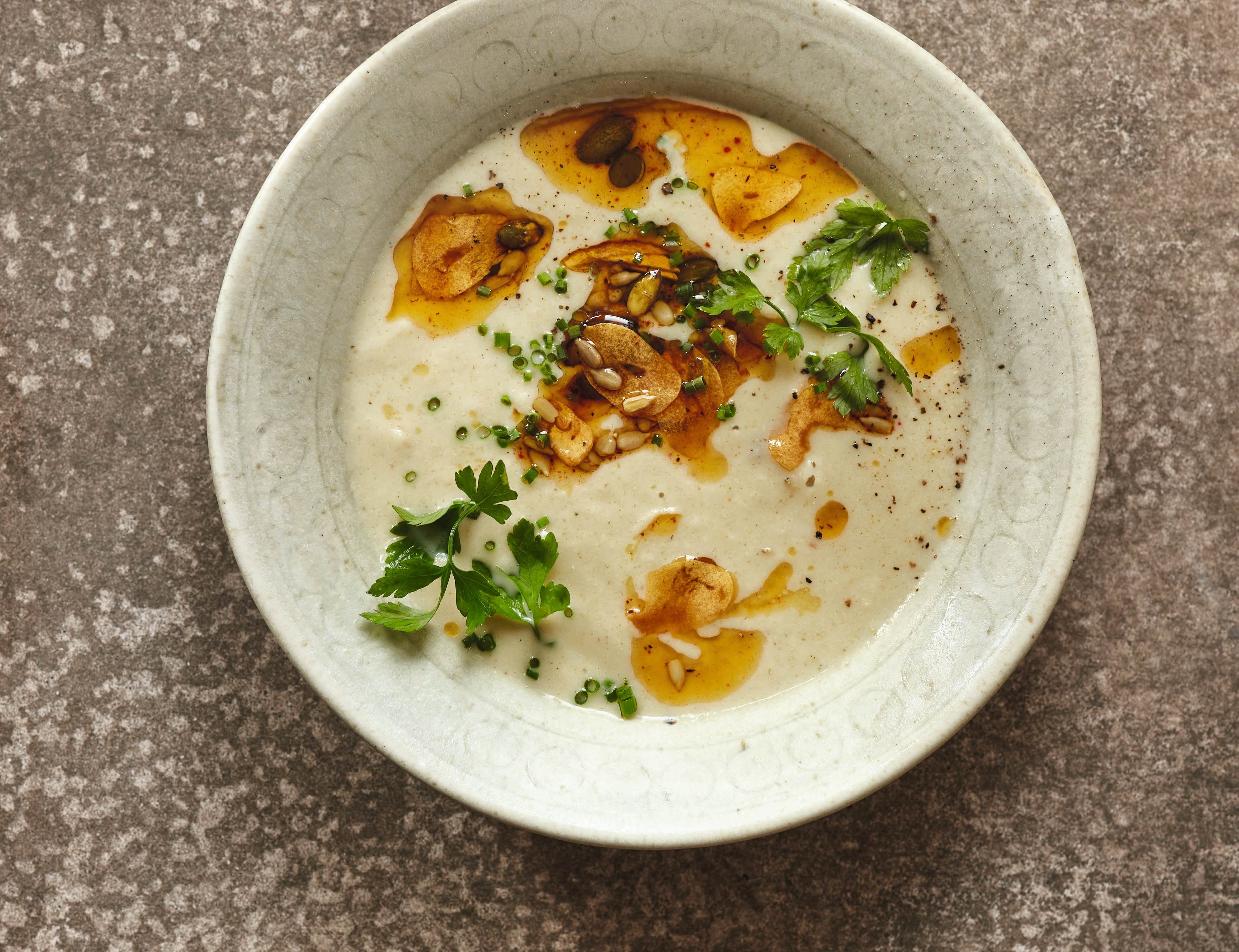
“This is a deliciously creamy white soup, packed with lots of lovely alliums (leek, onion, garlic), which get roasted with the cauli,” says Hugh Fearnley- Whittingstall.
If you have time, leave the cashews to soak for a few hours to soften – they’ll blend to a smoother finish.
“The garlic topping is a great addition and can be made ahead, but it’s by no means essential. ”
Serves: 4
Ingredients:
100g cashew nuts
1.2-1.5 litres hot vegetable stock
1 large cauliflower (about 1.5kg), trimmed and cut into small florets, leaves kept
2 leeks, trimmed and cut into chunks
1 large onion, roughly chopped
3 celery sticks, roughly chopped
1 tsp cumin seeds
2 tbsp oil or melted fat
5 sprigs of thyme, leaves picked
Sea salt and black pepper
Garlic oil topping:
3 tbsp extra virgin olive oil
2 garlic cloves, finely sliced
2 tbsp sunflower or pumpkin seeds (or a mix)
A pinch of dried chilli flakes
To finish:
A small handful of chives, finely chopped, and/or parsley
Method:
1. Put the cashews into a bowl, pour on 1.2 litres hot stock and leave to soak for at least an hour.
2. Preheat the oven to 190C/170C fan/gas 5.
3. Put the cauliflower florets into a large roasting tray, along with their roughly chopped leaves (if they’re in good nick). Add all the other veg and the cumin seeds. Add the oil or fat, season well with salt and pepper and toss the veg to coat lightly.
4. Transfer the roasting tray to the oven and roast for 20-25 minutes until all the veg are tender and golden.
5. In the meantime, make the topping. Put the extra virgin olive oil into a small saucepan with the garlic, seeds, chilli flakes and a pinch of salt. Place over a medium heat and heat gently for just a minute or two until the garlic starts to turn pale golden. Immediately take off the heat and pour the garlicky oil into a bowl. Leave to infuse until the soup is ready.
6. Scrape the contents of the roasting tray into a jug blender, add the thyme leaves and tip in the cashew nuts, along with their soaking liquor. Blitz until smooth. Return the soup to the saucepan and reheat gently, without boiling. (Or you can blitz the soup directly in a saucepan, using a stick blender, as you reheat it.) Either way, add a dash more stock to thin the soup a little if it seems too thick.
7. Ladle the soup into warmed bowls and top each serving with a trickle of the crispy garlic oil and a sprinkle of chopped chives and/or parsley.
‘How to Eat 30 Plants a Week’ by Hugh Fearnley-Whittingstall (Bloomsbury, £25).
(Not quite) chao xa ga
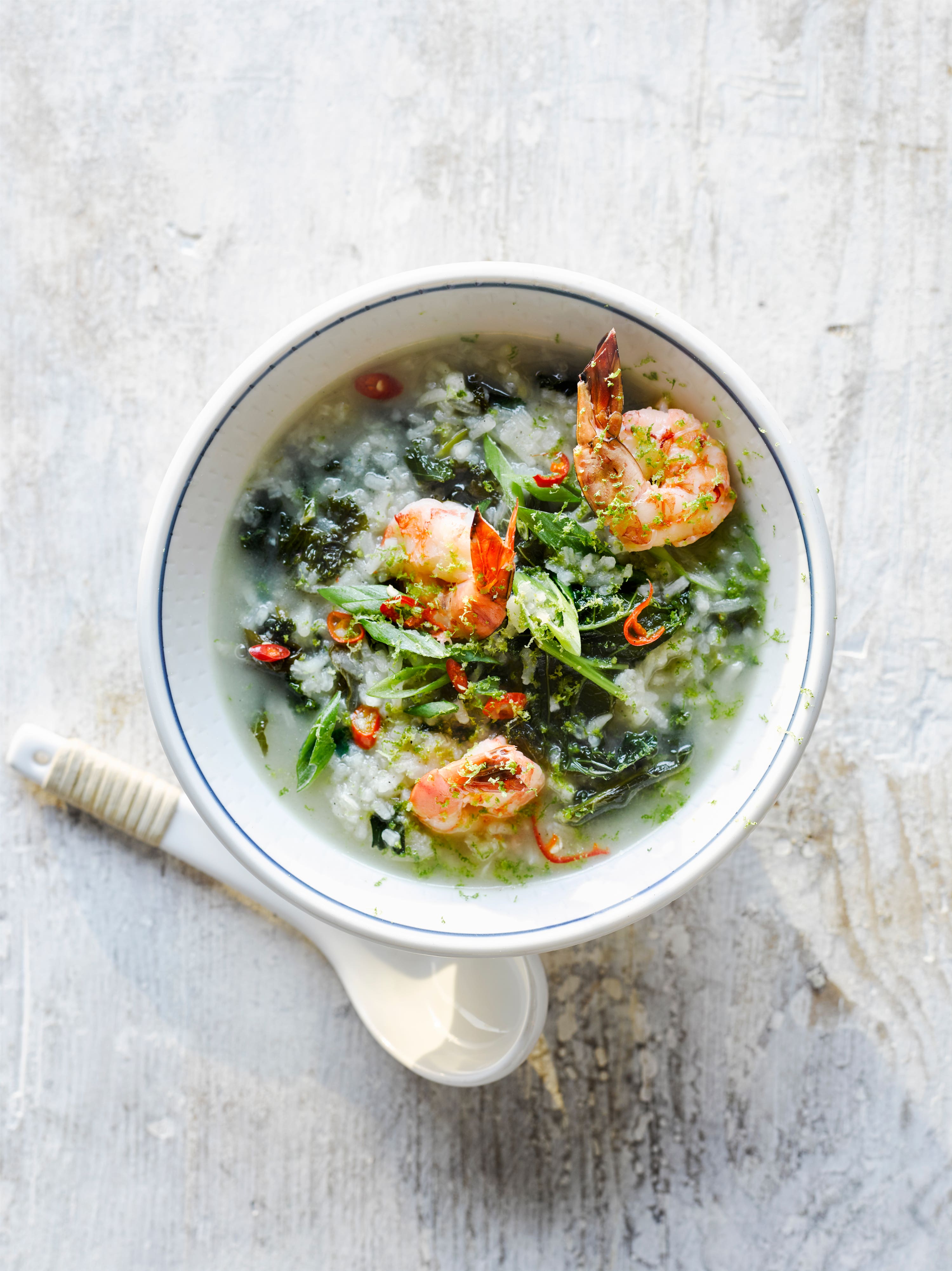
“I should make clear at once that this probably has very little to do with authentic chao xa ga, a kind of Vietnamese lemongrass rice porridge (this sounds terrible in English, which is why it isn’t the title of this recipe), but it does share most of the same flavours, and some of the same techniques,” explains writer of cookbook Midnight Chicken Ella Risbridger.
“Of course, it is really a kind of hearty chicken soup, and an actual doctor once told me that chicken soup has real benefits. That’s why I make this: Infinitely adaptable and infinitely delicious, it seethes and bubbles and fills the house with soft steam. It’s more than the sum of its parts, it’s absurdly comforting and clean-tasting, and you feel better and more lively for having eaten it.”
Serves: 2
Ingredients:
1 x 400ml tin of coconut milk
200ml chicken stock (or 1 chicken stock pot/cube dissolved in 200ml boiling water)
2 tbsp fish sauce
2 tbsp grated ginger (about 6cm)
1 tbsp grated garlic (about 4 cloves)
1 tsp brown sugar
2 tsp white pepper
2 lemongrass stalks (fresh is better, dried is fine)
2 limes
200g kale
Bunch of coriander
Bunch of spring onions
2 red bird’s eye chillies
200g jasmine rice
200g cooked and peeled prawns
Method:
1. Combine your coconut milk, chicken stock and fish sauce in a saucepan, and stir to dissolve any lumps. Add the ginger, garlic, sugar and pepper. Stir again. If using fresh lemongrass, chop it into the pan with scissors; if using dried, add the stalks whole. Bring the broth to a gentle simmer over the lowest possible heat while you zest and juice your limes. Reserve a pinch of lime zest, then add the rest to the broth, along with the juice. Inhale deeply. Feel better.
2. Tip the kale and coriander into a colander, and rinse them vigorously (both are horribly good at hiding grit). Use scissors to chop them as finely as you can manage, then set to one side.
3. Rinse and slice the spring onions, then add most to the broth, reserving a few green shreds for garnish. Rinse, slice and de-seed the chillies, and do the same.
4. This should all take about 10 minutes, and by this time the house will smell beautiful and bright and green. Rinse the rice, then tip it directly into the broth. Cover the pan and cook for 18 minutes, stirring a couple of times to break up any clumps of rice.
5. Taste: The rice should be soft and sticky, with broth bubbling all around and over it. Stir through the kale and coriander and cook for two minutes more. Finally, add the prawns and cook for another two minutes.
6. Decant into bowls: A mound of tender rice, studded with pink prawns and flecks of vivid green, with a moat of richly scented broth. Scatter with the reserved lime zest, loops of red chilli and hoops of green onion. Serve straight away.
French onion soup
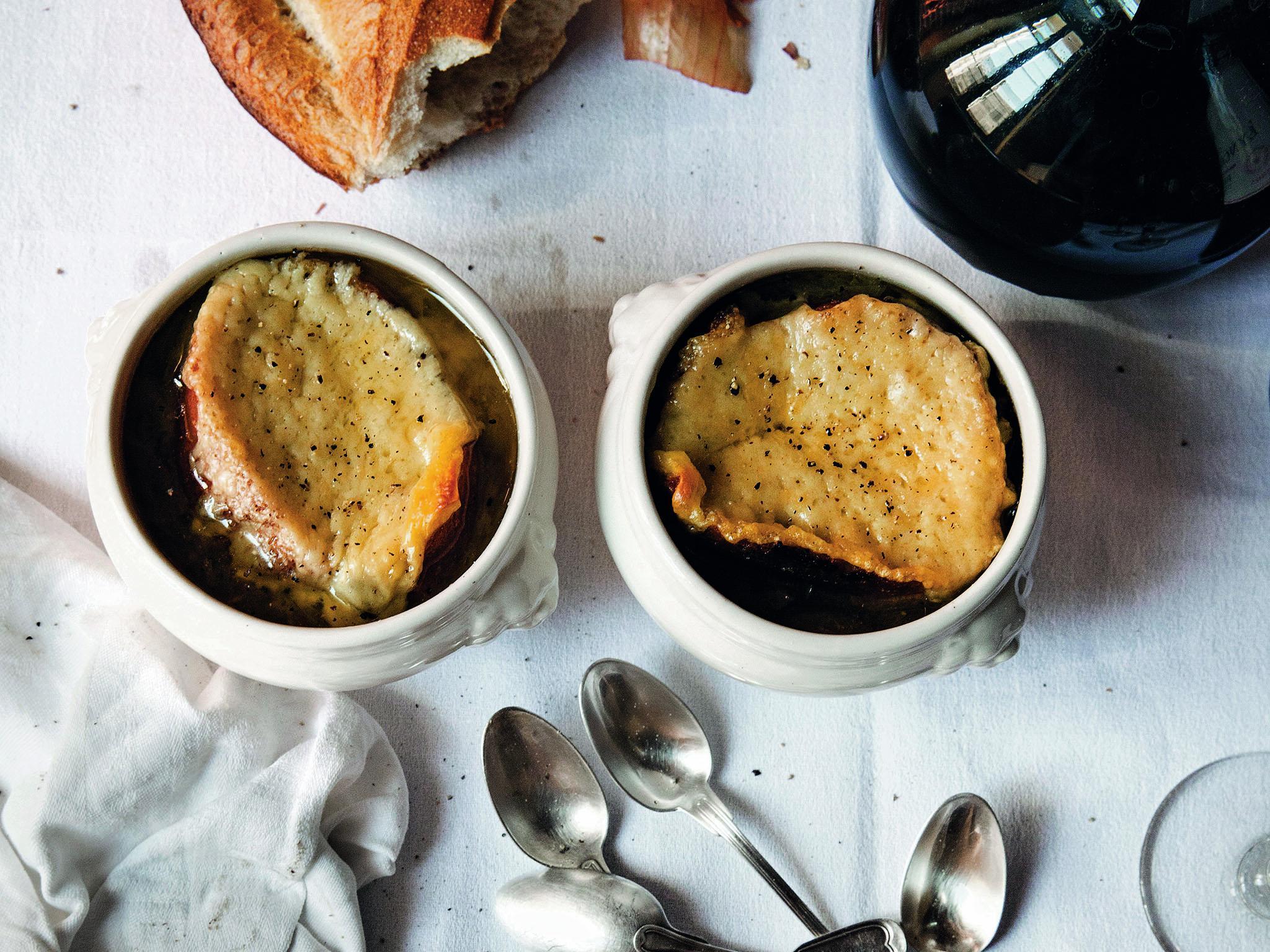
“It’s hard to imagine a bigger French cliche than onion soup. It’s right up there with the moustache-sporting, striped-top-wearing, baguette-carrying guy pedalling his bicycle. When he sits down in a bistro to have onion soup, he’s probably whistling La Vie en Rose. And let’s not forget the beret! I actually quite like that guy – and I love onion soup.
“In fact, it has been a mystery to me that I didn’t include a recipe for it in A Kitchen in France, though now, like so many things in life, I know why. It made me so happy to discover, talking to the old-timers of St Yzans, that Plantia, the lady who ran the restaurant in our house years ago, cooked her onion soup just like I do.
“Monsieur Gilet told me that her secret was to include duck fat in the recipe. I have been doing that for years. He also told me that she wouldn’t use just any cheese for the tartines, instead opting for something special and flavourful, like Comté or aged Gruyère – just like I do. I call this Plantia’s soup, but it’s also my soup. It turns out they are the same wonderful cliché.”
Serves: 6
Ingredients:
¼ cup/60g rendered duck fat, or butter 2lb/1kg large onions, thinly sliced 2qt/2l chicken stock⅓ cup/80ml dry white wine Leaves from a few sprigs of fresh thyme Fine sea salt and freshly ground black pepper 6 thick slices rustic country bread
½lb/230g cheese, preferably comté, thinly sliced 1 tbsp sherry vinegar
Method:
1. In a large saucepan or flameproof casserole dish, heat the duck fat over a medium-low heat. Add the onions and cook, stirring frequently, until softened, about 15 minutes.
2. Preheat the oven to 200C/400F.
3. Add the chicken stock, wine and thyme, and season with salt and pepper. Bring to a simmer and continue to cook for 15 minutes. The soup should have a nice velvety consistency.
4. Put the bread on a baking sheet and top each slice with cheese. Toast in the oven until the cheese has melted and is slightly golden, a few minutes.
5. Add the sherry vinegar to the soup and adjust the seasoning with salt and pepper to taste. Ladle the soup into bowls, add a cheese tartine on top of each, and sprinkle with salt and pepper.
‘French Country Cooking’ by Mimi Thorisson (Hardie Grant, £25).
Autumnal vegetable soup with basil, garlic and olive oil
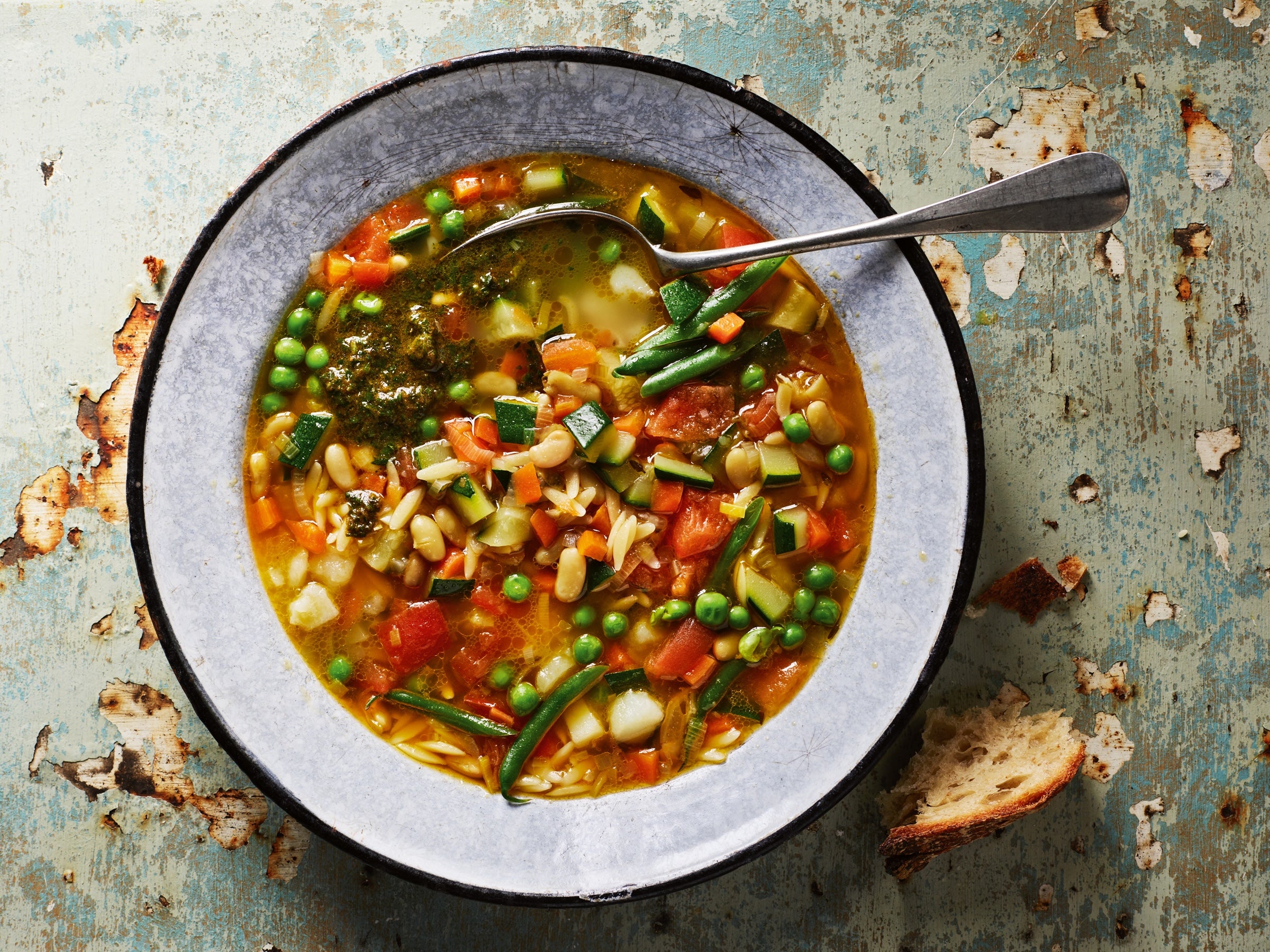
“One of the rather pathetic realities of the fact that so many of the restaurants in France are disappointing these days is the almost tearful joy in finding one that’s everything you would have hoped for, often from your childhood or teenage memories,” says chef Rick Stein.
“Such a place is Le Bistro du Paradou near Arles. I’ve mentioned the restaurant and this soup in the introduction to the book, and like all great dishes it takes me back to the evening I ate it. I remember the large green tureen it was served in and the wonderful scent of basil, olive oil and garlic. I also recall the animated chat round the table with my friend John Illsley, his wife Steph and my wife Sas about the French and about the realities of his band Dire Straits writing ‘Sultans of Swing’ in a council flat in Deptford.”
Serves: 6-8
Ingredients:
100g dried beans, such as flageolet, cannellini or haricots, soaked overnight in cold water
4 tbsp olive oil
1 garlic clove, finely chopped
1 onion, chopped
1 leek, halved lengthways and finely sliced
2 carrots, chopped
1 bouquet garni (bay leaf, thyme sprigs and parsley stalks)
675g courgettes, cut into small dice
450g tomatoes, skinned, seeded and chopped
2 medium potatoes, cut into small dice
100g fine green beans, topped, tailed and cut into 3-4 pieces
100g frozen peas
75g orzo or spaghetti, broken into small lengths
Salt and black pepper
To serve:
Grated Parmesan cheese
Extra virgin olive oil
Green pistou
Method:
1. Drain the soaked beans. Heat two tablespoons of the oil in a pan, add the garlic and cook gently for two to three minutes. Add the beans and 1.25 litres of water, bring to the boil, cover and simmer for 30-60 minutes, or until just tender. Add half a teaspoon of salt and simmer for another five minutes, then set aside.
2. Heat the remaining oil in a large pan. Add the onion, leek and carrots and cook gently for five to six minutes until softened but not browned. Add the beans, their cooking liquor and the bouquet garni to the pan of softened vegetables. Add the courgettes, tomatoes and potatoes and another 1.25 litres of water, then season with two teaspoons of salt and some pepper. Bring to the boil and simmer, uncovered, for 20 minutes.
3. Add the green beans, peas and pasta to the pan and simmer for another 10 minutes or until the pasta is cooked.
4. Remove the pan from the heat, take out the bouquet garni and stir in the pistou. Check the seasoning and serve in warmed bowls, with some extra grated Parmesan cheese and a little jug of extra virgin olive oil to drizzle on top.
‘Rick Stein’s Secret France’ by Rick Stein (BBC Books, £26).
Vegan laksa recipe

“For me, a laksa is the perfect quick-win vehicle to use up any leftover curry, as you can easily use it in place of the homemade curry paste,” says Jeremy Pang.
“Though it won’t hold a candle to the laksa aunties of Malaysia, it will make an easy, tasty dinner, so feel free to give it a try with this recipe.”
If you do make the curry paste, you can freeze any left over for another day.
Serves: 2
Ingredients:
4-5 lime leaves
400ml can of coconut milk
100g deep-fried tofu pieces, halved diagonally
200g rice vermicelli
Handful of sugar snap peas
1 carrot, finely sliced
100g beansprouts, rinsed
Vegetable oil
For the curry paste:
8-10 dried red chillies
2 tsp cumin seeds
2 tsp coriander seeds
1 tsp ground turmeric
½ red onion, finely chopped
½ thumb-sized piece of ginger, peeled and finely chopped
3 garlic cloves, finely chopped
2 lemon grass stalks, trimmed, bruised and finely chopped
For the stock:
500ml coconut water
500ml vegetable stock
1 tbsp palm sugar (or soft brown sugar)
4 tbsp light soy sauce
½ tsp sea salt flakes
To garnish:
Lime wedges
Handful of coriander
Sliced red chilli
1 tbsp sambal, ready-made or homemade (optional)
Method:
1. If making the curry paste, soak the dried red chillies in hot water for 10 minutes, drain and finely chop. Pound all the curry paste ingredients using a pestle and mortar until smooth. Stir the stock ingredients together in a jug.
2. Build your ‘wok clock’ (i.e. arrange your prepared ingredients on a plate before you cook, in the order you need them): Start at 12 o’clock with the curry paste or leftover curry, followed by the lime leaves, coconut milk, the stock, tofu, rice vermicelli, sugar snaps, carrot and lastly the beansprouts.
3. Heat two tablespoons of oil in your wok to a medium heat. Add three to four tablespoons of curry paste (or five to six tablespoons of leftover curry) and stir-fry for four to five minutes until it deepens in colour. Now add the lime leaves and one-quarter of the coconut milk and bring to a vigorous boil. Stir well, scraping off any paste stuck to the bottom of the wok and then add a further quarter of the coconut milk. Return to a boil before adding the remaining coconut milk to the wok. Pour in the stock and return to a boil once again. Next add the tofu pieces, reduce the heat to medium and simmer for 15-20 minutes until the flavour deepens and the stock reduces.
4. To finish the soup, add the vermicelli and boil for three to four minutes before fishing it out with tongs or a slotted spoon and dividing between serving bowls. Add the sugar snaps and carrot to the soup and boil for two to three minutes. Scoop the veg out of the soup and place on top of the noodles. Next, dunk the beansprouts into the hot soup for 30 seconds. Scoop out the tofu into the serving bowls, followed by the just-cooked beansprouts on top. Pour the broth over the bowls of noodles and veg and scatter the garnishes over the top.
‘Jeremy Pang’s School Of Wok: Delicious Asian food In Minutes’ (Hamlyn, £20).
Green gazpacho with crab and walnuts
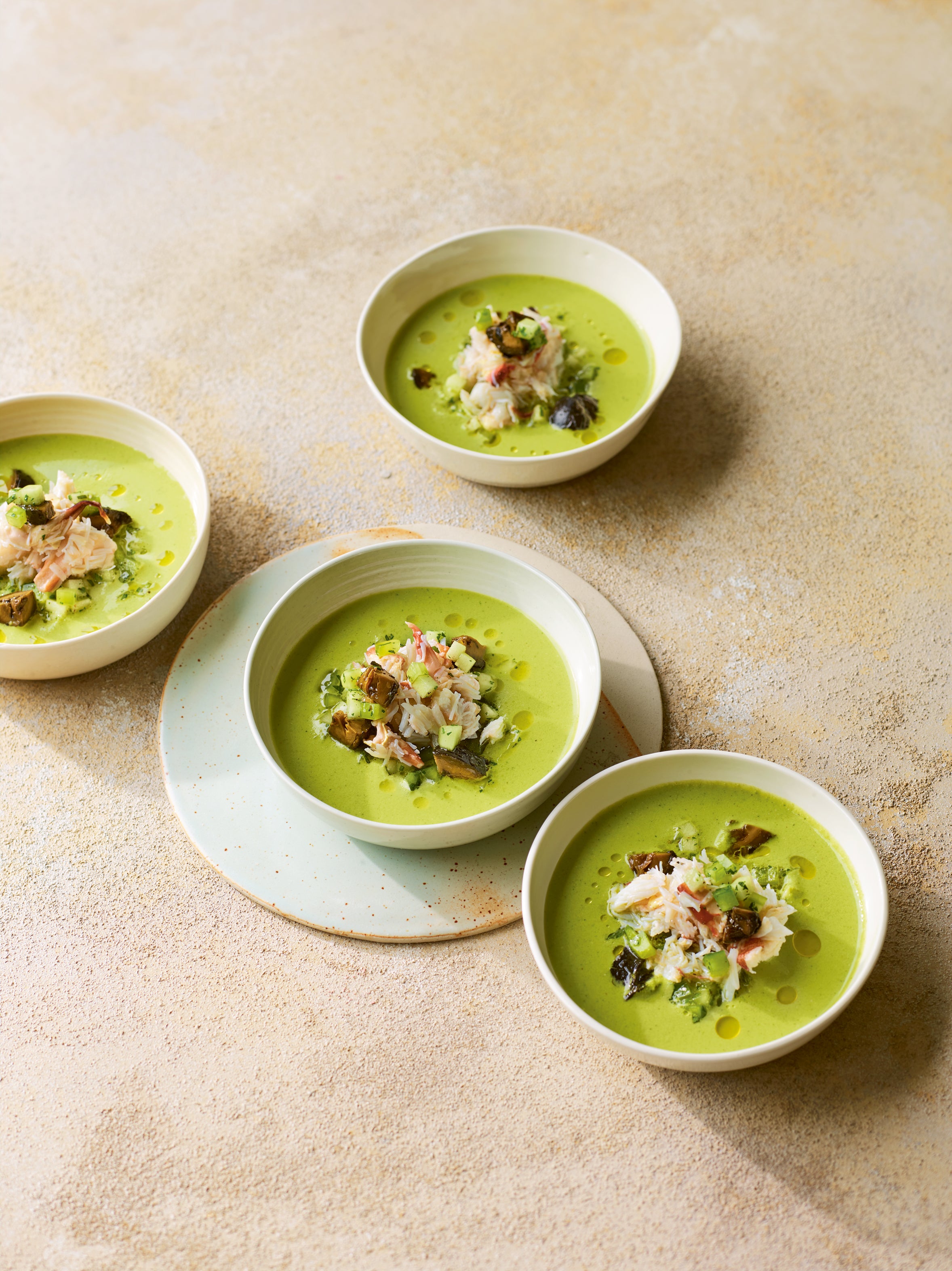
“The green gazpacho tastes so fresh and the flavours are so balanced, with each just showing enough of themselves when you give it a taste,” says chef Nathan Outlaw.
“As it is served chilled, it is also great for a party and actually benefits from being made well in advance so that the flavours have time to mingle.”
Alternative fish: poached lobster, raw scallops (or cooked if you want) or smoked mackerel.
Serves: 4
Ingredients:
200g (7oz) picked white crabmeat
Sea salt and freshly ground black pepper
For the green gazpacho:
1 celery stick, sliced
1 small green pepper, deseeded and chopped
150g cucumber, peeled and sliced
1 courgette, sliced
100g stale white bread, crusts removed
1 green chilli, deseeded and chopped
1 garlic clove, sliced
1 tsp sugar
50g walnut halves, lightly toasted
100g baby spinach, picked
30g tarragon
10g flat-leaf parsley, chopped
2 tbsp cider vinegar
100ml olive oil
60g full-fat Greek yogurt
200ml water
150g ice cubes
2 tsp sea salt
White pepper, to taste
To garnish:
4 pickled walnuts, chopped
½ cucumber, peeled and finely diced
1 green apple, peeled and finely diced
1 small green pepper, peeled, deseeded and finely diced
1 tbsp chopped tarragon
1 tbsp finely chopped flat-leaf parsley
6 tbsp olive oil
Method:
1. For best results, mix together all the ingredients for the gazpacho the day before and leave them to mingle and get to know one another in a bowl. Cover and refrigerate.
2. The next day, place all the gazpacho ingredients in a blender or food processor and blend for two minutes until smooth. Place a sieve over a bowl and pass the gazpacho through it, using the back of a ladle or large spoon to squeeze as much through the sieve as possible. Chill the gazpacho and discard any debris in the sieve.
3. To prepare the crabmeat, pick through your crab, checking for any shell or cartilage to discard. Place the white crabmeat in a bowl, season with salt and pepper to taste, then refrigerate.
4. Mix all the garnish ingredients together in a bowl and season with salt and pepper. Set aside.
5. Before serving, chill four bowls for 30 minutes in the freezer. To serve, divide the gazpacho between the chilled bowls and top with the crabmeat and a generous spoonful of garnish. Serve immediately.
‘Fish For Dinner’ by Nathan Outlaw (Kyle Books, £28).
Sweet potato gochujang soup with crispy chickpeas

“This is the perfect soup to slurp in colder months,” says Gigi Grassia, author of cookbook, Plant Protein.
“Where to begin? It combines the earthy sweetness of sweet potatoes with the bold flavour of gochujang paste, creating a rich and aromatic broth. Silken tofu adds creaminess while nutritional yeast contributes an umami depth of flavour. It takes roughly 30 minutes to make and you’ll honestly never guess that it is packed with so much protein!”
In fact, this warming soup contains 25g of protein per serving.
Serves: 3-4
Ingredients:
1 small-medium onion, finely chopped
2-3 garlic cloves, very finely chopped
1 tbsp gochujang paste
350g sweet potatoes, chopped into 1cm cubes
450-600ml vegetable stock
1 x 400g tin of chickpeas, drained and patted dry
1 heaped tsp smoked paprika
½ tsp ground cumin
1 tsp onion granules
300g silken tofu
2-3 tbsp nutritional yeast
200g vermicelli rice noodles
Olive oil, for cooking and drizzling
Salt and freshly ground black pepper
To serve:
Sesame seeds
Spring onions, finely chopped
Method:
1. Preheat the oven to 220C/200C fan/425F/gas mark 7 and a line a baking tray with baking parchment.
2. Heat a glug of olive oil in a saucepan over a medium heat and fry the onion, garlic and gochujang paste for five to eight minutes until the onions are soft and golden.
3. Add the sweet potatoes and a splash of stock to prevent sticking, then stir and cover. Cook for 20-30 minutes, or until fork tender, adding a little more stock to prevent sticking.
4. Meanwhile, toss the chickpeas in a bowl with a drizzle of olive oil, the paprika, cumin, onion granules and salt. Spread the chickpeas out on the prepared baking tray. Roast them in the oven for 35-40 minutes, then turn on the grill and grill for five to 10 minutes to ensure they’re crunchy. Alternatively, if you have an air fryer, you can air-fry the chickpeas at 200C for 15-20 minutes.
5. In a food processor, combine the cooked sweet potato mixture, silken tofu, nutritional yeast, vegetable stock and a pinch of salt and pepper. Blend until creamy. You might have to do this in batches.
6. Cook the rice noodles according to the packet instructions.
7. Assemble the bowls by ladling in the creamy soup, followed by the noodles. Garnish with the crispy chickpeas
‘Plant Protein: 80 Healthy And Delicious High-Protein Vegan Recipes’ by Gigi Grassia (Greenfinch, £22).
Traditional fish soup
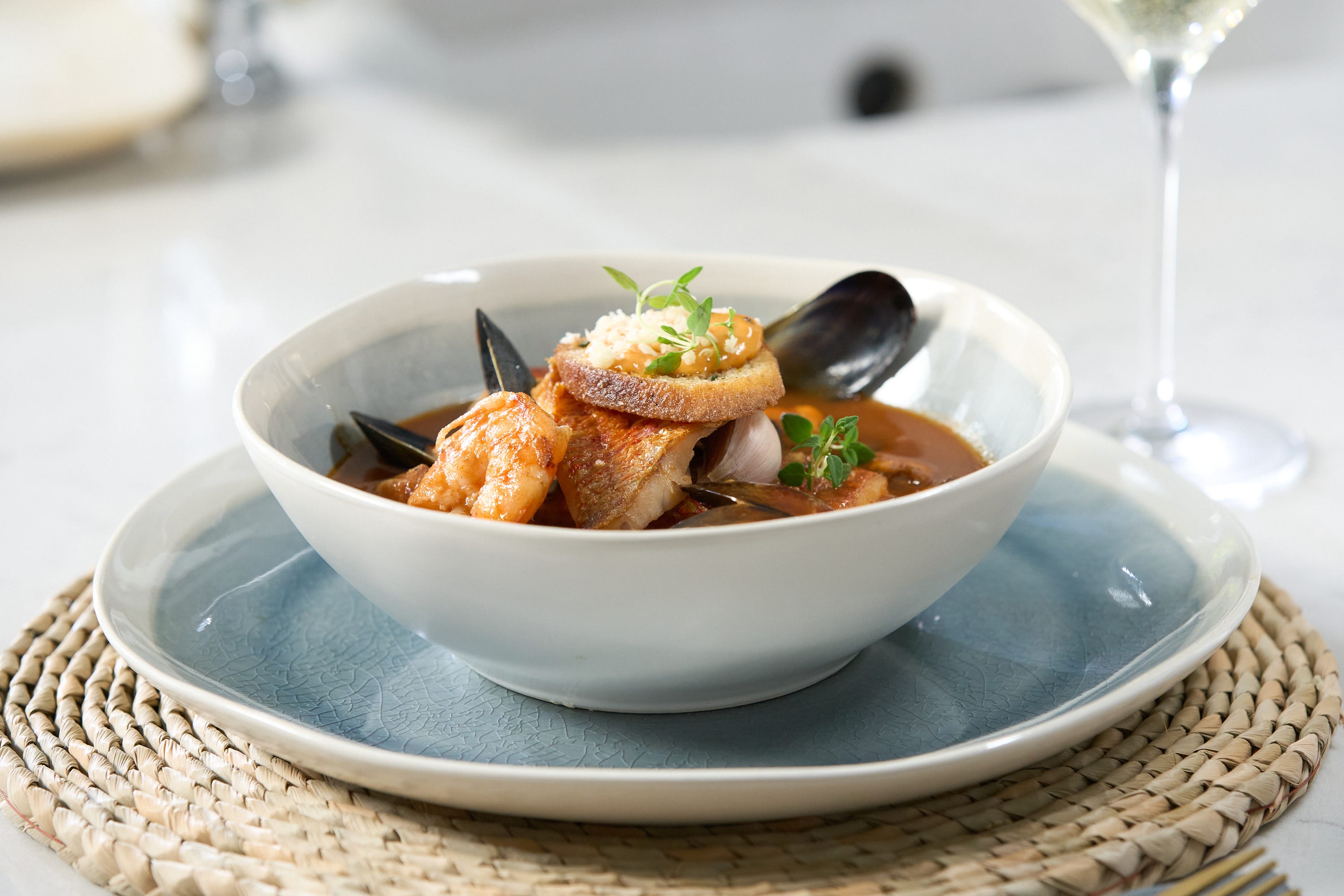
Saturday Kitchen star Matt Tebbutt shares his take on a traditional fish soup – full of mussels, cod, scallops and whatever seafood you fancy.
Serves: 4
Ingredients:
1kg of mixed sea fish – on the bone if possible, but just fillets is fine; any crab claws or shells or prawns in shell would be a great addition
1 white onion
1 head of garlic, broken into cloves
1 star anise
1 carrot
½ fennel bulb
3 sticks of celery
2 bay leaves
1 small bunch of thyme
125ml Noilly Prat
2 tbsp tomato purée
400g tin of plum tomatoes
1 pinch of saffron
1 bunch of tarragon
For the toppings:
1kg of cleaned mussels in shell
50ml white wine or Noilly Prat
1 bay leaf & smashed garlic clove
1 small sea bass or grey mullet or other British sea fish
200g cod fillet
1 red mullet or gurnard (optional)
2 scallops
Method:
1. Start by sweating the veg and aromatics (except the tarragon) in some oil for 15 to 20 minutes, until soft and starting to colour.
2. Add the fish and shells if using, bones and all to the pan and continue to cook for another 10 minutes or so before adding the tomato purée, saffron strands, vermouth or wine, and tomatoes.
3. Cook to a paste then barely cover with water and allow to simmer very gently for 30 minutes.
4. After this time, blitz briefly with a hand blender to get the most out of the fish, before draining in a colander and push as much liquid from the bones as possible.
5. Tip these bones away and now add the tarragon to the stock and boil to reduce. Skim off any fat as you go. Reduce to around half the volume. Taste and season accordingly.
6. Take a dry saucepan with a lid and put onto a high heat. Add the mussels, Noilly Prat, bay and garlic clove, immediately cover with a lid and shake the pan from time to time.
7. After two to three minutes, check all the mussels have opened. Remove from the heat. Tip into a sieve or colander. Allow to cool before picking the meat from the shells. Discard any that don’t open.
8. Now strain this liquor through a fine mesh sieve or chinois and tip into the reduced stock.
9. Fillet the rest of the fish and pan fry these and the scallops on one side, (depending on the thickness). Keep warm.
10. To serve, put some of the cooked fish into the bottom of a serving bowl, and ladle some of the fish soup over the top .
11. For the perfect finishing touch, add homemade croutons and rouille.
Leftover roast dinner soup
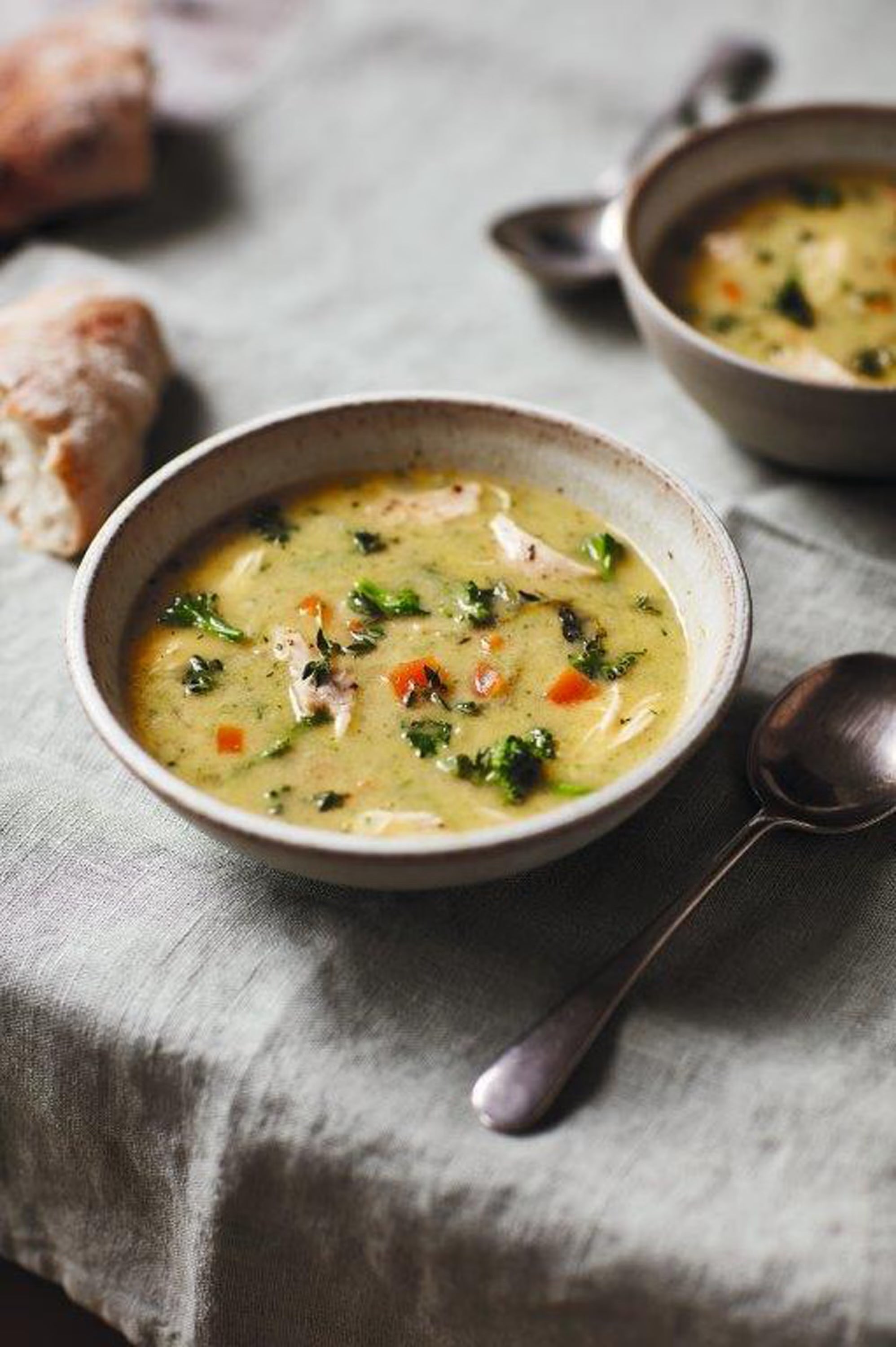
“We always cook a roast on a Sunday and if there is some leftover veg, I will make this soup with it,” says Rochelle Humes.
“It is a one-pot and has all the comforting flavours of a traditional roast. This is soul food at its best and is delicious dished up with chunky bread on the side.”
Serves: 4
Ingredients:
1 tbsp olive oil
2 onions, finely chopped
1 garlic clove, crushed
2 large carrots, peeled and roughly chopped
3 sprigs thyme, leaves picked
1.4L/2¼ pints chicken stock
200g/7oz frozen peas
300g/10oz leftover greens, roughly chopped (broccoli, cabbage, spinach and brussels sprouts all work well)
200g/7oz leftover roast chicken, shredded
Sea salt and freshly ground black pepper
Crusty buttered bread, for dunking
Method:
1. Heat the olive oil in a large pan over a medium heat. Add the onion, garlic, carrots and thyme, and cook, stirring occasionally, for 15 minutes until the carrots are soft and onions are golden.
2. Add the chicken stock to the pan and stir to combine. Bring the mixture to the boil, then reduce the heat to a simmer and leave to cook for 15 minutes.
3. Add the peas, leftover green veg and shredded, cooked chicken to the pan and stir to combine. Season with salt and pepper to taste, then leave to cook for five minutes.
4. If you like a chunky soup, ladle half of the soup into a blender and blend until smooth, then return to the pan with the unblended soup. If you like your soup smoother, blend all of the soup in batches to your preferred consistency.
5. Ladle the soup into bowls and serve with buttered crusty bread alongside for dunking.
For first-stage weaning: Substitute the stock for water or low-sodium chicken stock. Remove and blend some of the soup before you add the seasoning. You could also blend any leftover cooked veggies from the roast to make a purée.
For older children: Older children will enjoy this as it is, just leave any seasoning until the end and pass it round to the adults only so that they can season their own food.
At Mama’s Table’ by Rochelle Humes (Vermilion, £20).
Miso noodle soup with mushrooms, peas and greens
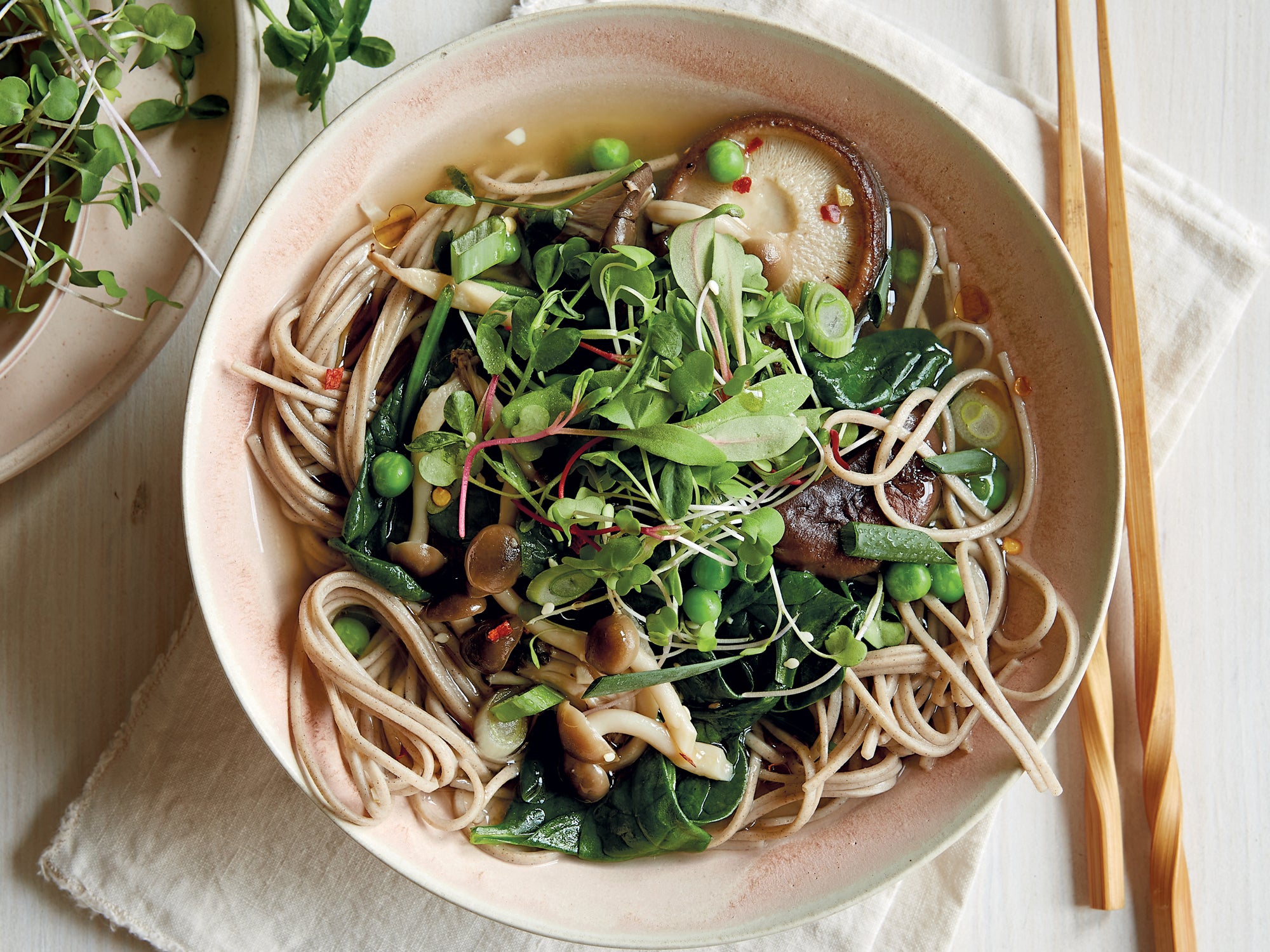
In Japan drinking the soba-noodle water, called soba-yu, is part of the pleasure of the meal,” says cookbook author and Queer Eye’s resident food guru, Antoni Porowski. “For this soup, I use the soba cooking water and some miso paste as the base. Be gentle with your miso and add it off the heat: high temperatures kill its beneficial live bacteria and probiotics.”
Serves: 4
Ingredients:
150g soba noodles
3 tbsp toasted sesame oil, plus more for drizzling
3 garlic cloves, gently smashed and peeled
2 tbsp finely chopped, peeled fresh ginger
450g mixed wild mushrooms, stems trimmed if using shiitakes, caps halved or quartered if large
Salt
300g frozen peas, thawed
150g baby spinach, mizuna, tatsoi or mixed Asian greens
75g white miso paste
1 tbsp soy sauce, plus more for serving
4 spring onions, thinly sliced
Red chilli flakes, toasted sesame seeds and/or micro greens for topping (optional)
Method:
1. Cook the noodles in boiling water according to the packet instructions. Drain in a colander placed over a large bowl. Set aside the soba water. Rinse the noodles under cold running water, drain, and set aside.
2. Measure the soba water and add more water if needed to make two litres (or discard any extra soba water).
3. Heat the oil in a large wide saucepan over medium high heat. Add the garlic and ginger and cook, stirring frequently, until fragrant, about one minute. Stir in the mushrooms with a generous pinch of salt. Cook, stirring occasionally, until tender, about five minutes. Stir in the peas and cook for one minute. Add the soba water, increase the heat to high and bring just to a low boil. Stir in the greens and immediately remove from the heat.
4. Scoop 60ml of the broth into a bowl and whisk in the miso. Return the mixture to the soup, add the soy sauce and stir to combine. Divide the noodles among four bowls. Ladle the soup over them. Top with the spring onions. Drizzle over sesame oil and soy sauce and top with red chilli flakes, sesame seeds and micro greens, if desired.
‘Let’s Do Dinner’ by Antoni Porowski (Bluebird, £22)
Super greens soup
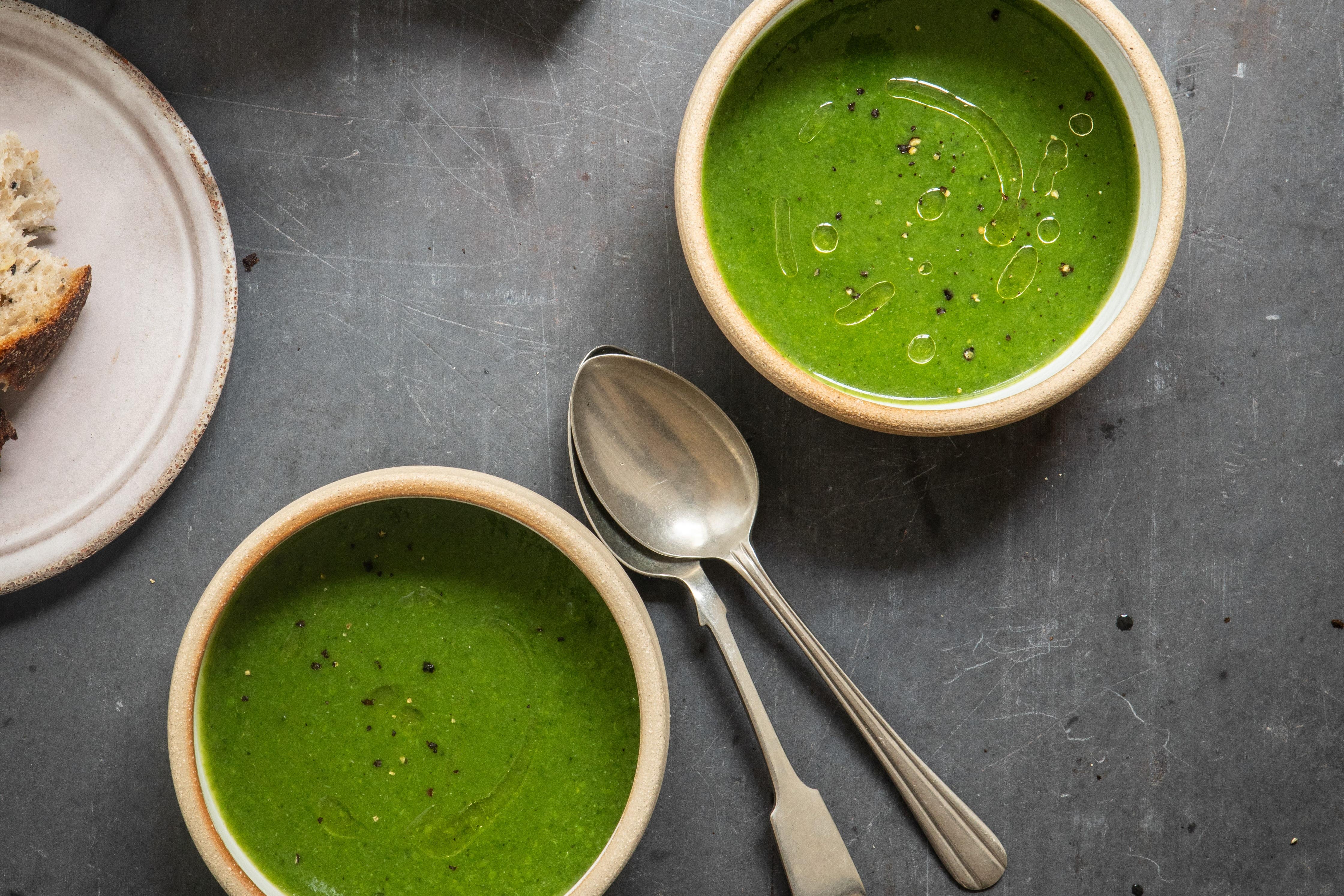
“This super-easy, Grab and Cook bag allows you to decide whether you fancy turning this recipe into soup or a pasta sauce simply by adjusting the amount of liquid added at the time of cooking,” says The Batch Lady, aka Suzanne Mulholland, author of Rapid Dinners. “This is fresh, packed full of goodness and totally delicious!”
Serves: 4
Ingredients:
280g frozen peas
115g frozen diced onions
100g fresh spinach or 4 cubes frozen spinach
140g frozen broccoli florets
2 tsp frozen chopped garlic
Large handful fresh basil
1 vegetable stock cube, crumbled
Salt and pepper
360-720ml boiling water
Method:
IF MAKING AHEAD FOR THE FRIDGE OR FREEZER:
Place all of the ingredients in a large labelled freezer bag and seal. Freeze flat.
HOB: Tip all the frozen ingredients into a saucepan. If making soup, add 720 millilitres of boiling water. If making pasta sauce, add 360 millilitres of boiling water. Bring to the boil, then reduce to a simmer and cook for eight to 10 minutes, until the vegetables are soft. Blend until smooth and season to taste.
SLOW COOKER: Tip all the frozen ingredients into the slow cooker. If making soup, add 720 millilitres of boiling water. If making pasta sauce, add 360 millilitres of boiling water. Cook for three hours on high, or five hours on low, or until the vegetables are tender. Blend until smooth and season to taste.
IF COOKING NOW:
HOB: Put all the ingredients into a saucepan. If making soup, add 720 millilitres of boiling water. If making pasta sauce, add 360 millilitres of boiling water. Bring to the boil, then reduce to a simmer and cook for eight to 10 minutes, until the vegetables are soft. Blend until smooth and season to taste.
SLOW COOKER: Put all the ingredients into the slow cooker. If making soup, add 720 millilitres of boiling water. If making pasta sauce, add 360 millilitres of boiling water. Cook for three hours on high, or five hours on low, or until the vegetables are tender. Blend until smooth and season to taste.
‘The Batch Lady: Rapid Dinners’ by Suzanne Mulholland (Ebury Press, £22).
Indian lentil coconut stew-soup

Serves: 4 as a soup, 8 as a stew over rice
Ingredients:
400ml coconut milk
2 tbsp ghee or coconut oil
3 garlic cloves, finely minced
1 brown onion, finely chopped
400g can chopped tomatoes
750ml water
200g dried split red lentils
400g can chickpeas, drained
Spices:
½ tsp cayenne pepper or chilli powder
½ tsp ground ginger
1 tsp ground turmeric
1 tsp curry powder
1 tsp ground cumin
1½ tsp salt
2 tsp ground coriander
To serve (optional):
Pinch of dried chilli flakes
Coriander leaves
Rice
Method:
1. Reserve the coconut milk – set aside 60 millilitres of the coconut milk for drizzling.
2. Saute the aromatics – melt the ghee in a large pot over medium-high heat. Add the garlic and onion and cook for three minutes until the onion is translucent. Add the spices and stir for one minute.
3. Simmer – add the tomatoes, remaining coconut milk, water, lentils and chickpeas. Stir, then once it comes to a simmer, reduce the heat to medium-low/low. Simmer gently for 15 minutes, uncovered, stirring every now and then to ensure the base doesn’t catch, until the lentils are soft and creamy and mostly broken down.
4. Serve – ladle into bowls if you see this as a soup, or over rice if you consider it a stew. Either way, drizzle generously with the reserved coconut milk, a pinch of dried chilli flakes, if you like (I do), and coriander leaves if you have them (I did). Devour!
‘RecipeTin Eats: Tonight’ by Nagi Maehashi (Bluebird, £26)
Beetroot soup recipe with celery and apple
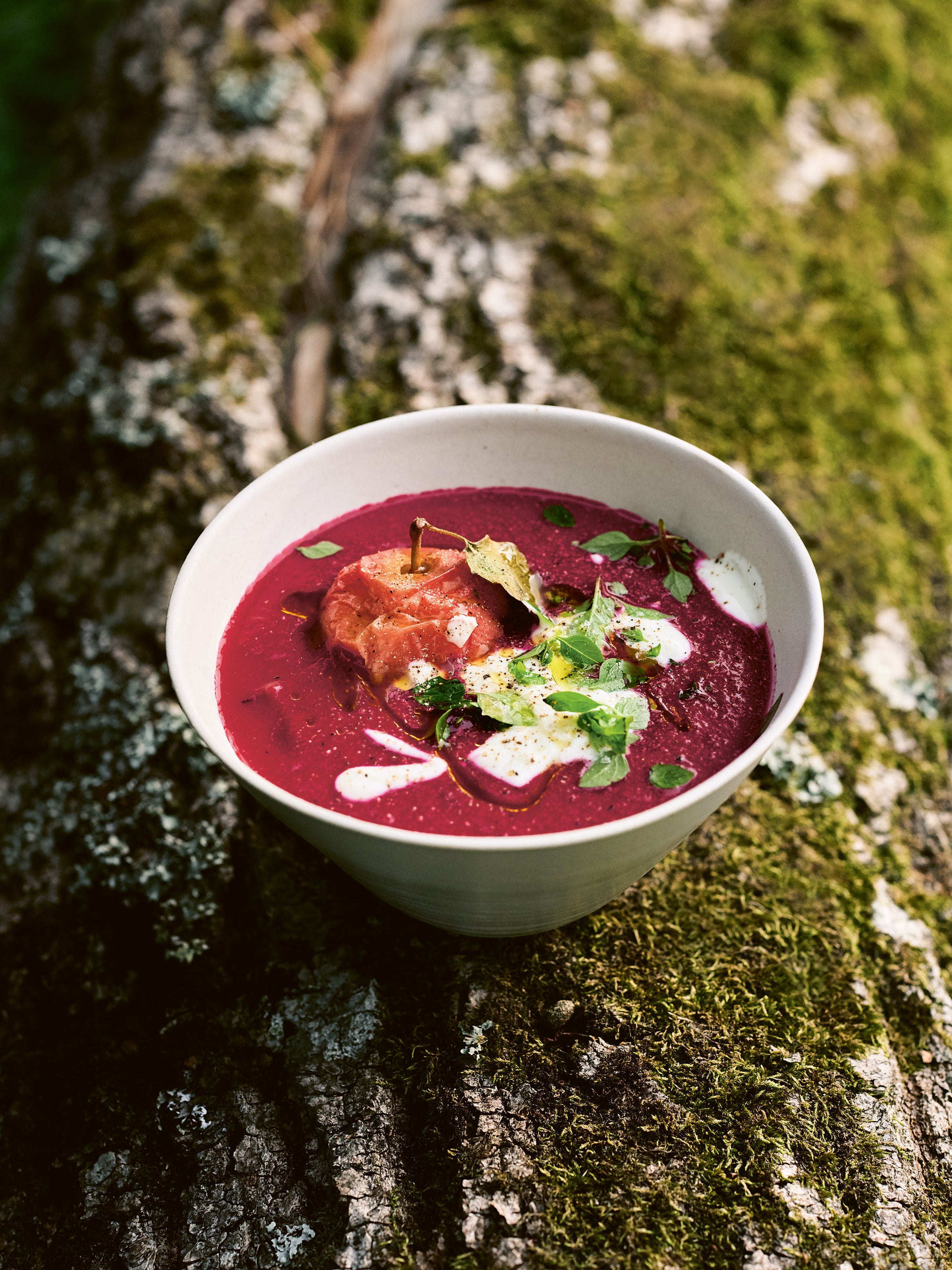
We don’t celebrate locally-grown beetroot enough.
“The red variety, of which the aptly named bull’s blood is one, is part of a vibrant family of vivid yellows, whites and candy pinks, all of which work well in this sweet, earthy, quick-to-make soup,” says Gill Meller in his book Root, Stem, Leaf and Flower.
The River Cottage chef says to serve this colourful dish steaming hot in autumn, or chilled in summer.
Serves: 4
Ingredients:
3 tbsp extra-virgin olive oil
4 or 5 raw beetroot (about 600g), peeled and roughly diced
4 tender celery sticks, thinly sliced
2 large garlic cloves, thinly sliced
1 onion, thinly sliced
2 dessert apples
200ml cloudy apple juice
Sea salt and freshly ground black pepper
To serve (optional):
Extra-virgin olive oil
A scattering of basil leaves
Spoonfuls of natural yoghurt
4 small baked dessert apples
Method:
1. Place a medium, heavy-based pan over a gentle heat. Add the olive oil and when it’s hot add the beetroot, celery, garlic and onion. Season with salt and pepper and cook, stirring regularly, for 12-15 minutes, or until the vegetables are beginning to soften and smell sweet and tasty.
2. Meanwhile, peel, quarter and core the apples, then slice them thickly. When the vegetables are ready, add the apples to the pan, stir, then cook for a further one to two minutes before adding 600ml of water. Place a lid on the pan and bring the soup to the simmer. Leave to simmer gently for 10 minutes, until all the vegetables are tender.
3. Ladle the soup into a blender. Add the apple juice and whiz until smooth. Return the soup to the pan and bring it briefly back to the simmer. Season with salt and pepper to taste and remove from the heat.
4. If you intend to serve the soup cold, leave it to cool, then transfer it to a bowl. Cover and place in the fridge to chill for three to four hours.
5. You can serve the soup just as it is, but I like to finish it with a swirl of olive oil, a scattering of fresh basil, a spoonful of organic natural yoghurt, and even a small, whole baked apple, but that’s entirely optional.
‘Root, Stem, Leaf, Flower: How To Cook With Vegetables And Other Plants’ by Gill Meller (Quadrille, £27).
Join our commenting forum
Join thought-provoking conversations, follow other Independent readers and see their replies
Comments
Bookmark popover
Removed from bookmarks