Christmas canapes made easy: Festive bites from Mary Berry, Rick Stein and more
Festive entertaining just got simpler. Hannah Twiggs rounds up the best Christmas canapes from Mary Berry, Rick Stein and more – from perfect cheese straws to punchy salmon tartlets – to keep guests happily grazing all season long


Christmas entertaining is full of illusions. We like to pretend we’re laid-back hosts who “just threw something together”, when in reality the dishwasher’s already on its third cycle and we’ve spent the past hour fishing cocktail sticks out of the dog’s mouth. But if there’s one thing guaranteed to make you look effortlessly competent – even saintly – it’s the canape.
Those tiny little mouthfuls do a lot of heavy lifting. They set the tone, quieten hungry guests, and buy you time while the main event does whatever it wants in the oven. They’re also the most fun part of festive cooking: a chance to show off a bit, lean into nostalgia, or pretend, very briefly, that you’re the kind of person who casually whips up gougères on a Tuesday.
This year’s line-up has range. Mary Berry’s Somerset Cheddar straws – tested “every week for a month”, because of course they were – are as classic as a glass of fizz on Christmas Eve. Rick Stein goes chic and sharp with filo tartlets, their wasabi-miso cream bringing the sort of oomph that cuts cleanly through all the beige of December. Kate Young gives the humble sausage roll its literary moment, sweetened with mango chutney and proof that no party food has ever been too retro to resurrect.
Elsewhere, there are buckwheat blinis for the overachievers who fancy being the March sisters for breakfast; golden, cheese-laden gougères straight from Matthew Ryle’s oven; coquilles for anyone willing to risk the boujiest “fish pie” imaginable; Camembert tarts, roasted grape crostini, devilled eggs with swagger; and finally, the kind of devils on horseback that don’t so much knock politely as burst through the door in a cloud of thyme honey and bacon.
If Christmas is a marathon, let these be the delicious first mile.
Mary Berry’s Somerset cheddar cheese straws
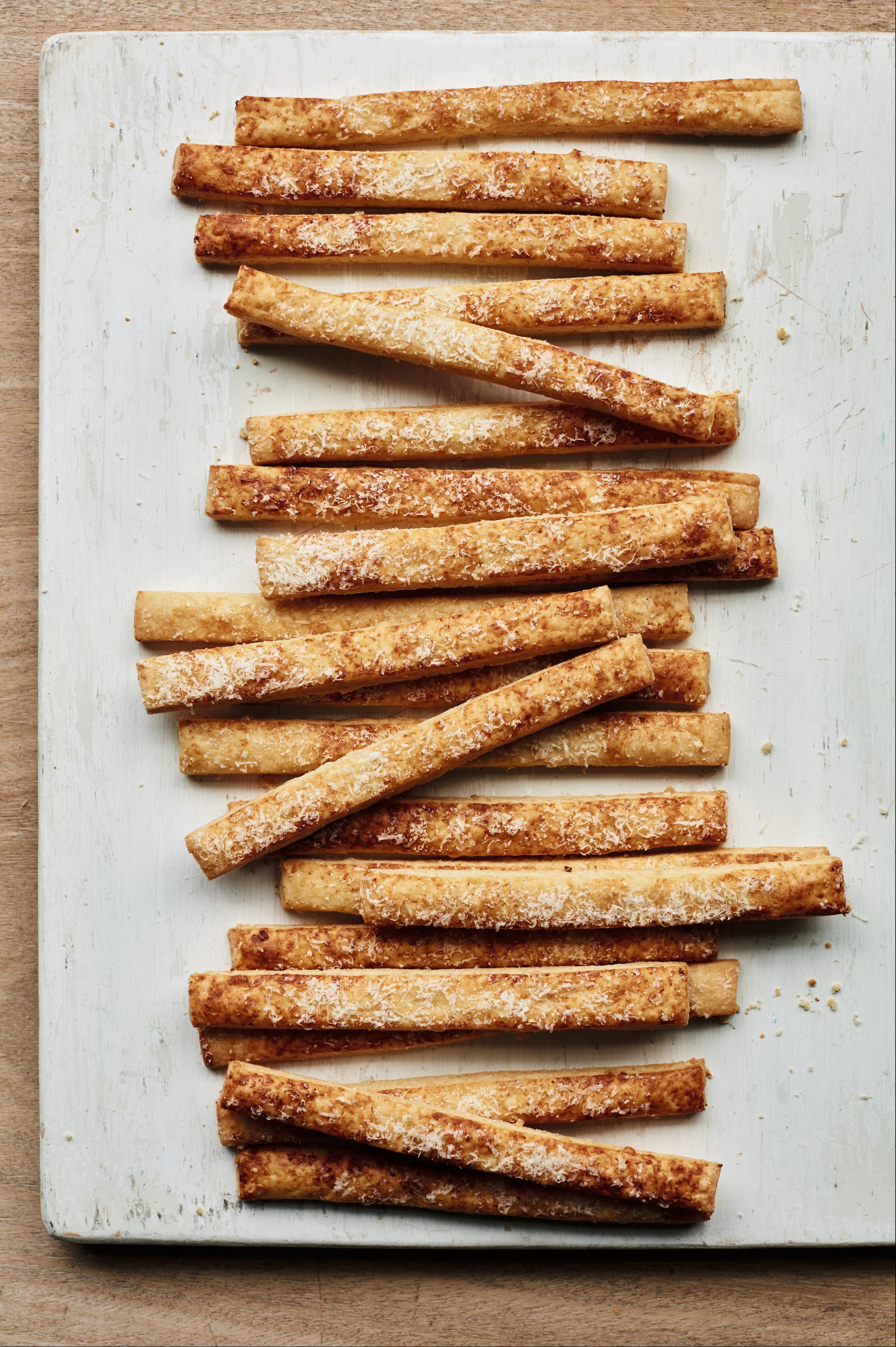
“Cheese straws are so delicious, but can be tricky to make if the proportions are not quite right,” says Mary Berry. “We tested these every week for a month, just to make sure they were perfect – and because they are so moreish, too!”
Makes: 50
Ingredients:
250g (9oz) cold butter, cubed
55g (2oz) semolina
400g (14oz) plain flour
1 tsp mustard powder
¼ tsp cayenne pepper
150g (5oz) mature Somerset Cheddar, coarsely grated
150g (5oz) Parmesan, coarsely grated, plus about 4 tbsp finely grated, to garnish
1 egg, beaten
A little milk
Method:
1. Preheat the oven to 200C/fan 180C/gas 6. Line 2 large baking sheets with non-stick baking paper.
2. Measure the butter, semolina, flour, mustard powder, cayenne pepper and a little salt into a food processor. Whizz until the mixture looks like breadcrumbs.
3. Add the cheddar, parmesan and egg and whizz again for a short time, just until the dough comes together.
4. Remove the dough from the processor, divide it into two equal pieces, and shape each one with your hands on a floured work surface into a rectangle. Roll each piece of dough into a rectangle about 46 x 16cm (18 × 6½in) and about 8mm (⅓in) thick.
5. Brush the milk over the top of the dough and sprinkle with the finely grated parmesan. Slice each rectangle into roughly 25 strips.
6. Carefully lift each straw onto the prepared baking sheets and bake in the preheated oven for about 18 minutes, or until golden brown. Leave to cool on the baking sheet until the straws have hardened and are easy to handle.
7. Serve cold.
‘Mary Makes it Easy’ by Mary Berry (BBC Books, £28)
Rick Stein’s filo tartlets with raw salmon, wasabi cream and capers
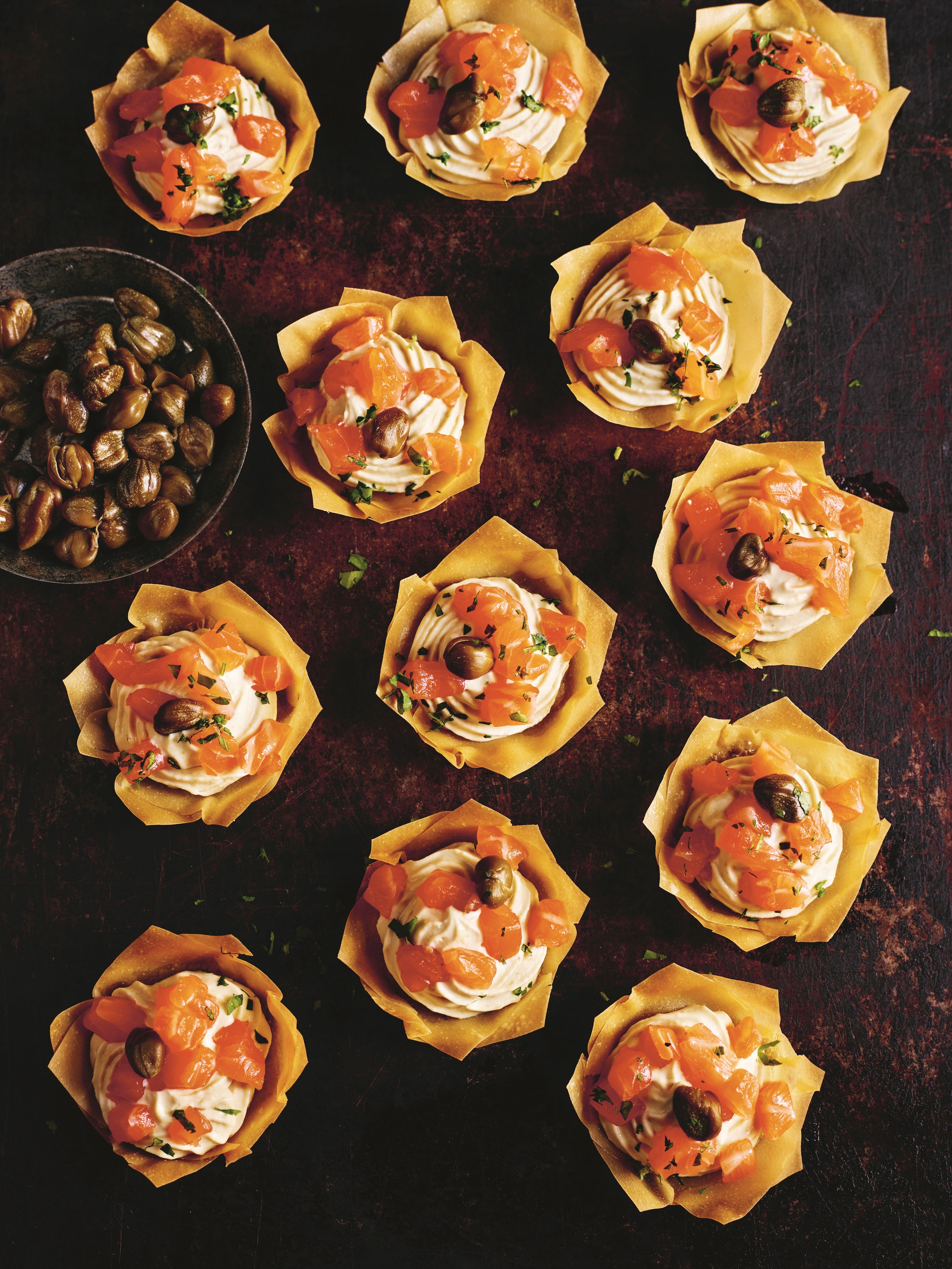
“I do think that cold canapes need plenty of what I can only describe as oomph and the oomph in this case comes from wasabi and white miso,” says Rick Stein.
“My son Jack has introduced me to the glory of Japanese fermented soybeans in all their different guises and white miso is perfect for these tartlets as it is pale. I recommend looking out for large filo sheets, such as the Theos brand which is available in supermarkets and online.”
Makes: 24
Ingredients:
2 large sheets of filo pastry (about 45 x 25cm)
30g butter, melted
150ml double cream
1½ tsp white miso paste
1-2 tbsp wasabi
80-90g raw salmon fillet, skinned and pin-boned
24 capers
Sea salt
Method:
1. Preheat the oven to 180C/fan 160C. You’ll need a 24-hole mini muffin tin.
2. Lay a sheet of filo on a board, brush it with butter, then cut the pastry into 5cm squares. Place a square into each of the 24 holes in the tin, pushing it down well. Repeat with the second sheet of filo, this time placing the squares in the tin at right angles to the first squares to create attractive star shapes.
3. Bake for 5-6 minutes until crisp and golden brown, then leave to cool. You can store the baked cases for up to 24 hours in an airtight tin.
4. For the wasabi cream, whip the cream very lightly until it is only just beginning to hold its shape – it will thicken when you stir in the seasoning. Fold in the miso paste, add a tablespoon of wasabi and taste, then add more wasabi according to your heat preference. Set aside.
5. About 30 minutes (or less) before serving, cut the salmon into small pieces. Spoon or pipe a teaspoon of the cream into each filo cup, then top with a piece of salmon, a caper and a sprinkle of sea salt.
‘Rick Stein’s Christmas: Recipes, Memories & Stories for the Festive Season’ (BBC Books, £28)
Kate Young’s sausage rolls
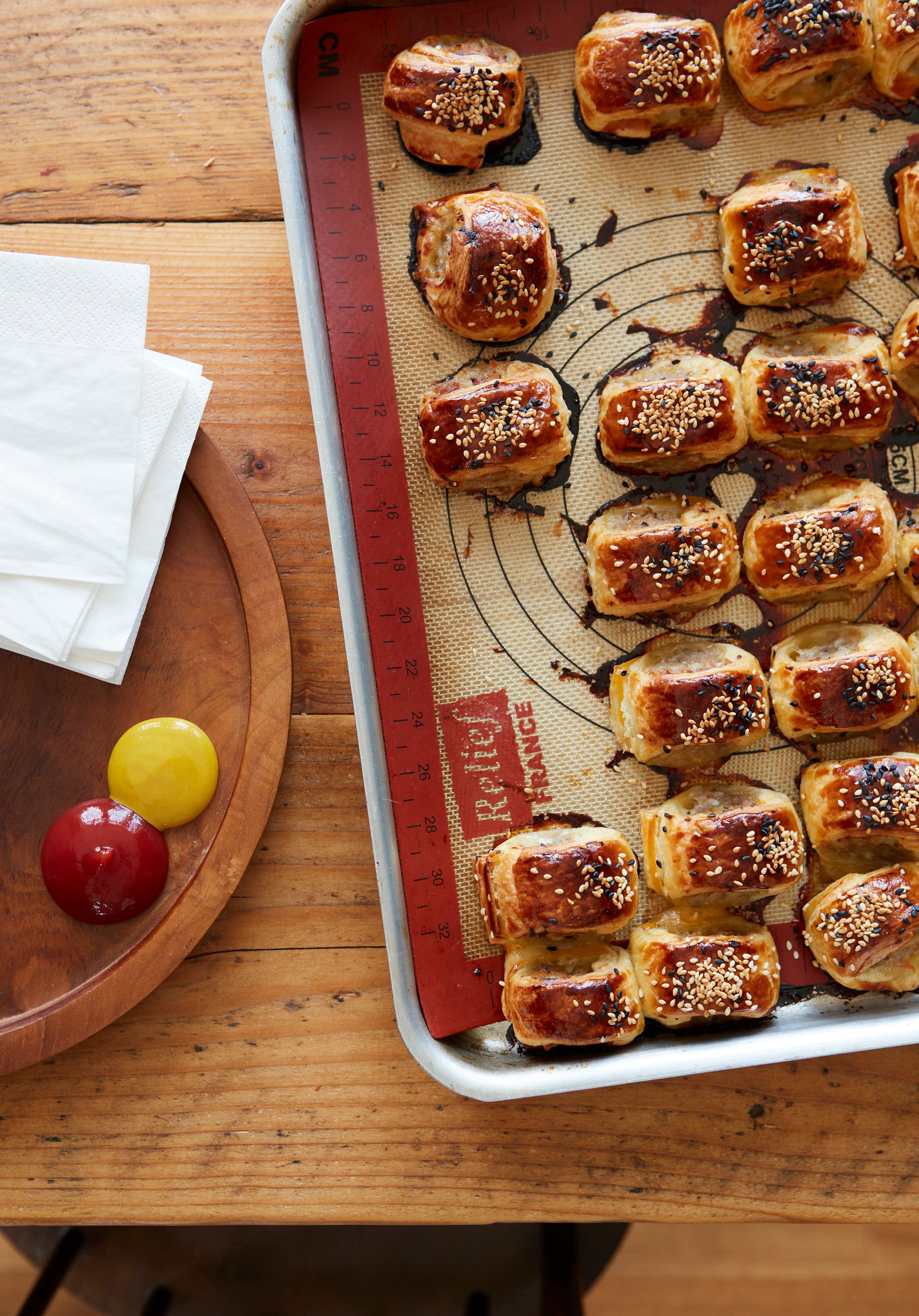
Food writer Kate Young is a huge fan of sausage rolls, and these ones are “made sweet and salty with mango chutney and soy sauce”, she says.
They’re perfect party food for Christmas or New Year’s Eve – and are actually inspired by plenty of literary parties.
Makes: around 64 little rolls
Ingredients:
2 brown onions, finely diced
1 carrot, grated
2 crisp eating apples, grated
500g sausage meat (I squeeze the meat from a packet of good sausages – the texture and seasoning give your sausage rolls a good kickstart)
500g minced pork, at least 10 per cent fat
125g soft white breadcrumbs
6 tbsp mango chutney
2 tbsp soy sauce
1 tbsp cider vinegar
Lots of freshly ground black pepper
A large pinch of flaky sea salt
1 egg
4 sheets ready-rolled puff pastry
1 tbsp sesame seeds
Method:
1. In a mixing bowl, bring together the onions, carrot, apples, meat, breadcrumbs, mango chutney, soy sauce, vinegar, and seasoning. Squidge everything together with your hands.
2. Whisk the egg in a small bowl and set aside. Preheat your oven to 200C/400F/gas 6. Lay out a sheet of pastry, with the narrower end parallel to the edge of your work surface. Slice in half, again parallel to the edge of the work surface. On each half, place one eighth of the filling in a line along the longer edge. The line of filling should be a generous two centimetres high.
3. Roll the pastry tightly over the meat. Paint some of the beaten egg along the top edge of the pastry, then roll the meat over it to seal. Paint the roll with more beaten egg, then slice each roll into eight pieces (a bread knife or serrated knife is the best one to use here) and transfer to a lined baking sheet. They will puff up, so give them a little space. Sprinkle the tops with sesame seeds. Repeat with the remaining pastry and filling.
4. Bake to a deep golden colour; 25-30 minutes should do it. Allow to cool slightly before serving, or serve at room temperature if you prefer.
‘The Little Library Parties’ by Kate Young (Head of Zeus, £15)
Kate Young’s buckwheat blinis for breakfast
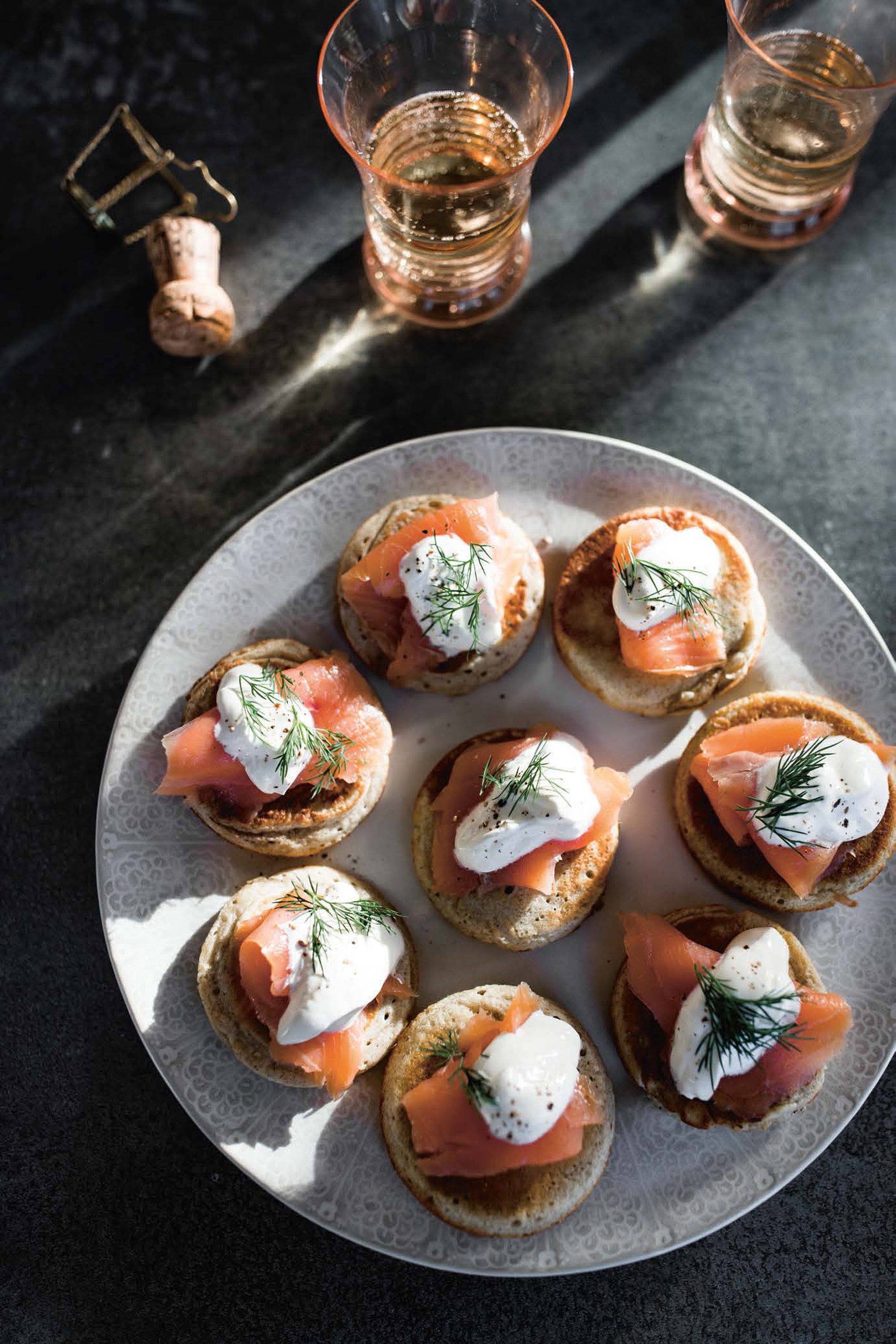
“The March sisters’ breakfast, the one they end up giving away, is a memorable spread,” says Young, referencing Little Women. “I grew up watching the 1994 film, and I can still see Winona Ryder reach for a sausage before they’re sitting around the table, and Kirsten Dunst with an orange tucked under her chin.
“But it’s the buckwheats, little Civil War-era pancakes, that I fancy for my Christmas breakfast. The March girls didn’t have salmon, but I see no reason for us to recreate their breakfast too faithfully, especially if you have any gravadlax leftover from yesterday.”
Makes: enough for 8
Ingredients:
60g buckwheat flour
60g strong white bread flour
A pinch of salt
A pinch of sugar
100ml cup milk
2 tsp fresh yeast (or 1 tsp fast-action yeast – I like the flavour of fresh yeast here, but if you can’t get hold of it, easy/fast-action is great too)
5 tbsp sour cream
1 egg yolk
2 egg whites
30g/2 tbsp butter
To serve:
Smoked salmon (or leftover gravadlax from yesterday if making on Boxing Day)
3½ tbsp sour cream
Dill sprigs
Juice of 1 lemon
Method:
1. Whisk together the flours, salt and sugar in a mixing bowl. Warm the milk to body temperature in a saucepan, then stir in the yeast until it dissolves. Whisk in the sour cream, and the egg yolk.
2. Pour the liquid ingredients into the flour and whisk thoroughly. Cover the bowl with a tea towel and put it in a draught-free place to rise for an hour (it might take a little longer than this on Christmas morning, so feel free to get your bird prepped, or stuffing made). The batter should almost double in size.
3. After an hour, beat the egg whites to stiff peaks, and then fold them into the frothy mixture. Cover with the tea towel again and leave for another hour. The mixture should be very light and full of bubbles –almost like a foam.
4. Once the batter has risen, warm half a tablespoon of the butter in a frying pan. Without stirring the mixture (you want to retain the lightness), drop teaspoons of the batter into the pan. When the top of a blini is covered with bubbles, flip it over. Cook the blinis in batches until all the batter is used up, adding more butter when needed.
5. Serve each blini warm, with a twist of salmon, a dollop of sour cream, a sprig of dill, and a squeeze of lemon. They can be warmed through in the oven, but are best fresh, if you can serve them straight away.
‘The Little Library Christmas’ by Kate Young (Head of Zeus, £15)
Matthew Ryle’s Comté gougères
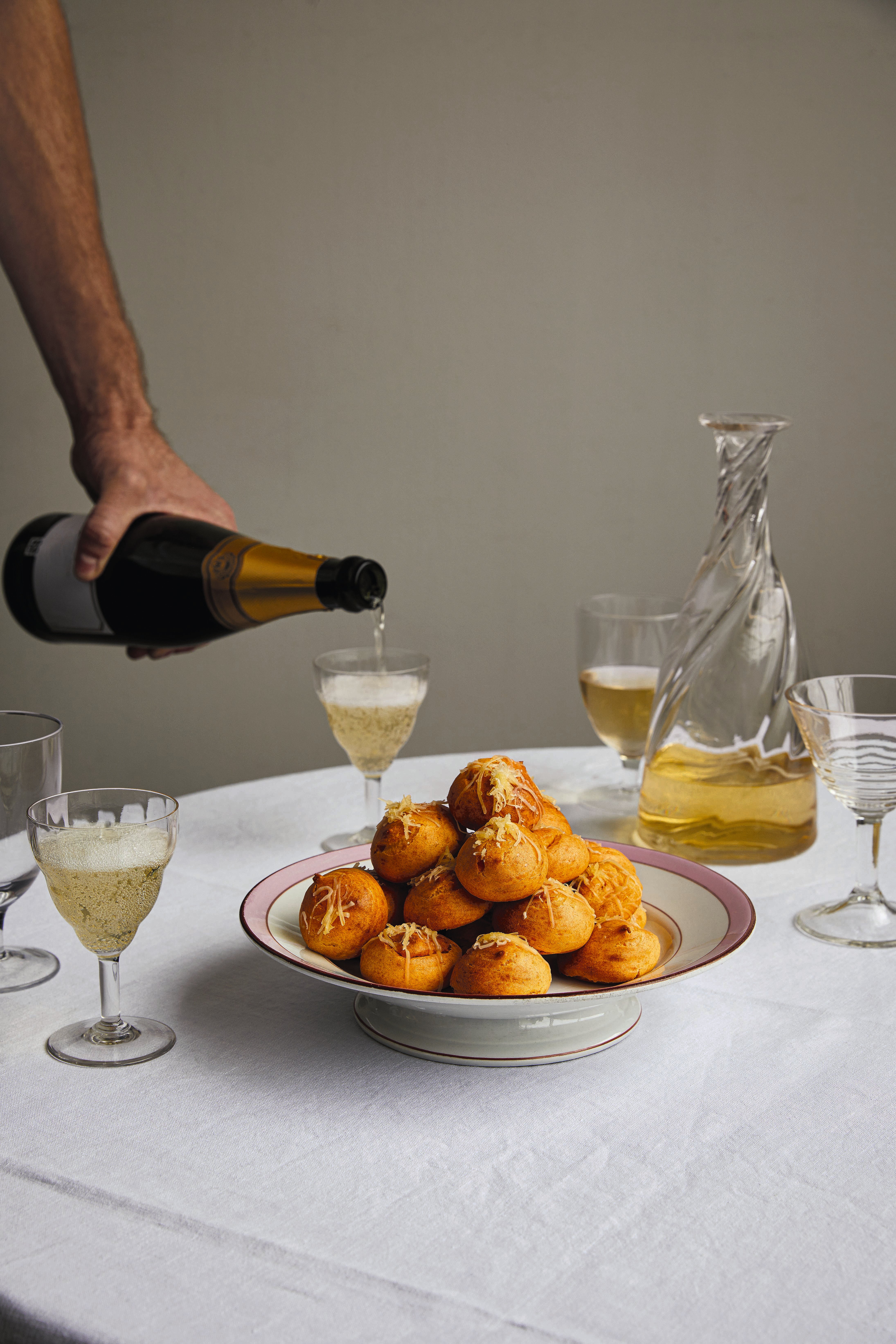
“A gougère is a savoury choux pastry puff – think cheesy profiterole – baked into a crisp, airy pocket of delight. My favourite cheese to use is Comté, but feel free to swap this out for your preferred hard cheese; anything from gruyère to cheddar will work well. This is a wonderful make-ahead recipe: simply stash them in the freezer, ready to bake whenever you get a gougère craving. We serve more than 50,000 of these every year at the restaurant, so I’ve become something of an expert on preparing them. A great snack at any time and heavenly while sipping on a cold glass of wine or champagne.
“Best eaten straight from the oven, gougères should always be served warm and covered in grated cheese. I like to make them whenever I have friends over for drinks, as there’s something special about the room filling up with that baked cheese smell while you’re handing out warm gougères. It makes you feel like Nigella!”
Notes: This choux base is quick and easy to whip up. Temperature is important when preparing your choux: you need the mix to be hot enough to melt the cheese in the first instance, but leave it to cool slightly before adding the eggs, as you don’t want those to scramble. Sometimes, after adding the eggs, the mix is still too firm to pipe – most often if your eggs were on the smaller side – so make sure you have a few extra eggs around in case they’re needed to correct the consistency. At all costs, do not open the oven while baking, as this will cause your cheese puffs to, well, lose their puff!
If you’re filling the freezer, you can pipe the gougères on to a small tray, side by side. Once they are frozen solid, you can break them apart and store in a freezer bag. When it comes to baking, follow the same steps as in the recipe, leaving the same gap between each as you lay them out on the baking tray.
You will need a piping bag.
Makes: 10
Prep time: 15 minutes, plus cooling (if needed) and resting | Cooking time: 25 minutes
Ingredients:
50g butter
½ tsp sea salt flakes
100ml water
100ml whole milk
125g plain flour
60g Parmesan cheese, finely grated
85g Comté cheese, finely grated, plus more to serve
4 eggs, plus more if needed
Method:
1. Chop the butter into small pieces and put in a saucepan with the salt, measured water and milk. Place over a high heat and bring to the boil. Once the butter has melted and everything is bubbling away, reduce the temperature to low, add the flour and cook for around 5 minutes, continually stirring with a spatula.
2. Pour the cooked mixture into a stand mixer fitted with a paddle attachment, if you have one. If not, a bowl, spatula and some elbow grease will work. Add both grated cheeses and mix on a medium speed until the cheese has melted and the mixture is combined. At this stage, the mix should be cool enough to start adding the eggs, but if it is visibly steaming, or hot to the touch, leave it for 5 minutes more to cool down.
3. Add the eggs 1 at a time, while mixing on a low speed, waiting until each egg is fully combined before adding the next. Once all 4 eggs are added, you should have a mixture that has a spooning consistency: take a spoon, scoop up the mix and tap the edge of the bowl to knock off the mix; it should come off with relative ease. If it is still a little too stiff, lightly beat another egg in a small bowl, then add it gradually until the consistency is perfect. Put the mix into a piping bag and leave to rest for 15–20 minutes.
4. Preheat the oven to 160C fan.
5. On a baking tray lined with baking paper, pipe the gougères: you’re aiming for something slightly bigger than a £2 coin, leaving at least a 2cm gap between each. Wet the tip of your finger and tap down any peaks your piping has left.
6. Bake for 12 minutes without opening the oven door. When the timer runs out, turn the tray around and cook for a further 2–3 minutes until golden brown. Cover the hot gougères with finely grated Comté, then serve straight away.
‘French Classics’ by Matthew Ryle (Bloomsbury Publishing, £26)
Matthew Ryle’s coquilles Saint Jacques
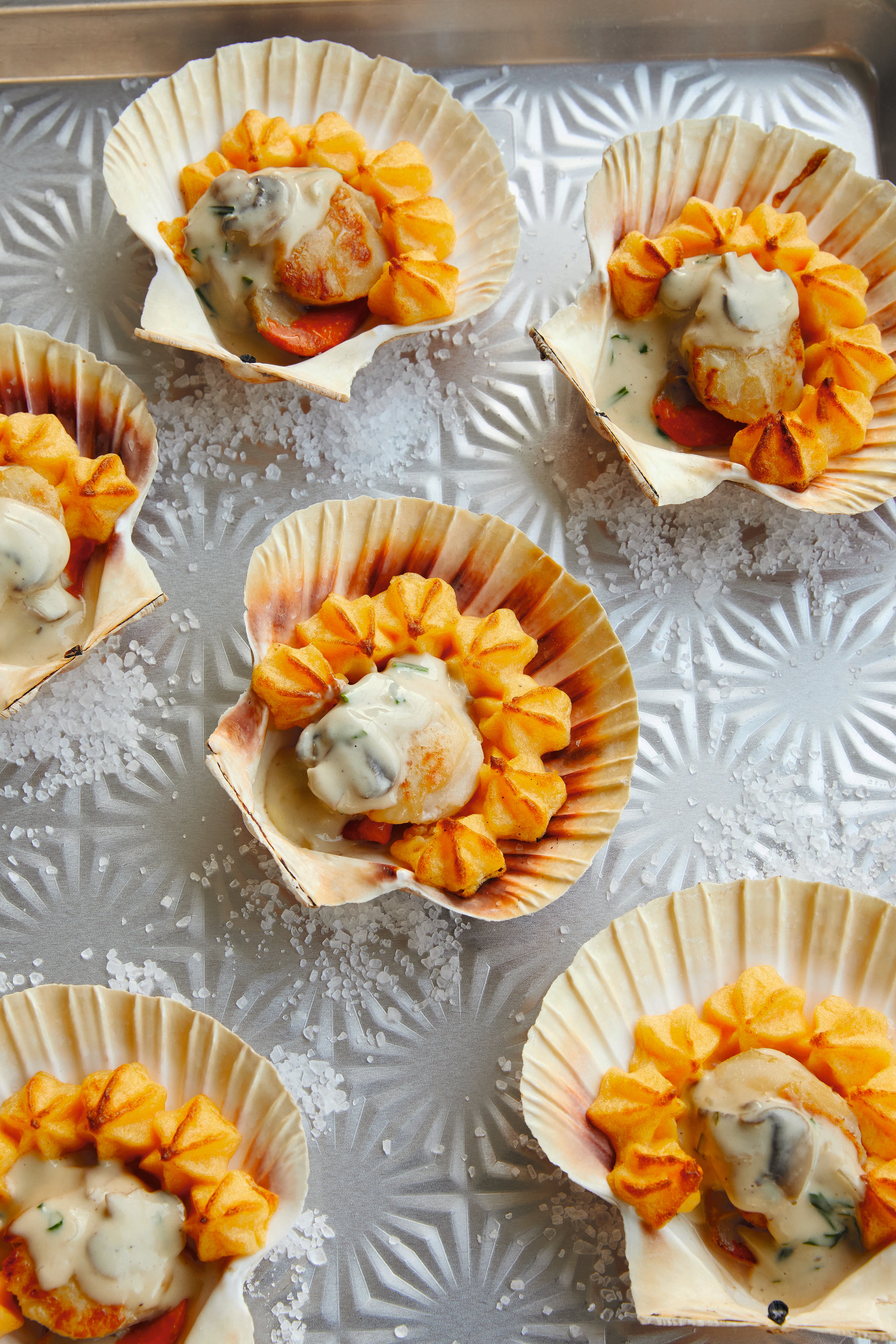
“If I was to try and explain these to a friend who had very little cooking knowledge, I’d describe them as mini scallop fish pies, served inside their shells. Properly boujee fish pie! As far as I’m concerned, scallops are the king of the ocean when it comes to shellfish. Try to find hand-dived scallops if you can; they’re expensive but far superior in flavour and texture to those that are available in most supermarkets. This dish is great all year round, but especially a big hit around Christmas in France, and is often the way people kick off their festive celebrations. Why not leave the prawn cocktail to one side and give it a go this year, impressing your family with some beautifully gratinated coquilles?”
Notes: Overcooking a scallop is a crime, so my only tip for this recipe is this: don’t f**k them up! Get a frying pan roaring hot, season the scallops and sear them in a tiny amount of oil. This should take no longer than 20 seconds; if it takes more, your pan wasn’t hot enough. We are not cooking the scallops, just giving them some caramelisation, then the cooking takes place under the grill, though again just a few minutes is plenty to finish them off. Scallops are great even when eaten completely raw, so I would always err on the rare side rather than risk overcooking them. That natural shellfish sweetness and tender flesh is what makes them so special; too much cooking will turn them, instead, into fishy bouncy balls.
You will need a piping bag.
Serves: 3
Prep time: 20 minutes | Cooking time: 85 minutes
Ingredients:
For the mash:
2 large floury potatoes, ideally Maris Piper or Yukon Gold
50g butter
20ml (4 tsp) whole milk
1 egg yolk
Sea salt flakes
Rock salt
For the scallops:
9 hand-dived scallops, with their curved shells
1 shallot, finely sliced
Knob of butter
75g mushrooms, finely sliced
2 garlic cloves, finely sliced
100ml Noilly Prat (white vermouth)
250ml fish stock
100ml double cream
Finely grated zest and juice of ½ lemon
5g (2 tsp) chopped chives
5g (2 tsp) chopped parsley leaves
Olive oil
For the beurre manié:
30g butter, softened
30g plain flour
Method:
1. Preheat the oven to 180C fan. Prick the potatoes with a sharp knife, put them in the oven in a baking tray on a pile of rock salt and bake for 1 hour. Once baked, scoop out the cooked potato flesh and put it through a sieve or ricer. (The rock salt can be used next time you are baking potatoes.) Add the butter, milk and egg yolk, mix well, season to taste with sea salt flakes and spoon into a piping bag.
2. Ask your fishmonger to prepare the scallops, if needed, though in most places they will already be prepped. You want the white scallop meat with orange roe attached, and you want their curved shells too. When you get home, scrub the shells clean, as these will be your serving dishes.
3. To make the beurre manié, mix the butter and flour in a bowl, then chill until needed.
4. To make the sauce, sweat the shallot in the knob of butter in a large saucepan over a medium heat. When it is soft but not coloured, add the mushrooms and garlic. After 3-5 minutes, add the Noilly Prat and deglaze the pan, then pour in the stock and cream and simmer for 5 minutes. Thicken the sauce with the beurre manié, adding small knobs little by little, whisking between each addition, until you are left with a thick sauce. Finish the sauce with the lemon zest and juice and the herbs.
5. Preheat the grill to very hot. Heat a little olive oil over a high heat in a very hot frying pan, while you season the scallops. Add the scallops and sear them on one side (see tip, opposite). When nicely coloured, place them in their curved shells, seared sides up, spoon over the sauce and pipe the potato on top, or around each scallop, as you prefer.
6. Gratinate the coquilles under the hot grill until the tops are golden brown and crisp. Serve on a platter, the shells sitting on a bed of rock salt, to stop them from moving around.
‘French Classics’ by Matthew Ryle (Bloomsbury Publishing, £26).
Camembert and cranberry tarts
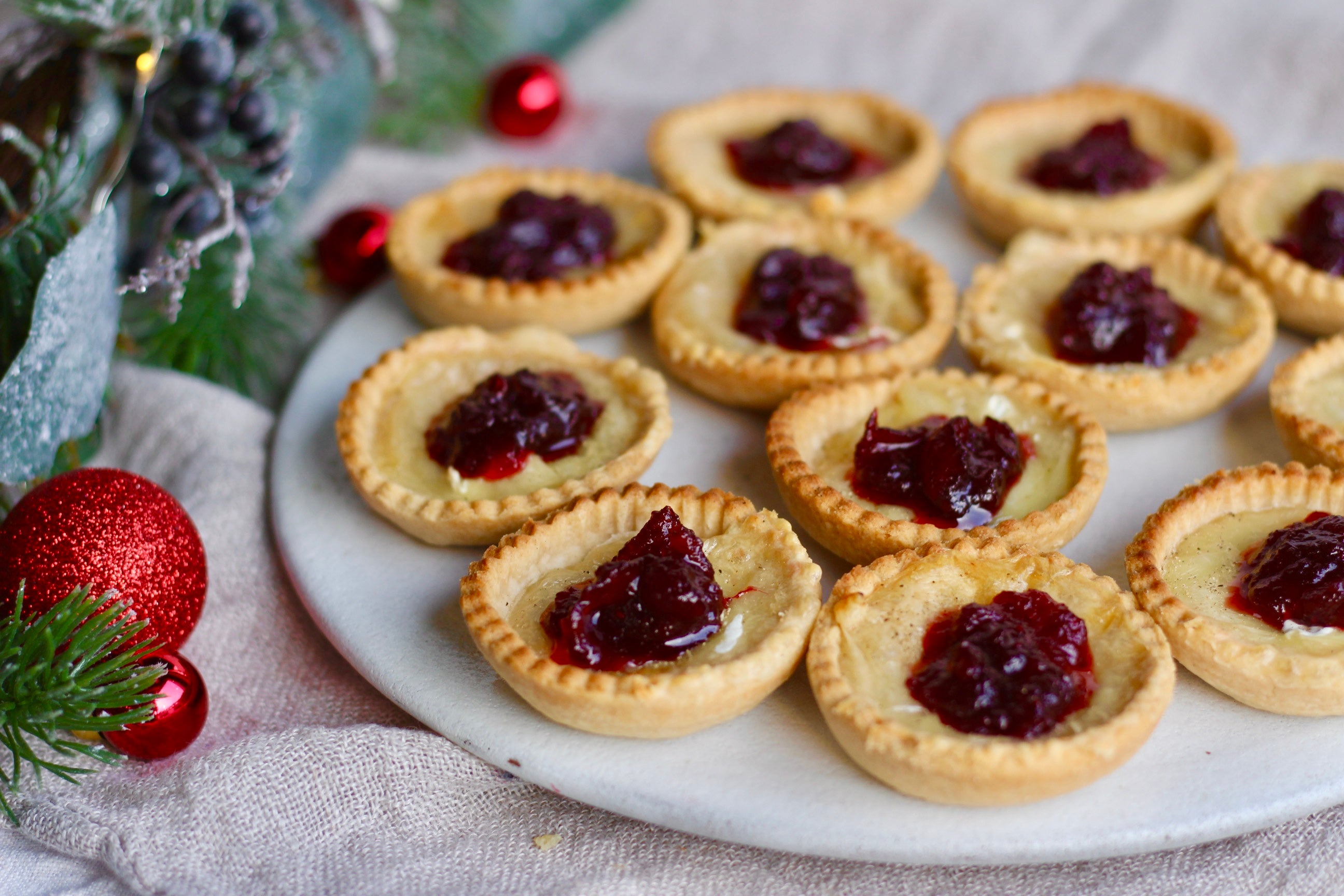
Makes: 12 mini tarts
Ingredients:
200g plain flour
100g salted butter, cold and cubed
2 tbsp cold water
1 wheel of Camembert cheese, around 250g
Jar of cranberry sauce
Method:
1. Preheat the oven to 180C (fan).
2. In the large mixing bowl, bring together the flour and cold, cubed butter to form a crumb consistency. Add in the cold water and work to form a dough.
3. Roll the dough out to a 5mm thickness on a lightly floured surface and cut out rounds, pressing each one into the muffin tray to form the tart shells. You will need to bring the dough offcuts together and re-roll to make 12.
4. Prick each tart case base with a fork to stop them rising and place in the oven for 15 minutes to blind bake.
5. While the cases are blind baking, remove the rind from the cheese and divide into 12 equal portions, then, place a portion into each tart case and return to the oven for a further 15 minutes.
6. Allow to cool slightly before removing the tarts from the muffin tin, placing on a serving platter and topping each one with ½ tbsp of cranberry sauce.
Tips: If you don’t have a round cutter, you can use a tumbler.
Recipe from the Easy Peasy Baking campaign
Roasted grape, honey and feta crostini
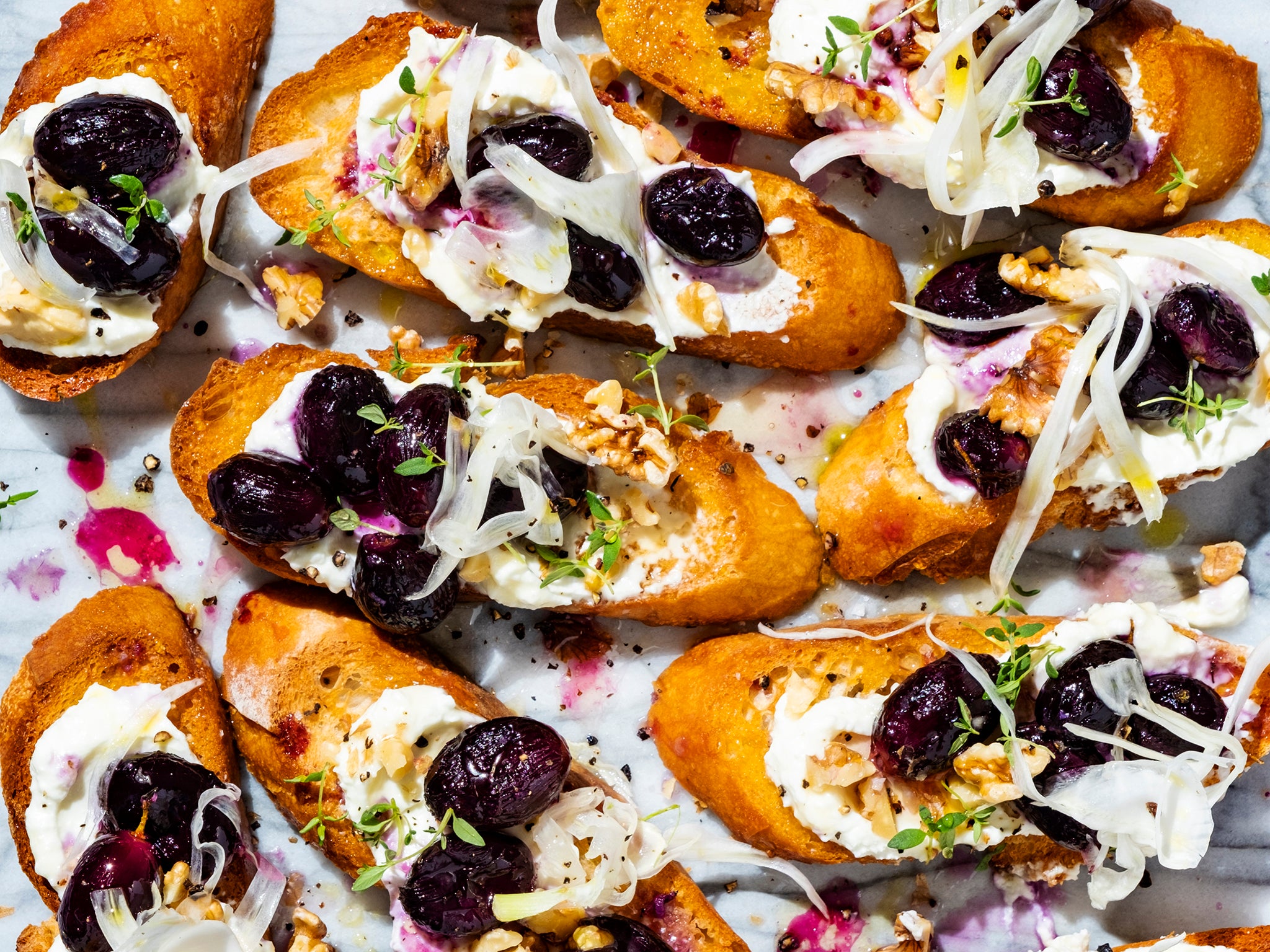
“This creation is heavily inspired by one of my favourite signature bakes in the Bake Off tent,” says Crystelle Pereira, who was a runner-up on the show in 2021.
“I had made a focaccia during Bread Week, with roasted grapes, sharp, salty feta, crunchy walnuts and fresh fennel. It went down a treat, and so I’ve transferred all of the same flavours and textures into crispy crostini – little bites of sweet and salty deliciousness.”
Ingredients:
For the infused oil:
50ml olive oil
2 garlic cloves, grated
½ tablespoon dried thyme
For the crostini:
240g black seedless grapes (about 24 grapes)
200g feta
10 walnuts, skin on
1 small baguette
1½ tablespoons runny honey
¼ fresh fennel bulb, thinly sliced (optional)
A bunch of fresh thyme
A pinch of fine sea salt and ground black pepper
Method:
1. Preheat the oven to 180C fan/400F/gas mark 6.
2. First make the infused oil. Place the olive oil in a small saucepan with the garlic and thyme and heat very gently over a low heat for about 10 minutes, until the oil is sizzling and fragrant. Turn off the heat and set aside.
3. Arrange the grapes in a roasting tray and spoon over 3 teaspoons of the infused oil. Toss the grapes until they are coated, then place in the oven and roast for 20 minutes, until they are sizzling and the skins have shrivelled slightly. Allow to cool, then slice each grape in half lengthways.
4. Place the feta in a food processor with a splash of feta water (or a splash of milk if your feta does not have water), a good pinch of pepper and a tiny pinch of salt and blend until completely smooth.
5. Place the walnuts in a dry frying pan over a medium heat and toast for around 7 minutes until slightly browned and fragrant. Allow to cool slightly, then break into small pieces and set aside.
6. Slice the baguette diagonally into thin crostini slices (about 1.5cm thick) and drizzle a teaspoon of the infused oil over each slice. Place these on a tray and toast in the oven for 7–10 minutes until crispy and golden, or alternatively cook on a griddle pan over a high heat for 4 minutes, flipping halfway through.
7. To assemble, spread 1 heaped teaspoon of whipped feta over each crostini and drizzle with honey. Top with about 4 grape halves and a scatter of fennel, crushed walnuts and fresh thyme leaves, and serve straight away.
‘Flavour Kitchen: Vibrant Recipes with Creative Twists’ by Crystelle Pereira (Kyle Books, £22)
Sizzled spring onion and Togarashi devilled eggs

Devilled eggs were a well-loved party favourite in the Seventies and Eighties, that have had something of a revival in recent years – with all sorts of global iterations perking up this joyful classic.
This Japanese-inspired take brings in Asian flavours with unapologetic gusto and will go down a storm at any New Year’s Eve or seasonal bash.
Makes: 12
Ingredients:
2 whole spring onions, finely sliced
2 tbsp olive oil
6 large eggs
1 tsp wasabi
1 tsp English mustard
½ tsp toasted sesame oil
2 tsp soy sauce
3 tbsp Kewpie mayonnaise
2 tsp juice, 1 tsp zest lemon
2 tsp Togarashi Shichimi (Japanese 7 spice), plus extra to garnish
Method:
1. Place the eggs in a large saucepan with 1 tablespoon of vinegar and 1 teaspoon of salt. Pour over boiling water, then bring to a rolling boil on the hob. Cook for exactly 7 minutes, then remove the eggs from the boiling water and plunge them into cold water. Leave for 1 minute, then carefully peel them all.
2. While the eggs are cooking, heat the olive oil in a frying pan – then add the finely sliced spring onions and sizzle for 3-4 minutes until they just start to take on a little colour. Spoon them out of the oil, and keep them to one side.
3. Cut the eggs in half and scoop out the yolks – putting them into a mixing bowl. Arrange the whites onto a serving plate.
4. Use a fork to break up the yolks, then add the soy sauce, toasted sesame oil, English mustard and wasabi. Mix well, then add the mayonnaise, lemon juice, lemon zest, togarashi and most of the sizzled spring onion – keeping some behind to garnish. Mix again, then check for seasoning, adding more soy, mustard or lemon if needed.
5. Use a piping bag with a large star nozzle to pipe the filling into the cavity of each egg white. Garnish with the remaining spring onions and a sprinkle over more togarashi. Enjoy with drinks.
Recipe by Gurdeep Loyal for Borough Market
Feta and thyme honey devils on horseback

The ultimate party bite is something that hits every taste bud at the same time – something sweet, savoury, salty and crunchy all at once. These devils on horseback do just that!
Makes: 12
Ingredients:
12 large Medjool dates, destoned
100g feta
6 tbsp runny honey
1 tbsp thyme, very finely chopped
1 tsp lemon zest
50g walnuts, finely chopped
12 smoked streaky bacon rashers
Method:
1. Pre-heat the oven to 190C fan.
2. Add the runny honey to a small saucepan, along with a pinch of fine salt, the lemon zest and finely chopped thyme. Warm over a medium heat for 2 minutes, then remove from the heat and leave to infuse for 5 minutes.
3. Cut a slit into your first date along its length. Brush the inside liberally with thyme-honey, then sprinkle in some of the chopped walnuts. Stuff the inside fully with a piece of feta, then encase with the sides of the date.
4. Brush over a little more of the honey, then wrap with a rasher of streaky bacon. Use a large cocktail stick to pierce through the centre of the date, securing everything together. Place on a lined baking sheet. Repeat until you have 12 feta-stuffed bacon wrapped dates, well spaced apart.
5. Bake in the oven for 16-18 minutes, turning every 5 minutes, until the bacon is cooked through and slightly crispy, and the feta is starting to ooze from the sides.
6. Remove from the oven, place on a serving plate, drizzle over more of the thyme-honey and enjoy with drinks (careful, they will be hot inside if served straight from the oven!).
Recipe by Gurdeep Loyal for Borough Market
Join our commenting forum
Join thought-provoking conversations, follow other Independent readers and see their replies
Comments
Bookmark popover
Removed from bookmarks