From Prue Leith’s trifle to Nigella’s chocolate cake and a perfect brandy pudding – the Christmas desserts worth making
From brandy-soaked Christmas pudding and classic yule log to glossy trifles and brilliantly lazy cheat’s tiramisu, Hannah Twiggs rounds up the festive dessert recipes to make when the fridge is full and time is short

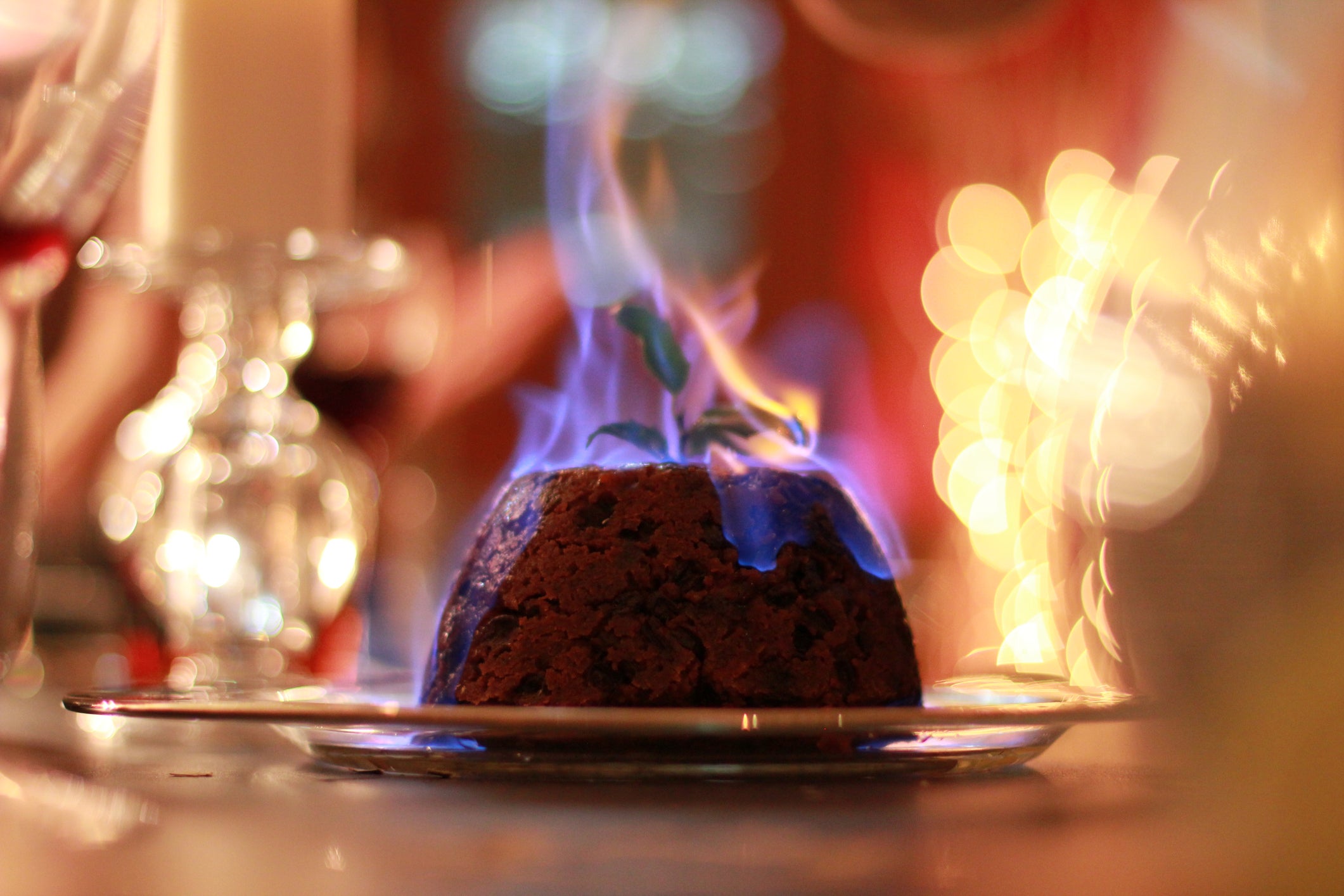
Christmas dessert is where rules loosen, spoons get bigger and restraint quietly leaves the room. After the turkey’s been picked over and the cheese board has done its duty, this is the moment everyone is really waiting for – the part of the meal where nostalgia, indulgence and a bit of theatre are actively encouraged.
This collection brings together the kind of puddings that feel unapologetically festive, whether you’re feeding a full house or just want something excellent waiting in the fridge when the dishes are done. There are showstoppers for the centre of the table and cheats for when time has slipped away, alongside clever ways to use up Christmas leftovers before they turn from joyful to vaguely accusatory. It’s rich, comforting food, but never without a point.
You’ll find deeply indulgent classics from the likes of Jamie Oliver, who leans hard into chocolate, coffee and caramel when the season demands it, and Nigella Lawson, who makes a compelling case for ditching dried fruit in favour of something altogether more chocolatey. Elsewhere, there’s the technical reassurance of Marcus Wareing and Michel Roux, offering desserts that look impressive but are entirely achievable at home, provided you keep your nerve.
There are also puddings that prioritise ease – quick tiramisus, trifles built for improvisation, and make-ahead options that quietly improve with time – as well as recipes that invite a bit of ceremony, from brandy flames to glossy ganache and snowy meringue. Pick one, pick three, or simply bookmark them for the long stretch between Christmas and New Year, when something sweet in the fridge can feel like a small act of self-preservation.
Jamie Oliver’s sticky toffee coffee pudding

Serves: 16
Time: 1 hour 15 minutes
Ingredients:
For the pudding:
170g unsalted butter, plus extra for greasing (at room temperature)
340g self-raising flour, plus extra for dusting
450g fresh Medjool dates
1 level tsp ground cinnamon
1 whole nutmeg, for grating
50g walnut halves
170g golden caster sugar
170g dark muscovado sugar
4 large free-range eggs
For the caramel sauce:
250g unsalted butter
125g golden caster sugar
125g dark muscovado sugar
50ml espresso
50ml dark rum
250ml double cream
70g walnut halves
Method:
1. Preheat the oven to 180C/350F/gas 4. Grease and lightly flour a 26-centimetre bundt tin or a 20-centimetre x 30-centimetre baking dish.
2. Destone the dates and put into a food processor with the cinnamon and 300 millilitres of boiling water, then finely grate in the whole nutmeg. Leave the dates to soak with the lid on for 10 minutes, then blitz to a purée, stopping occasionally to scrape down the sides to help it along.
3. Add the walnuts to the food processor and blitz again. Add both the sugars and the butter and blitz until combined. With the motor still running, crack in the eggs. Add the flour and a pinch of sea salt, then pulse until combined. Pour the pudding mixture into the prepared tin, then bake for 45 minutes, or until an inserted skewer comes out clean.
4. When your pudding is almost ready, make the sauce. Place a wide saucepan over a medium heat, cube and add the butter, then sprinkle over the sugars.
5. Once the butter has melted, stir in the espresso, carefully add the rum (it may splatter), then bring to the boil. Add the cream and walnuts, then reduce the heat to low and simmer for 5 minutes, or until the sauce has thickened and turned a lovely deep golden colour.
6. Remove the pudding from the oven. If using a bundt tin, flip out the cake onto a platter and brush it all over with the sauce – as the cake cools down, the sauce will harden into a delicate crisp layer. If using a baking dish, poke holes in the top and pour over one-third of the sauce.
7. Decorate the sponge with the walnuts, using a fork to remove them from the sauce. Serve with a jug of the remaining sauce and some double cream, ice cream or custard, if you like.
Michel Roux’s Yule log with Grand Marnier
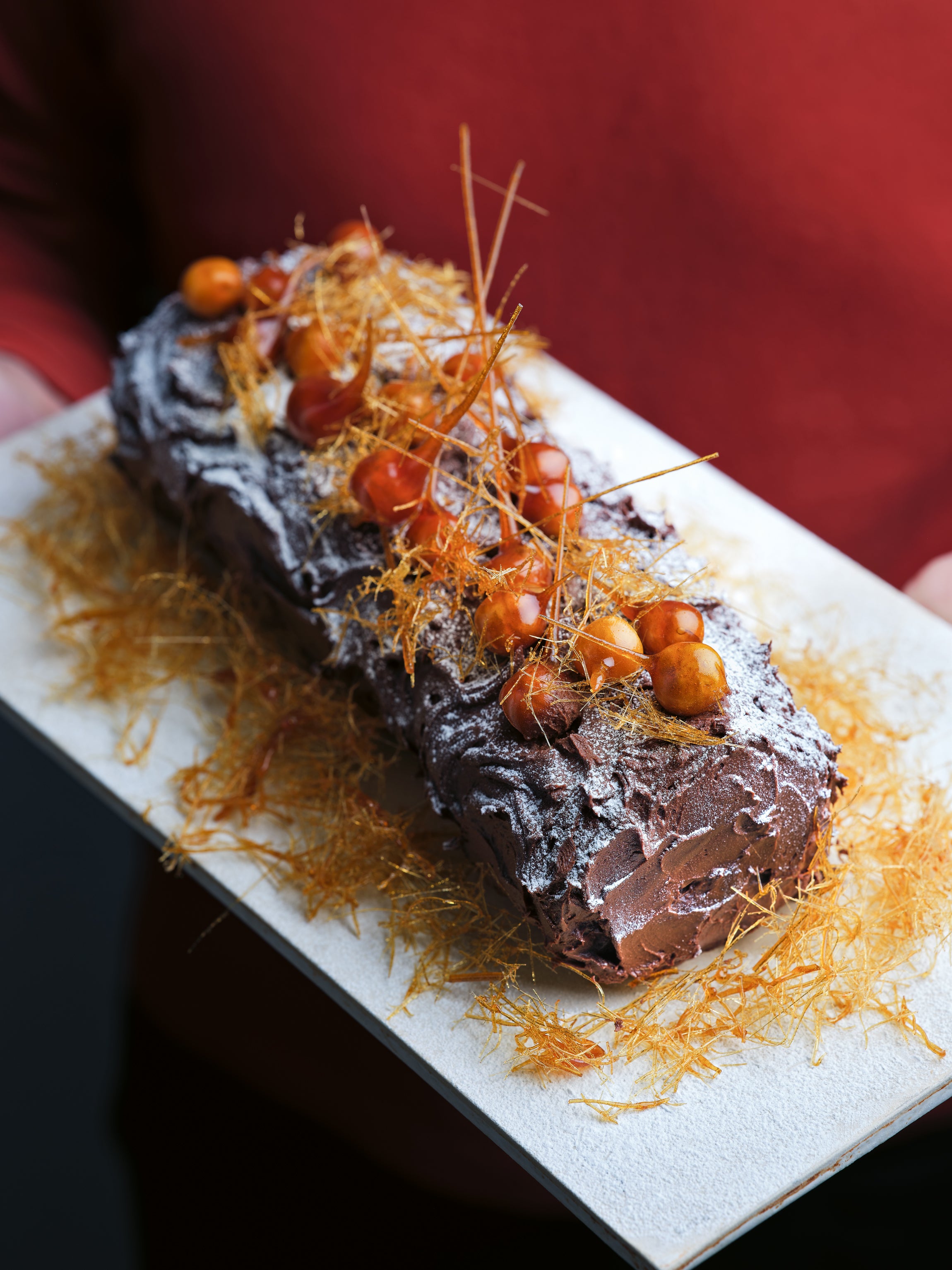
“The classic Yule log is the perfect finale to a Christmas feast,” says Michel Roux. If you have chocaholics in your family, you can’t go far wrong with a classic Yule log recipe – or Bûche de Noël, as it’s known in French.
Serves: 6-8
Ingredients:
For the ganache:
200g dark chocolate (70% cocoa solids), broken up
200g double cream
Splash of Grand Marnier
For the sponge:
6 free-range eggs, separated
150g caster sugar, plus extra for dusting
70g plain flour
30g pure cocoa powder
Pinch of salt
30g butter, melted
2 tbsp icing sugar
For the caramelised hazelnuts:
About 20 whole peeled hazelnuts
250g caster sugar
Method:
1. Start by making the ganache. Put the chocolate in a bowl. Pour the cream into a pan and bring it to the boil, then pour it over the chocolate and mix until smooth. Leave to cool, then add Grand Marnier to taste. Whisk until light and fluffy.
2. For the sponge, line a baking tray measuring about 30 x 40 centimetres with baking parchment. Preheat the oven to 200C/fan 180C/gas 6. Beat the egg yolks with 100 grams of the sugar until pale, then add the flour, cocoa powder and salt, followed by the melted butter. Whisk the whites until frothy, then add the remaining sugar and continue to beat until stiff. Fold the egg whites into the egg yolk mixture, then spread over the baking tray. Bake in the preheated oven for 15 minutes.
3. Lay a clean tea towel on your work surface and turn the sponge out onto it. Remove the baking parchment. Dust the sponge with a little of the caster sugar, spread some of the ganache over it and roll the sponge up as tightly as possible into a neat log. Leave the sponge to cool, then cover it with the rest of the ganache and leave it to chill in the fridge.
4. To make the hazelnut decoration, stick a toothpick into each hazelnut and set them aside. Have something ready to stand the toothpicks into while the nuts harden, such as a piece of polystyrene. Heat the sugar in a heavy-based pan until you have a golden-brown caramel. One by one, dip the hazelnuts into the caramel, then stand them in whatever you have prepared and leave them to harden. Drizzle any remaining caramel in a criss-cross pattern over a piece of baking parchment and leave it to harden.
5. Dust the log with icing sugar and arrange the caramelised nuts on top. Scatter over the pieces of caramel to look like hay.
‘Michel Roux at Home’ by Michel Roux (Seven Dials, £26).
Marcus Wareing’s apple tarte tatin with nutmeg cream
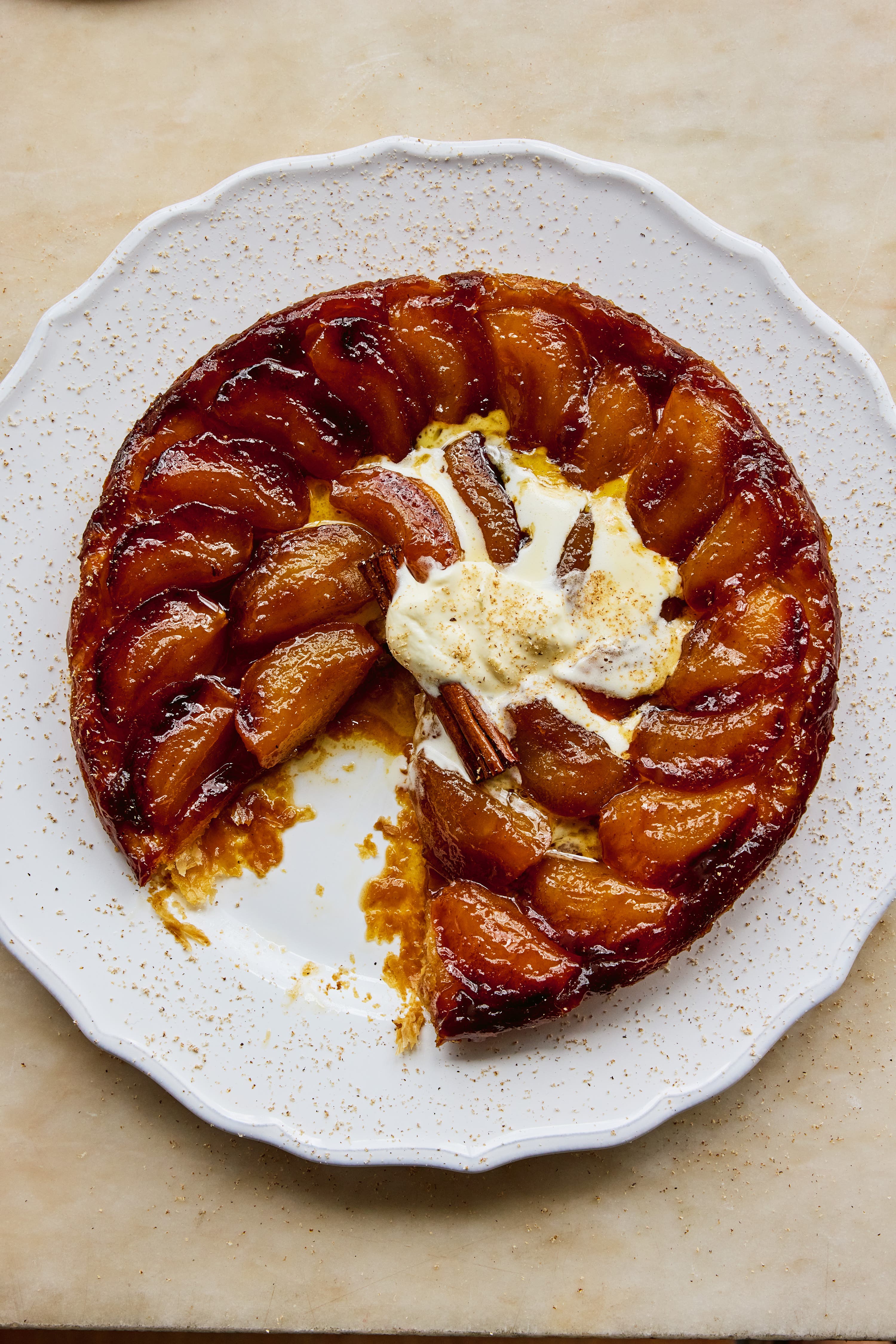
“My first ever attempt at making an apple tarte tatin was in a competition at The Savoy hotel in London – talk about being thrown in at the deep end! It did not go well,” admits Marcus Wareing.
“I had no idea that the apples needed to be caramelised, which I soon realised is the key to a perfect tarte tatin. I’m happy to say that I’ve mastered the technique since then, and this recipe is both foolproof and delicious.”
Serves: 6-8
Prep time: 20 minutes | Cook time: 50 minutes
Ingredients:
1 x 320g sheet of ready-rolled all-butter puff pastry
Plain flour, for dusting
100g cold butter, softened
100g golden caster sugar
2 cardamom pods, bashed gently with a rolling pin to release the flavour
1 cinnamon stick
6-7 Braeburn apples, peeled and quartered
For the nutmeg cream:
200ml double or whipping cream
A grating of fresh nutmeg
Method:
1. To make the tarte tatin, roll the puff pastry on a floured work surface out to about three millimetres thick and cut around a plate to make a large circle, just bigger than the pan you’re going to use to make the tart. Cut three small slits in the pastry for the steam to escape and move to a baking parchment-lined tray. Place in the fridge to rest while you make the rest of the tart.
2. Spread the softened butter in an even layer over the base of a 20-24 centimetre ovenproof frying pan. Cover with the sugar and spices in another even layer. Arrange the apples on top in a spiral, overlapping one another.
3. Preheat the oven to 210C/190C fan/gas 7.
4. Place the pan on the hob over medium-high heat and cook until the butter and sugar start to bubble and form a caramel; this will take around 10 minutes. Remove from the heat and then place the pastry circle over the apples, using a spoon to tuck the pastry in around the edges of the pan. Be careful, it will be very hot!
5. Bake for about 35-40 minutes until golden brown. Remove from the oven and leave to rest for 5 minutes.
6. Meanwhile, make the nutmeg cream by whisking the cream until it reaches soft peaks. Spoon into a serving bowl and grate some fresh nutmeg over the top.
7. Run a small knife around the inside of the pan to ease away the caramelised pastry. Put a large plate over the tarte tatin in the pan and carefully flip both pan and plate over. Slowly lift the pan off to turn the tarte out. Serve with the nutmeg cream on the side.
‘Marcus’s France’ by Marcus Wareing (Harper NonFiction, £22).
Prue Leith’s dark chocolate and orange trifle
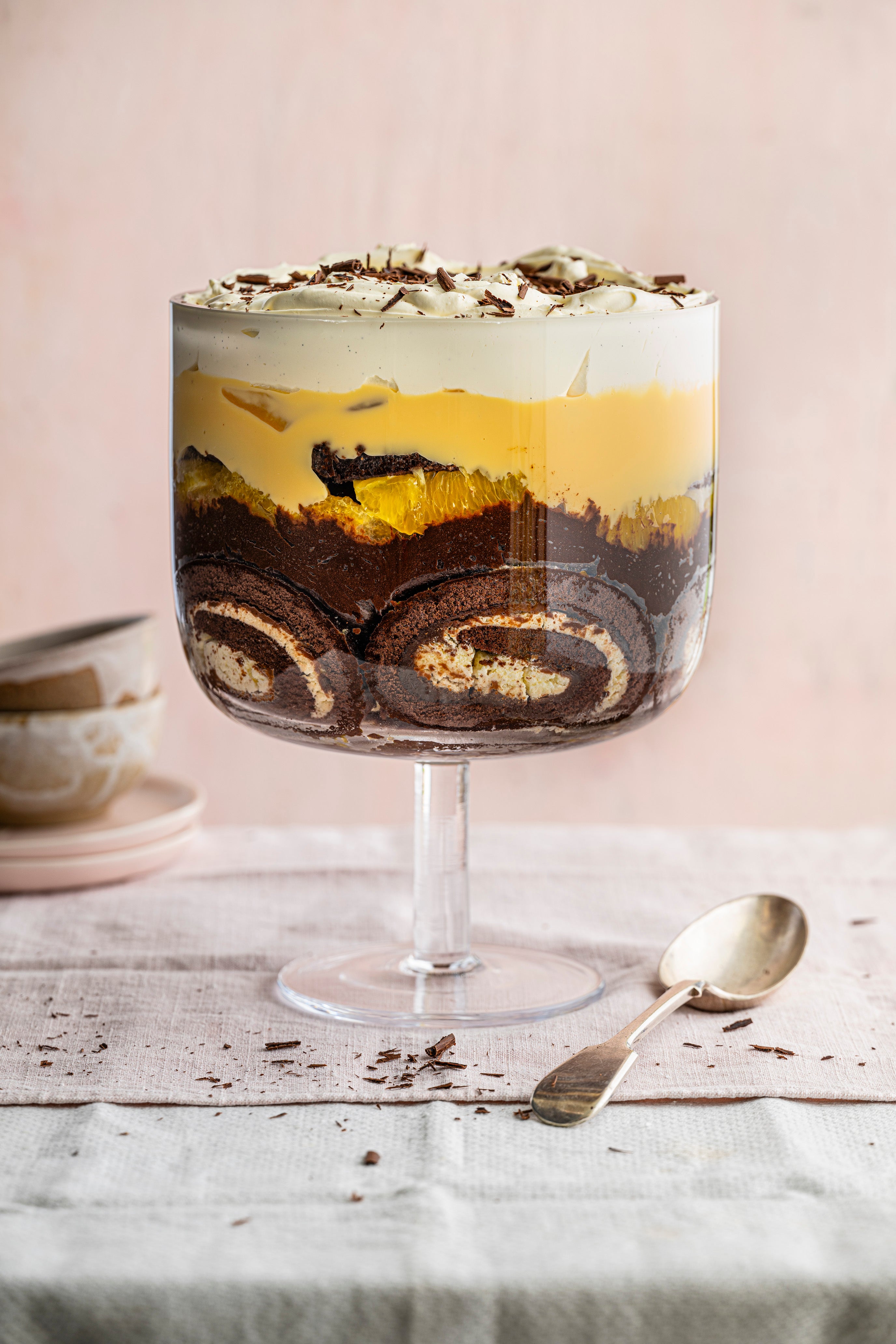
“Rather egotistically, I consider myself the trifle queen!” says Prue Leith. “Any leftover cake, croissants, brioche, panettone or raisin bread in our house ends up spread with a suitable, sweet spread (jam, honey, Nutella), soaked in a compatible booze (sherry, brandy, rum, fruit or coffee liqueur), and sunk in lashings of custard and cream.
“I’m not above using bought cake and custard either. And I love to decorate the top with a colourful mixture of the traditional trifle toppings (glacé cherries, angelica, walnuts) or more modern ones, like freeze-dried raspberries, fresh fruit and edible flowers.
“Indeed, I mostly just assemble anything I can from the larder and pile the lot on – and I think it looks wonderful.”
Serves: 4-6
Ingredients:
4 large oranges
3 tbsp Cointreau or other orange liqueur
300g 70% dark chocolate
500ml double cream
50g caster sugar
1 tsp vanilla extract
1 chocolate Swiss roll (about 250g)
500ml vanilla custard
Method:
1. Segment the oranges, keeping any juice separately from the segments.
2. Add the Cointreau or other orange liqueur to the juice.
3. Roughly chop 250 grams of the dark chocolate, then melt it in a heatproof bowl set over a pan of simmering water. Stir occasionally until the chocolate is smooth and fully melted. Remove from the heat and let it cool.
4. Whip 200 ml of the cream with the sugar and vanilla until it will just hold its shape.
5. Fold the melted chocolate into the whipped cream until combined, creating a rich chocolate mousse.
6. Cut the Swiss roll into 1cm-thick slices and use two-thirds of them to line the bottom and sides of a deep trifle bowl.
7. Pour half of the orange-juice mixture over the Swiss-roll layer.
8. Spread the chocolate mousse over the cake.
9. Arrange the segmented oranges over the mousse, keeping a few back for garnish.
10. Add another layer of Swiss-roll slices, then drizzle them with the remaining orange-juice mixture.
11. Pour the custard all over, spreading it out evenly.
12. Whip the remaining cream until it will just hold its shape (the soft peaks stage).
13. Using a vegetable peeler, shave the remaining chocolate to create chocolate curls for decoration. Or simply grate it.
14. Top the trifle with the whipped cream, remaining orange segments and a sprinkle of chocolate.
15. Chill in the fridge, preferably for two to three hours, or overnight, which gives the dessert time to set. (Although it will still taste terrific if you have to eat it straight away.)
‘Life’s Too Short to Stuff a Mushroom’ by Prue Leith (Carnival, £25).
Rick Stein’s last-minute cheat’s tiramisu
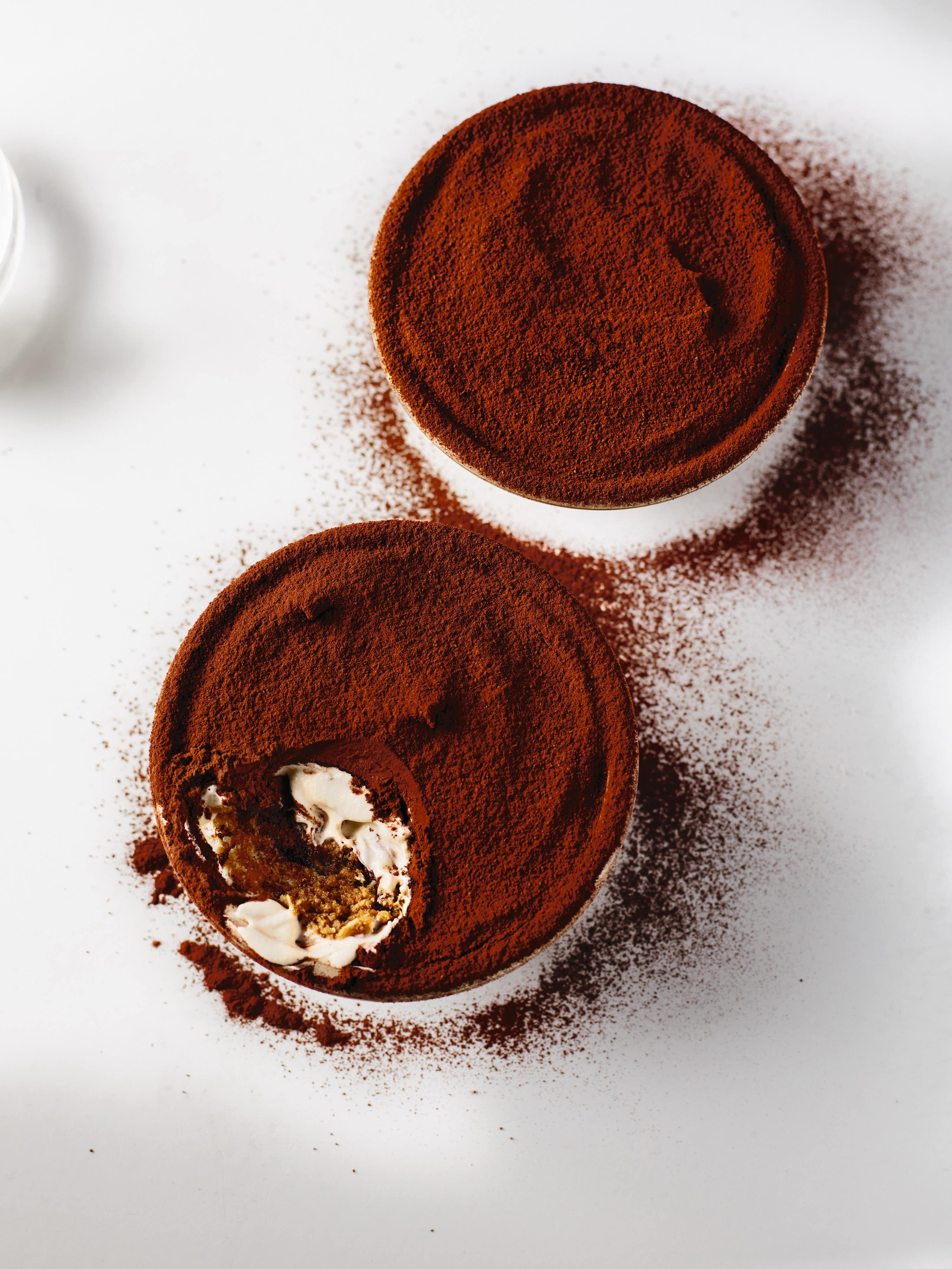
“Obviously, there is nothing that can beat a proper tiramisu, but this is so quick and so lovely, and it really does take just minutes to make,” says Rick Stein.
Serves: 4
Ingredients:
150ml whipping or double cream
250g mascarpone, at room temperature
40g icing sugar, sifted
50ml Baileys or Marsala
150ml espresso coffee, cooled
8-12 sponge fingers or 4 trifle sponges
Cocoa powder, for dusting or a chocolate flake, crumbled
Method:
1. Lightly whip the cream in a bowl until it’s only just starting to thicken.
2. Whisk the mascarpone with the Baileys or Marsala to soften, add the icing sugar, then fold into the cream.
3. Pour the coffee into a separate bowl. Dip the sponges into the coffee and then divide half of them between 4 glasses or small bowls.
4. Add half the cream mixture, again dividing it between the bowls, then repeat the layers of sponge and cream. Dust generously with cocoa powder or crumbled chocolate.
5. Refrigerate until ready to serve or serve immediately if making at the last minute.
Rick Stein’s Simple Suppers (BBC Books, £28).
Jamie Oliver’s chocolate dreams – dedicated to wife Jools
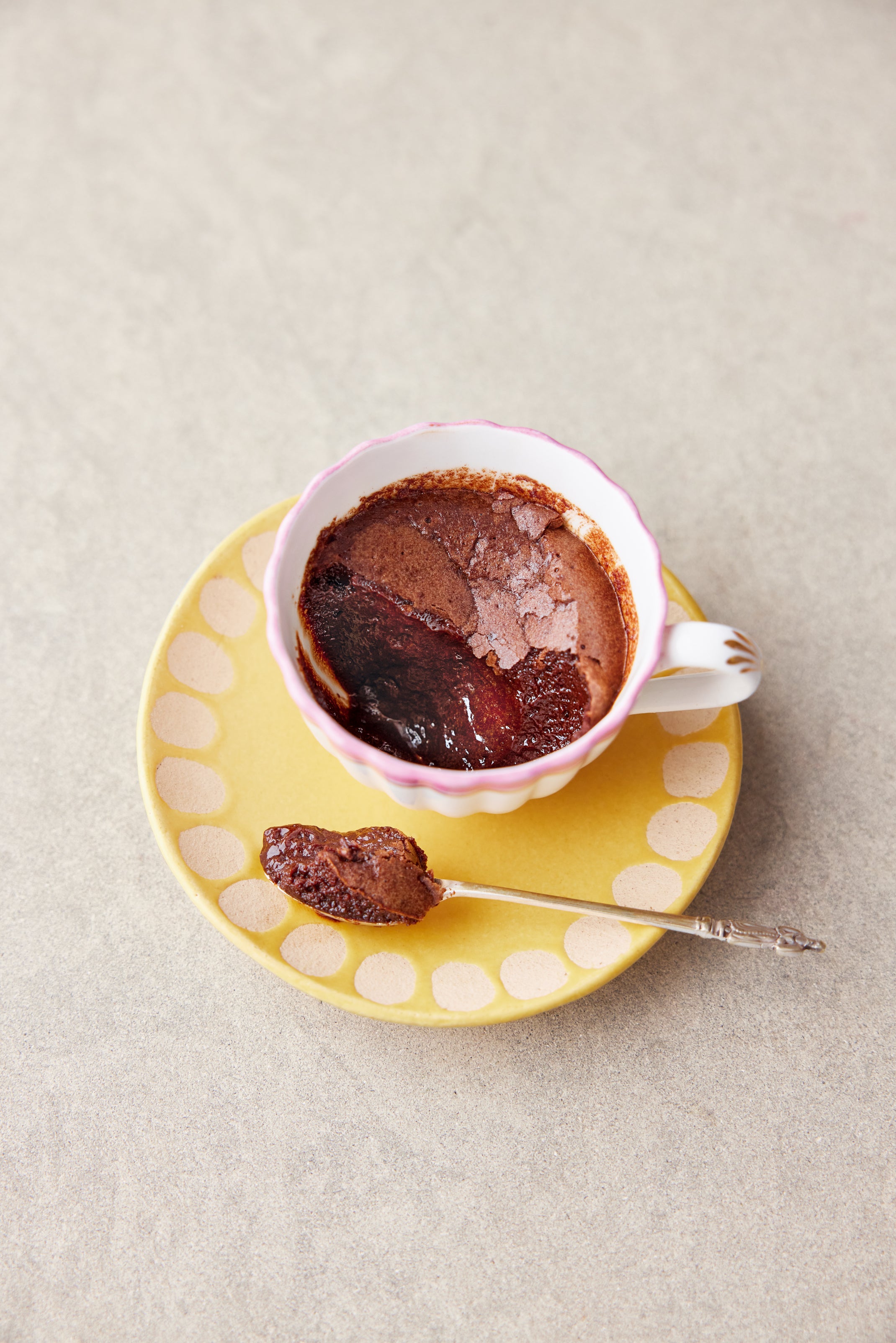
“Chocolate and coffee are celebrated all around the Med and they’re also my wife’s two favourite indulgent pleasures, so why wouldn’t I create possibly one of the most decadent desserts on earth?” says Jamie Oliver.
Serves: 6
Time: 40 minutes, plus cooling
Ingredients:
150g dark chocolate (70%)
125g unsalted butter
50ml good espresso
2 large eggs
125g golden caster sugar
Method:
1. Preheat the oven to 120C/250F/gas ½.
2. Snap the chocolate into a heatproof bowl, add the butter, espresso and a good pinch of sea salt, and place over a pan of gently simmering water to melt very slowly until smooth, stirring regularly.
3. Meanwhile, whisk the eggs and sugar together until pale and doubled in size, then carefully fold in the melted chocolate mixture.
4. Boil the kettle. Divide the mixture between six coffee cups or ramekins and put them into a roasting tray. Place the tray in the oven, then carefully pour in enough boiling kettle water to come halfway up the side of the cups.
5. Bake for exactly 20 minutes, then carefully remove from the oven and leave to cool in the water for two hours.
6. To serve, I sometimes shave over some extra chocolate, or add fresh fruit like cherries, blood oranges or wild strawberries, with a dollop of yoghurt or crème fraîche.
‘5 Ingredients Mediterranean’ by Jamie Oliver (Penguin Michael Joseph © Jamie Oliver Enterprises Limited).
Jon Watts’ panettone pudding
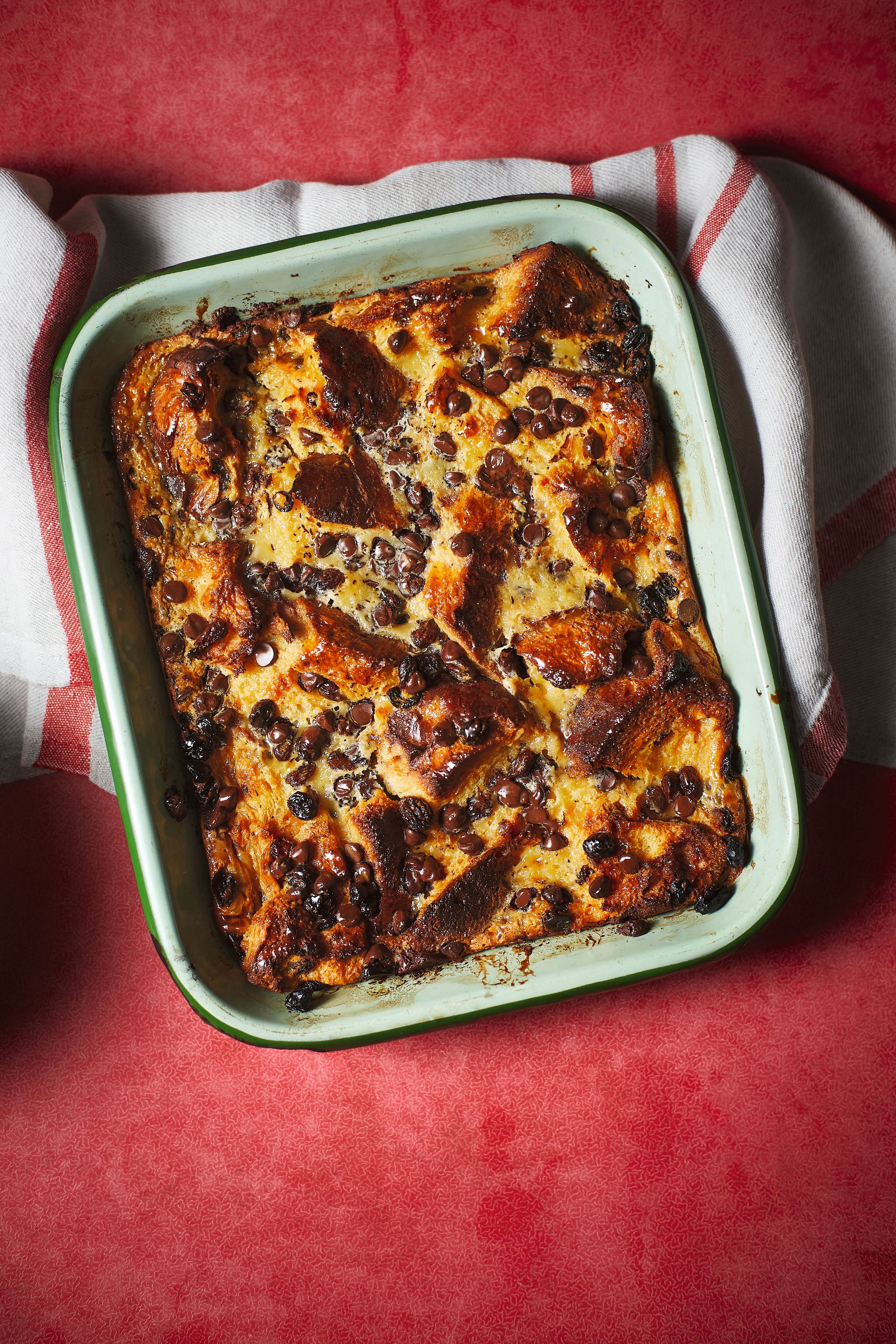
Use leftover panettone at Christmas time to make this comforting dessert, an update on an old favourite. When I was a child, I found the name “bread and butter pudding” really off-putting, so if you make this for your kids, let them try it before you use anything like those words out loud, just in case they feel the same way!
If you ever have longer than 30 minutes, leave the panettone to soak in the custard until you’re ready to bake it: 20 to 30 minutes will do the job. This effort-free technique means the pudding is lighter after baking.
Serves: 6
Prep time: 10 minutes | Cooking time: 20 minutes
Ingredients:
200ml whole milk
350ml double cream
2 tsp vanilla bean paste
4 eggs
250g golden caster sugar
20g butter
450g panettone, cut into rough chunks
100g raisins
100g chocolate chips
50g demerara sugar
Method:
1. Preheat the oven to 190C fan.
2. To make the custard, put the milk in a saucepan with the cream and vanilla paste and cook over a medium heat until it’s almost at boiling point. (Do not boil it, though.)
3. While that’s heating up, whisk the eggs and golden caster sugar in a heatproof bowl until well combined.
4. Gradually pour the hot cream mixture over the eggs, whisking constantly, until smooth.
5. Butter an ovenproof dish generously. Spread out the chunks of panettone, then scatter over the raisins and chocolate chips. Pour the custard over the pudding (see recipe introduction).
6. Scatter evenly with the demerara sugar, then bake for 20 minutes or until golden and puffed up. Or you can also make this in an air fryer in a baking dish that will fit inside (for timings and temperatures, see the air fryer conversion chart on page 205). Serve the pudding with custard or ice cream.
‘Speedy Comfort’ by Jon Watts (Bloomsbury Publishing, £22).
Tiramisu trifle
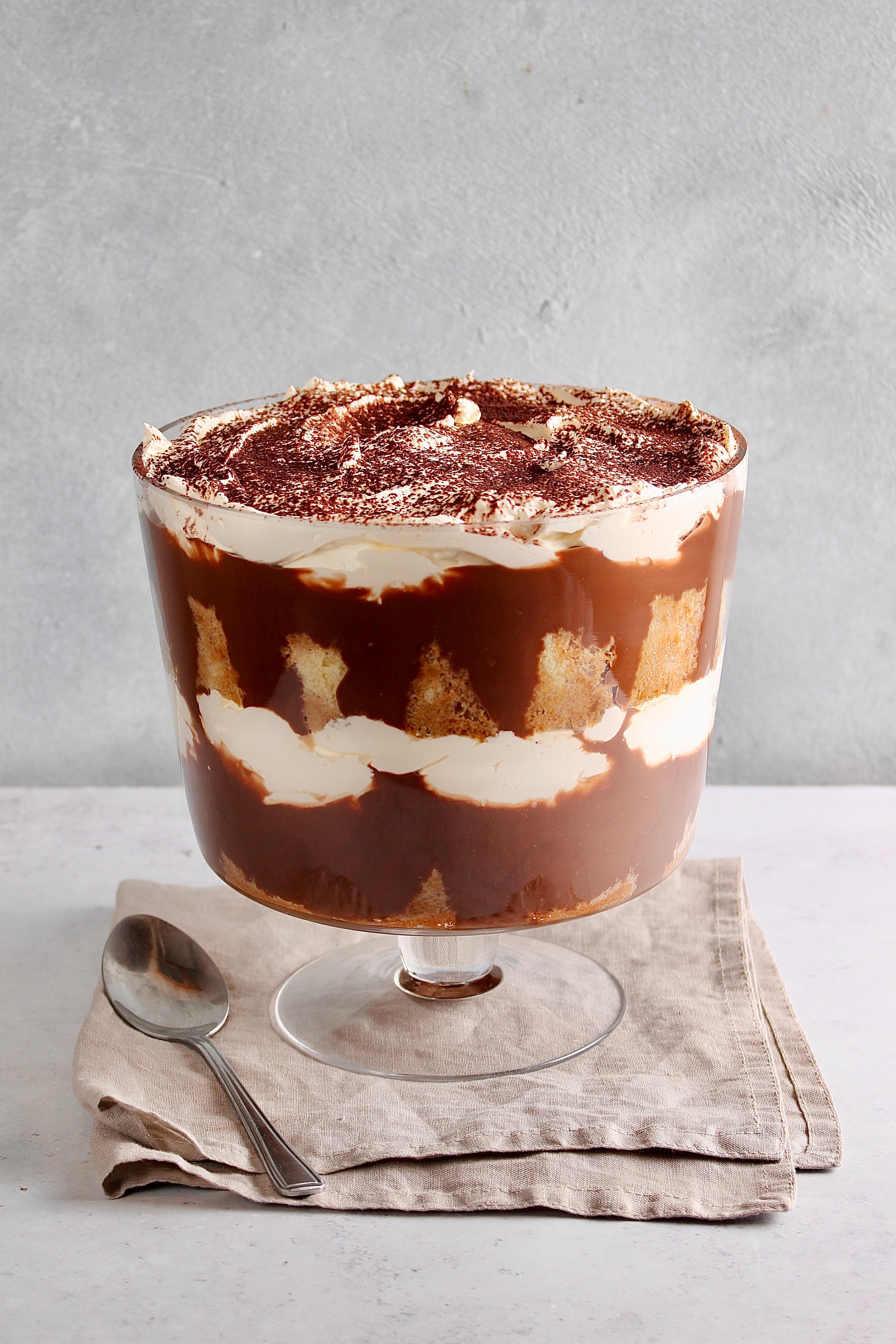
Makes: 1 x 20cm/3.5 litre trifle
Time: 10 minutes to mix sponge, 20-25 to bake, 15 minutes to assemble
Ingredients:
175g caster sugar, plus extra for sweetening cream and coffee
175g unsalted butter, softened
3 eggs
175g self-raising flour
45ml/3 tbsp milk
500g mascarpone cheese
600ml double cream
2 tbsp instant coffee OR 2 double espressos + 8 tbsp boiling water
1L chocolate custard
Method:
1. Preheat the oven to 160C fan.
2. In the mixing bowl, cream together the butter and 175g caster sugar, add the eggs, followed by the flour and milk and mix until just combined.
3. Pour the mixture into the prepared tin and bake for 20-25 minutes or until golden brown and springy to touch. Allow to cool completely.
4. Once cooled, remove the sponge from the tray, trim the edges and cut into 32 squares. Prepare the coffee and sweeten to taste.
5. Whisk together the mascarpone and double cream with the extra caster sugar until thick/soft peaks. Be careful not to over-whip.
6. Place a layer of sponge squares in the base of the trifle dish and pour over half of the coffee, allowing it to soak into the sponge. Then, pour half of the custard on top, followed by half of the cream, spreading to the edges.
7. Repeat the three layers again and dust with cocoa powder to finish.
Recipe from the Easy Peasy Baking campaign
Rick Stein’s hazelnut pavlovas with white chocolate and dark berry sauce
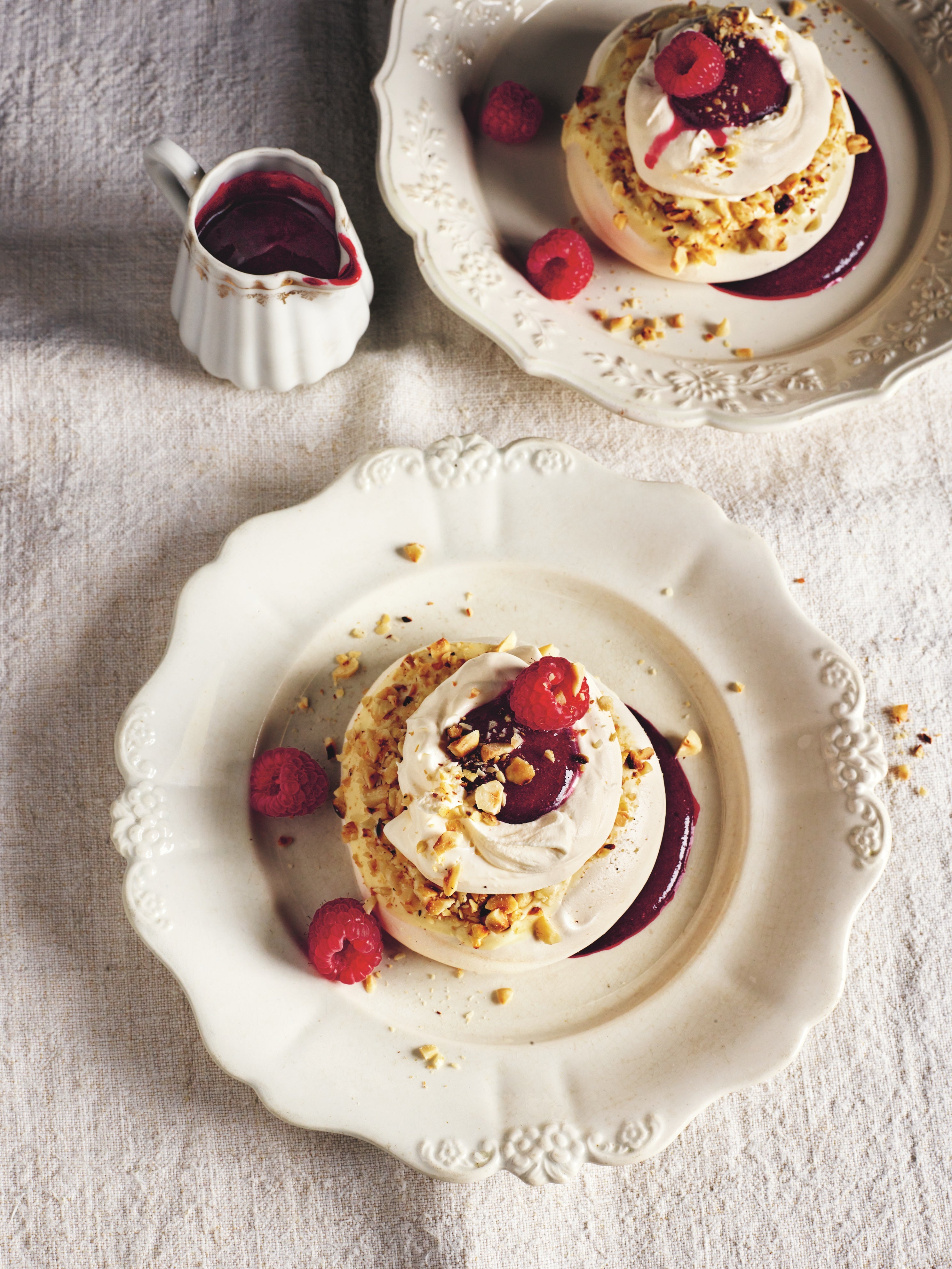
“I am a bit of a purist about pavlova,” says Rick Stein. “As it is one of Australia’s classic dishes, I feel it should be made with something exotic like passion fruit, but when Andrew Sullivan, the pastry chef at The Seafood Restaurant [in Cornwall], made these, I was very taken with them. I asked Andrew to send me the recipe, which was for about 50 portions of a lovely seasonal dish using cobnuts and damsons.
“I have cut it back to a more manageable eight servings and made it suitable for winter by using hazelnuts and frozen berries. Thanks, Andrew.”
Serves: 8
Ingredients:
For the meringues:
4 medium egg whites
220g caster sugar
2 tsp cornflour
½ tsp white wine vinegar
For the berry sauce:
500g frozen Black Forest berry mix, defrosted
2-3 tbsp icing sugar
To serve:
75g blanched hazelnuts
150g white chocolate
500ml double cream
Fresh raspberries or blueberries
Method:
1. Preheat the oven to 120C/fan 100C. Line 2 baking sheets with baking paper.
2. In a clean, grease-free bowl, whisk the egg whites until they form soft peaks. Gradually whisk in the caster sugar, cornflour and vinegar and continue to whisk until the mixture is thick and glossy and the beaters leave a thick ribbon trail in the mixture.
3. Spoon the meringue mixture onto the sheets to form 8 round nests about 10cm in diameter. Place in the oven and cook for about 1½ hours or until the meringues are crisp and dried out. Leave them in the switched-off oven to cool completely.
4. For the berry sauce, blitz the fruit and sugar in a food processor, then pass it through a sieve. Store in the fridge until ready to use. It will be fine for up to 2 days if you want to prepare ahead.
5. Add the nuts to a hot, dry pan and toast for a minute or so until they’ve taken on a little colour. Watch them carefully so they don’t burn. Chop the nuts and set them aside in a bowl.
6. Melt the white chocolate in a bowl over a pan of simmering water.
7. When the meringues are completely cool, dip each one into the melted white chocolate and then into the bowl of chopped nuts. Set aside to cool on a wire rack.
8. Whip the cream until it holds its shape. Spoon a tablespoon of berry sauce onto each plate and top with a teaspoon of the cream, then place a meringue, nut side up, on top. Spoon some cream onto each meringue and use a clean measuring spoon to scoop a hollow in each dollop of cream. (Dip the spoon in water between each plate to get a clean scoop.) Spoon a little berry sauce into the hollow and top with a fresh berry and a few more nuts. Serve immediately.
‘Rick Stein’s Christmas: Recipes, Memories & Stories for the Festive Season’ (BBC Books, £28).
Spiced orange mince pies

Ingredients:
For the pastry:
300g plain flour
3 tbsp icing sugar
1 tsp sea salt
150g cold, unsalted butter, cubed
1 large egg, beaten
1 tbsp ice-cold water
For the filling:
350g mincemeat
1 small eating apple, coarsely grated
Zest of 2 oranges
1 tsp sea salt
To serve:
1 egg, lightly beaten, for brushing
Demerara sugar, for sprinkling on top
Brandy butter or brandy cream, for serving
Method:
1. For the pastry, put the flour, icing sugar and salt in a food processor. Pulse briefly to evenly distribute the sugar and sea salt.
2. Add the cubed butter and pulse until the mixture resembles breadcrumbs.
3. Add the beaten egg and cold water, pulse again briefly just to bring the pastry dough together.
4. Alternatively, to make the pastry by hand, mix the flour, icing sugar and sea salt in a large bowl. Using your fingertips, rub the butter into the flour until it resembles breadcrumbs. Using a table knife, “cut in” the beaten egg and cold water, then tip out onto a clean surface and use your hands to bring the dough together into a ball.
5. Wrap the pastry in parchment paper or cling film and transfer to the fridge for an hour to chill.
6. On a clean surface, roll the pastry out to the thickness of a pound coin. Using a round cutter that is a little larger than the holes of your bun tin, cut out 12 rounds and lightly press these into the tin. For the pastry lids, cut whatever shapes you like (smaller rounds, stars, etc).
7. Mix the mincemeat with the grated apple, orange zest and sea salt.
8. Fill each pastry case with a heaped teaspoon of mincemeat. Brush a little beaten egg on the base of the pastry lids and press gently to seal to the pie edges. Transfer to the fridge to chill for 30 minutes.
9. Preheat the oven to 170C fan.
10. Brush the tops of the mince pies with egg and sprinkle with a little demerara sugar. Bake for 25-30 minutes until the pastry is golden brown and crisp. Serve warm with brandy butter or brandy cream.
Recipe from Maldon Sea Salt
Christmas pudding with brandy butter
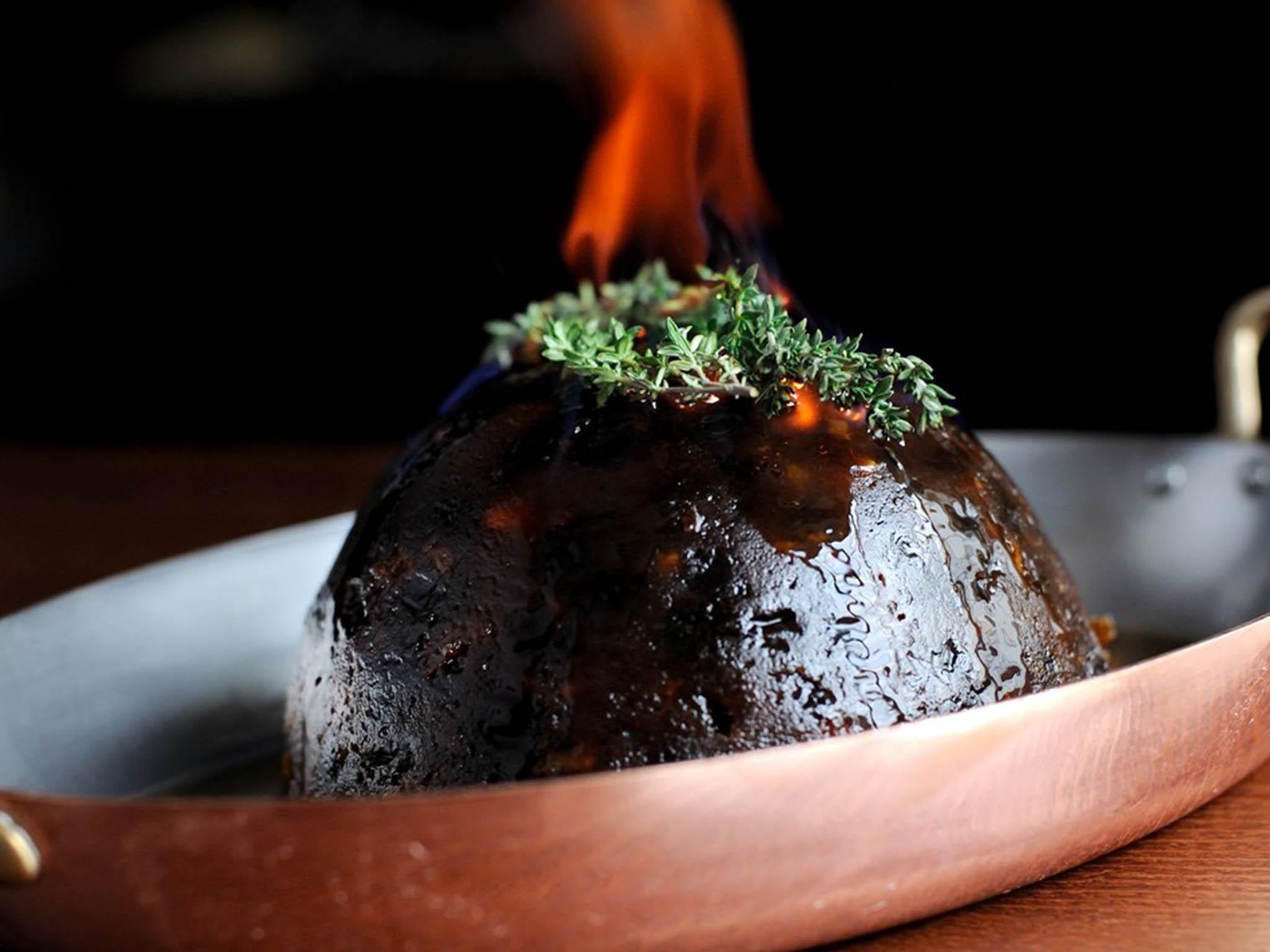
Christmas wouldn’t be the same without the feeling of having totally overindulged. This Christmas pudding with brandy butter recipe will make sure you and your guests will be full of Christmas cheer – with Guinness, rum and brandy in the mix.
Ingredients:
115g self-raising flour
110g white breadcrumbs
250g soft brown sugar
½ tsp ground mixed spice
¼ tsp nutmeg, grated
¼ tsp cinnamon
50g nibbed almonds
90g dates, stones removed
125g raisins
125g sultanas
125g currants
25g mixed peel
1 Bramley apple, peeled and grated
1 orange, juice and zest
1 lemon, juice and zest
3 eggs
75ml rum
75ml brandy
75ml Guinness
100g golden syrup
Brandy butter
Brandy to taste
100g unsalted butter, softened
225g icing sugar
To plate:
200ml double cream
Brandy
Method:
1. To prepare the pudding mix, sift the flour into a bowl and combine with the breadcrumbs, suet, almonds, sugar and spices. Remove the stones from the dates, chop the flesh and combine with the remaining fruits. Add to the flour mixture and mix well.
2. Whisk the eggs together and add to the pudding mixture with the rum, brandy, Guinness and golden syrup. Stir thoroughly to combine. Leave the mix in the fridge for one week to develop its flavour. During this time, taste the mixture occasionally – more spices or alcohol can be added if required.
3. To cook the pudding, butter and flour a pudding basin, then fill it three-quarters of the way up the side with the mixture. Place a circle of parchment paper on top of the mixture, cover the basin with tin foil and seal tightly.
4. Place in a steamer and steam the pudding for four hours. Once cooked, allow to cool and store tightly wrapped in the fridge or a cool place until required. To reheat the puddings, return to the steamer and steam for a further 2 hours. To prepare the brandy butter, add the butter to a large bowl and allow to soften. Once soft enough to beat, whisk the butter until light and creamy.
5. Add the icing sugar and beat again until all of the sugar is mixed in, then whisk in the brandy, tasting to achieve the right balance of sweetness and alcohol. Store the butter in the fridge until required. Serve the reheated Christmas pudding with a good dollop of brandy butter or some cream. If desired, turn down the lights, splash some more brandy over the hot pudding and set it alight!
Recipe from www.greatbritishchefs.com
Nigella Lawson’s winter wonderland cake
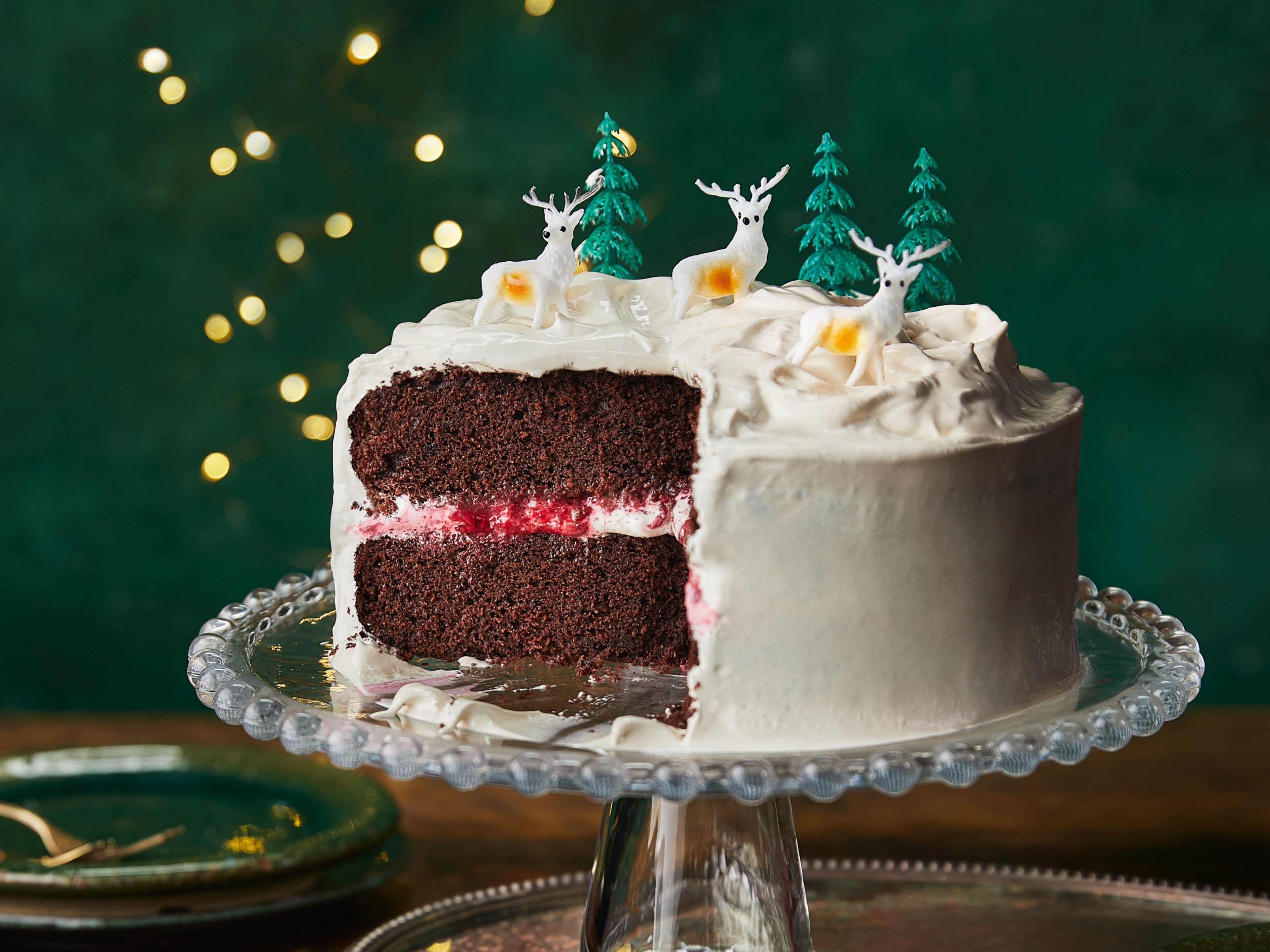
“Much as I love a slice of dense Christmas cake, especially when eaten with a slice of strong, sharp cheese, I am surrounded by those who abominate dried fruit in all its seasonal manifestations. If no one in your family likes dried fruit, there’s no point having a Christmas cake gathering dust or just being eaten on sufferance. If chocolate cake appeals more, go for it.
“It was made clear to me long ago that, in the interest of harmony in the home, I needed to introduce a new tradition that made us all happy, and this cake is it. Tradition is a glorious thing at this time of year, but I’m all for embracing new Christmas rituals of our own.”
Ingredients:
For the cake:
150g unsalted butter, cut into 5 slices, plus extra for greasing
1 x 100g bar 70 per cent dark chocolate, bashed and broken up inside the packet
100g soft dark muscovado sugar
125g caster sugar
1tsp baking powder
200g plain flour
½tsp bicarbonate of soda
50g cocoa
½tsp fine salt
2 large eggs
50g soured cream (serve the rest of the tub with the cake, if you like)
2tsp vanilla extract
For the filling and recipe:
150g frozen raspberries
2 large egg whites or 2 x 5g sachets Dr Oetker free range egg white powder
150g golden syrup
125g caster sugar
½tsp lemon juice
Pinch of fine salt
Method:
1. Preheat the oven to 180C/160C fan/gas 4. Grease 2 x 20cm sandwich tins (preferably not loose-bottomed) with butter and line the bases with circles of baking paper. If you only have loose-bottomed tins, then cut the baking paper circles slightly bigger than the bases so they go up the sides of the tins just a little.
2. Over low heat, start melting the butter in a heavy-based saucepan of 22-23cm diameter. Put the kettle on. Tip the bashed-up chocolate pieces into the pan, and when the butter and chocolate are all but completely melted, pour in 250ml freshly boiled water, followed by both sugars, stirring very gently to get rid of any lumps. When you have a smooth liquid, take the pan off the heat and leave the mixture to cool a little.
3. Meanwhile, measure the baking powder, flour, bicarb, cocoa powder and salt into a bowl. Loosely whisk the eggs, soured cream and vanilla extract together in a measuring jug.
4. Tip the dry ingredients into the saucepan, and whisk slowly and carefully until smooth. Then gradually whisk in your jug of wet ingredients until everything’s incorporated and the batter is dark and glossy.
5. Divide the batter equally between the prepared tins, and bake in the oven for 18-20 mins: the top of the cakes should be set (don’t worry about the cracks) and coming away from the tins at the edges. A cake tester will come out mostly dry but still slightly smudged with chocolate.
6. Leave to cool on a rack for 15 minutes or until you can handle the tins without oven gloves. Turn the cakes out, peel off the baking paper and leave until cold.
7. While you wait, tip the frozen raspberries onto a lipped plate in one layer and leave to thaw.
8. You can leave the cold cakes, covered, for a couple of hours, if needed, before icing them. But once the cake is filled and iced, it really is at its best served within 1½ hours or so.
9. Now to the icing, which requires a bowl and pan that you can fashion into a double boiler. Put a very little bit of water into the pan and bring to a simmer. Put the egg whites into a wide-ish heatproof bowl that will fit over your pan (if you’re using the egg white powder, make it up first, according to packet instructions). You want the gentle steam from the water to heat the base of the bowl, but no water should touch it, ever! Add the golden syrup, caster sugar, lemon juice and salt and, using an electric hand-held whisk, beat the mixture vigorously for 5 mins: it starts off rather yellowy and very liquid, but when the 5 mins are up, you will have a firm, thick, voluminous and snowy meringue mixture. Lift the bowl immediately off the saucepan and place it on the cool kitchen surface.
10. Sit one of the sponges, domed side down, on a cake stand or plate – 23cm diameter at most or it will look lost – and spread enough of the icing to give you a layer about 1cm thick. Then top with the thawed raspberries, leaving a pure white ring of icing about 2cm wide all around the edge.
11. Gently sit the other sponge, domed side uppermost, on top. Ice the top and sides, using a couple of spatulas for ease, swirling the top and smoothing the sides as best you can.
12. Adorn with Christmas decorations if you wish, and leave for 30 minutes or up to 1½ hours before you slice into it. Serve with the extra soured cream, if you like, and joy in your heart. Store leftovers for 1 day in an airtight container in a cool place.
After Eight Christmas tree cookies

Makes: 12, depending on the size of your cutters
Prep time: 30 minutes, plus chilling | Cooking time: 10 minutes, plus cooling and decorating
Tip: You could use any Christmas-themed cutters, like stars or snowmen. Make ahead of time to impress your Christmas guests.
Ingredients:
100g softened butter
100g caster sugar
250g plain flour
1 egg
50ml milk
1x 300g pack of After Eight chocolates or similar
Method:
1. Preheat oven to 200C.
2. Lined a baking sheet with baking paper.
3. In a large bowl, beat the butter and sugar together till soft, then add the egg and flour to make a firm dough. Knead together briefly before forming your mixture into a flat disc, before wrapping and chilling in the fridge until firm.
4. Roll out the dough to ½ cm thickness and stamp out an even number of shapes using the larger cutter. Put half of these on the baking sheet
5. Using the smaller cutter, remove a section from the centre of the remaining tree shapes to form “picture frames”.
6. Brush the larger trees with milk and then place the frames on top of them. Make sure you line up the edges.
7. Chill until firm in the fridge or pop into the freezer.
8. Cook in the oven for 10 minutes or until lightly golden.
9. Meanwhile, cut up the after eights into 4-6 pieces.
10. Remove the cookies from the oven, and while still hot, place the After Eight pieces inside the frame of each cookie. Try to fill the space, but avoid going over the edges. The chocolate will melt and you can tease it into any corners with the point of a knife.
11. Leave to cool and add any decoration if using.
Recipe from the Easy Peasy Baking campaign
Sarah Raven’s Cranberry tart with hot toffee sauce
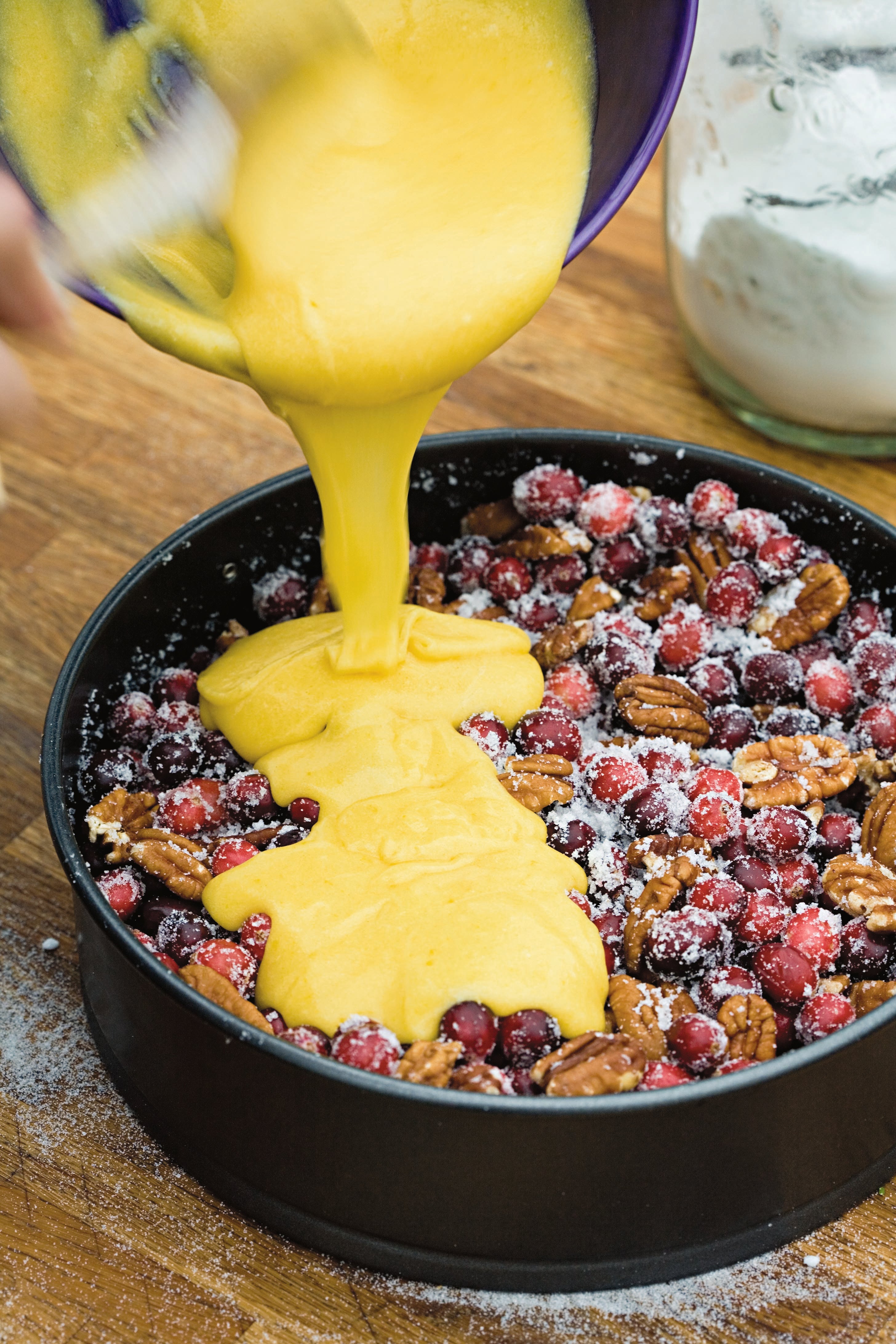
“An excellent Christmas pudding for eating at any time when you have lots of people to feed,” notes gardener and chef Sarah Raven. “It has a good balance of sweet and sour. You can swap cranberries with rhubarb. Serve with crème fraîche.”
Serves: 6
Ingredients:
500g cranberries, fresh or frozen
Juice and grated zest of 1 orange
200g caster sugar
150g shelled pecan nuts
1 egg, beaten well
60g plain flour, sifted
75g butter, melted
Crème fraîche, to serve
For the toffee sauce:
180g dark brown sugar
120g butter
120ml double cream
Method:
1. Preheat the oven to 180C/gas mark 4. Grease a 20cm-diameter springform cake tin.
2. Put the cranberries in a non-stick pan with the orange juice and zest and mix well in the tin. Cook them for about 3-4 minutes, until the cranberries pop.
3. Put the just-cooked cranberries into the prepared cake tin. Sprinkle with half the sugar and the pecans, and mix well.
4. In a bowl, beat the remaining sugar with the egg and mix very well (for 4-5 minutes) until the mixture pales and leaves a trail as you whisk. Add the flour and melted butter to make a smooth batter. Pour this over the cranberries in the tin and bake for 40-45 minutes.
5. To make the toffee sauce, heat the sugar, butter and cream together until the sugar has dissolved and the sauce is bubbling. Take off the heat and serve warm. This makes generous quantities of sauce, and you may have some left over for ice cream the following day. Serve the tart warm with the hot toffee sauce and crème fraîche.
‘Sarah Raven’s Garden Cookbook’ by Sarah Raven (Bloomsbury, £35).
Raymond Blanc’s Basque-style cheesecake
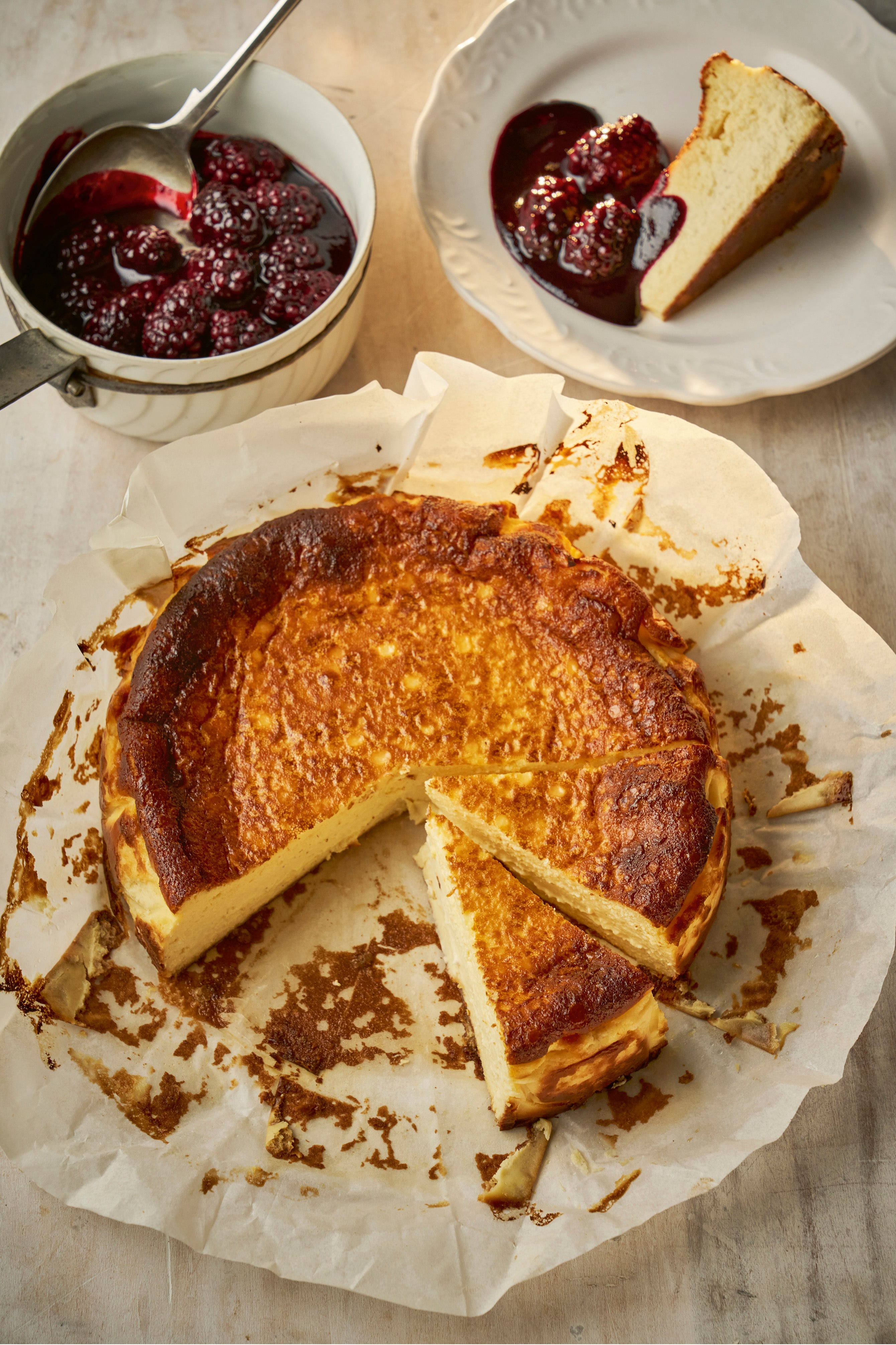
“This is the very best cheesecake I have ever tasted,” says Raymond Blanc. “A dessert much loved in the Basque Country (which straddles the border of France and northern Spain), it is so good that we put it on the menu at Brasserie Blanc.
“I have served the cheesecake with stewed blackberries, but it may be accompanied by any seasonal fruits or good-quality shop-bought preserves, such as cherries in Kirsch.
“I like to make this cheesecake a day in advance so that after being baked in the oven it has plenty of time to chill in the fridge. It is not a great challenge to make, but it is certainly a dessert for that celebratory occasion. Our guests describe it as ‘a showstopper’.”
Serves: 8
Prep time: 15 minutes | Cook time: 25-30 minutes
Ingredients:
For the cheesecake:
1 tsp unsalted butter, softened, for greasing the tin1 lemon, for zesting
550g cream cheese
175g caster sugar
4 eggs (preferably organic or free-range)
250ml double cream
4 tsp shop-bought vanilla bean paste
20g cornflour
Method:
1. Preheat the oven to 220C/200C fan/gas 7 (here, it is best – but not essential – to use the fan-assisted oven).
2. Use your fingertips to rub the soft butter around the inside of a springform cake ring (or mousse ring) with a diameter of 20 centimetres so that the greaseproof paper will stick to it. Now line the inside of the ring with a large sheet of greaseproof paper, making sure it fits neatly into all the edges and the base of the ring. Place the lined ring on a baking tray and keep aside.
3. Zest the lemon and keep the zest to one side. In a large bowl, whisk together the cream cheese and caster sugar until smooth. Add the eggs and whisk again to an even consistency. Next, pour in the double cream, add the vanilla and lemon zest and sift in the cornflour. Whisk again, ensuring there are no lumps in the mixture. Pour this mixture into the prepared tin.
4. Bake for 25 to 30 minutes on the middle shelf of the oven until the top has that distinctive dark sheen of traditional Basque cheesecake. Halfway through cooking – and depending on your oven – you might need to turn the cheesecake 180 degrees so that it is evenly browned. (Chris’s photograph is a good guide to what the cheesecake top should look like.) The sides of the cheesecake should be slightly firm and the centre should have a gentle wobble.
5. Remove the cheesecake from the oven and set it to one side to cool (it will continue to cook as it cools). Place the cooled cheesecake in the fridge for at least half a day or overnight to firm up.
6. To serve, remove the springform cake or mousse ring and gently peel back the baking paper. Serve slices of the cheesecake with lightly stewed blackberries, if you wish, or a fruit preserve of your choice.
‘Simply Raymond Kitchen Garden’ by Raymond Blanc (Headline Home, £26).
Join our commenting forum
Join thought-provoking conversations, follow other Independent readers and see their replies
Comments
Bookmark popover
Removed from bookmarks