Traybakes and no-faff desserts: The only New Year’s Eve recipes you’ll ever need
Low on time, energy or inspiration? This mix-and-match New Year’s Eve menu is built for effortless hosting – choose a few canapés, one standout main and a no-faff dessert, then get back to the party, writes Hannah Twiggs


New Year’s Eve has a funny way of making perfectly sensible people lose the plot. It’s 31 December, you’ve told everyone to come round “for something low-key”, and suddenly you’re googling “can you make béarnaise in advance” like you’ve been training for MasterChef: The Hangover Edition.
The truth is, the best NYE food isn’t the kind that demands silence, a stopwatch and a sink full of pans. It’s the kind that looks like a party, feeds a crowd without fuss and lets you spend more time topping up glasses than tending reductions.
That’s what this collection is for: a deliberately mix-and-match New Year’s Eve menu you can build to suit your night. Pick a few canapés and picky bits to pass around while people arrive, put one proper showstopper in the middle of the table, then finish with a dessert that mostly looks after itself. No rigid courses, no plating drama. Just good food that knows it’s there to support the evening, not dominate it.
Start with pastry-led crowd-pleasers that do the hosting for you – Paul Hollywood’s sausage plait is essentially a centrepiece you can slice – alongside dishes made for grabbing, dipping and hovering by the kitchen island (Giuseppe Dell’Anno’s pizza rolls, Nadiya Hussain’s syrup-soaked samsas, Big Zuu’s jollof rice balls with molten mozzarella). For mains, choose one dish that feels celebratory without turning the night into a catering shift: Marcus Wareing’s indulgent coq au vin, Rick Stein’s puff pastry-topped fish pie or Jeremy Pang’s sticky black-pepper short rib bao all fit the brief.
And because it’s New Year’s Eve, dessert matters – but it doesn’t need babysitting. Most of these can be made ahead, from Ottolenghi’s chocolate ripple fridge cake to Rick Stein’s caramelised bread and butter pudding or Jane Dunn’s boozy Irish cream tart. Pick wisely, prep early, and you’ll have a table that looks abundant, tastes like you tried, and still leaves you free for the countdown.
Paul Hollywood’s sausage plait
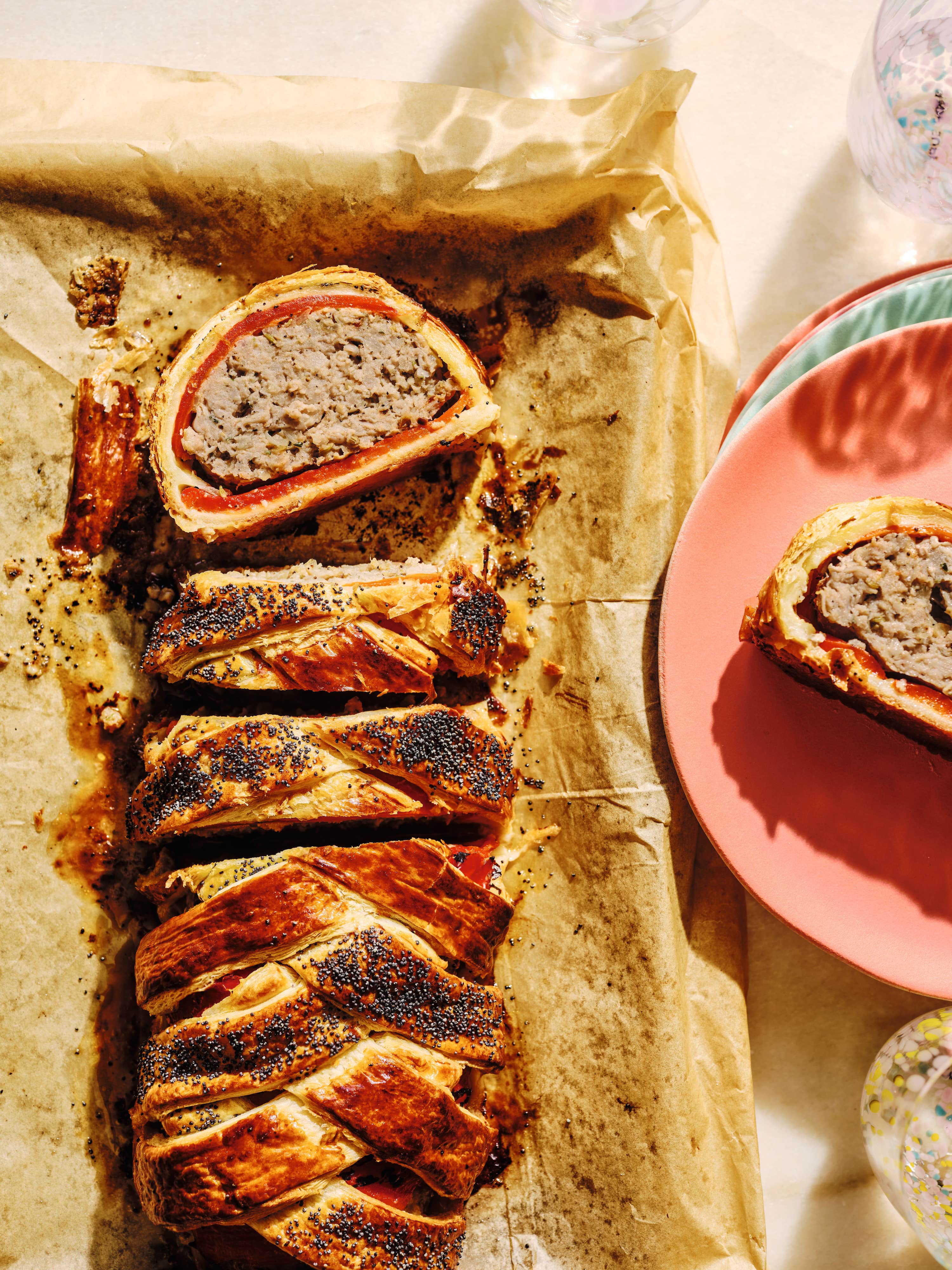
“I grew up with sausage rolls in my dad’s bakery and they’re still probably my all-time number one food,” says Paul Hollywood. “This elaborate plaited version is a great way to show off your pastry skills.
“The sausage meat is flavoured with roasted peppers, fennel seeds and chilli flakes, but you can leave out these extras and just use your favourite sausages – it’ll still taste amazing.”
Serves: 10
Ingredients:
1 quantity puff pastry (homemade or 500g good-quality ready-made)
Plain flour, to dust
For the filling:
1 tbsp olive oil
1 onion, finely diced
2 garlic cloves, crushed or grated
2 tsp fennel seeds
½ tsp dried chilli flakes
2 x 400g packs of good-quality sausages
450g jar roasted peppers
To finish:
1 medium egg, beaten, to glaze
A small handful of poppy seeds
Method:
1. For the filling, heat the olive oil in a small frying pan, add the onion and cook over a medium-low heat for 7-10 minutes until softened. Add the garlic, fennel seeds and chilli flakes and sauté for another minute. Transfer to a medium bowl and leave to cool.
2. Peel away the skins from the sausages and then add the sausage meat to the cooled onion mix. Mix well with your hand until the ingredients are thoroughly combined.
3. Heat your oven to 220C/200C fan/gas 7. Line a large baking tray with baking paper.
4. Drain the peppers, cut them lengthways to open them up and pat dry on kitchen paper.
5. On a lightly floured surface, roll out the puff pastry to a 35 x 40cm rectangle. Arrange half of the roasted peppers down the centre of the pastry. Now form the sausage mix into a log that will cover the centre third of the pastry. Lay the sausage log on top of the peppers and then arrange the remaining peppers on top.
6. Using a small knife, make diagonal cuts in the pastry down either side of the sausage filling, spacing them 1.5–2cm apart. Fold the strips in over the filling alternately to create a plait and seal the ends.
7. Brush the pastry with beaten egg and sprinkle with poppy seeds. Bake the plait in the oven for 35–45 minutes until crisp and piping hot. Leave to stand for 10 minutes before slicing. It is delicious hot or cold.
‘Celebrate’ by Paul Hollywood (Bloomsbury Publishing, £26).
Nadiya Hussain’s samsas
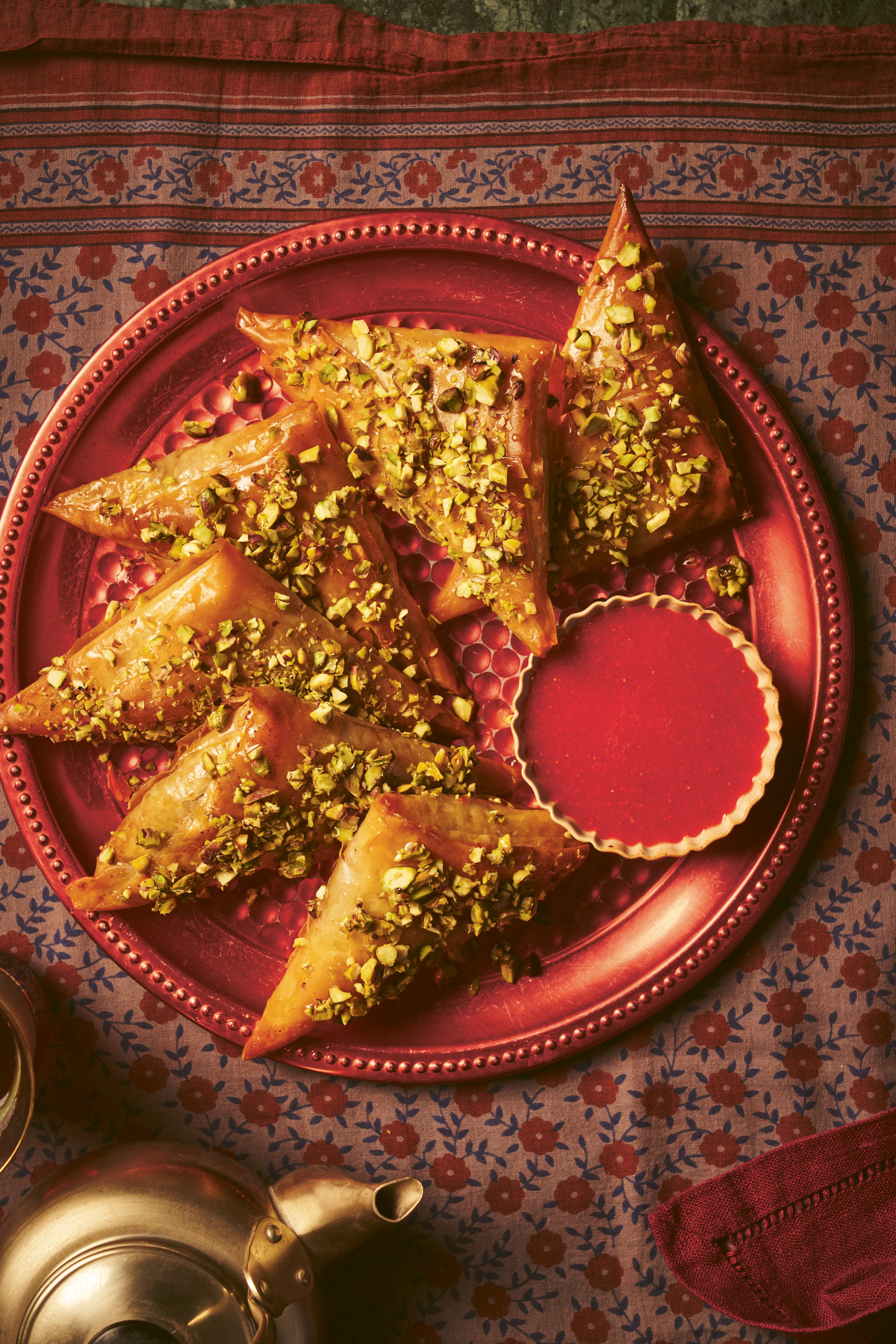
“Samsa is a traditional dish often made during Ramadan,” explains Nadiya Hussain, whose new cookbook Rooza is dedicated to the holy month.
“They are not like the samosas you frequently find, filled with spiced savoury meat. These are stuffed with a mixture of ground down nuts, sweet potato, orange and cinnamon. Doused in sweet syrup, they are then coated again with nuts. I like to serve mine with a simple strawberry coulis.”
Makes: 7
Ingredients:
For the filling:
2 medium sweet potatoes
1 tsp ground cinnamon
1 orange, zest only (reserving the juice for later)
100g walnuts, finely chopped
For the pastry:
150g butter
270g pack of filo pastry, ready-rolled (7 sheets)
100g pistachios, finely chopped
For the syrup:
Juice of an orange (see above)
100ml water
150g caster sugar
For the strawberry coulis:
227g punnet of strawberries
100g icing sugar
Squeeze of lemon juice
Method:
1. Pierce the sweet potatoes all over with a fork, place directly onto a microwave plate and cook for 10 minutes till very soft. You can also do this in the oven.
2. Take out and leave to cool enough so they can be handled and then scoop out all the flesh and pop into a bowl. Mash to a smooth paste with the cinnamon, orange zest and walnuts. Set aside.
3. For the pastry, pop the butter into a pan and melt till brown. As soon as it starts to bubble and brown flecks appear, you have browned the butter. Take off the heat.
4. Preheat the oven to 190C and have a baking tray at the ready.
5. Cut the filo sheets down the length and create 14 strips of filo, leaving the sheets you’re not working with under a damp tea towel. Butter two sheets together. Take a dollop of the filling and place at the bottom of the end of the strip. Fold a corner over to create a visible triangle, encasing the filling. Now take the filled triangle and fold over again, and keep going till you have a fully encased triangle. Make the other six and butter them all over with any leftover butter. Pop onto the tray and bake for 20 minutes.
6. Make the syrup by pouring the orange juice into a pan with the water and caster sugar. Bring to the boil and leave to simmer till the syrup is thick and golden.
7. Take the triangles out of the oven and dip straight into the syrup till completely coated, then coat with pistachios and set aside.
8. For the strawberry coulis, put the fresh strawberries, icing sugar and lemon juice in a food processor and blend. Serve alongside the samsas as a dip or a drizzle.
‘Rooza’ by Nadiya Hussain (Penguin Michael Joseph, £25).
Rotoli di pizza ai peperoni
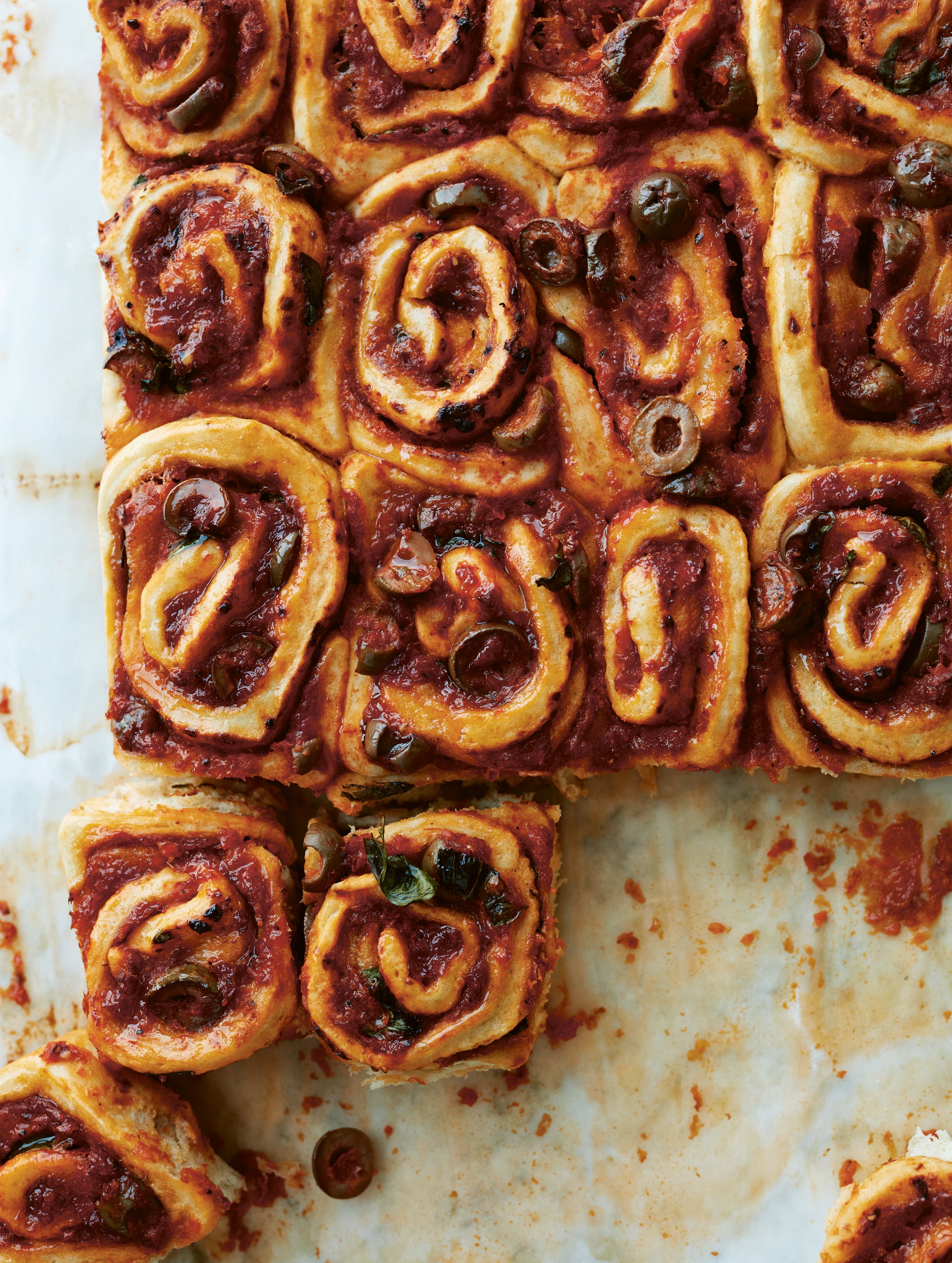
“This tear-and-share traybake makes a great and always welcome addition to an informal dinner buffet, a picnic or a kids’ birthday party,” says Giuseppe Dell’Anno, winner of The Great British Bake Off 2021.
“Common fillings include the usual tomato sauce, mozzarella and often ham; however, this recipe uses one of my favourite combinations based on ripe red sweet peppers and onions.”
Serves: 20
Ingredients:
For the dough:
450g strong bread flour
3 tsp dry yeast
2 tsp caster or granulated sugar
250g lukewarm water
3 tbsp extra virgin olive oil
2 tsp salt
For the filling:
350g red sweet peppers (about 3 medium peppers)
100g red onion (about 1 small onion)
2 tbsp extra virgin olive oil, plus extra for greasing
⅛ tsp salt
2 tbsp concentrated tomato purée
100g green olives, pitted and sliced
Ground black pepper, for seasoning
50g grated Parmesan
A few fresh basil leaves, roughly chopped
Method:
1. Add the flour, yeast and sugar to the bowl of a stand mixer fitted with the dough hook and mix them with a spoon until fully combined. Start the mixer on a medium-high speed and slowly trickle the water into the mixing bowl. Immediately after the water, add the oil and continue mixing until the dough comes together evenly. It should take a couple of minutes. Sprinkle in the salt and let the mixer knead the dough for a further 8–10 minutes, or until it becomes smooth, wraps around the hook and comes off the sides of the mixing bowl cleanly.
2. Scoop the dough out of the bowl and, while holding it in your hands, stretch it and fold it over itself a few times and shape it into a ball. Drop it back into the mixing bowl, cut a deep cross on the surface with a sharp knife, cover the bowl with clingfilm and leave the dough to prove until it has doubled in volume; it should take about one hour 10 minutes at 20C. A very practical solution to prove the dough is to leave the bowl in the closed oven, with the heating off but the internal light switched on. This will generate an optimal draught-free and slightly warm environment to facilitate the action of the yeast. Proving the dough in these conditions may shorten the proving time.
3. Meanwhile, prepare the filling: wash the peppers, remove the stems, cores, white pith and seeds, and roughly chop the skin into 2–3cm pieces. There is no need to be accurate as they will be blended once cooked. Peel and chop the onion, then place it in a medium frying pan with the oil and the chopped peppers. Add the salt and shallow-fry over a medium heat, uncovered, for about five minutes, stirring often until the onion has become translucent. Add the tomato purée and about 125g of water, cover the pan with a lid, reduce the heat and simmer for about 15 minutes until most of the liquid has evaporated. Keep checking that the pan does not dry out to avoid burning the sauce.
4. Remove the pan from the heat and cream the contents in a heatproof blender or with a stick blender. Set aside to cool.
5. Grease the baking tin, spreading a thin layer of olive oil over the bottom and sides. Line the bottom with a sheet of baking paper.
6. Drop the proved dough over a well-floured surface, roughly shape it into a square with your fingers, then roll it out to a thickness of five millimetres, shaping it into a 30 x 50cm rectangle. With the longest side facing you, pour the pepper filling over the dough, and spread it with the back of a spoon or a small offset spatula, leaving 2–3cm of dough at the top of the rectangle sauce-free. Distribute the sliced olives evenly over the dough. Grind a generous dusting of black pepper over the sauce, sprinkle over the grated Parmesan and add the basil leaves. Roll the sheet of dough, starting from the side facing you, all the way to the top.
7. Using a sharp knife, slice the sausage of filled dough into 20 equal rolls, about two-and-a-half centimetres thick, and arrange them sideways in the prepared baking tray. There might be space left between the rolls at this stage; however, this will be filled by the dough during the second prove and baking. Leave the rolls to prove again, uncovered, for a further 30 minutes.
8. Meanwhile, set the shelf in the lowest position in the oven and preheat it to 200C (400F/gas mark 6). Once the second prove is completed, bake the rolls for 27–29 minutes, or until the tops just start to brown. Store, wrapped in paper, for up to a day.
‘Giuseppe’s Italian Bakes’ by Giuseppe Dell’Anno (Quadrille, £20).
Big Zuu’s jollof rice balls with scotch bonnet sauce recipe
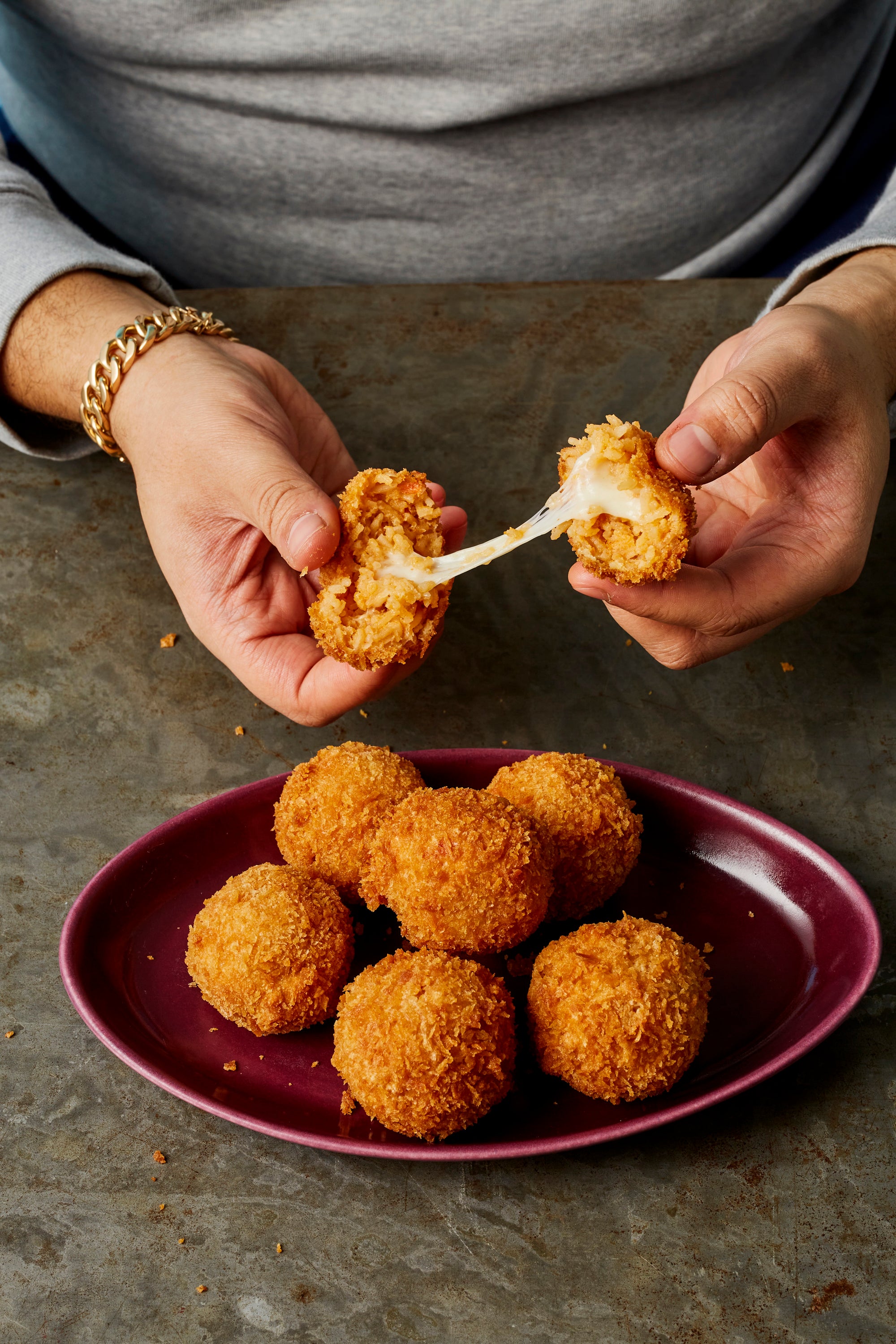
“We have taken the most African dish and gentrified it, but don’t worry, my Sierra Leonean elders gave me a pass, and it also tastes nice. This is an embodiment of my love for West African and Italian food,” says Big Zuu. “Finally, they’ve come together to create this mighty ball of tastiness.”
Makes: 8
Ingredients:
400g leftover Mumma Zuu’s Jollof Rice (see below)
60g mozzarella, cut into 8 pieces and drained well
1.5L vegetable oil, for deep-frying (if using a saucepan; if using a deep-fat fryer follow manufacturer’s instructions for oil)
50g plain flour
2 eggs, beaten
50g panko breadcrumbs
1 quantity of Scotch Bonnet Sauce (see below)
For Mumma Zuu’s Jollof Rice:
800g lamb leg, diced
3 tbsp All Purpose Seasoning
1L vegetable oil, for deep-frying
1 onion, diced
4 garlic cloves, crushed
1–2 Scotch bonnet chillies, depending on how hot you like it, chopped or whole
4 tbsp tomato paste
600g plum tomatoes, chopped
4 Maggi or other vegetable stock cubes, crushed
2 bay leaves
Pinch each of white pepper and ground black pepper
500g basmati rice, rinsed
Salt
For the Scotch Bonnet Sauce:
2 tbsp vegetable oil
1 onion, finely chopped
1–2 Scotch bonnet chillies, depending on how hot you like it, pricked
4 garlic cloves, crushed
2.5cm piece fresh root ginger, peeled and grated
800g tomatoes, chopped
1 tbsp white vinegar
1 tbsp caster sugar
2 Maggi or other vegetable stock cubes
Salt and ground black pepper, to taste
Method:
1. Make the jollof rice: Toss the lamb in two tablespoons of the All Purpose Seasoning. Place in a saucepan, cover with cold water and bring up to the boil. Simmer for 40 minutes to one hour until just tender, skimming off any foam that comes to the surface. Drain the lamb, reserving the cooking liquid. Dry the lamb pieces on kitchen paper.
Preheat the oil in a deep-fat fryer to 170C or heat the oil in a deep saucepan over a medium-high heat to 170C. Then, working in batches, carefully fry the pieces of lamb for two to three minutes until they are golden brown and crisp all over. Drain on kitchen paper and set aside.
Heat the three tablespoons of vegetable oil in a large casserole and add the onion. Cook for 10–15 minutes over a medium heat until the onion is golden, then add the garlic, Scotch bonnets, tomato paste and remaining All Purpose Seasoning. Cook for another two minutes before adding the tomatoes, stock cubes, bay leaves, salt and a pinch each of black and white pepper. Simmer for five minutes before stirring in the rice and the cooked lamb.
Measure the leftover cooking stock from the lamb into a jug. You need 850ml – if there isn’t enough, top up with water. Stir this into the rice, cover with foil, put the lid on and turn the heat down to low. Simmer for 25–30 minutes, stirring every so often, until the rice is tender. Remove from the heat and leave the rice to stand, covered, for 15–20 minutes before serving – or saving for jollof balls.
2. Make the scotch bonnet sauce: Add the oil to a saucepan and fry the onion over a medium heat for 15 minutes until soft and beginning to caramelise. Add the chillies, garlic and ginger and fry for two to three minutes more before adding the tomatoes, three tablespoons water, the vinegar, sugar and the stock cubes. Season with salt and pepper. Bring up to a simmer and cook for 25 minutes to a thick, spicy sauce. Blend to a smooth sauce using a food processor or stick blender.
3. Divide the leftover Jollof into eight patties. Take a patty in the palm of your hand and place a piece of mozzarella in the centre. Wrap the rice around it using your hand and shape into a ball. Repeat with the rest of the balls and chill in the fridge for 15–20 minutes.
4. Preheat the oil in deep-fat fryer to 170C or heat the oil in a deep saucepan over a medium–high heat to 170C.
5. Put the flour, beaten eggs and panko in three shallow dishes. Roll each rice ball in the flour, then egg and then panko, coating well.
6. Carefully drop the rice balls in the fryer or saucepan and, working in batches, fry for three to four minutes until golden brown. Drain well on kitchen paper and serve immediately with Scotch Bonnet Sauce.
‘Big Zuu’s Big Eats’ by Big Zuu (Ebury Press, £22).
Black pepper glazed short rib bao
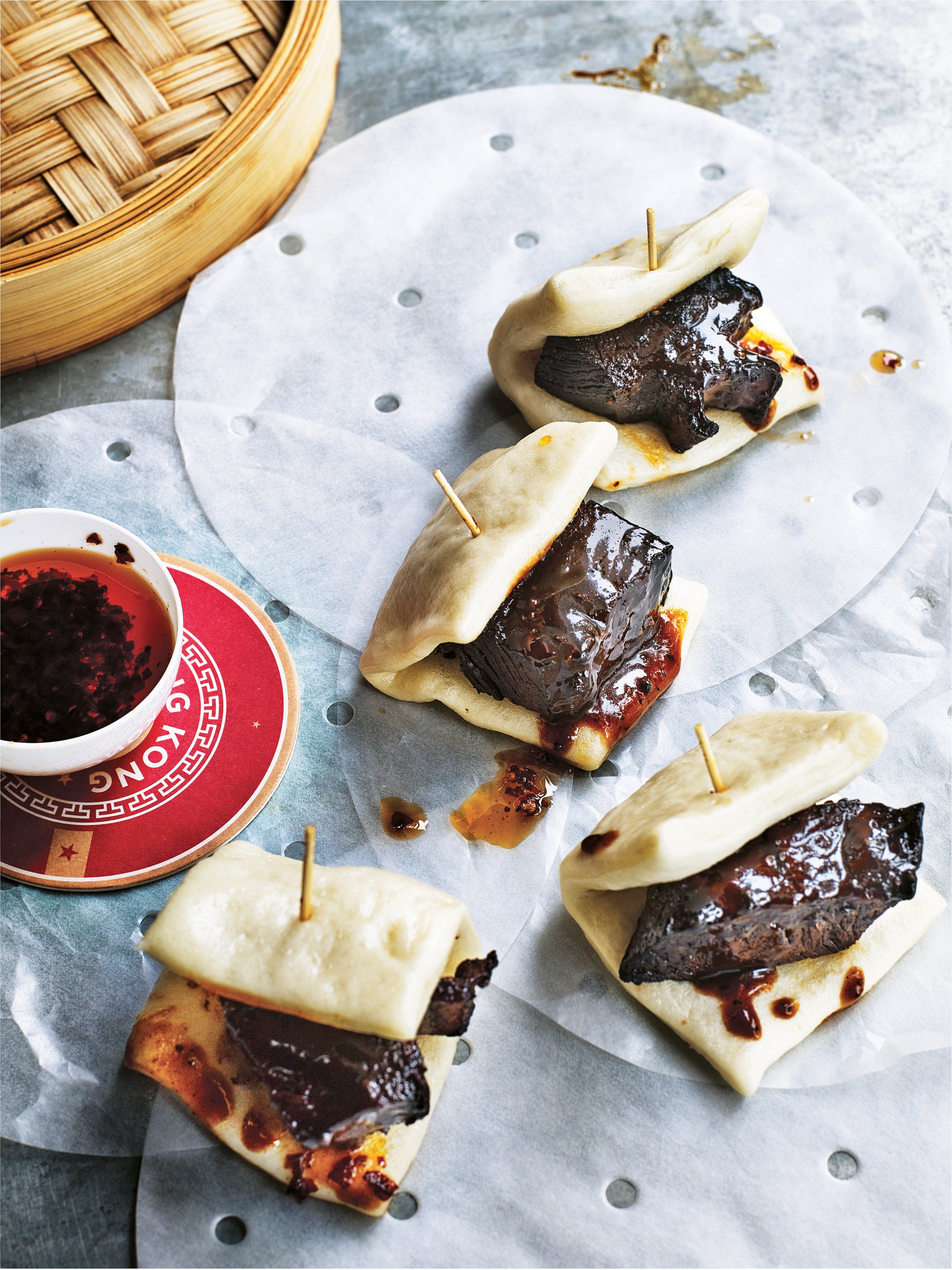
“Baos, burgers and sliders have been setting food trends around the world for years now,” says TV chef Jeremy Pang.
“We tried a version of this slider in a new organic restaurant called Sohofama in Hong Kong, which seems to be leading the way in urban farming and healthier cooking styles, while still managing to maintain the best part of traditional Chinese cooking techniques to create delicious dishes like this.”
If you’re making your own bao, try either the hirata bun fold or burger bao fold, and steam them just before finishing off the meat.
Serves: 4
Ingredients:
4 beef short ribs, separated
½ a portion of bao dough, ready to make 8–10 steamed hirata bunsor burger baos
For the poaching liquid:
1 star anise
1 small cinnamon stick
2 cloves
2 bay leaves
1 tsp black peppercorns
½ tsp salt
1 litre water
For the glaze:
3 tbsp jarred Chinese black pepper sauce (available in Chinese supermarkets)
2 tbsp light soy sauce
4 tsp sugar
Method:
1. Place the short ribs in a large saucepan and add all the poaching liquid ingredients. Bring to the boil on a high heat, then lower to a gentle simmer. Poach the beef ribs on a low heat for 3 hours, until the meat starts to fall off the bone but still keeps its shape.
2. While the meat is cooking, make your bao buns if you haven’t made them beforehand.
3. Mix the glaze ingredients together in a large mixing bowl. Once the ribs have been poached, remove them from the poaching liquid and carefully remove the bones, leaving the meat itself whole and intact as much as possible.
4. Cut each long piece of meat in half vertically, in order to make more reasonably sized portions that will fit well into the steamed buns. Put the pieces of meat into the bowl of glaze and gently coat the pieces of meat, using a spoon to baste on all surfaces and sides.
5. Just before you finish glazing the meat, start steaming your bao buns. Char each side of the meat under a hot grill (minimum 230°C) on a lined baking tray or unlined rack, or finish directly on the barbecue.
6. Serve one piece of short rib to one steamed bun for ease of eating (with only moderate gluttony), along with some pickles or salad and condiments on the side.
‘Hong Kong Kitchen’ by Jeremy Pang (Hamlyn, £25).
Ian Haste’s peach and sage-stuffed pork fillet with garlic roasties
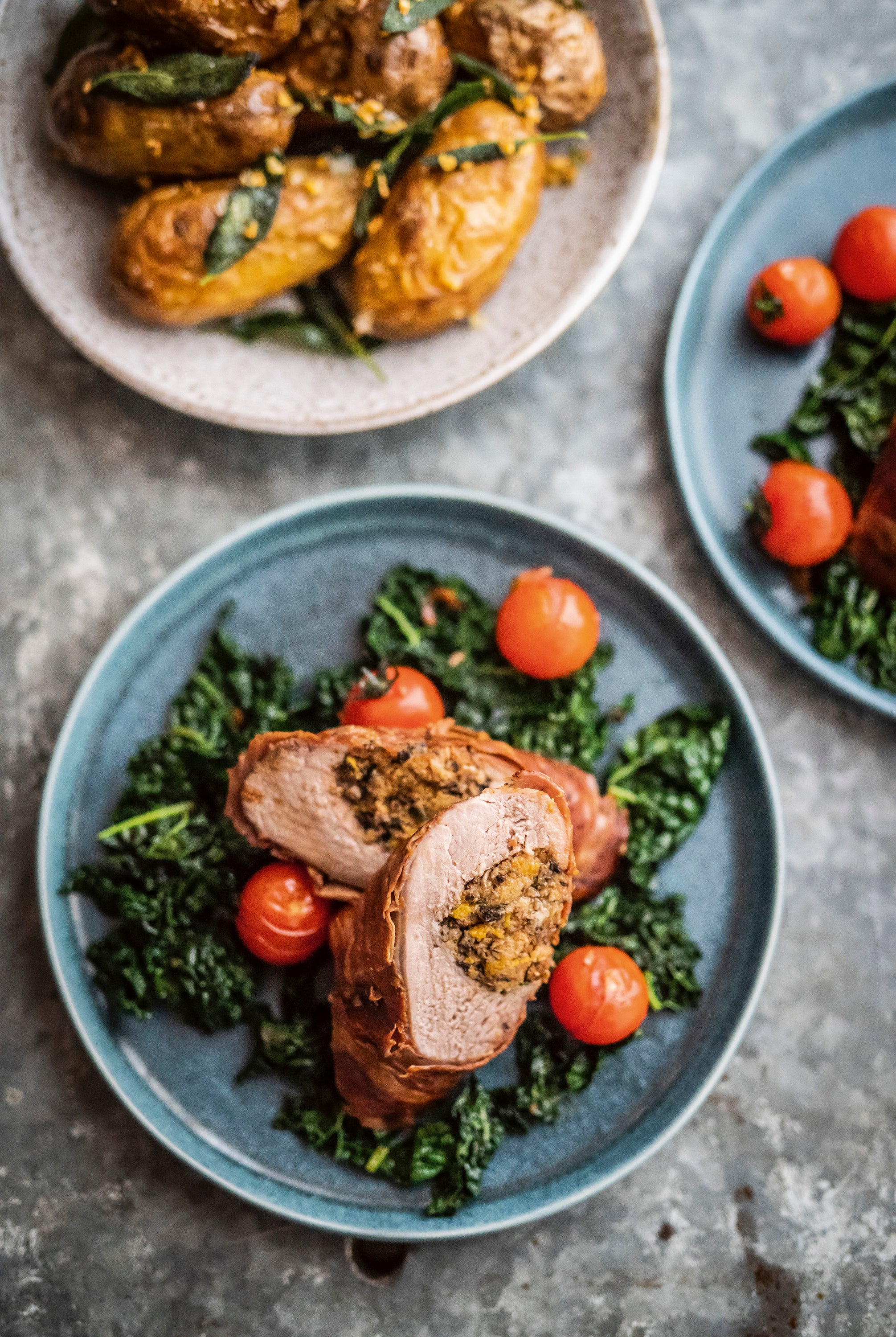
“This is a proper Sunday roast with pork, roasties and veg, but it takes less than an hour in the oven and is perfect for two,” says YouTuber and chef Ian Haste.
So there you go – a roast with all the trimmings that doesn’t take all day.
Serves: 2
Ingredients:
150g chestnut mushrooms, very finely chopped
50g butter
30g sage leaves
1 slice of wholemeal bread
1 peach, peeled, stoned and finely chopped
600g pork fillet (in one piece)
80g Parma ham
400g Charlotte potatoes
2 garlic cloves, peeled and crushed
Splash of olive oil
10 cherry tomatoes
200g cavolo nero, chopped
Salt and pepper
Method:
1. Preheat the oven to 220C/200C fan/gas 7. Add the mushrooms and 10g of the butter to a hot pan and season, then add three-quarters of the sage and cook for two to three minutes.
2. Roughly chop the bread into crumbs and scatter into the mushrooms with the peach. Cook for a further two minutes until soft and brown.
3. Cut the pork fillet down the middle horizontally to create a pocket for the stuffing, then add the mushroom stuffing and tightly close together. Lay out a sheet of foil about twice the size of the fillet and cover the foil with layers of the Parma ham, creating a wrap effect ready to cover the fillet. Lay the fillet on the ham and tightly pull the ham over the fillet, then use the foil to tightly wrap the pork into a Christmas cracker-type cylinder. Twist both the ends of the foil and place into a heatproof tin.
4. Add the potatoes to a pan of salted boiling water and cook until starting to soften, drain and place in the same baking tin as the wrapped pork. Add the garlic, remaining sage and a splash of oil to the potatoes, season well and bake for 30 minutes, turning the potatoes every 15 minutes.
5. Take the pork out of the oven and unwrap, adding the roast potatoes back to the oven whilst you do this (do not lose the juices created from the pork!). Add the fillet to a hot frying pan and cook along with the cherry tomatoes until the ham is crispy and dark and the tomatoes start to pop. Leave the fillet to one side to rest on a warm plate. Add the cavolo nero to a separate pan with the remaining butter, season and cook over a high heat. If it starts to smoke, add a few splashes of water to start steaming it. This takes about four to five minutes.
6. Add the pork juices to a small pan and reduce them, then serve the fillet cut diagonally into circles and drizzled with any juices, along with the cabbage, tomatoes and crispy roast potatoes.
‘The 7-Day Basket’ by Ian Haste (Headline, £25).
Marcus Wareing’s quick coq au vin
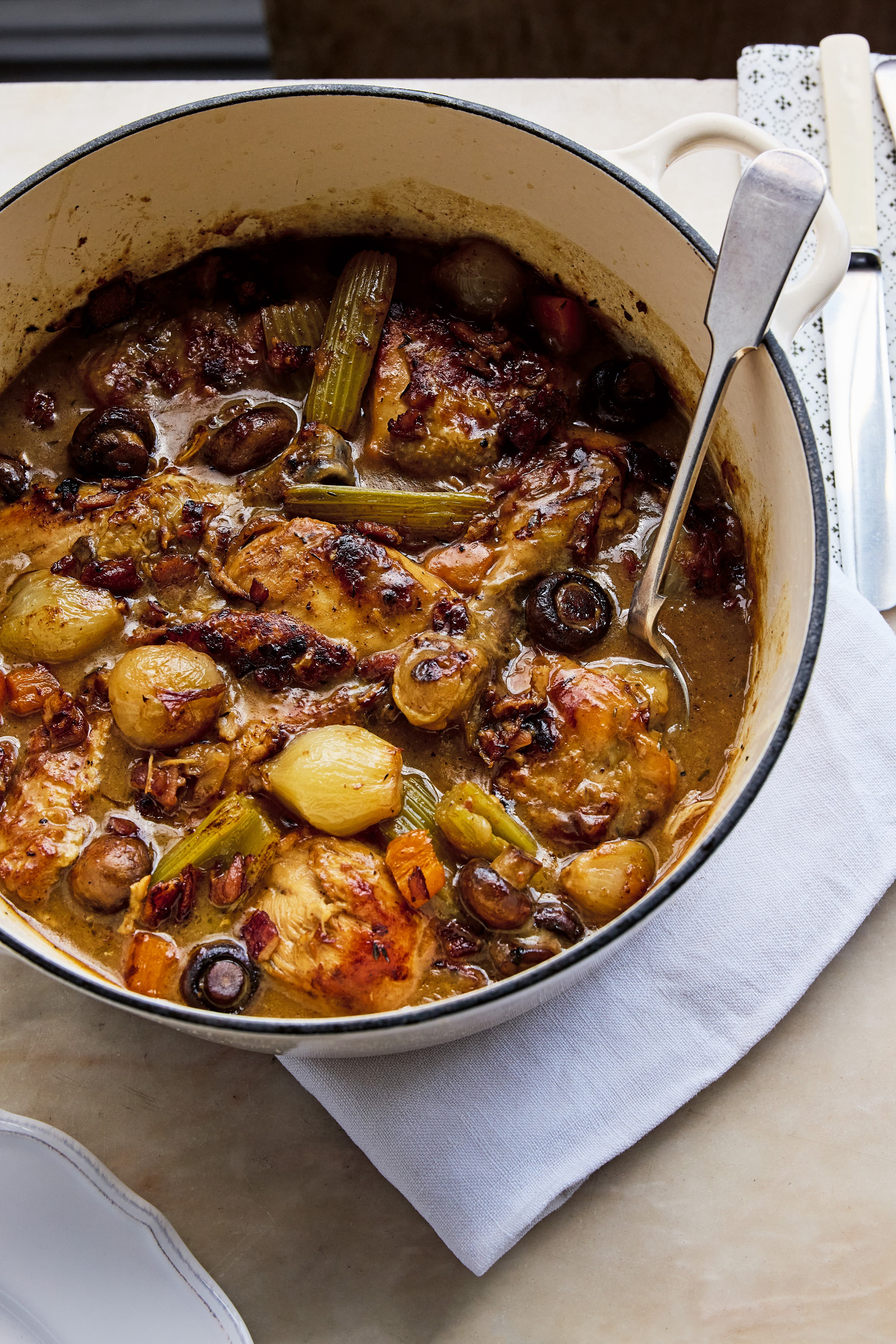
“A classic coq au vin, while utterly delicious, is quite a stagey recipe to prepare. There are lots of different elements that are cooked separately before being added at different times to a casserole dish,” explains Marcus Wareing.
“With this recipe, I’ve taken out as many of the stages as possible, while ensuring that the end result is just as tasty as the original. It’s good enough for a dinner party, but easy enough for a weeknight family dinner.”
Serves: 4–6
Prep time: 20 minutes | Cooking time: 2 hours, 20 minutes
Ingredients:
4 tbsp duck fat or butter
2 celery sticks, quartered
1 onion, chopped
2 carrots, chopped
4 garlic cloves, finely grated
4 tbsp plain flour
½ tsp table salt
½ tsp freshly ground black pepper
1 whole large chicken, jointed into 8 pieces
250g smoked streaky bacon, cut into 1cm lardons
250g button mushrooms, halved if large
200g small shallots, halved if large
2 tbsp brandy
750ml white wine
3 bay leaves
½ bunch of fresh thyme
500ml good-quality chicken stock
2 tsp cornflour (optional)
½ bunch of fresh flat-leaf parsley, leaves chopped
Method:
1. Preheat the oven to 180C/160C fan/gas 4.
2. Heat two tablespoons of the duck fat or butter in a large frying pan over high heat and, when hot, add the celery, onion and carrots and cook for 10 minutes, or until softened. Add the garlic and fry for another minute or two. Remove from the pan and set aside in an ovenproof casserole dish.
3. Combine the flour, salt and pepper, then dust the chicken pieces all over with the seasoned flour. Add the remaining two tablespoons of duck fat to the frying pan and fry the chicken pieces in batches until golden brown – each batch should take about 10 minutes. Remove from the pan and add to the casserole dish.
4. Add the bacon, mushrooms and shallots to the pan and fry for five to seven minutes until well-browned, then add to the chicken in the casserole dish.
5. Deglaze the pan with the brandy then pour this over the ingredients in the casserole dish. Place the casserole dish over the heat, add the wine, bay leaves and thyme (tied together with string) and bring to the boil. Simmer rapidly for about 15 minutes, then add the chicken stock and simmer gently for a further 15 minutes. If needed, mix the cornflour with a little water and stir into the sauce to thicken.
6. Cover and place in the oven for 40–50 minutes, or until the juices run clear when a chicken thigh is pierced with a knife in the thickest part. Remove the herbs tied with string, stir in the parsley and serve.
‘Marcus’s France’ by Marcus Wareing (Harper NonFiction, £22).
Rick Stein’s puff pastry topped fish pie
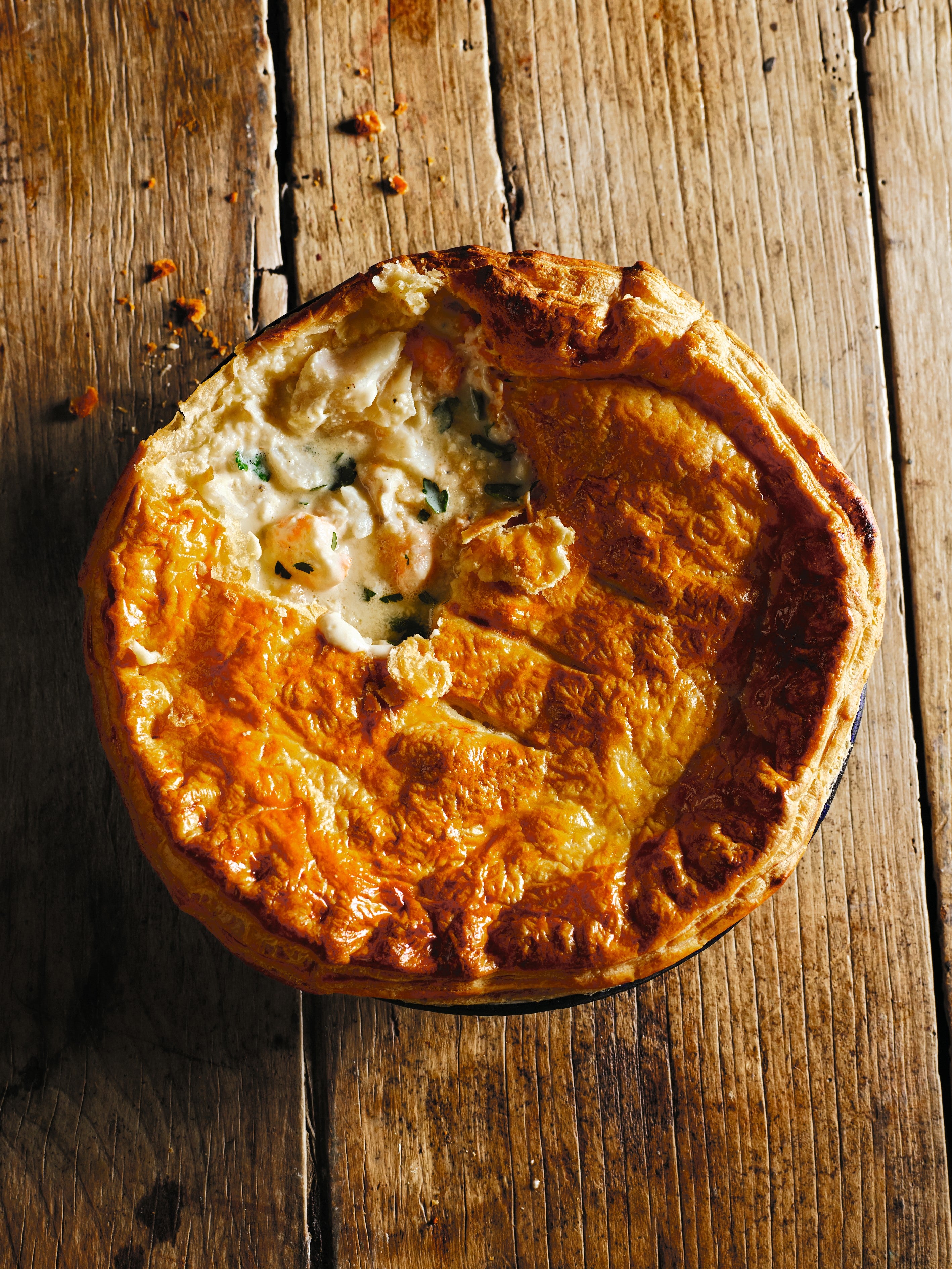
“I love a fish pie, but I do realise that there are a lot of processes involved,” says Rick Stein, “although the great thing is that when you come to serving, there’s nothing to do except take it out of the oven.
“I’ve made this recipe as simple as possible by not having a proper béchamel sauce or mashed potato, as you would for a traditional fish pie.”
Serves: 6
Ingredients:
600ml whole milk
500g whiting, coley or pollock
300g undyed smoked haddock
2 egg yolks
2 tbsp cornflour
85g mature Cheddar cheese, grated
Splash of white wine
Large handful of parsley, chopped
150g peeled prawns, fresh or frozen and defrosted
320g ready-rolled puff pastry
Milk or egg yolk, to glaze
Salt and black pepper
Method:
1. Preheat the oven to 200C/fan 180C.
2. Heat the milk in a wide pan, add the fish and poach for 3–5 minutes.
3. Take the pan off the heat, then lift the fish out with a slotted spoon, leaving the milk in the pan. When the fish is cool enough to handle, peel off any skin and gently break the flesh into large chunks. Allow the milk to cool a little.
4. In a small bowl, mix together the egg yolks and cornflour to form a paste. Gradually whisk in about a ladleful of the poaching milk. Place the pan of milk over a low heat and whisk in the egg yolk mixture, then stir over a medium heat until you have a thickened creamy sauce. Stir in the grated cheese, wine and parsley, then taste and season with salt and pepper.
5. Add the fish, sauce and prawns to an ovenproof dish, about 20 x 30cm in size, and gently combine. Top with the pastry and brush with milk or egg yolk. Slash the pastry a couple of times to allow steam to escape and bake for 25–30 minutes until the pastry is golden and risen. Serve with peas, broccoli or green leafy vegetables.
‘Rick Stein’s Simple Suppers’ by Rick Stein (BBC Books, £28).
Hugh Fearnley-Whittingstall’s chunky beef chilli recipe
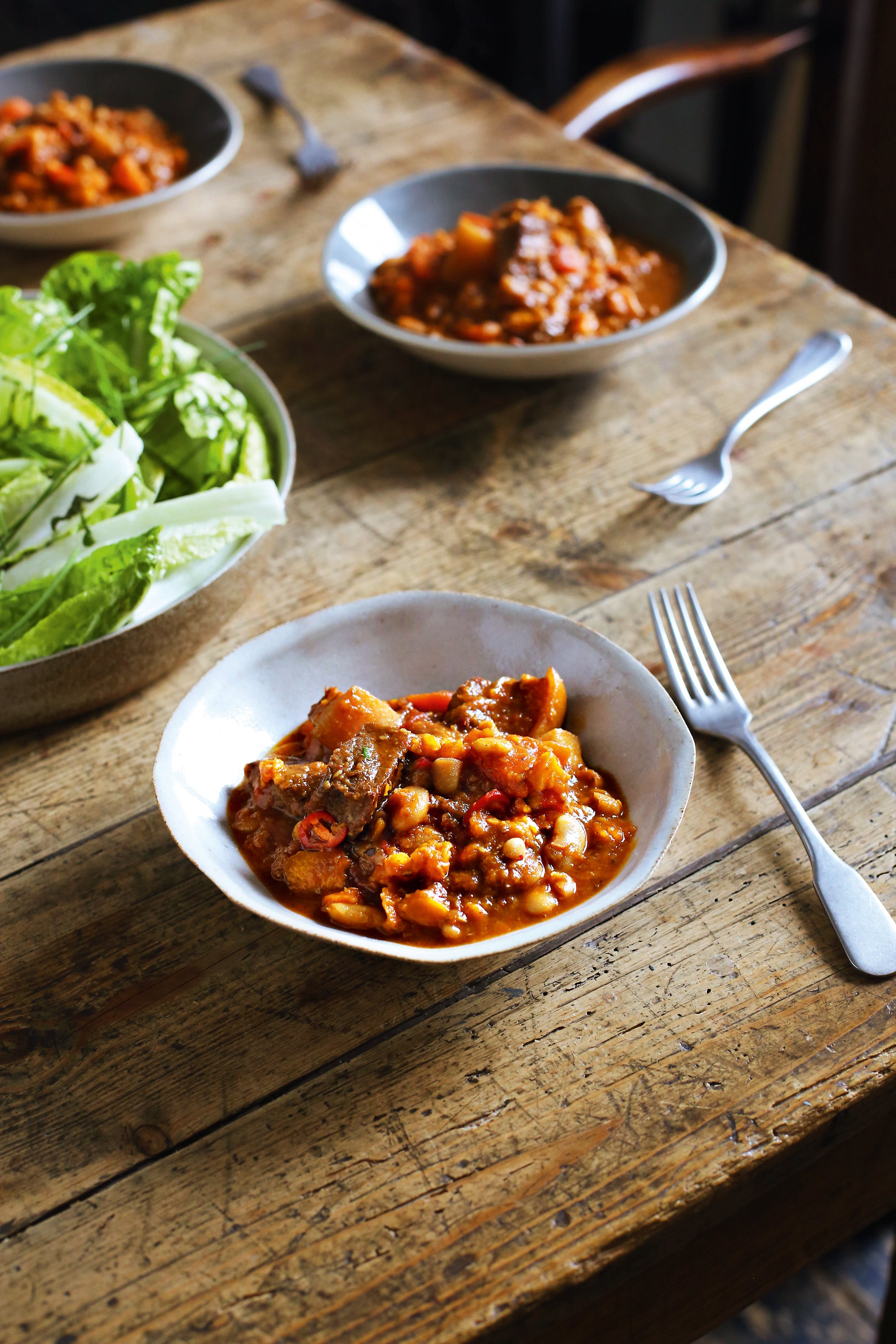
With hunks of beef and lots of tasty veg, this is a healthy take on classic chilli con carne. Hugh Fearnley-Whittingstall says: “It tastes even better the day after it’s made, so leftovers are a treat.”
Serves: 6–8
Ingredients:
Olive or vegetable oil, for frying
About 200g free-range pork belly (rind on or off), cubed
800g chuck or stewing steak, cubed
150ml red wine (optional)
2 medium onions, halved and thinly sliced
4 medium carrots, halved and thickly sliced
4 garlic cloves, sliced
1 tsp dried chilli flakes
2 tsp each cumin and coriander seeds, crushed (or 1 tsp each ground)
1 tsp smoked paprika
1 star anise (optional)
½–1 fresh red chilli, sliced (optional)
A few strips of pared orange zest
3–4 sprigs of thyme (optional)
400g tin tomatoes
About 1L hot beef stock, or veg or chicken stock
1 large sweet potato (300–400g), peeled and cubed (or you can use squash)
2 x 400g tins beans (cannellini, kidney or butter beans), drained and rinsed
Sea salt and black pepper
Method:
1. Set a large heavy frying pan over a high heat and add a dash of oil. When hot, add the pork with some salt and pepper. Cook briskly for several minutes, turning the meat from time to time, until browned all over. Transfer to a large flameproof casserole dish. Repeat the browning process with the beef, doing it in two batches so as not to crowd the pan, seasoning it as you go and adding a dash more oil to the pan if necessary.
2. When all the meat is browned and transferred to the casserole, reduce the heat under the pan to low and pour in the red wine (or 150ml of the hot stock). It will bubble and hiss. Stir the liquid, scraping the pan with a spatula, to release all the caramelised meaty bits from the base of the pan. Bring to a simmer and set aside.
3. Meanwhile, add the onions, carrots, garlic, spices, chilli if using, orange zest, a pinch of salt and a twist of pepper, plus the thyme if using, to the casserole with the browned meat. Cook over a medium heat, stirring often, for eight to 10 minutes to soften the veg.
4. Tip the liquid from the frying pan over the meat. Add the tomatoes and hot stock; if the liquor isn’t enough to cover everything, add a little more stock or boiling water. Bring to a low simmer and cook very gently for one-and-a-half hours or until the meat is becoming tender.
5. Add the sweet potato and beans (with a little more hot stock or water if needed) and cook for a further 30 to 45 minutes. Check that all the meat and veg are nice and tender, tweak the seasoning and the chilli is ready to serve.
‘Eat Better Forever’ by Hugh Fearnley-Whittingstall (Bloomsbury, £26).
Mary Berry’s double-baked mushroom soufflés
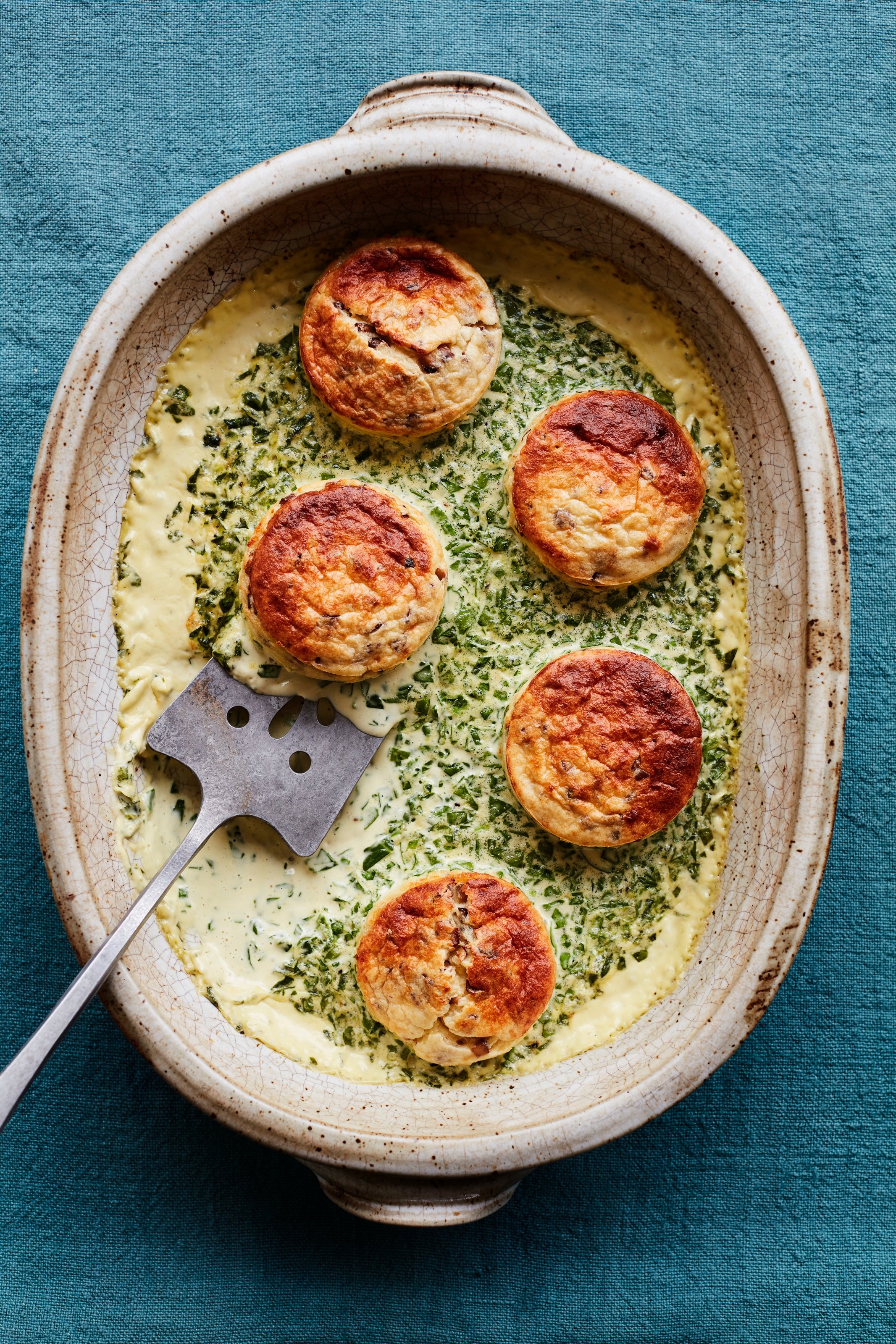
“Pure indulgence in the best way! You can make these simple mushroom and cheese soufflés well ahead of time, then reheat them in the creamy spinach sauce and they still stand tall,” says Mary Berry.
Makes: 6
Ingredients:
75g butter, plus extra for greasing
200g chestnut mushrooms, finely diced
50g plain flour
300ml hot full-fat milk
50g Gruyère cheese, grated
50g Parmesan cheese, grated
3 eggs, separated
Salt and freshly ground black pepper
For the sauce:
300ml pouring double cream
50g baby spinach, roughly chopped
2 tsp Dijon mustard
Method:
1. You will need 6 x size 1 (100ml) ramekins. Preheat the oven to 220C/200C fan/Gas 7 and butter the ramekins generously. Lay a piece of kitchen paper in the base of a roasting tin – the paper stops the ramekins for slipping in the tin.
2. Melt 25g of the butter in a large, non-stick frying pan, add the mushrooms and fry them over high heat for a few minutes. Cover the pan with a lid, lower the heat and cook for another four minutes, then remove the lid and fry over a high heat to evaporate the liquid. Remove the mushrooms with a slotted spoon and set them aside.
3. To make the soufflé base, melt the remaining butter in a saucepan. Whisk in the flour to make a roux and cook for a minute. Gradually add the hot milk and whisk over a high heat until you have a thickened, smooth sauce.
4. Remove the pan from the heat and beat in the egg yolks, one at a time, until the sauce is smooth. Add the mushrooms and the cheese and season, then set aside to cool a little.
5. Whisk the egg whites until soft peaks form. Stir about a tablespoon of egg whites into the egg and mushroom mixture and carefully fold it in, keeping everything light and airy. Continue doing this until you’ve folded in all of the egg whites.
6. Divide the soufflé mixture evenly between the ramekins and sit them on the paper in the roasting tin. Pour enough boiling water into the tin to come halfway up the sides of the ramekins. Bake the soufflés for about 15 minutes until risen and lightly golden.
7. To make the sauce, pour the cream into a jug and add the spinach and mustard. Season with salt and pepper and stir to combine.
8. To serve, preheat the oven to 220C/200C fan/Gas 7. Carefully run a knife around the edge of each ramekin and remove the soufflés. Sit the soufflés, browned side up, in an ovenproof dish, then spoon the sauce around them. Reheat for about 12 minutes until piping hot. Serve with dressed leaves or some brown bread.
‘Simple Comforts’ by Mary Berry (BBC Books, £26).
Yotam Ottolenghi’s chocolate ripple fridge cake
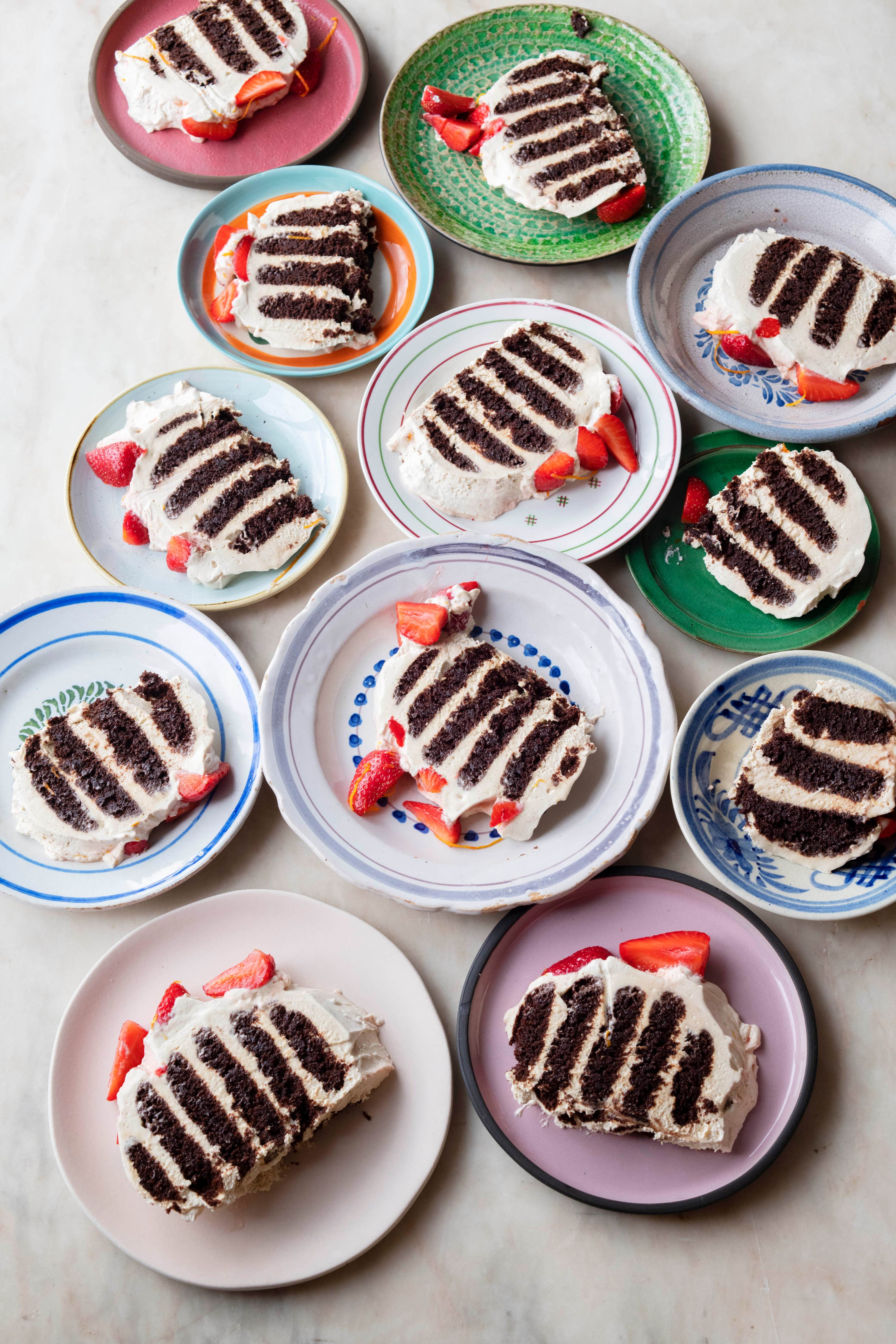
“As anyone who’s ever been to an Australian BBQ will know, chocolate ripple cake is a ubiquitous, no-bake dessert,” say Yotam Ottolenghi, Helen Goh, Verena Lochmuller and Tara Wigley, the team behind the cookbook Ottolenghi COMFORT.
“In Australia, it’s made with shop-bought chocolate biscuits, which are then sandwiched together with cream. The recipe is so simple that it’s printed on the back of the biscuit packet! On a recent family trip back to Melbourne, Helen’s kids were so taken by the cake that they begged her to make it back in London.
“Not being able to get hold of the right biscuits – Arnott’s Choc Ripple (though they are now available online) – Helen made them from scratch. They’re so quick and simple to bake that Helen now not only bakes them to make the cake, but also makes extra biscuits to have around. No birthday party (or BBQ!) is complete without them.”
If you want to get ahead, the biscuits can be made and baked up to seven days in advance, and stored in an airtight container. The cake needs to be made up to six hours before serving, but can be prepared up to two days ahead, and left in the fridge.
Serves: 8–10
Ingredients:
3 tbsp milk (or 105ml if not using the Grand Marnier)
60ml Grand Marnier (if using)
1 espresso shot, regular or decaf (30ml)
650ml double cream
325g crème fraîche
50g icing sugar
1½ tsp vanilla extract
1½ tsp ground cinnamon
For the biscuits:
225g plain flour
50g cocoa powder
¾ tsp baking powder
½ tsp bicarbonate of soda
¼ tsp salt
100g unsalted butter, at room temperature
200g caster sugar
50ml vegetable oil
50g golden syrup
1 egg
For the macerated strawberries:
600g strawberries, hulled and quartered
1½ tbsp caster sugar
1 tsp finely shaved orange zest
2 tbsp Grand Marnier (or orange juice)
2 strips of orange zest, julienned
Method:
1. First make the biscuits. Sift the flour, cocoa powder, baking powder, bicarbonate of soda and salt into a medium bowl.
2. Place the butter, sugar, oil and golden syrup in the bowl of a stand mixer with the paddle attachment in place. Beat on a medium speed for two minutes, until light and creamy. Scrape the sides of the bowl, then add the egg and beat again until combined. Reduce the speed to low, add the dry ingredients and mix until the dough comes together. Wrap and chill in the fridge for at least two hours.
3. When ready to bake, preheat the oven to 190C/170C fan.
4. Pinch off 30g pieces of dough and roll them into balls, then place them, spaced about 5cm apart, on two large parchment-lined baking trays. You should make about 23 balls. Flatten them with your hand – they should be about 5cm wide – then bake for 15 minutes, until firm and the tops are cracked or ‘rippled’. Remove from the oven and allow to cool for five minutes before transferring to a wire rack to cool completely.
5. When ready to assemble the cake, combine the milk, Grand Marnier (if using) and espresso and set aside.
6. Place the cream, crème fraîche, icing sugar, vanilla extract and cinnamon in the bowl of the stand mixer with the whisk attachment in place. Whisk on a medium-high speed until soft peaks form: be careful not to over-whip, as the cream will thicken as you spread it. Transfer 200g of the mixture to a small bowl and refrigerate: this will be used to finish the cake. Pipe or dollop a roughly 30cm-long line (about 2cm wide) of the remaining cream mixture down the centre of a long cake plate or board: this is to help position the biscuits for assembly.
7. Take 20 of the biscuits and, working with one biscuit at a time, lightly brush both sides with the milk mixture: you want to just moisten the entire biscuit without drenching it. Then, using a small spatula or knife, spread two tablespoons of the cream on one side of the biscuit. Standing the biscuit upright, press it down onto one end of the strip of cream. Repeat with another biscuit, then place alongside the first biscuit, pressing to sandwich them together. Continue with the remaining biscuits to form a long log cake. Spread the remaining cream mixture over the top and sides of the log: don’t worry if it only barely covers the cake, as it will be topped up with the reserved cream the following day. Cover loosely and refrigerate for at least six hours or overnight.
8. About 15 minutes before you’re ready to serve, combine the strawberries in a bowl with the sugar, finely shaved orange zest and Grand Marnier. Leave to macerate for 10–15 minutes.
9. Meanwhile, spread the reserved cream over the top and sides of the log.
10. When ready to serve, tumble about half the strawberries along the top of the cake, pressing them on slightly to help them stick. Drizzle any syrup over and around the plate. Finish with the orange zest strips on top. When serving, slice on the diagonal – warming the blade of the knife in a jug of hot water helps with the ‘cleanness’ of the slice – to reveal the stripes.
‘Ottolenghi COMFORT’ by Yotam Ottolenghi, Helen Goh, Verena Lochmuller and Tara Wigley (Ebury Press, £30).
The Hebridean Baker’s romkugler
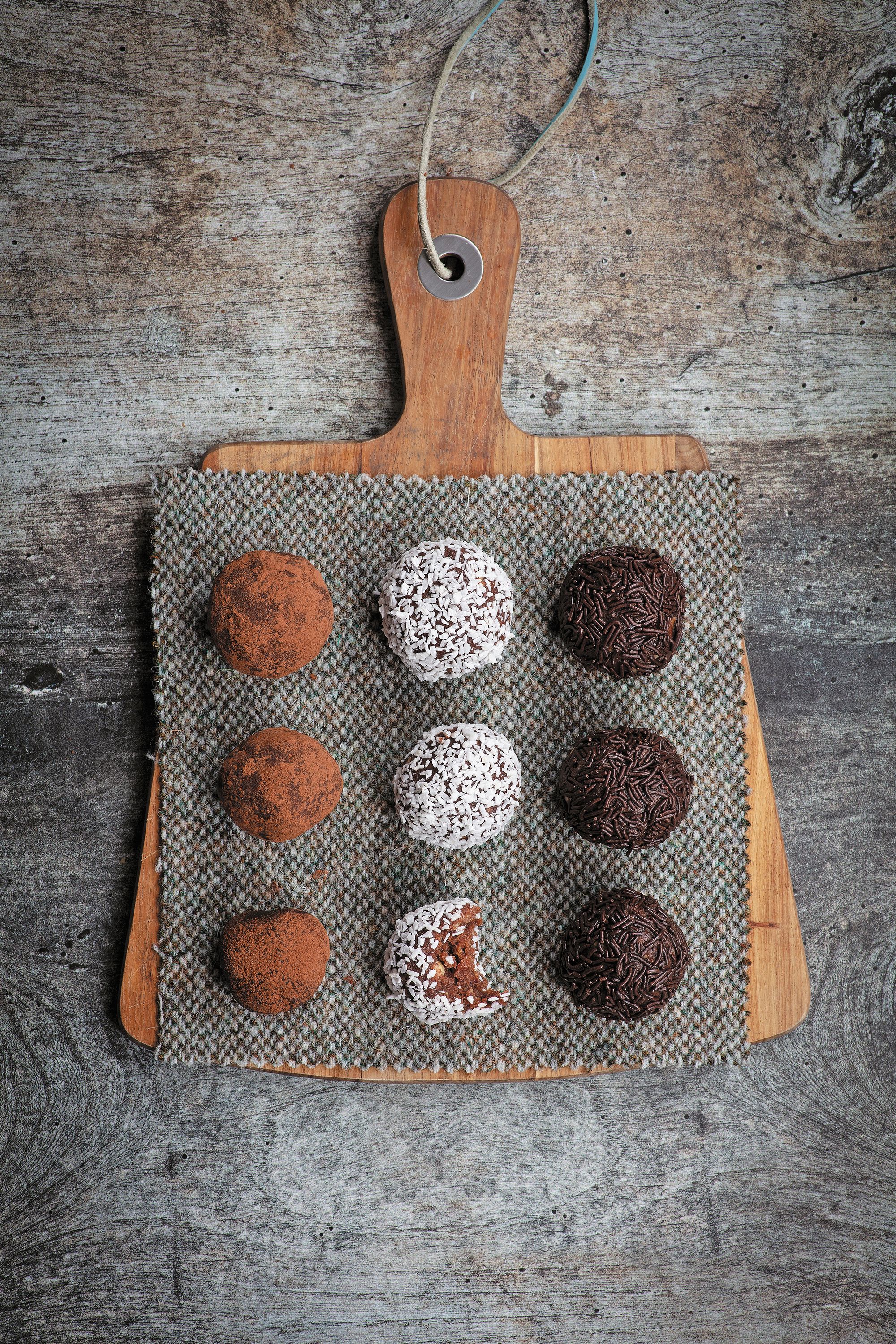
Got any leftover cake knocking about from Christmas? No need to waste it, when you can whip up a tasty treat instead – romkugler.
This sweet treat was invented by Danish bakers, says Coinneach Macleod aka The Hebridean Baker. Instead of throwing away leftover cakes and pastries, they combined them with store cupboard ingredients, rolled them into balls and decorated them with chocolate sprinkles.
“Queues of adults and kids snapped up these cheap wee treats, which quickly became a Danish tradition,” he says.
Makes: 12
Ingredients:
500g Madeira cake (actually any cake will work; even better if it’s a bit stale)
3 tbsp raspberry jam
80g icing sugar
100g butter, softened
3 tbsp cocoa powder
3 tsp rum essence (or for an adult treat use real rum; you might need to add another teaspoon)
For decoration:
Chocolate vermicelli, desiccated coconut or cocoa powder
Method:
1. Time to get your hands dirty! Crumble up the cake into a bowl, add the jam, icing sugar, softened butter, cocoa powder and rum essence and mix together with your hands (or a wooden spoon or a standing mixer) until evenly combined.
2. Depending on which cake you use, you might need to add a wee bit more cocoa or rum. Or you might like to add rolled oats for a wee bit of texture. Trust your taste buds!
3. Place in the fridge for 30 minutes then begin to roll the dough into balls.
4. Roll each ball in chocolate vermicelli, desiccated coconut or cocoa powder. Chill in the fridge and take them out 10 minutes before serving.
‘The Hebridean Baker: My Scottish Island Kitchen’ by Coinneach Macleod (Black & White Publishing, £25).
The Hairy Bikers’ chocolate eclairs

“Possibly everyone’s top teatime pleasure, eclairs are a bit of work, but are so worth it,” said Dave Myers and Si King – otherwise known as the Hairy Bikers.
“Just picture yourself biting into that beautiful choux pastry filled with cream and spread with chocolate.”
Makes: about 8–12
Ingredients:
For the choux pastry:
115g plain flour
100g butter
2 tsp caster sugar
1 tsp vanilla extract
Pinch of salt
3 eggs, well beaten
1 tbsp icing sugar
For the filling:
300ml double cream
1 tbsp icing sugar
½ tsp vanilla extract
For the chocolate glaze:
100g dark chocolate (or 50g dark chocolate and 50g milk chocolate)
50g whipping cream
50g butter
25g golden syrup
Method:
1. Preheat the oven to 180C/fan 160C/gas 4 and line two baking trays with baking parchment. Sift the flour onto another piece of baking parchment.
2. Put the butter, sugar, and vanilla extract in a pan with 225 millilitres of water and a generous pinch of salt. Heat gently until the butter has melted and the sugar has dissolved, then turn up the heat until the mixture is boiling. Remove the pan from the heat.
3. Pull up the sides of the baking parchment and slide the flour into the butter and sugar mixture. Stir the flour into the wet ingredients to form a thick paste, which should come away from the sides of the pan in one solid mass. Put the pan back over a gentle heat and continue stirring with a wooden spoon for two or three minutes, until the mixture is slightly steaming and leaves a floury residue on the base of the pan.
4. Leave to cool for a couple of minutes, then beat for a couple of minutes more. You can then transfer the dough to a stand mixer or use electric beaters if you prefer. You will see steam escape from the dough at this point. Keep beating until the steam has subsided.
5. Gradually work in the eggs, just a couple of tablespoons at a time, until you have a thick glossy dough – it needs to be quite stiff and firm enough for you to draw your finger through it without the sides falling back in. The dough initially breaks up a lot, but eventually it will come together again.
6. Fit a large star or plain round nozzle into a piping bag and scoop the dough into the bag. If you don’t have a nozzle, simply snip off the end of the bag – the hole should be about 2.5cm wide.
7. Pipe tiny amounts of the dough under the corners of the baking parchment on the trays to keep the parchment in place. For large eclairs, pipe eight lines of dough, as evenly as possible, onto the baking trays, making each one about 15cm long. To make sure they don’t spread to an oval shape, pipe them slightly wider at each end. To make slightly smaller eclairs, pipe 12 lines of about 10cm long. Wet your fingers and smooth out the ends of the eclairs if peaks have formed. If you haven’t used a star nozzle, run a fork along the length of each one.
8. Dust the eclairs with the icing sugar – this will help them darken and crisp up in the oven. Bake for 25 minutes, by which time they should have formed a crust. Use a skewer to poke holes in each end of the eclairs so steam can escape from their centres, then continue to bake for another eight to 10 minutes. Turn the oven off and leave the door ajar. Leave the eclairs in the oven for about half an hour – this will help make sure they are crisp all the way through.
9. To make the filling, whip the cream until it is stiff, then fold in the icing sugar and vanilla extract. Chill for half an hour.
10. For the glaze, put the chocolate, cream, butter and golden syrup into a bowl over a saucepan of simmering water. Melt together gently to make a fairly thin ganache.
11. To fill the eclairs, cut three holes in the base of each one. Fill a piping bag with the cream and pipe it into the holes. Squeeze the eclairs lightly – they should feel nicely full. Dip each filled eclair in the chocolate glaze – this gives a much better coverage than trying to spread it – then leave them in the fridge to set. These are best eaten on the same day they are made, as the pastry will eventually soften, but they will keep for up to 48 hours.
‘The Hairy Bikers: Ultimate Comfort Food’ by Si King and Dave Myers (Seven Dials, £25).
Rick Stein’s caramelised bread and butter pudding with sultanas and apricot glaze
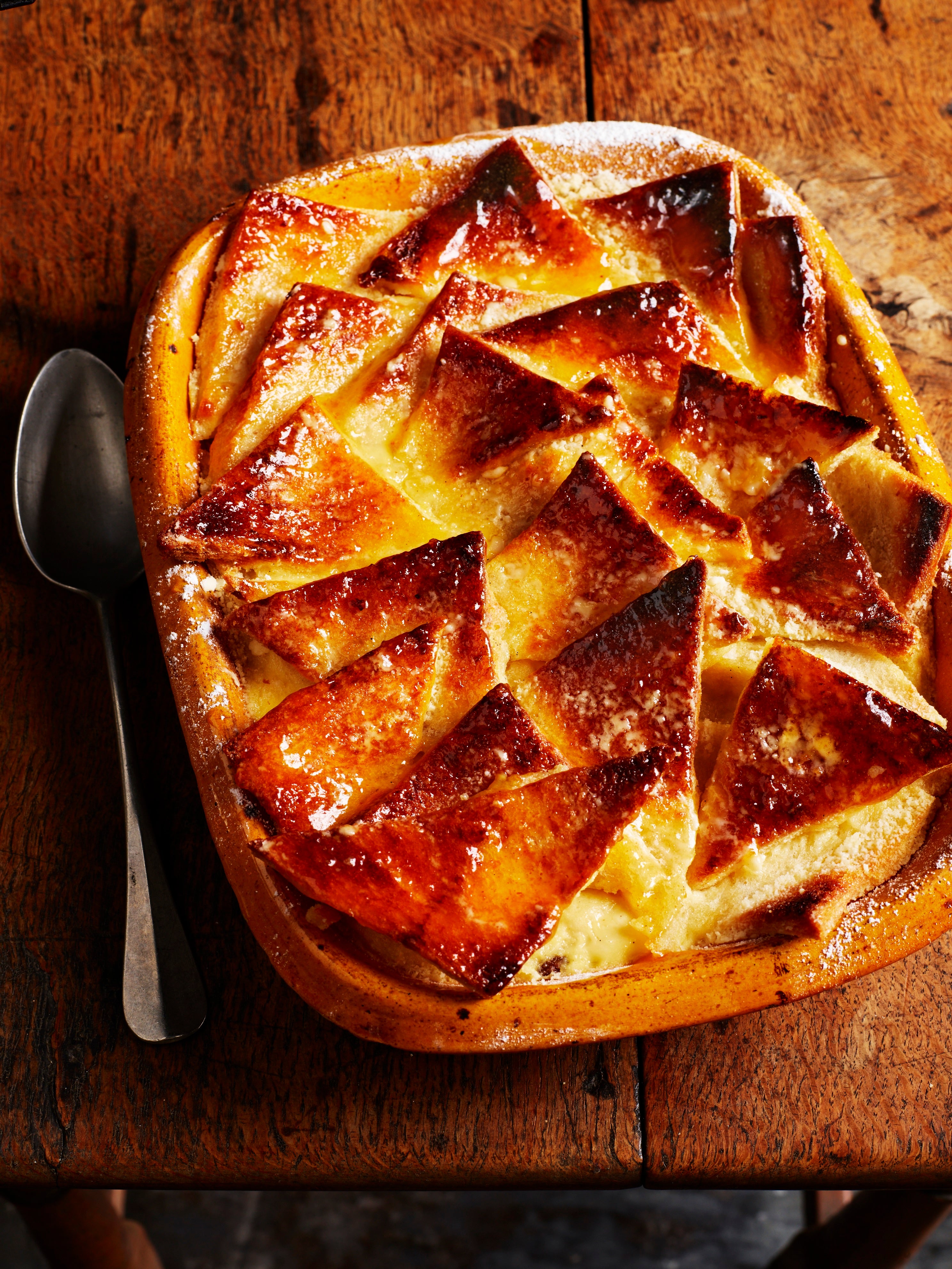
“For me, bread and butter is a favourite nursery pudding,” says Rick Stein. “It was originally intended to use up stale bread, and with that thought in mind, I think that simple white bread is the right choice for this recipe.
“Some people choose brioche or some other enriched dough, but I prefer the simple plainness of the bread with the creamy vanilla voluptuousness of the custard.
“I like to add some sultanas or candied peel or both to my bread and butter pudding, and finish it with an apricot glaze, having first caramelised the top with icing sugar under the grill.”
Serves: 6–8
Ingredients:
50g butter, plus extra for greasing
6–7 thin slices of white bread, crusts removed
100g sultanas or candied peel, or a mixture
250ml double cream
250ml whole milk
3 medium eggs
50g caster sugar
1 vanilla pod
25g icing sugar
25g apricot jam, warmed and sieved
To serve:
Clotted cream (optional)
Method:
1. Preheat the oven to 190C/fan 170C. Butter a one-and-a-half-litre shallow ovenproof dish – something about 6cm deep is ideal.
2. Generously spread the slices of bread with butter and cut each slice into four triangles. Arrange a layer of the bread over the base of the dish, then sprinkle in the sultanas and/or candied peel. Arrange the remaining bread triangles on top.
3. Mix the cream, milk, eggs and sugar together and pass the mixture through a sieve. Slit open the vanilla pod, scrape out the seeds and whisk them into the custard. Pour the custard over the bread and leave to soak for five minutes.
4. Place the dish in a roasting tin and pour enough hot water into the tin to come halfway up the sides of the dish. Bake in the preheated oven for about 30 minutes, until the top is golden and the custard has lightly set but is still quite soft in the centre. Remove the dish from the roasting tin and leave to cool for about 15 minutes.
5. Meanwhile, preheat the grill to its highest setting. Generously dust the top of the pudding with icing sugar and place under the grill to glaze – watch it carefully, though, as it burns easily.
6. If the top starts to puff up, remove the dish from the grill and let it cool a little longer before returning to the heat. Brush the top with the sieved apricot jam and serve with some clotted cream, if you wish.
‘Rick Stein’s Food Stories’ by Rick Stein (BBC Books, £28).
Jane Dunn’s Irish cream tart
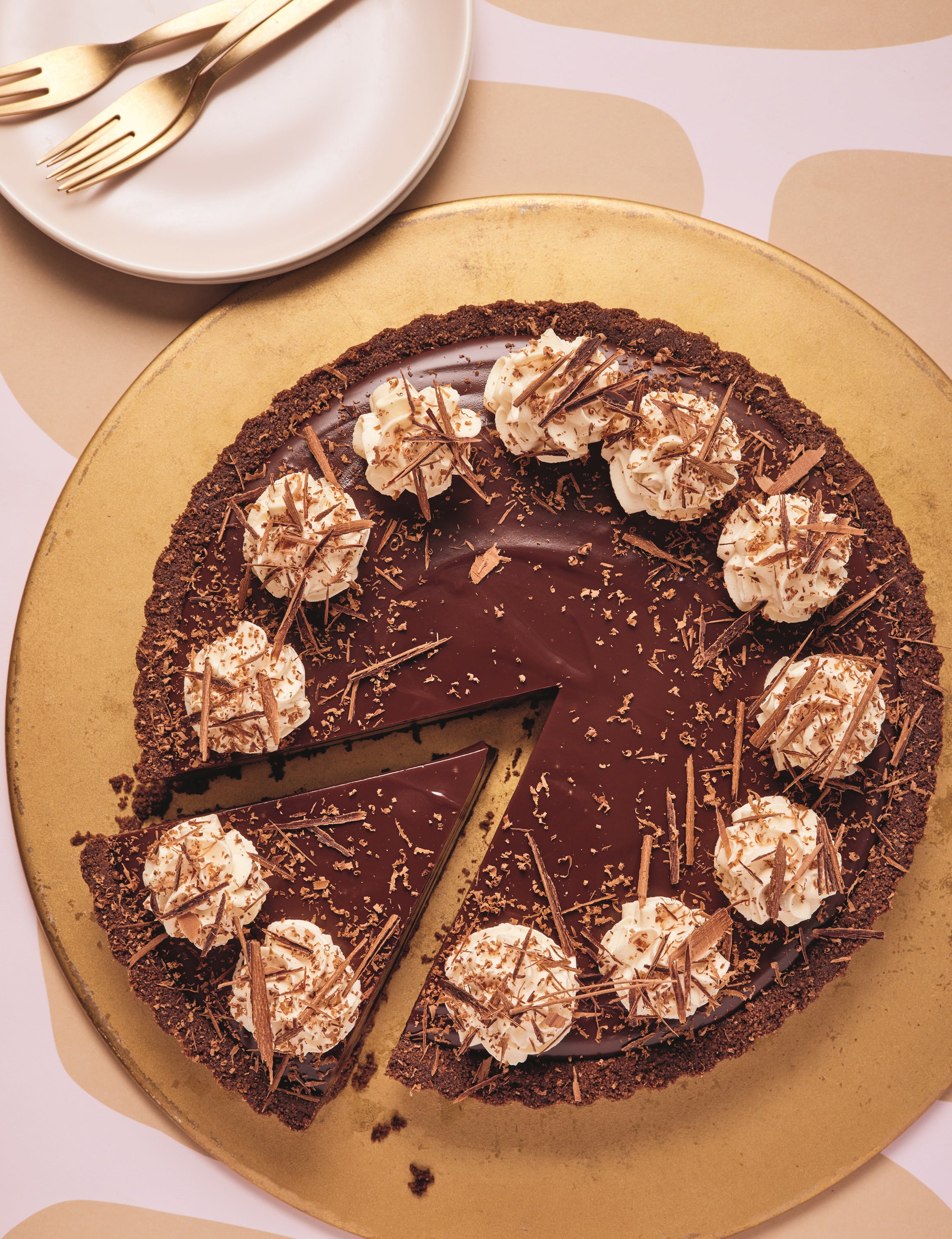
“This dessert is one of the most luxurious no-bake treats you can make,” says Jane Dunn, author of Jane’s Patisserie: Celebrate!
“I serve this every Christmas season, as it always goes down well, but you know it would suit a New Year’s Eve or a dinner party.”
She recommends making them in miniature for your New Year’s party, so they’re even easier to serve to guests.
Serves: 12
Ingredients:
For the base:
300g digestive biscuits
35g cocoa powder
150g unsalted butter, melted
For the filling:
175g dark chocolate
175g milk chocolate
50g unsalted butter
300ml double cream
150ml Irish cream liqueur (I use Baileys Original)
For the topping:
125ml double cream
25ml Irish cream liqueur
2 tbsp icing sugar
Grated milk chocolate
Method:
1. For the base: In a food processor, blitz the biscuits and cocoa powder to a fine crumb, add the melted butter and pulse a few times until well combined. Transfer to a 23cm loose-bottomed tart tin and press firmly into the base and sides.
2. For the filling: In a large bowl, add the dark chocolate, milk chocolate and butter. In a small pan, add the double cream and Irish cream liqueur and heat until just before boiling point. Pour over the chocolate and butter and whisk together until smooth. Pour the filling into the biscuit crust and chill in the fridge for around three hours until set.
3. For the topping: Carefully remove the biscuit crust from the tin and transfer to a serving plate. In a large bowl, whip the double cream, Irish cream liqueur and icing sugar together to form soft peaks. Transfer to a piping bag with a piping nozzle fitted and pipe swirls over the tart. Grate some chocolate over the dessert before serving.
‘Jane’s Patisserie: Celebrate!’ by Jane Dunn (Ebury Press, £20).
Join our commenting forum
Join thought-provoking conversations, follow other Independent readers and see their replies
Comments
Bookmark popover
Removed from bookmarks