Why does lettuce go bad so quickly? Scientists have the answer
Lettuce is the first horticultural species on which such a detailed study has been carried out
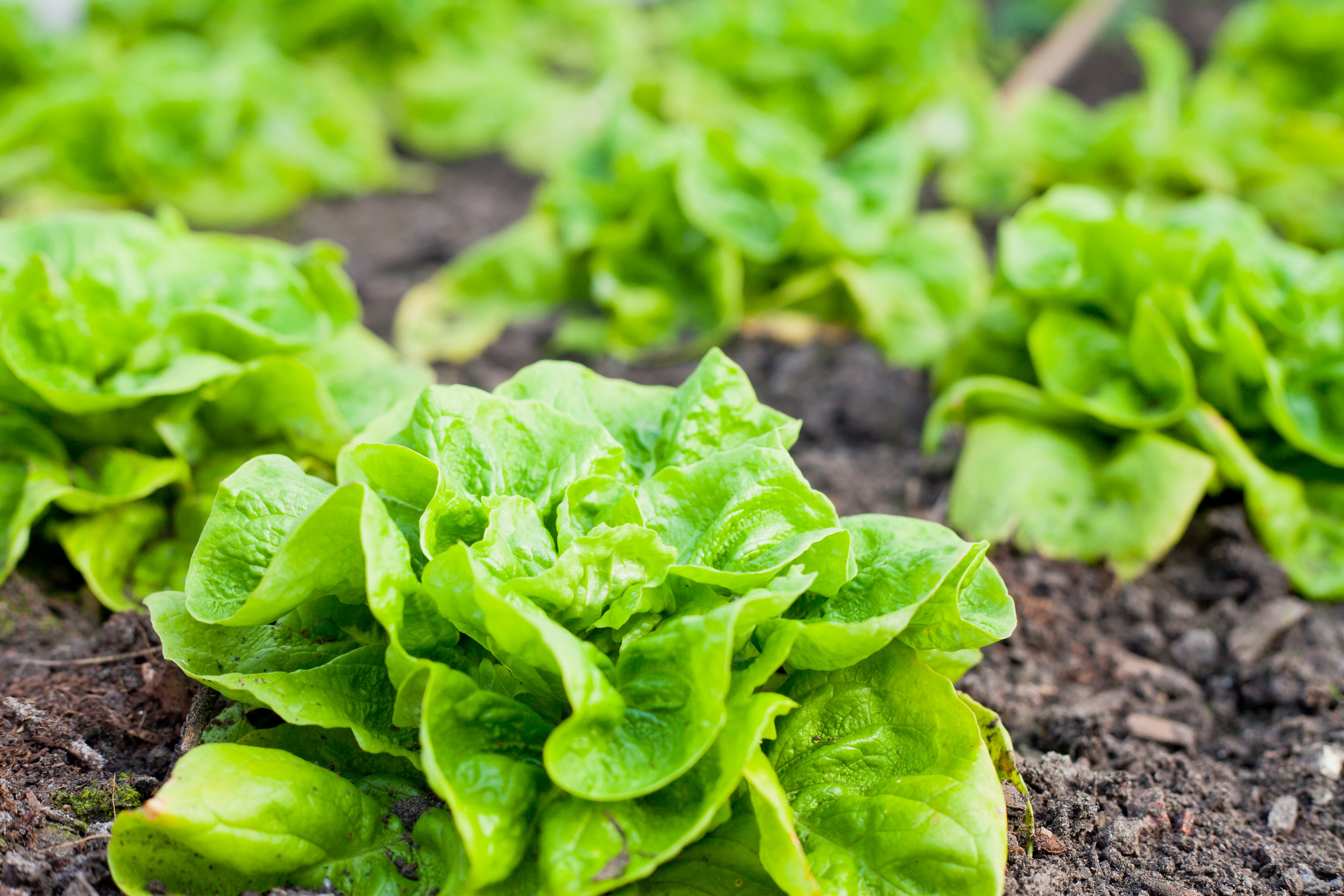
As children, we’re taught that the functions of a leaf are photosynthesis (turning sunlight into chemical energy) and storing water. This is generally true, including for the lettuce leaves we eat.
However, the surface of a leaf is not just a shield – it is a complex lattice of chemical compounds, with different properties in different areas. By finding out where lettuce’s weakness is concentrated (in its hydrophilic or “water-loving” areas), we can find new ways to protect it, make it last longer, and make it easier to produce and sell.
Not so waterproof
To protect themselves, the leaves and other aerial parts of plants, such as flowers, stems, and fruits, are covered by a waxy, more or less waterproof layer made of fat (lipids), called the cuticle. It is akin to a natural raincoat, though with a composition and structure that are not uniform.
But what if leaves were not as waterproof as we thought? This would explain one of the great household mysteries: why lettuce wilts and goes bad so quickly.
The nanoworld of lettuce
If the cuticle is an impermeable layer of lipids, as has been believed for centuries, how can water get through it to escape a leaf’s interior?
To unravel this mystery, a multidisciplinary team of scientists peered into the lettuce leaf’s “nanoworld”, observing the leaves at a level of detail a thousand times smaller than a human hair. Thanks to atomic force microscopy (AFM) and other advanced techniques, we discovered that the surface of plants is not a continuous, uniform layer of wax, but that it there is chemical heterogeneity, or “patchiness”, at the micro and nano scale.
We have observed this on rose petals, olive leaves, and now also lettuce. It is as if the leaf’s raincoat had some areas of fabric that repel water, and other areas that attract it.
We chose lettuce leaves for our study because they are perishable and easily absorb water.
We sought to answer one question: why is this leaf so perishable and susceptible to microbial contamination? In other words, why does it spoil so quickly? Does its surface have fewer barrier properties to prevent dehydration and pathogen attack?
Lettuce’s epidermal cells
In our study – conducted by the Polytechnic University of Madrid, the University of Murcia and the University of Valencia – we analysed in detail the surface of the upper and lower leaves of one variety of lettuce.
We selected romaine lettuce, a common, highly perishable vegetable. It wilts and goes bad quickly, and is very susceptible to microbial contamination. This suggests that its “raincoat” (the cuticle) is not as effective a protective barrier as that of other plants.
The surface of the leaf is mainly composed of two types of cells. “Pavement” cells cover most of the surface, while “guard” cells are made up of two kidney-shaped cells that join together to form openings called stomata (from the Greek word stoma, meaning “mouth”).
About the authors
Victoria Fernández is a Researcher, Universidad Politécnica de Madrid (UPM). Ana Cros Stötter, Catedrática de Universidad. Física Aplicada, Universitat de València. Jaime Colchero, Profesor Titular. Física del Estado Sólido, código Unesco 2211, Universidad de Murcia.
This article was originally published by The Conversation and is republished under a Creative Commons licence. Read the original article.
On the underside of the leaves, there is a slightly higher density of stomata. However, both sides are generally similar in structure and chemical composition.
The main role of stomata is to open to allow carbon dioxide to enter for photosynthesis, although they also allow water vapour to escape. Stomatal opening is well regulated at the plant level, but can be affected by a range of stressors.
Analysing the lettuce revealed something crucial. While pavement cells have a fairly homogeneous surface rich in water-repellant lipids, the guard cells that form the stomata are different. The surface of the stomata is chemically heterogeneous, or diverse. There are hydrophilic (water-friendly) areas among the hydrophobic (water-repellent) areas.
Chemical diversity, and why it matters.
Our study shows for the first time that the surface of stomata, apart from being rough, also exhibits chemical heterogeneity.
The purpose of stomata is to open up and allow carbon dioxide to enter the leaves for photosynthesis, limiting water loss. However, we assume that the chemical heterogeneity concentrated on the surface probably serves an additional function that we have yet to explore further.
We can anticipate possible implications, such as a link between the plant’s hydrophilic areas and its susceptibility to contamination by bacteria or viruses. These areas also promote water loss from inside the leaves. By losing more water, they spoil after harvesting, including while on sale.
Likewise, it is possible that this heterogeneous composition of the stomata limits carbon dioxide loss and the transport of hydrophobic substances, and that it affects the leaf’s mechanical properties.
Lettuce is the first horticultural species on which such a detailed study has been carried out. However, we believe that studying the surface of fruit and vegetables is essential to finding ways to prolong and improve their shelf life after harvesting and extend their life – all of which contributes to a stronger, more robust food supply.
Join our commenting forum
Join thought-provoking conversations, follow other Independent readers and see their replies
Comments
Bookmark popover
Removed from bookmarks