These simple changes could help your dog or cat live longer
A study of two million cats and four million dogs has better defined their different life stages
Geriatric veterinary care is in great shape, with dogs and cats living on average 11.3 years, according to French data. Our knowledge of how to accompany them in later life is expanding fast. We now know that simple changes can do wonders for an old cat or dog’s comfort and quality of life.
The main trick is for pet owners not to stand by idly as their four-legged companions age.
At what age can my dog or cat be considered old?
A study of over two million cats and four million dogs has enabled us to better define their different life stages.
Cats enter old age at around 10 years old. This period is then divided into mature, senior and super-senior stages.
The same study points out that it’s less uniform for dogs, for whom old age depends heavily upon size.

Small dogs (toy and small breeds weighing less than 9 kg, such as Chihuahuas or Cavalier King Charles Spaniels) enter their third age at around 7 years old, then become seniors at around 12 years old.
Medium to large dogs weighing more than 9 kg, such as Welsh Corgis, Golden Retrievers and Australian Shepherds, for example, reach this stage earlier: around 6.
Not to panic, however: the new stage needn’t mean that the end is near. Rather, it may just be time to pay greater attention to your pet and to gradually adjust their environment, medical and care routine to help them age in the best possible conditions.
What is healthy ageing? How can you assess it in your pet?
But before we even talk about “healthy ageing”, it’s useful to recall what ageing is: a natural, gradual and inevitable process. Over time, animals become less tolerant of environmental stress and their cells accumulate damage, leading to various physiological changes.
So, what do we mean by a dog or cat ageing “in good health”? A recent consensus article in which I participated offers a definition adapted to our pets: an elderly animal in good health is one that retains sufficient capacity and resilience to meet its physical, behavioural, social and emotional needs, while maintaining a stable and positive relationship with its human.
Some signs are completely normal: greying hair, slight tartar build-up, thinner skin, and slightly duller senses–these bear no noticeable impact on quality of life.
On the other hand, mobility issues that hinder access to resources (difficulty getting up, climbing stairs or interacting easily with you) should not be considered simply as signs of ageing. The same goes with the first signs of cognitive dysfunction (a syndrome that has some similarities with Alzheimer’s disease) when a dog or cat struggles to find its food bowl or seems lost in the house, for example. These cases call for veterinary advice.
Quality of life therefore becomes the central criterion for assessing whether an animal is ageing harmoniously. In dogs and cats, the concept of frailty, derived from human geriatrics, is now used (see table below).
How can you assess your pet’s frailty?
Frailty score: if at least 3 out of 5 components are affected, the individual is considered frail.
Criteria | Appearance |
|---|---|
Weakness | A loss of strength or/and of muscle mass |
Fatigue | An intolerance to exercise when compared to the animal’s adult stage |
Weak exercise | Likewise, a decline in activity levels when compared to the animal’s adult stage |
Malnutrition | Loss of body mass or/and of appetite |
Weak mobility | Weak mobility |
Animals classified as frail are more prone to developing diseases and should be monitored more closely.
The major advantage of this approach is that, as in humans, frailty detected early can sometimes be mitigated. Hence the importance of regular screening and early support to best care for our elderly companions.
Some adjustments to be made
The first step is to make the animal’s environment more accessible so that it can easily reach all its resources: food, water, resting and hiding spots, contact areas, etc. A few props and adjustments can make a real difference, including small steps to climb onto the sofa, armchairs, firm and low cushions, or raised bowls for dogs and cats suffering from osteoarthritis, etc.
Increasing the number of access points is also useful: two or three feeding areas, several places to sleep, and more litter trays that are easy to step over. Some commercial litter trays are too high for cats with osteoarthritis; a wide tray with a low rim can be much more comfortable.
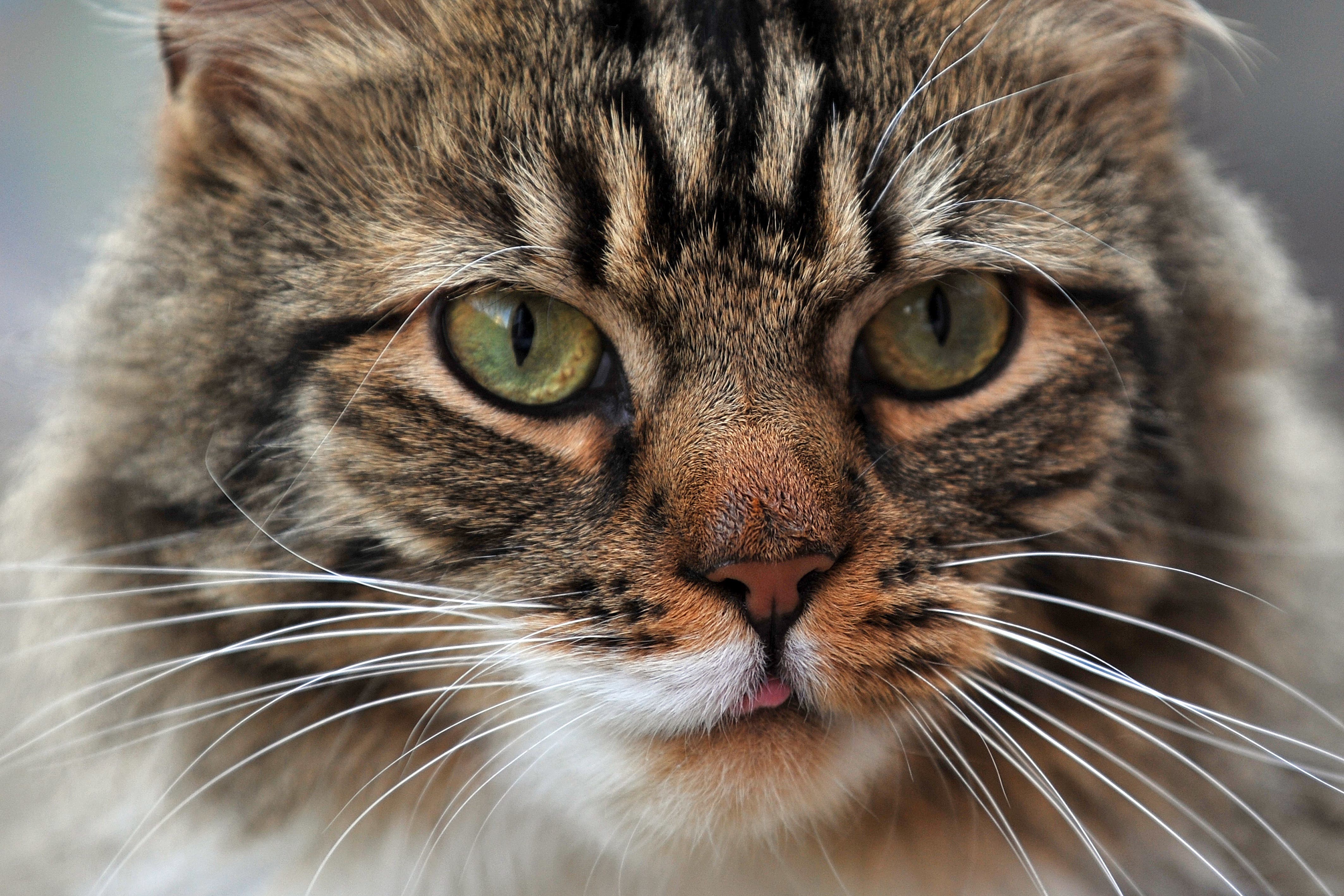
Maintaining a calm and positive relationship is essential. Behaviour that is considered “undesirable” should always be investigated by a vet and a behaviourist (or a veterinary behaviourist): it may reflect a need, discomfort or difficulty. A cat that scratches the carpet rather than its scratching post, for example, may simply be looking for a less painful position. Some animals also become more anxious or reactive with age or certain medical conditions; it is therefore important to understand the cause rather than punish them, at the risk of damaging the relationship and failing to resolve the issue.
Cognitive and physical stimulation must continue, but adapted to the animal’s abilities. “Puzzle feeders” (or interactive bowls, where animals have to solve puzzles to get their food) are still useful, provided they are chosen according to the animal’s condition: a scratch mat or an interactive bowl that can be pushed by the nose are preferable to a system that requires complex leg movements. Games, learning and small training sessions are still beneficial; sometimes it is enough to shorten the sessions and use very enticing rewards (think small pieces of chicken breast or sausage, etc.).
About the author
Sara Hoummady, DMV, PhD, Associate professor in ethology and animal nutrition, UniLaSalle.
This article is republished from The Conversation under a Creative Commons licence. Read the original article.
Walks can be adapted, in particular by using comfortable and safe bags to carry the dog when it is too tired, either for part or all of the walk. The important thing is to continue to give the animal access to the outdoors.
Finally, diet is key when caring for older animals. Ageing leads to changes in digestion and a gradual loss of muscle mass. It is therefore recommended to choose a diet that is easily digestible, has a smell and taste that appeal to your pet, and is specifically formulated for the needs of senior animals. Raw meat should be avoided: it’s often unbalanced in terms of minerals, which can be harmful to older animals, who are particularly sensitive to excess phosphorus or inappropriate calcium/phosphorus ratios. They also present an increased health risk, as their immune systems are less effective.
On the other hand, combining dry food (kibble) and wet food (terrine, mousses, etc.) is often beneficial. A cooked, homemade meal (following the advice of a vet) can also help an animal regain its appetite. And for the fussiest eaters, a simple trick may suffice: warm the wet food slightly to enhance its smell and make it more appealing.
When should you see your vet?
Regular vet check-ups are still essential, particularly to keep up to date with vaccinations and worming. Ageing weakens the immune system, making senior animals more vulnerable and requiring regular protection against infectious diseases and parasites.
Geriatric consultations aim to monitor the ageing process, which is unique to each individual. The first consultation is often the longest to allow for an in-depth discussion and include additional tests where necessary. These initial findings will serve as a reference for follow-up visits. Ideally, this monitoring should begin at the start of the third age. The frequency of consultations then depends on the animal’s trajectory: every six months if signs of frailty appear, or once a year if its condition remains stable.
The challenge is no longer just to extend the lifespan of our furry friends, but to, above all, prolong their health. After all, we want them to enjoy it as long as possible, much as we would for humans.
Join our commenting forum
Join thought-provoking conversations, follow other Independent readers and see their replies
Comments
Bookmark popover
Removed from bookmarks