Unregulated ultrasounds like these are putting pregnant women like me at risk
Social media has turned the ultrasound scan into a kind of ritual – a milestone to share, film, post. There’s a whole subculture of “scan reveals” on TikTok, with some couples booking multiple private sessions from sonographers who aren’t regulated. And it can go horribly wrong, Zoe Beaty reports


“Have you booked your reassurance scan?” my phone asked accusingly, early one morning back in March as I scrolled through Instagram. I’d hazard a guess that I was around four weeks pregnant the first time I saw this sort of thing – a local company were offering very early pregnancy scans for a small fee. Naturally, I clicked “see more”.
It was no surprise that the algorithm was ahead of the curve. It had been only a matter of days since I presented a positive pregnancy test to my partner, having taken one on a gut feeling and a whim one Friday morning. Despite both of us being in our late thirties we reacted, as many apparently do, like guilty teenagers – baffled, mind-blown, bewildered, elated, worried. We had talked about the idea of parenthood in a roundabout way, generally alongside the assumption that choosing it would likely be a very challenging pursuit as we both neared 40. As it turned out we were very, very lucky.
But the thing about pregnancy is that it’s spent anxiously waiting to get to the next milestone safely – at which point the goalposts move. Quickly our ages became another source of anxiety, given that I was now classed as a “geriatric” pregnancy (all women over 35). Crippling nausea and tiredness, extreme hunger for carbs, cold, wet lettuce and anything lemon went some way to assuaging our niggling worries that something might be wrong. Strong symptoms are good, I was told by friends and family we disclosed to. But as soon as the symptoms waned, even for a few hours, panic crept in. And here was a solution: “reassurance”, so my phone told me, was available in 10-minute slots, just a few streets away from home, for the small sum of £85.
In fact, I could have that reassurance on tap, whenever I’d like – as long as I had the time and the money. As many as 83 per cent of new parents now book a private scan at some point in their pregnancy according to one survey, and it’s not difficult to see why.
The “journey” to motherhood, as TikTok dubs it, is paved with worry, even more so for those who have suffered arduous and often heartbreaking difficulties with fertility, or previous losses. These on-demand scans, particularly for the latter, can provide much-needed relief during the long stretches of time between getting pregnant and being seen by a doctor or midwife. But that same hunger for reassurance is also now fuelling an industry that is – as NHS specialists are now warning – alarmingly under-regulated.
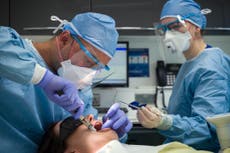


This week, hospital radiologists have spoken out about the UK’s unregulated private pregnancy scan clinics, who they say are putting lives in danger. Many are operating with little to no oversight, some being run by unqualified staff using low-grade equipment; others are offering services far beyond their remit. The only real constant is that it’s women, often at their most vulnerable, who are really paying the price.
“I think it’s important to say that not all private clinics are bad,” says Katie Thompson, a senior sonographer and current president of the Society of Radiographers. “There are some really well-run clinics that have appropriately qualified sonographers. But people using these clinics need to be aware that sonography isn’t a protected title. You don’t have to have any qualifications at all to do the scans, or you can have very minimal ones. And that’s where the risk comes in.”
Thompson explains that if something unexpected shows up, it might not be picked up, or could be incorrectly diagnosed. “Or sometimes it’s seen,” she adds, “but nothing is done about it. “You expect that if someone’s got a uniform on, they’ll have the right qualifications. And most of the time, nothing is wrong. But when something is wrong, that’s when it can have a devastating impact.”
Some women have even been told - incorrectly - that their baby has died. Inevitably, even if a later scan confirms this to be false, the ensuing anxiety stemming from incompetency like this is excruciating and cruel.
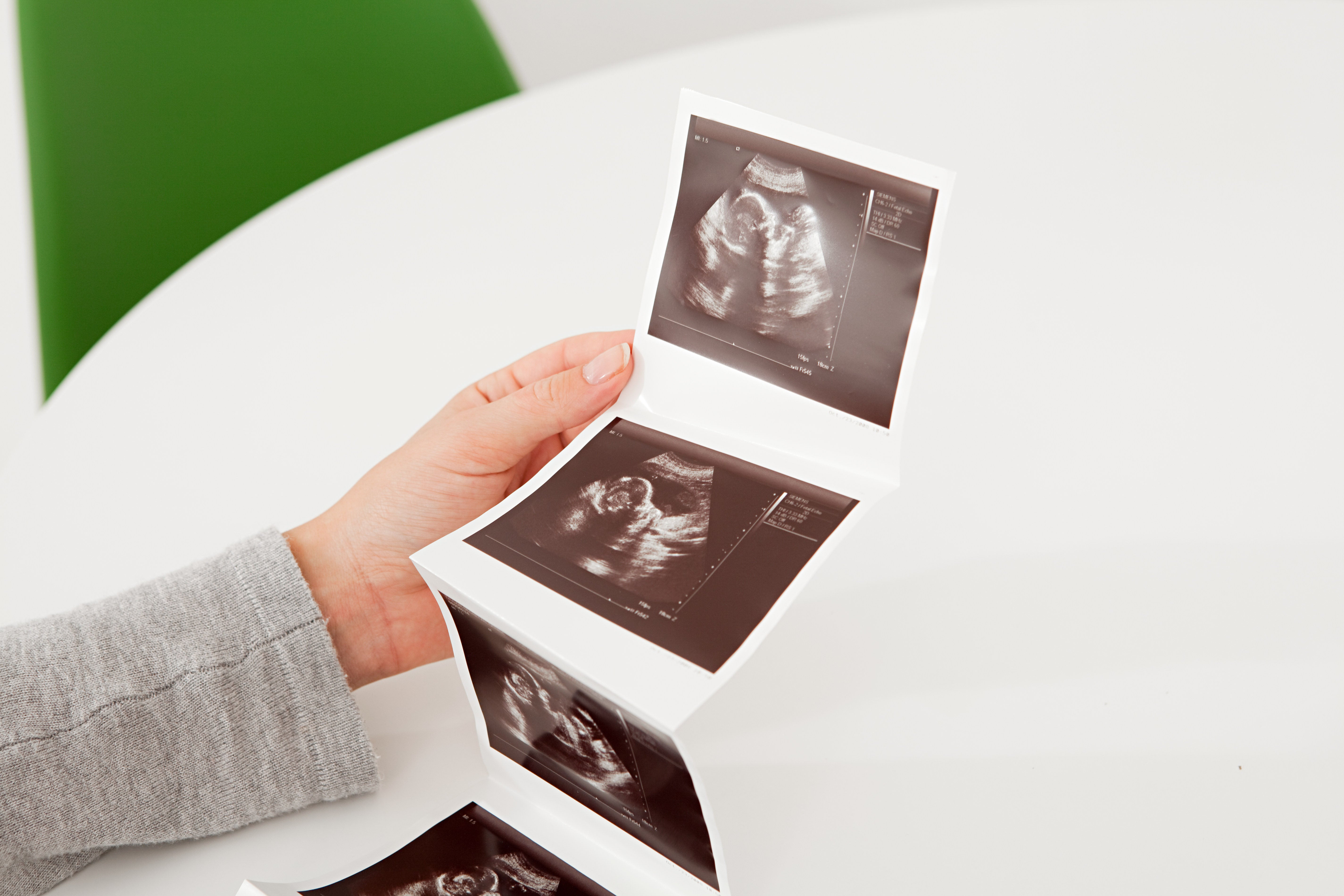
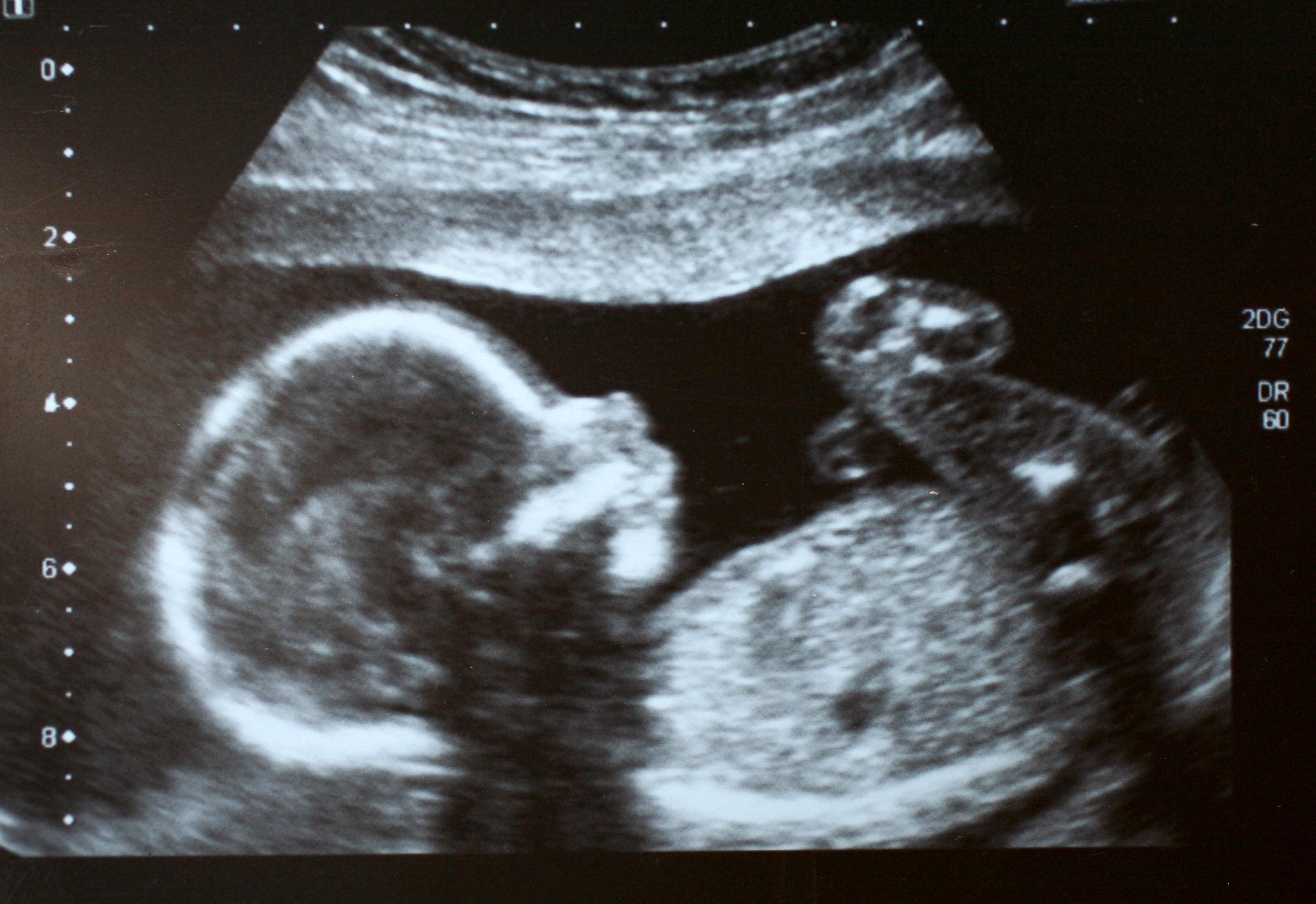
The trouble is, it’s a circular anxiety. I eventually bowed to the algorithm and booked a reassurance scan when I was nine weeks, when the baby girl still baking in my belly looked like nothing more than a hearty little potato. It was, to be fair, nothing short of miraculous. I saw the heartbeat that is now, forever will be, the most important heartbeat for the first time; I marvelled at tiny gummy bear legs trying to wiggle and at the undeniable miracle of life. We got a photograph to proudly stick on our fridge. I was “reassured”. Until I wasn’t.
In the first weeks, developments come thick and fast – each is its own milestone, and the days are all singularly important. The nausea that once felt like proof could vanish overnight, leaving you spiralling. The algorithm will inevitably leave you with no doubt of anything else that could go wrong. While I felt comforted in the (very expensive) 10 minutes that a stranger held a probe on my tummy and declared my tiny baby “10 out of 10” – which very much satisfied the school nerd in me – it was fleeting. “A scan only tells you what’s true at that moment,” Katie explains. “As soon as you step off the bed, it’s already out of date.”
In the comments sections of all these services, there is proof of women becoming obsessed with “reassurance”, getting more scans, all at more cost. At no point during the onslaught of ads did I see any real declarations about qualifications (nor did it really occur to me, embarrassingly) and no warning about the risks of over-scanning – though ultrasound is generally safe, excessive or poorly performed scans can raise concerns.
“Ultrasound uses sound waves, but it still generates heat,” Katie explains. “In very early pregnancies, using colour Doppler to show the heartbeat can raise the temperature slightly – even half a degree – and that can be dangerous in very early pregnancy. So you have to use it carefully, and only for as long as needed.”
But not all clinics are following that guidance, or using properly maintained equipment, despite booking back-to-back scans all day, generating huge profit margins. Even in the last few weeks, Katie has seen these issues in action: recently it was a woman who had been told by a private clinic that she had miscarried.
“She’d been told her pregnancy sac was empty,” Katie says. “But when I scanned her, there was actually a large bleed next to a perfectly normal early pregnancy. The private clinic had misdiagnosed the bleed as the sac. She’d spent days thinking she’d lost her baby.”
In the absence of regulation, stories like this are far from isolated. “We’ve had people who were struck off as radiographers in the past but can still work privately as sonographers,” Katie says. “There’s no central body to report them to. They can just move to another clinic and carry on scanning.”
It’s a loophole that campaigners have been trying to close for more than 30 years. “We’ve been raising this since the 1990s,” Katie says. “We need regulation for sonography – a body that can investigate, that can strike people off if they’re unsafe. It’s about patient safety.”
Still, the demand keeps growing. Social media has turned the scan itself into a kind of ritual – a milestone to share, film, post. There’s a whole subculture of “scan reveals” on TikTok, with some couples booking multiple private sessions to track the baby’s growth week by week. Katie worries this, too, is feeding a cycle of anxiety. “Some people are so hyper-anxious that they’ll go for five or six scans before their NHS twelve-week appointment,” she says. Except in very specific cases, it’s not healthy emotionally or physically, she says.

The truth, she says, is that the NHS already provides the scans you need. “If everything is normal, you don’t need to be scanned every week. Later on, if you have a concern, your midwife can listen for the heartbeat. But those early weeks can feel so long – and I do understand why people want reassurance.”
What’s needed, she argues, isn’t opportunity or access but accountability. “We don’t want to say, ‘Don’t go for a private scan.’ We just want people to be safe. We want them to know the person scanning them is clinically competent, educated to the right level, and that if something goes wrong, there’s a process in place.”
For many of these businesses, “scanxiety” has become a product to package up and sell back to women who are already doing their best to keep their heads above water. It’s easy to see why it works so well on thousands of women like me – glossy, persuasive marketing, smiling couples, sickly pastels and the promise of the ultimate need in one of the most vulnerable times of your life: reassurance. It might be wrapped up in the language of care, but being told that you can top up that feeling like a phone battery is not in the best interest of patients, but profit.
In the absence of proper regulation, these clinics will keep multiplying and keep churning out the appointments, feeding on the worry that comes with early motherhood and the silence that often surrounds it. Reassurance shouldn’t be a luxury purchase, and it certainly shouldn’t be a gamble of who happens to be holding the probe that day. Once again, we deserve better than that.
Join our commenting forum
Join thought-provoking conversations, follow other Independent readers and see their replies
Comments
Bookmark popover
Removed from bookmarks