What is the Scandinavian sleep method? The trend that could save your relationship
The Scandinavian sleep method allows couples to continue sleeping together while meeting each person’s individual needs
It begins with two people, one blanket, and two very different ideas of what’s a comfortable sleeping temperature. By midnight, one partner is hot and sweaty while the other is freezing.
Sounds familiar? You’re not alone.
Many couples have nightly arguments over blankets or doonas, bedroom temperature and differing sleep habits. Poor sleep and relationship strain can follow.
So it’s no wonder couples are curious about the “Scandinavian sleep method”, which is having a moment on social media.
But what is it? And will it end your nightly “doona drama”, as TikTok suggests?
What is the Scandinavian sleep method?
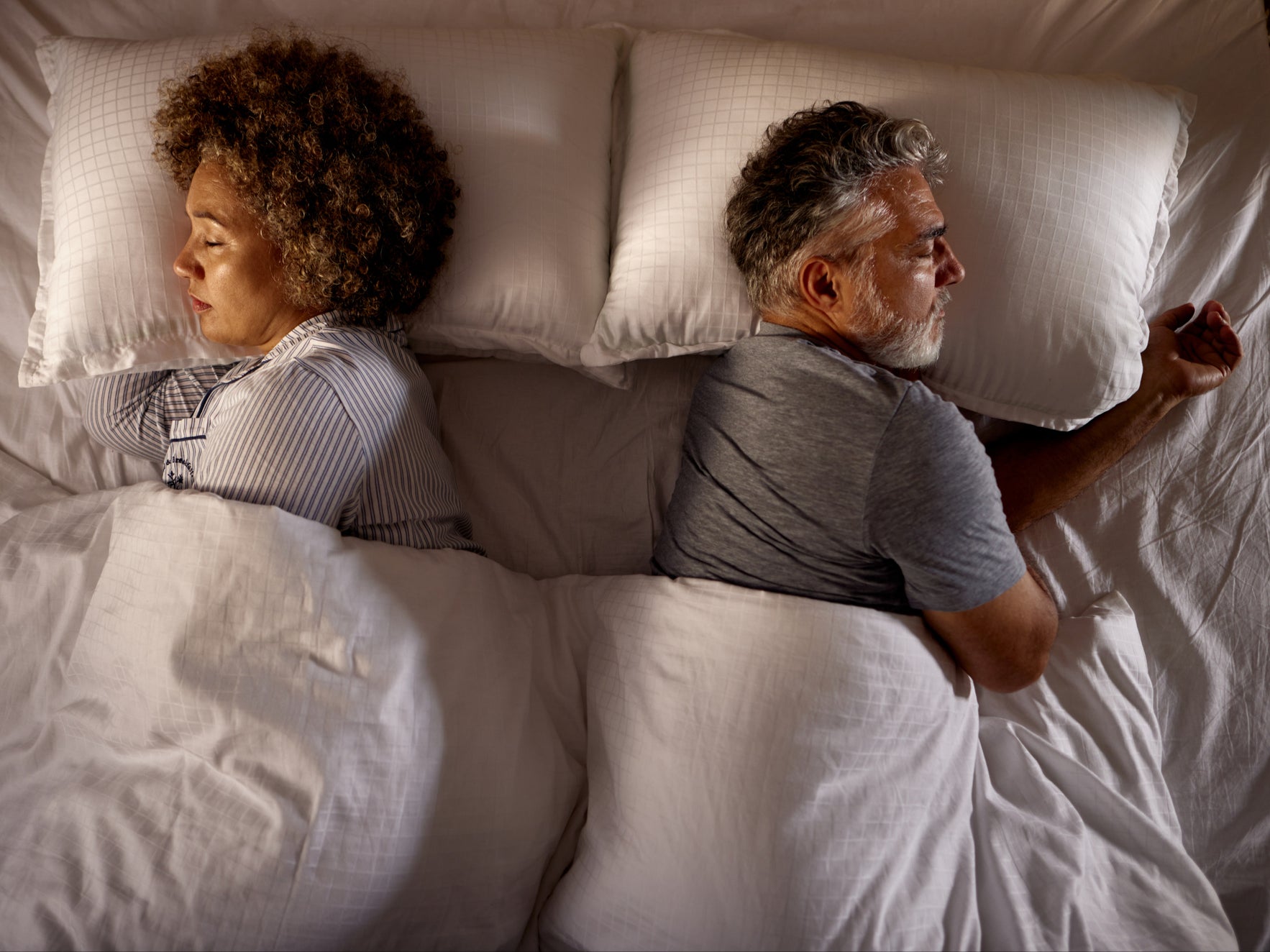
This is a sleeping arrangement for couples who share a bed. But rather than sharing bedding, each has their own blanket or doona.
This arrangement allows couples to continue sleeping together while meeting each person’s individual needs. It offers a balance between sleeping together and sleeping apart.
As the name suggests, it’s said to be a popular in Scandinavian countries. It reflects the preferences of many couples who value both intimacy (sharing a bed) and personal sleep comfort (their own blanket or doona).
Now many couples from non-Scandinavian countries say trying the Scandinavian sleep method has been a game-changer for their sleep.
Does it really work?
Most research on how couples sleep focuses on broader factors. These include the sleep environment (whether it’s safe, quiet or dark), temperature and routines, rather than whether couples share a blanket.
In the absence of research specifically testing “two blankets vs one blanket” it is hard to check if the Scandinavian sleep method is scientifically valid.
However, this method has many aspects that align with healthy sleep practices. So there’s reasonable evidence to suggest it could reduce the type of sleep disturbances you can get from sharing a blanket with your partner.
I’m hot, you’re cold
The body’s internal clock manages daily rhythms in core body temperature, which drops when you fall asleep. And different bedding materials can influence your sleep by affecting your skin and body temperature.
For instance, different fibre types can affect how quickly you fall asleep or the amount of deep sleep you get. Blankets that are too hot and raise your body temperature can also affect your sleep.
But night time body temperature patterns can vary with age, body composition, hormones, and whether you’re a morning or evening person. These contribute to whether you’re a hot sleeper or a cold sleeper, and can explain why you need different types of bedding to your partner.
Hot sleepers generally prefer lightweight, breathable fabrics, whereas cold sleepers tend towards heavier, insulating fabrics that trap heat.
Individuals may also prefer different bedding for other reasons. Someone with heightened sensory awareness or skin sensitivities might favour more natural, smooth fibres. Or they may opt for weighted blankets to provide a calming effect that helps reduce anxiety or sensory processing issues.
With the Scandinavian sleep method, each person can choose the type of bedding that suits them best.
My feet are cold
For female-male bed partners, sex differences in night time core body temperature patterns can lead to one person shivering while the other sweats under the same cover.
Women’s hands and feet often have lower skin temperatures, as their body prioritises keeping their internal organs warm. This can explain why women might want to tuck their hands and feet in under the doona or blanket, while their male partner is happy to stick theirs out.
Women may also reach their lowest night time body temperature earlier in the night than men. As women age and transition to menopause, they might experience hot flushes and night sweats, which often disturb sleep.
These differences in temperature regulation mean men and women usually have varying preferences for their ideal temperature for sleeping.
I was almost asleep!
If you have insomnia, your sleep can be disturbed by your partner’s noise or movement. Your sleep can also be disturbed by your partner’s influence over the sleep environment – whether they watch TV or use their phone in bed, or if they sleep with the lights on.
About the authors
Yaqoot Fatima is a Professor of Sleep Health at University of the Sunshine Coast. Danielle Wilson is a Research Fellow and sleep scientist at University of the Sunshine Coast. Nisreen Aouira is a Research Program Manager, Let's Yarn About Sleep, Thompson Institute at University of the Sunshine Coast. This article is republished from The Conversation under a Creative Commons license. Read the original article.
Female partners report being disturbed more often by their male partner’s movement than the other way around.
So separate bedding may help minimise someone’s sleep being disturbed when partners go to bed and wake at different times. And as each person has their own bedding, it would also avoid the disturbed sleep that would arise when one person “hogs the blanket”.
What’s the verdict?
For couples who have poor sleep due to conflicting comfort needs – whether it’s blanket-hogging, different temperature preferences, restlessness or misaligned sleep schedules – the Scandinavian sleep method seems to offer a practical and affordable solution.
It allows you to manage your microclimate to suit your body’s needs.
But sleeping with a separate doona or blanket can make it harder to make the bed and make bedtime cuddles more tricky. Unless you have a queen-size or bigger bed, they might also be tough to balance on the bed without one sliding off.
While the Scandinavian sleep method appears promising, it certainly isn’t a game-changer. Until there is research evidence, it should be best regarded as a practical “sleep hygiene hack” rather than a scientifically tested sleep method.
Join our commenting forum
Join thought-provoking conversations, follow other Independent readers and see their replies
Comments
Bookmark popover
Removed from bookmarks