I spend thousands on tutors for my child – does that make me a middle-class hypocrite?
If you think the private school system is fundamentally wrong, but then pay for private tutor because your child is falling behind in class, are you cheating the system? One mother explains why she is struggling with her decisions

It started with Kumon. When my then eight-year-old son – a June baby, at the younger end of his state primary year group – was struggling to retain his times tables, and falling behind in maths, it was quickly apparent that his teacher was not able to offer him the support that he needed. Worse, she seemed to be parking him in “duds” territory. To be clear, I don’t view any children as duds, but when a teacher is grappling with a class of 30-plus kids with wildly varying needs and abilities, I can see the temptation to crudely organise by ability.
Kumon, a daily maths worksheet plus a weekly in-person session, cost about £40 a week at the time; the same price, I reasoned, as just one session with a maths tutor. My husband and I had chosen state education largely because of the level playing field it offered, but when deciding to pay for a tutor, we didn’t spend too much time considering the ethics of our decision.
My son, also a “reluctant reader”, was becoming increasingly unenthusiastic about going to school. His self-worth was being crumpled by being allocated to the bottom groups. Even in his primary school, they were streamed and despite the groups being named after flowers rather than ranked by number, those children all knew exactly where they stood in the supremacy ranks.
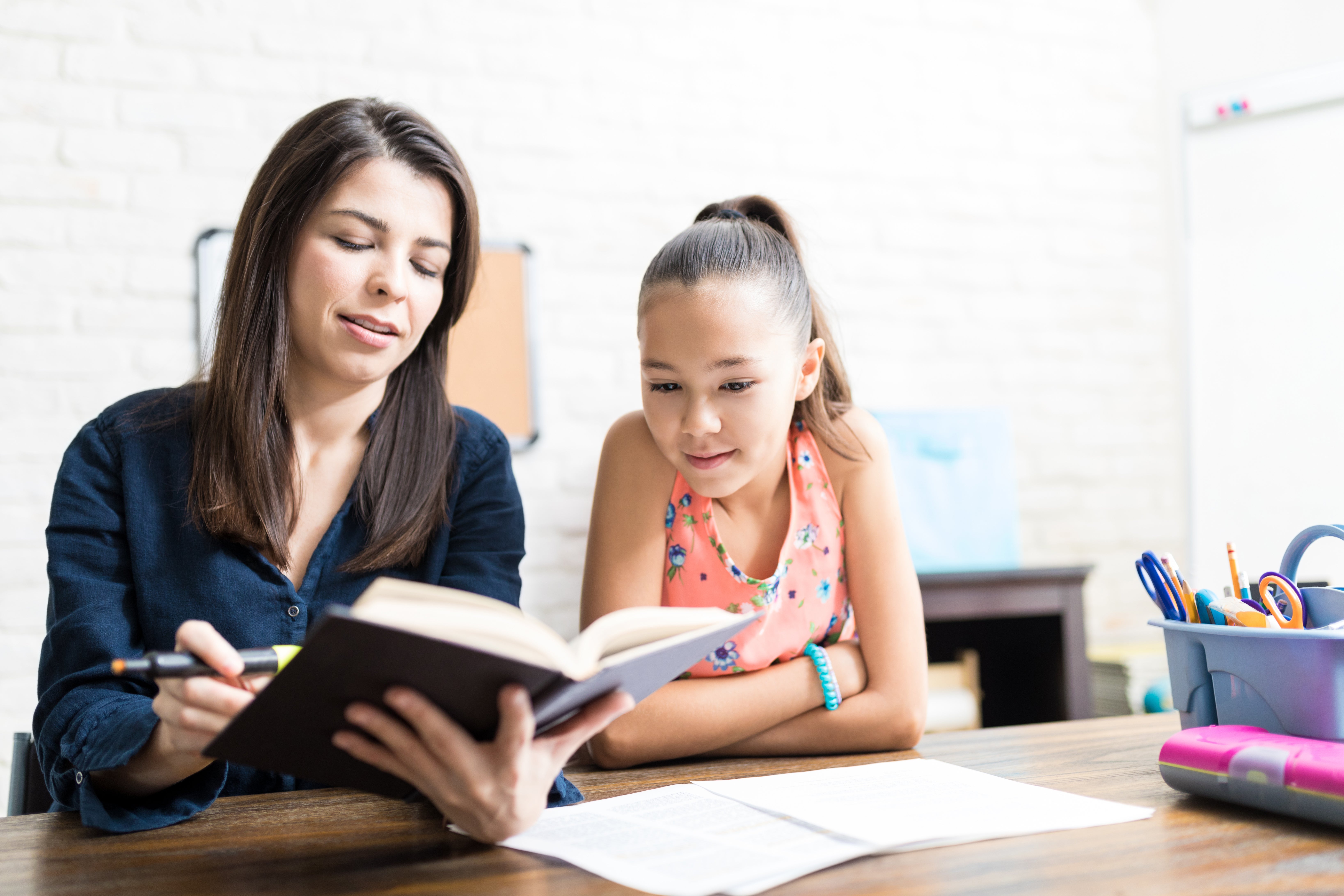
Naturally, I was keen to nip all of these things in the bud. So, when I met a retired local teacher who was offering literacy lessons before school, I signed him up for £20 for two half-hours a week. Since my husband and I were both working full-time, the financial outlay wasn’t my biggest consideration. Rather, my preoccupation was the fear of seeming like a helicopter parent in the eyes of our peers in the liberal corner of London where we live. So, I kept our decision to pay for tutor support to myself. But I now know I needn’t have bothered – when it comes to going-state-but-paying-for-private at home, it seems like we are all at it, or those of us who can afford it, at least.
The latest figures investigating how much middle-class families pay for “top-up teaching” show that one in five children now spend more than 100 hours a year with a tutor outside school. The survey of nearly 6,000 families found that a quarter of parents have paid for tutoring; a figure that rises to 45 per cent among parents with a household income above £100,000. Those who pay spend an average of £1,287 a year, with maths followed by English the most popular subjects, according to the poll by YouGov, commissioned by the parenting charity Parentkind.
One wide-eyed, newly qualified teacher at an early parents’ evening described the drama classes she was overseeing as ‘the wild west’
For us, when it came to top-up teaching, Kumon was just the beginning. By year nine at secondary school, it was clear that, with a classroom full of kids with such different abilities to learn, focus – “teaching” in this state academy school was often more a case of crowd control. One wide-eyed, newly qualified teacher at an early parents’ evening described the drama classes she was overseeing as “the wild west”. Lessons were hardly beginning before the bell for break rang. We could see we were going to have to give our son a boost.

We looked around and tried out a few tutors from different websites. One mother tells me she did this on the suggestion of their schools, which had links to different tutoring agencies, so aware they were that their teachers needed as much help as their pupils did. As my son enters his GCSE year, I find myself in the slightly mad position of spending up to £500 a month on tutors. This includes maths (£50 a session, in person, with a former teacher who left teaching after two years); science (£30 an online session from a working teacher who needs to boost her income – lives up north) and English (£40, for my son’s former teacher who recently quit her job because it was too stressful).


The cost of living crisis, combined with a change to our work circumstances, means that, these days, money is now much more of a factor. We now prioritise our son’s state-school-private-at-home with some necessary lifestyle tweaks. Dinner and drinks are now an occasional – rather than weekly – treat, M&S has been swapped for Aldi. Given that I used to have a budget-free approach to grocery shopping, that made a huge and immediate difference, probably paying for half of the tutoring bill alone. We also scaled down our summer holiday plans this year – confining them to mostly visits to friends and family and the odd camping trip.
Happily, the benefits of all of this extra teaching are becoming manifest. Our son is now in the top groups for both maths and English and is tracking decent GCSE results. His potential was there; it just took a bit of cash to leverage it in an overstretched state system.

Still, I am more than well aware of our privilege in being able to do this. And I do feel guilty about it. I also know how easy it is for a young person to fall behind, slip through cracks, give up, go off the rails, or become a school refuser.
The more engaged and the better our son does now, the more choices he will have for A levels and beyond. Some of the London sixth forms are punishingly selective – even more so now with the new influx of former private school applicants whose parents cannot afford the fees in the wake of new VAT charges. The Department for Education (DfE) data shows there were approximately 11,000 fewer pupils in private schools in England in January 2025 compared to January 2024. How many of these children are now benefiting from at-home tutors giving them the private education edge in their state school classroom?
Also, quite a few teenagers who start off in the private system – many of whom also have tutors – also switch lanes by wielding their primacy to scoop up the places in the most prestigious and selective state six forms. This is often, to the detriment of many of the children who had been in those schools since year 7 and whose parents hadn’t been able to afford extra help that might have been needed to secure a top grade.

As someone who has stood alongside those state-school parents for many years, I wonder what they think about mums like me? Parents who get to stand on the moral high ground because we have chosen a state school, but are also paying our way for our son to nudge ahead of his classroom peers. Like the parents who snap up housing stock near great state schools – pushing up housing prices as they do, we are all ultimately paying for our children’s education, albeit in a less obvious way.
We didn’t send our son to a private school because we agreed that an education system of haves and have-nots is fundamentally unfair and wrong. So, I am more than aware of how hypocritical it is for us to now pay for extra tuition, invisibly leveraging our privilege. The truth is that when push came to shove, we’ve chosen our son’s welfare over our principles. But it doesn’t always feel good.
Join our commenting forum
Join thought-provoking conversations, follow other Independent readers and see their replies
Comments
Bookmark popover
Removed from bookmarks