This Week in History: Soviet collapse, Clinton’s impeachment, and the death of Pinochet
From power struggles to global crises, explore how major events between 8 and 14 December were captured on The Independent’s front pages
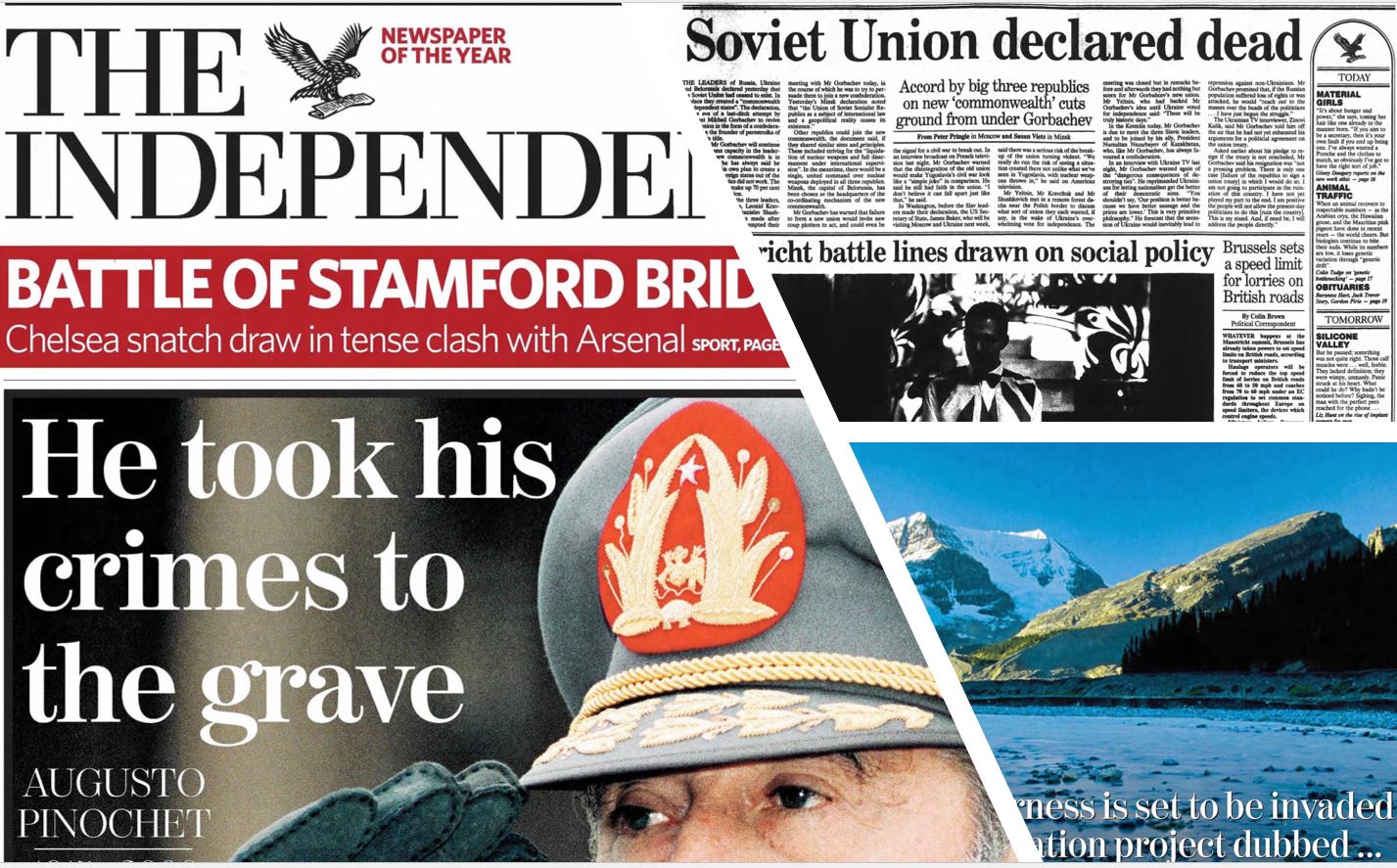
A busy week for Mikhail Gorbachev, from a sweeping peace initiative to the Soviet Union’s final death knell. In Washington, political drama unfolds as Bill Clinton resists calls to resign amid an impeachment crisis, while Al Gore concedes the presidency after a historic Supreme Court battle. Elsewhere, Aleppo faces bombardment, Brixton erupts in unrest, and BP’s “greatest environmental crime” makes headlines. Uncover a week shaped by political upheaval and public unrest – all captured on these front pages between 8 and 14 December.
8 December 1988 – Gorbachev’s peace initiative
In a “dramatic” announcement at the United Nations, Mikhail Gorbachev commits to slashing Soviet forces by 500,000 troops and calls for a complete ceasefire in Afghanistan. Although the proposals draw “muted applause” from the United States, diplomats from both East and West view the proposals as a major shift in the Cold War balance.

13 December 1988 – Clapham Junction rail tragedy
A crowded commuter train ploughs into the rear of another at Clapham Junction, killing 35 people and injuring nearly 500. Investigators later trace the crash to faulty signalling caused by poor wiring practices, prompting a public inquiry that exposed systemic maintenance failures within British Rail.

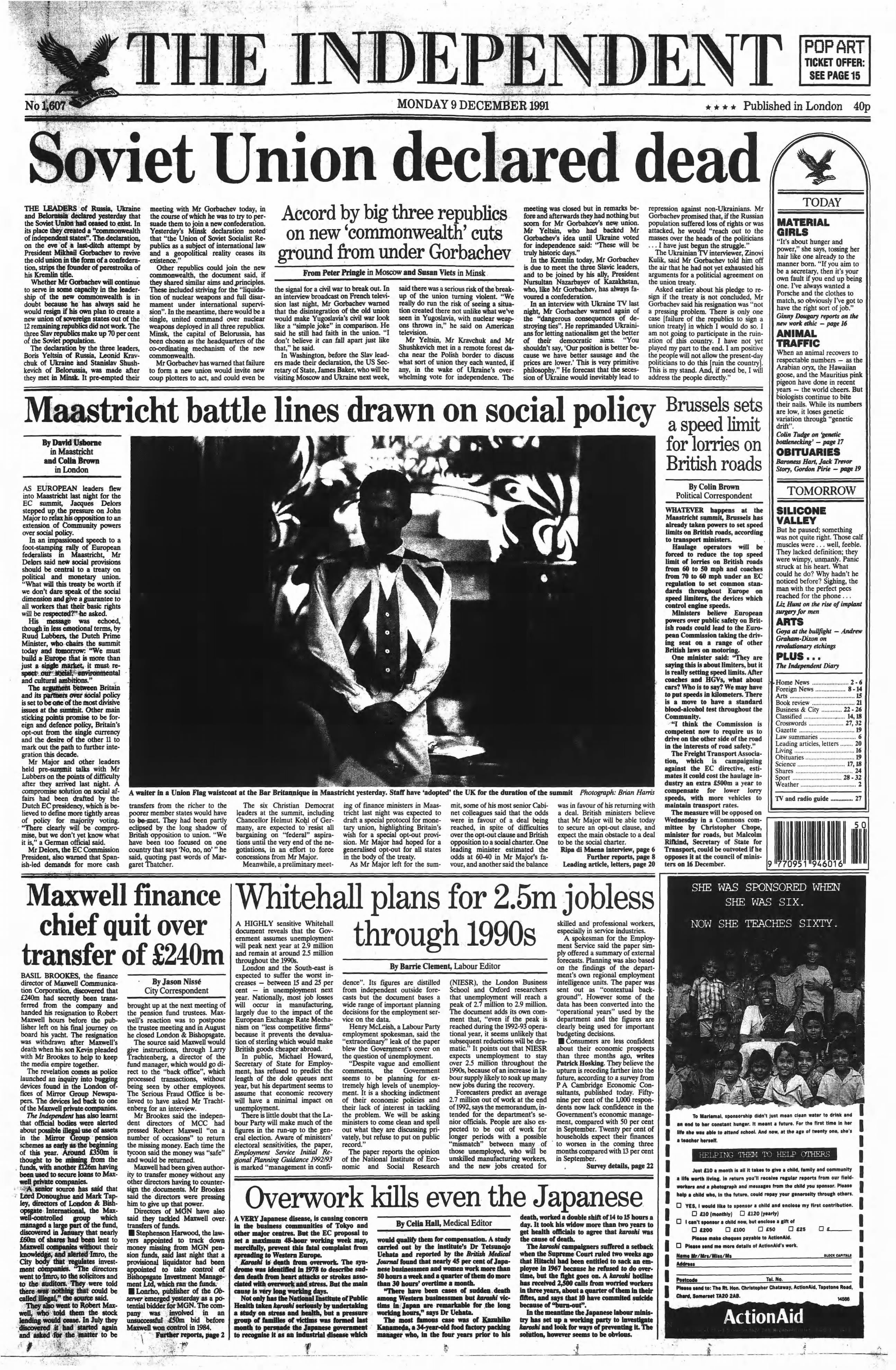
9 December 1991 – Soviet Union declared dead
Leaders of Russia, Ukraine and Belarus sign the Belavezha Accords, declaring the Soviet Union dissolved and creating the Commonwealth of Independent States in its place. The agreement signals the formal end of the USSR after months of political crisis and the failed August coup, leaving Mikhail Gorbachev without a state to lead.
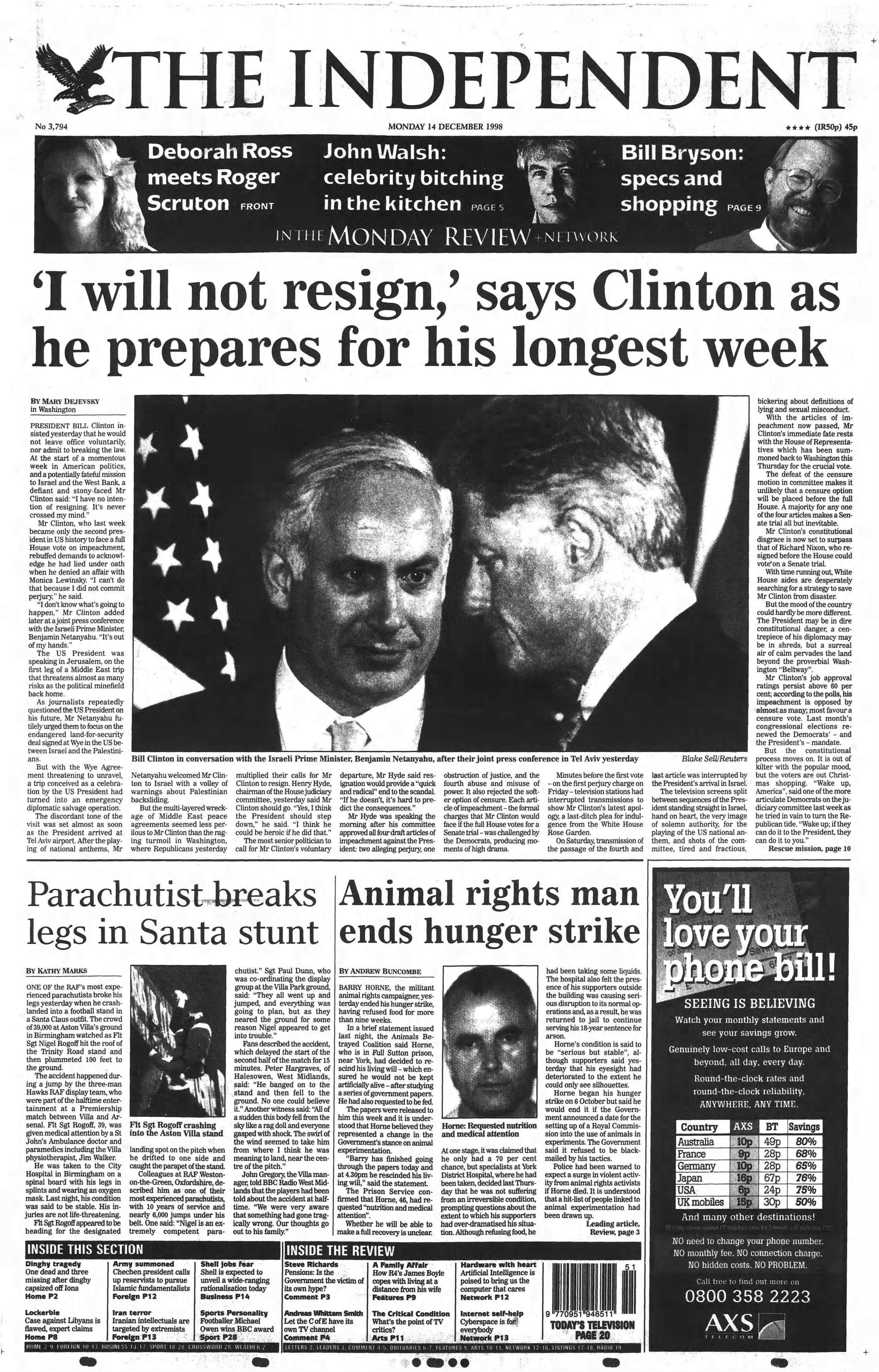
14 December 1998 – Clinton refuses to resign
President Bill Clinton insists he will not resign as he faces a full House vote on impeachment. Speaking at the start of a high-stakes visit to Israel and the West Bank, he rebuffs calls to admit he lied under oath about his relationship with Monica Lewinsky. “I don’t know what is going to happen,” Clinton says at a joint press conference with Israeli prime minister Benjamin Netanyahu, as political pressure intensifies in Washington.
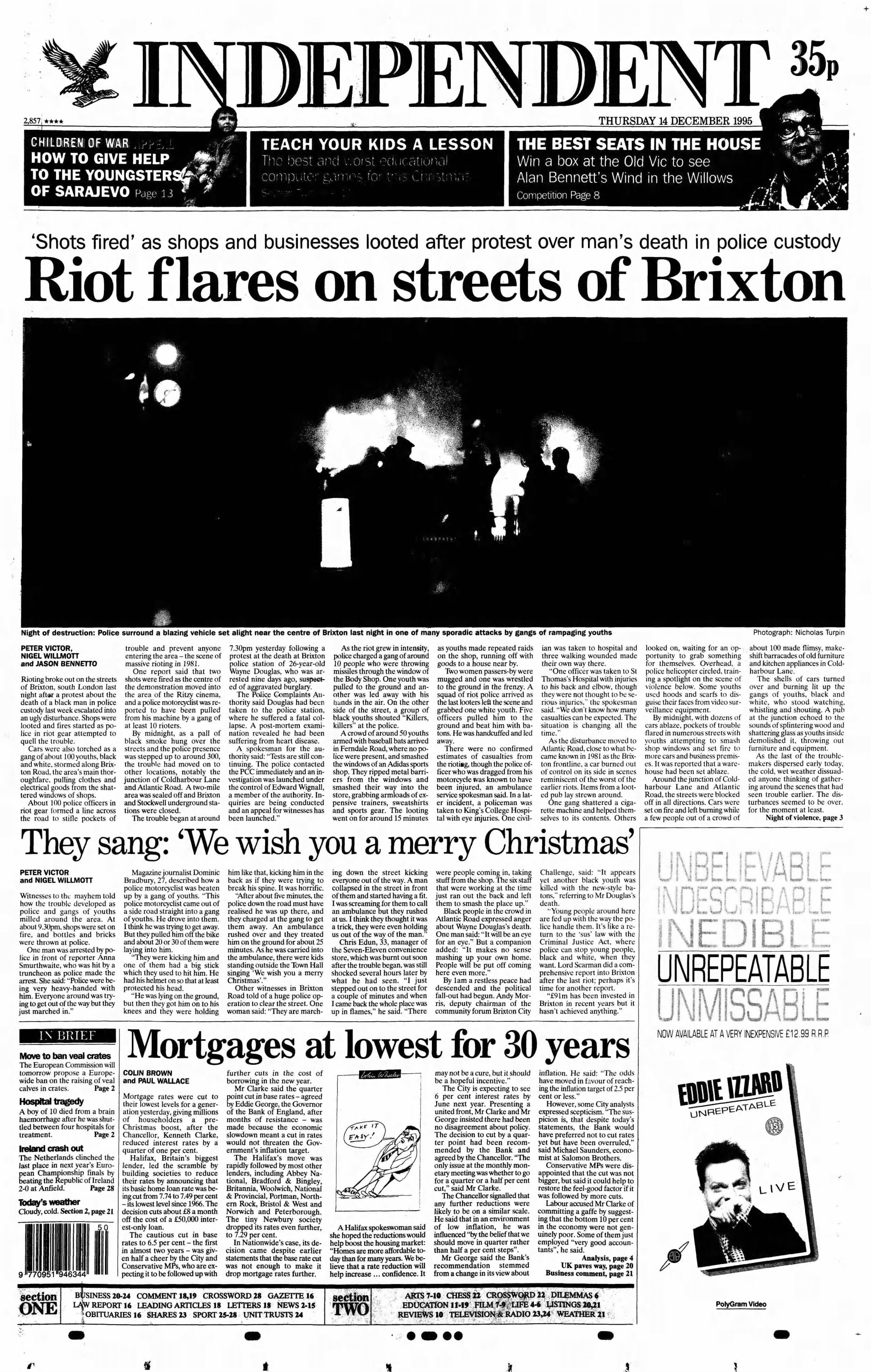
14 December 1995 – Brixton riot
Unrest breaks out in Brixton after 26-year-old Wayne Douglas dies while in police custody. Five hours of clashes follow across the area. The Independent reports on renewed tensions between officers and residents, coming just over a decade after the 1981 riots.
14 December 2000 – Bush is president-elect
Al Gore abandons his lengthy and litigious fight for the presidency after the US Supreme Court halts the Florida recount, clearing the way for George W Bush to take office. While accepting the ruling, Gore tells the nation, “I strongly disagree with the court’s decision,” bringing an extraordinary electoral stand-off to an end.

11 December 2006 – Death of Pinochet
General Augusto Pinochet dies at 91, taking “his crimes to his grave”, reports The Independent. The former Chilean dictator had once faced extradition from Britain to Spain over allegations of torture, murder and human rights abuses, before the home secretary intervened on health grounds. In the years that followed, Chilean courts continued to pursue charges, but Pinochet died without ever standing trial, leaving hundreds of cases unresolved.

10 December 2007 – BP and ‘the greatest climate crime’
BP faces criticism for investing in a vast tar sands project in the Canadian wilderness, dubbed “the biggest environmental crime in history”. The Independent highlights concerns over forest destruction, carbon emissions and water contamination. Despite protests, BP proceeds with the venture, expanding its stake in Alberta’s tar sands in the years that follow.

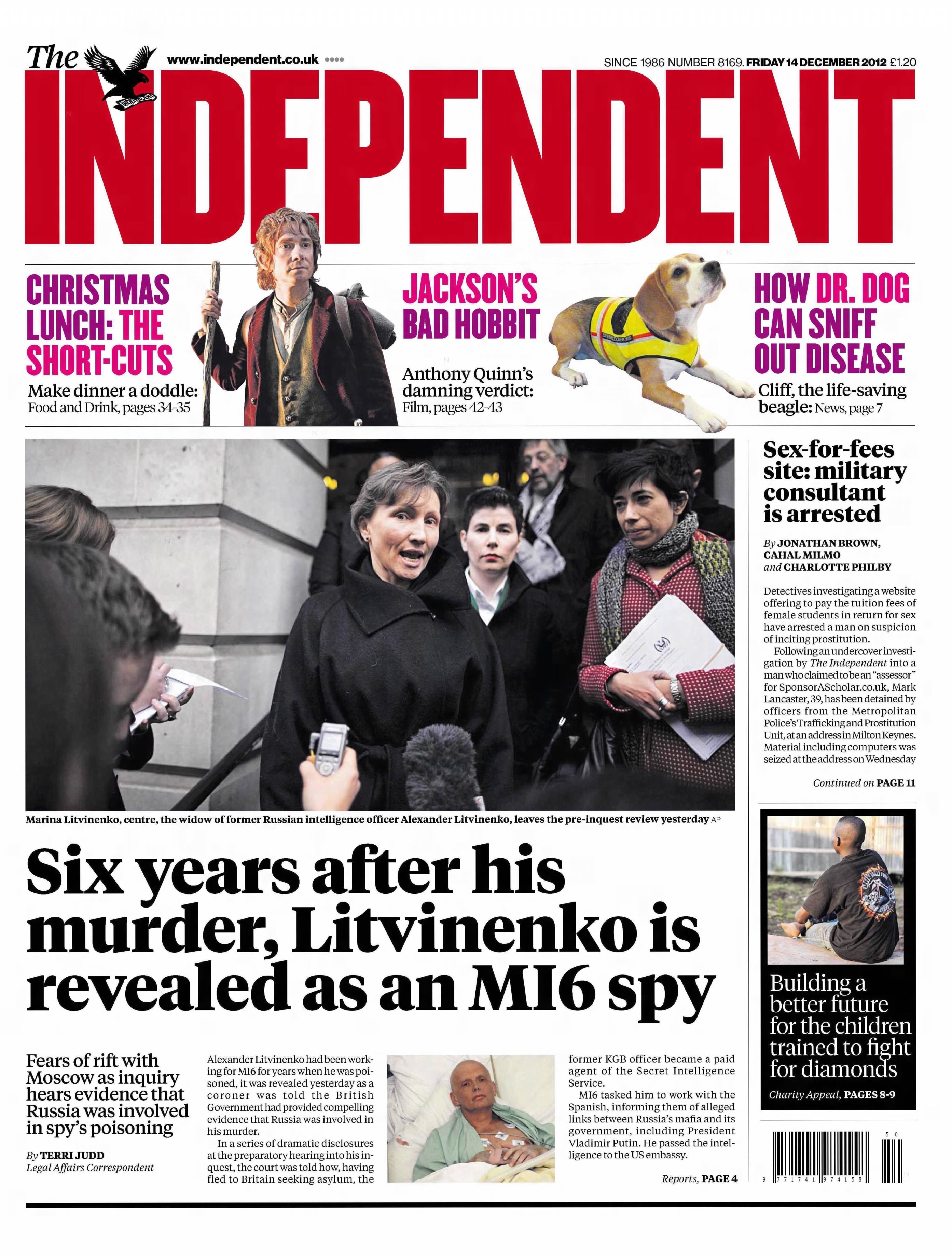
14 December 2012 – Litvinenko revealed as MI6 spy
A UK inquiry confirms that Alexander Litvinenko, the former Russian intelligence officer poisoned in a London hotel, had been working with MI6. The revelation adds a new layer to the diplomatic fallout surrounding his 2006 death, intensifying scrutiny of Russia’s alleged involvement.
14 December 2016 – The Aleppo offensive
As pro-Assad forces advance through eastern Aleppo, the United Nations issues urgent pleas for access to trapped civilians and warns of atrocities amid the city’s fall. The Independent reports on the humanitarian crisis unfolding in its final days, as thousands seek evacuation from neighbourhoods devastated by months of siege and bombardment.

Join our commenting forum
Join thought-provoking conversations, follow other Independent readers and see their replies
Comments
Bookmark popover
Removed from bookmarks