This Week in History: From the liberation of Nelson Mandela to East Germany’s final gasp
Explore how major events between 9 and 15 February were captured on The Independent’s front pages
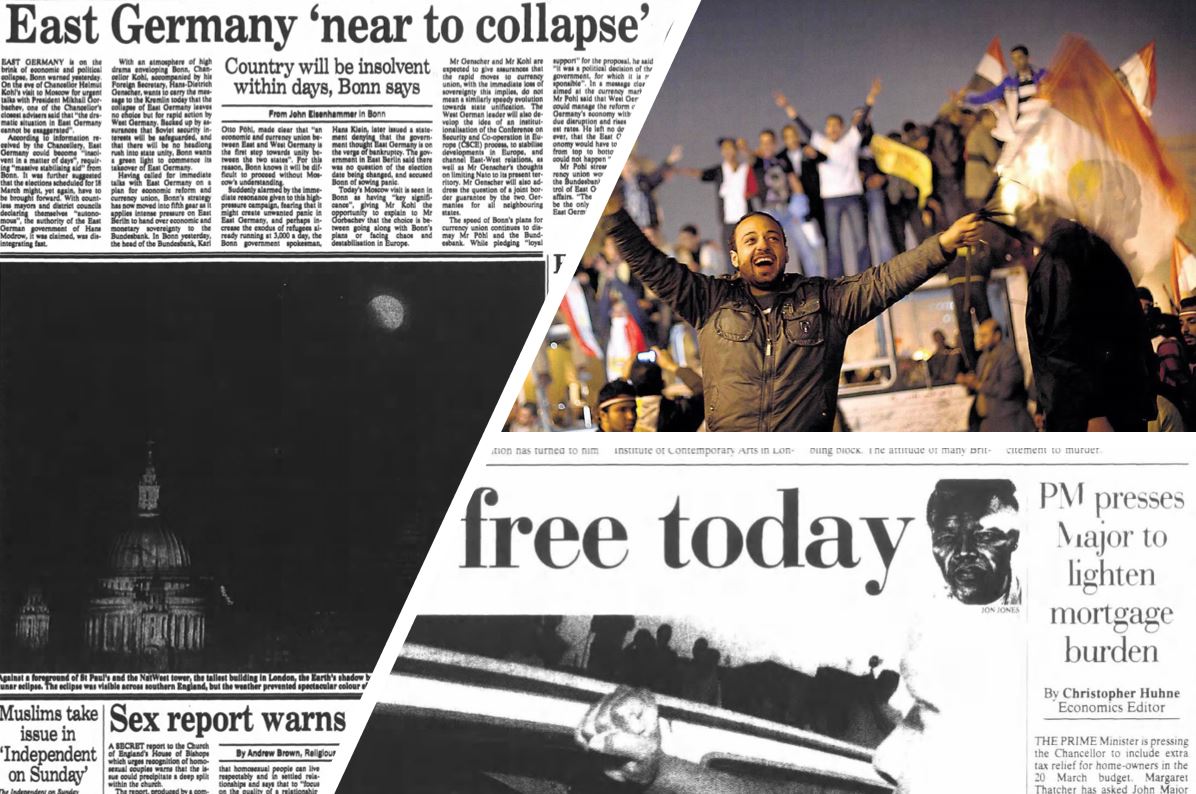
“On the brink” appears to be the operative phrase this week, as seismic changes ripple across the globe. East Germany edges towards collapse as advisers warn the situation “cannot be exaggerated”, while Nato faces a tense standoff in the Balkans, issuing a stark deadline that leaves the region poised between war and peace. In Northern Ireland, however, the momentum shifts towards compromise as the IRA moves further than ever before on the question of disarmament after the Good Friday Agreement. South Africa witnesses one of the era’s defining moments as Nelson Mandela walks free after more than 10,000 days in prison, signalling irreversible political change. Across the Middle East tensions intensify: Iran’s Ayatollah Khomeini issues a death sentence against novelist Salman Rushdie, Egypt’s president steps down, and Israeli airmen reveal using outdated intelligence to strike Gaza “blind”. Explore a world in relentless motion, as recorded on the front pages of The Independent.
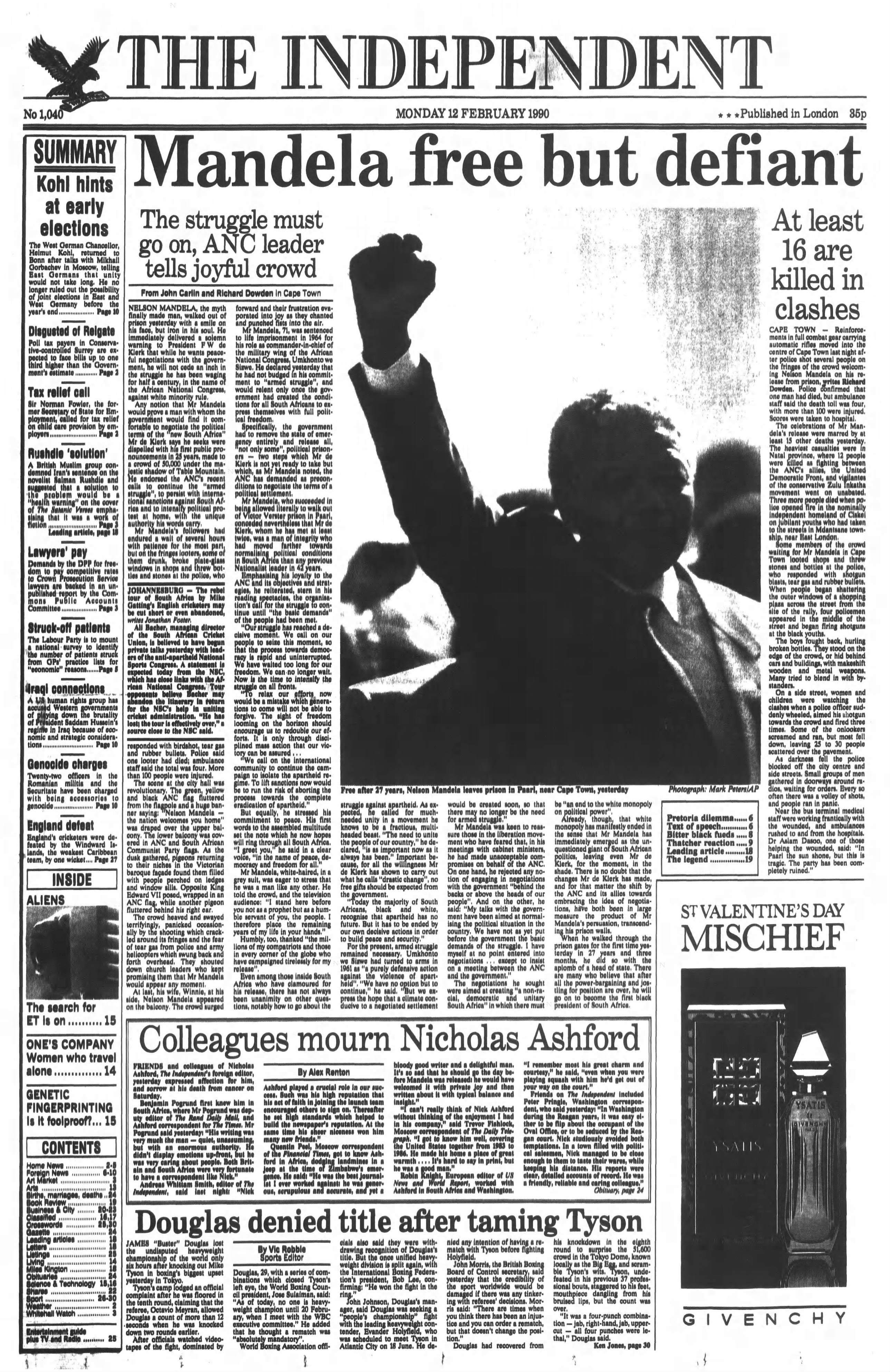
15 February 1989 – Ayatollah Khomeini orders Rushdie’s murder
Iran's supreme leader Ayatollah Khomeini calls for the death of novelist Salman Rushdie over The Satanic Verses, forcing the author into hiding and prompting discussions about his police protection in Britain. Tehran radio broadcasts the declaration: “I inform the proud Muslim people of the world that the author of The Satanic Verses book which is against Islam, the Prophet and the Koran, and all those involved in its publication who were aware of its content, are sentenced to death.” The Iranian leadership would eventually make the call to distance itself from the fatwa nearly 10 years later in 1998.
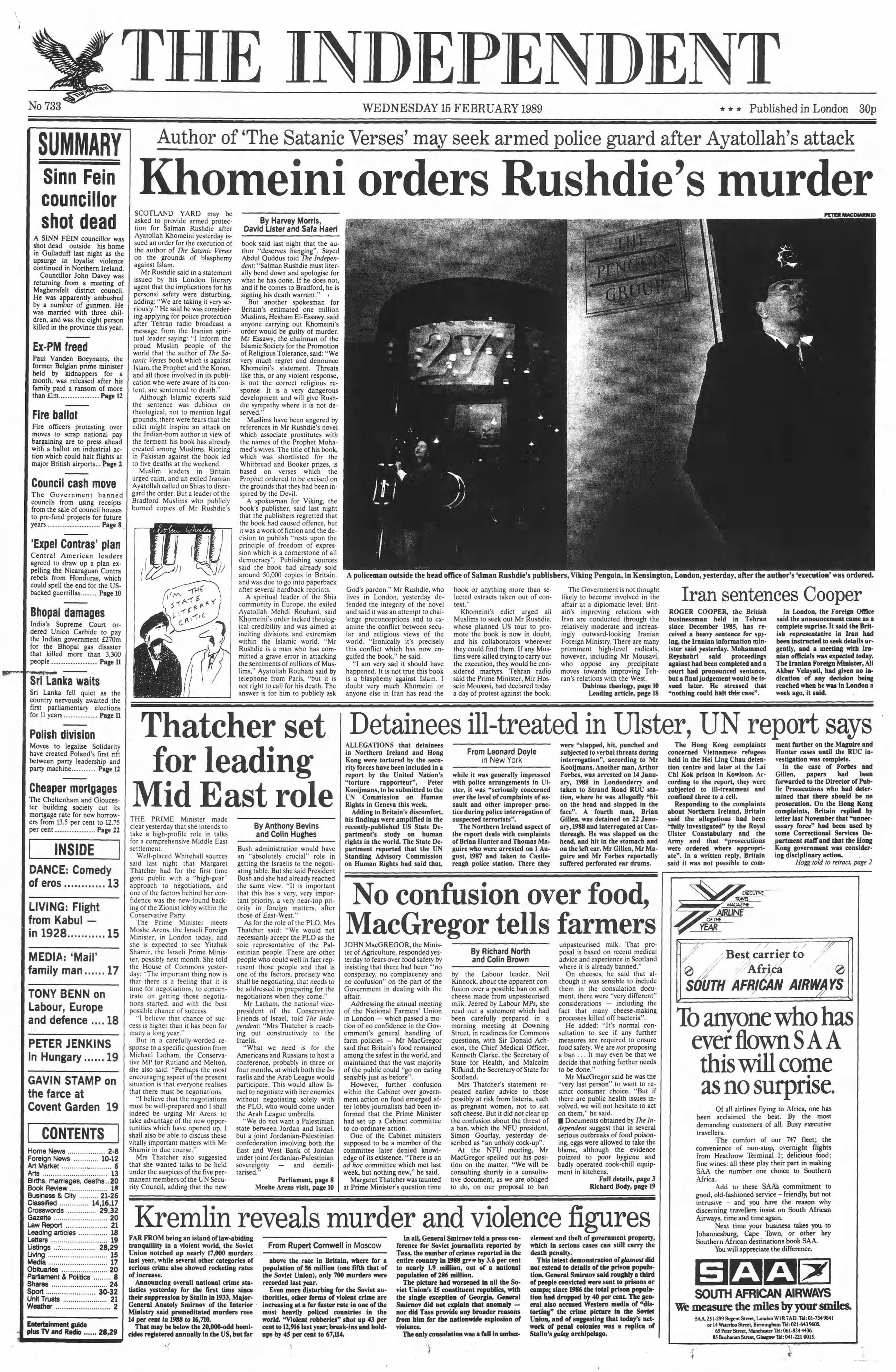
10 February 1990 – East Germany ‘near to collapse’
West German officials warn that East Germany faces imminent economic and political collapse, with advisers to Chancellor Helmut Kohl saying the scale of the crisis “cannot be exaggerated” and that the state could become insolvent within days. The alarm comes ahead of urgent talks in Moscow with Soviet leader Mikhail Gorbachev as the future of the divided nation hangs in the balance. Within months, negotiations accelerate and Germany is formally reunified in October 1990.
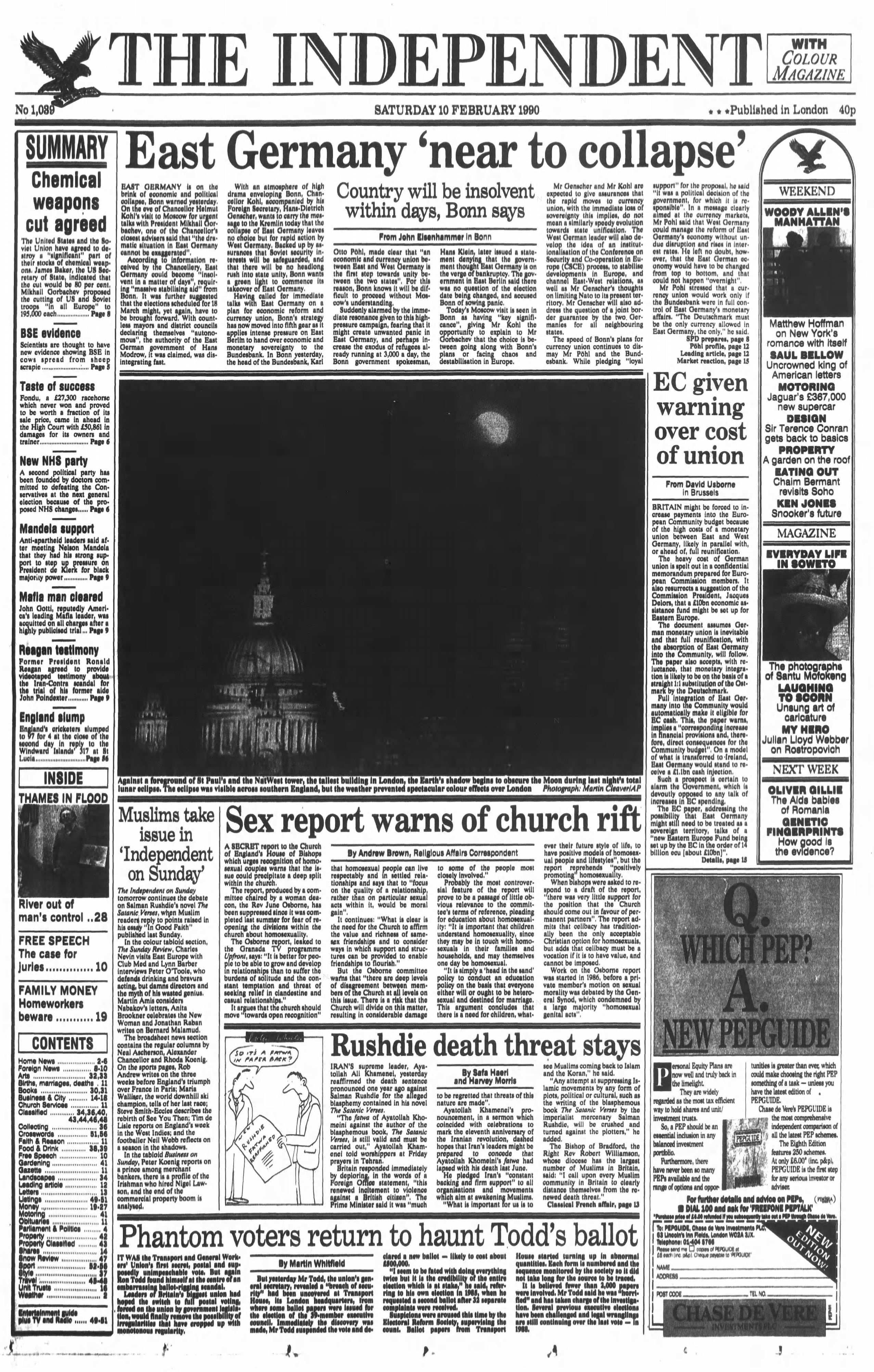
11 February 1990 – Nelson Mandela freed
Nelson Mandela walks free after more than 10,000 days in prison, as South Africa begins a profound political transition following President F W de Klerk’s decision to unban the ANC and open negotiations. The Independent emotively describes the scenes on the ground: “the myth finally made man, walked out of prison with a smile on his face, but iron in his soul”. Addressing jubilant crowds, Mandela says the struggle must continue as talks toward reform begin. Within four years, the country holds its first democratic elections and Mandela is elected president.
11 February 1994 – Nato prepares first strikes in Bosnia
Nato moves towards military action for the first time as Bosnian Serb forces defy an ultimatum to halt shelling around Sarajevo, with Western governments warning the conflict could escalate into open war. The crisis unfolds under a UN mandate but without backing from Russia or China, highlighting deep diplomatic tensions as peacekeepers struggle to enforce a fragile truce. Within weeks Nato carries out limited air strikes, marking a turning point in international intervention in the Bosnian war.
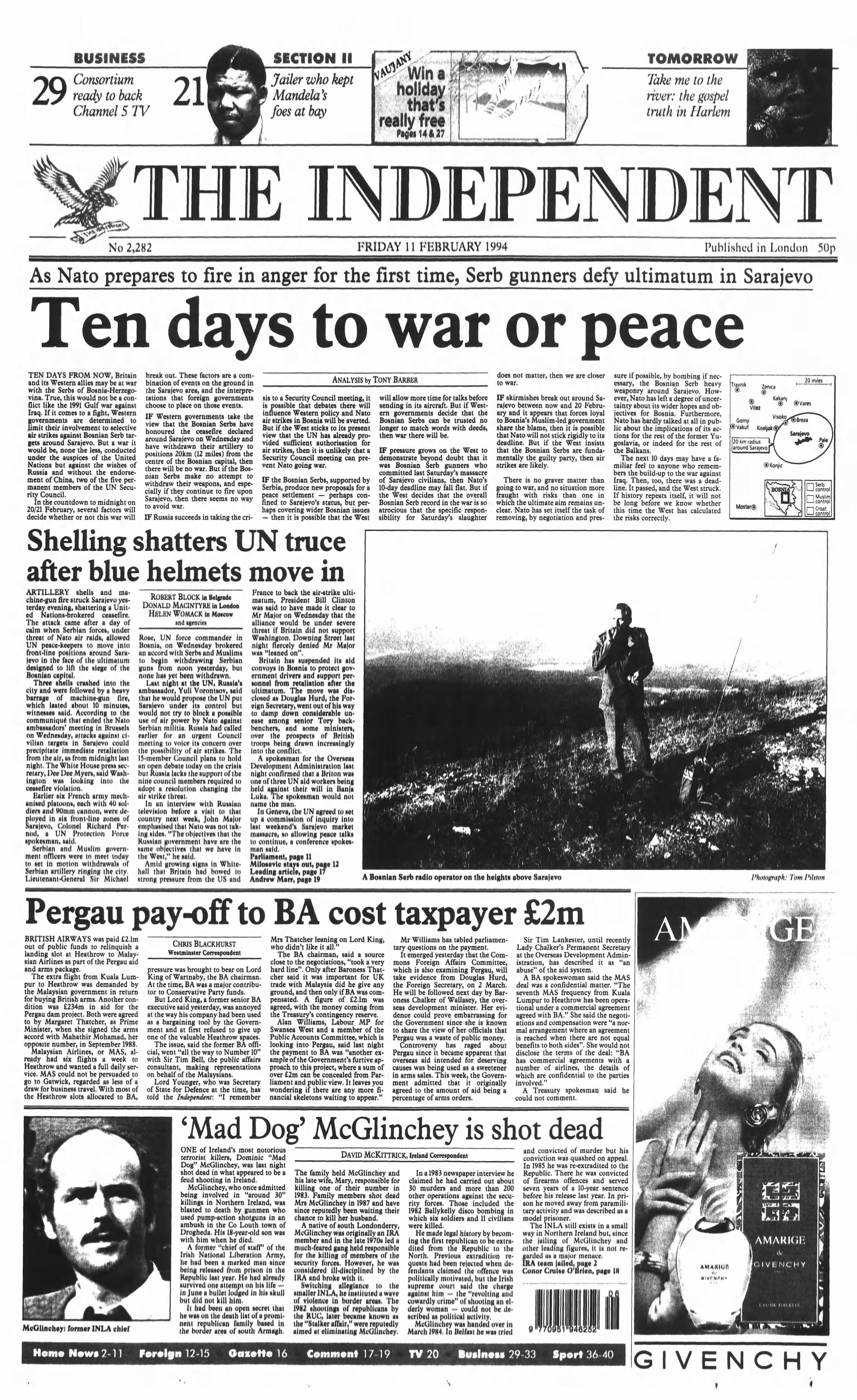
12 February 2000 – IRA makes offer on arms
The IRA offers a new proposal to put weapons “beyond use” following the suspension of the Northern Ireland Assembly, described by the government as a development of real significance but still short of a clear commitment to disarm. The move marks the furthest step yet on the arms question since the Good Friday Agreement, even as uncertainty remains over timing. Full decommissioning is eventually completed in 2005 under international supervision, helping stabilise the peace process.
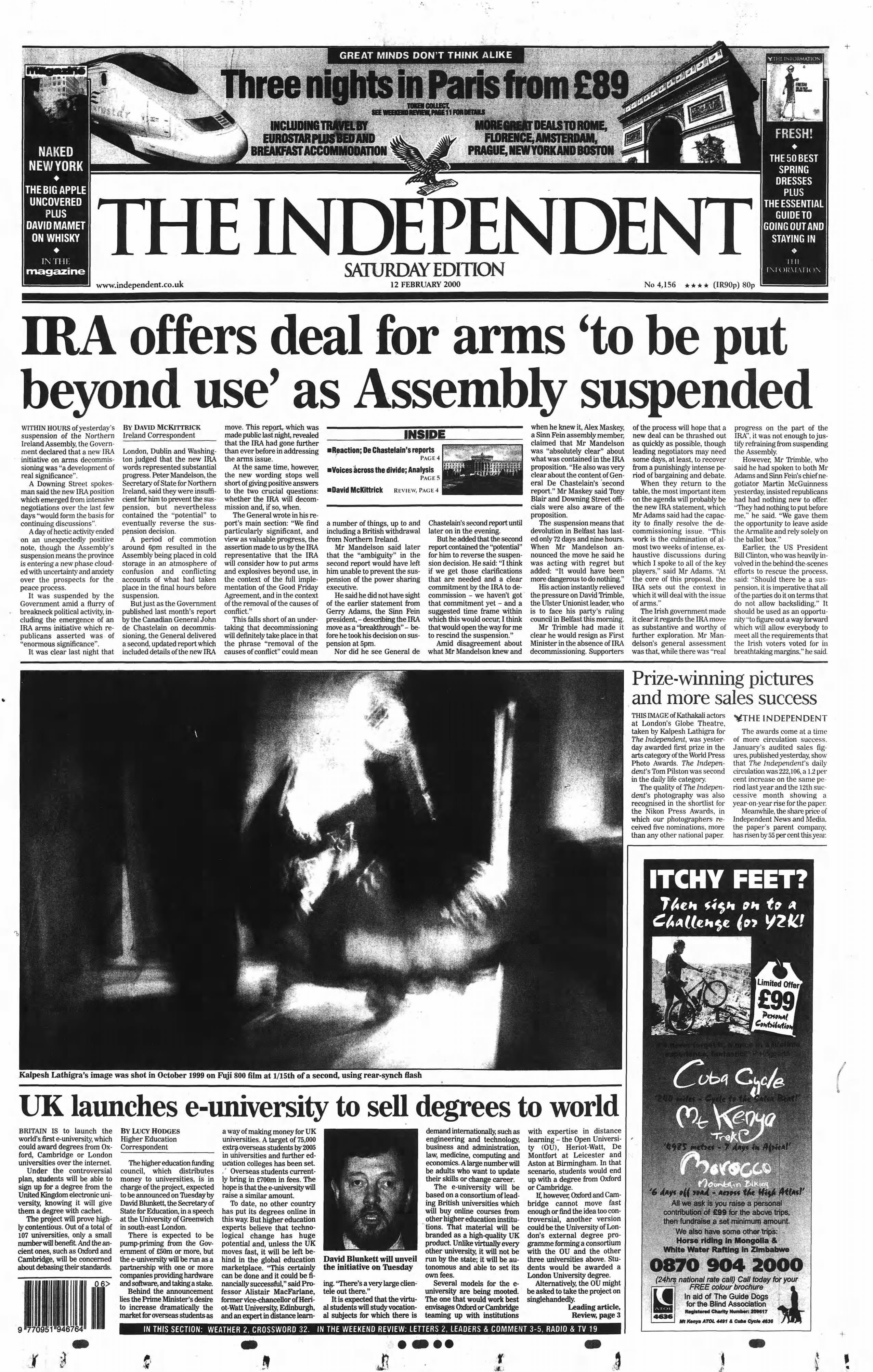
12 February 2011 – Mubarak steps down as protests sweep Egypt
Egyptians celebrate in Cairo after President Mubarak resigns following 18 days of mass demonstrations, ending three decades in power. His resignation would come to be known as the "Friday of Departure”. The uprising forms part of the wider Arab Spring protests that had gathered momentum across the region in early 2011. Authority passes to the military council, ushering in a turbulent transition that leads to elections the following year and, after further unrest, the military’s return to power in 2013.
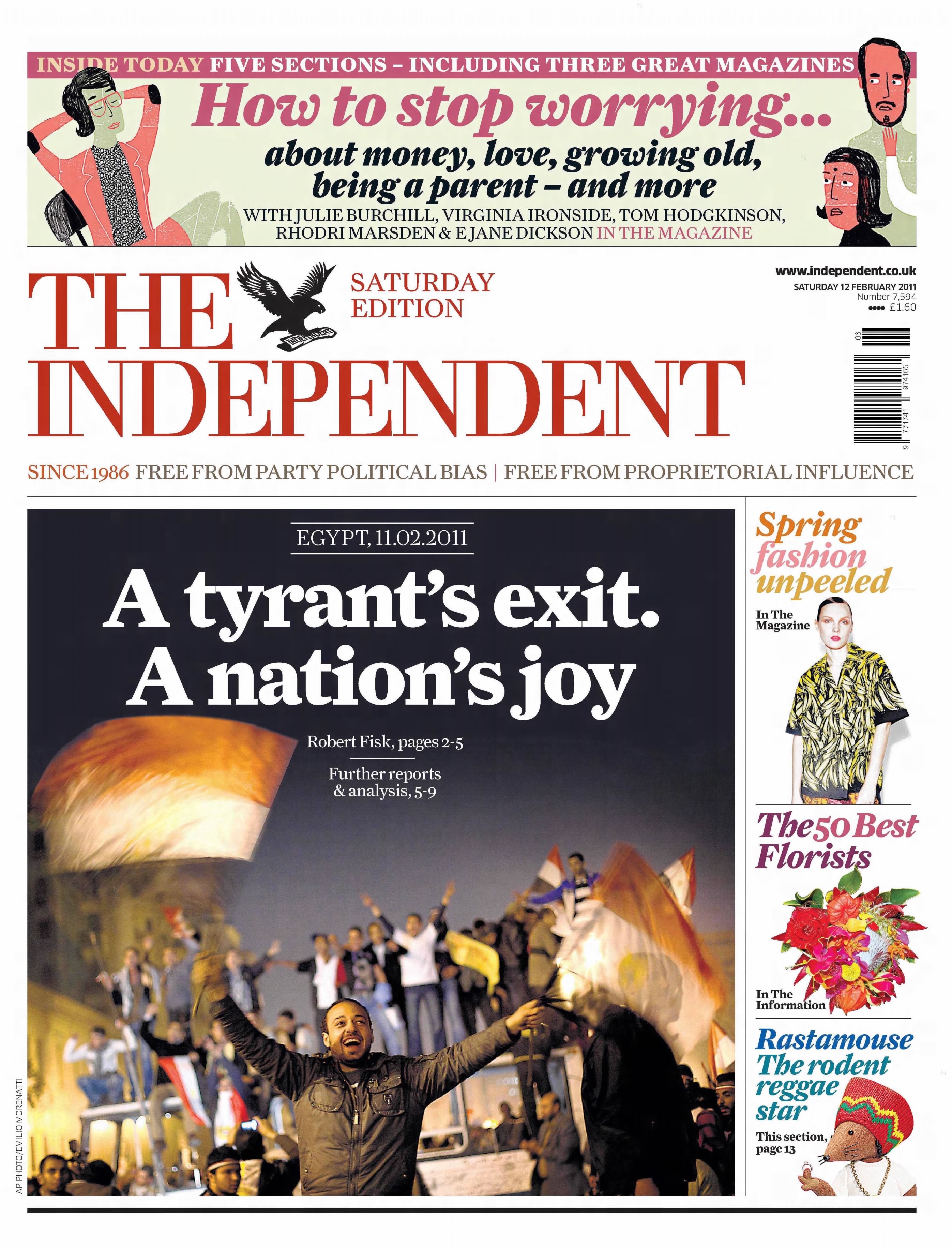
15 February 2013 – Pistorius charged over girlfriend’s death
Paralympic champion Oscar Pistorius appears in court accused of murdering his girlfriend Reeva Steenkamp at his home in South Africa, shocking fans around the world and dominating international headlines. The athlete denies intent, saying he believed he was confronting an intruder. After a series of trials and appeals, he is ultimately convicted of murder in 2015 and later sentenced to a lengthy prison term.
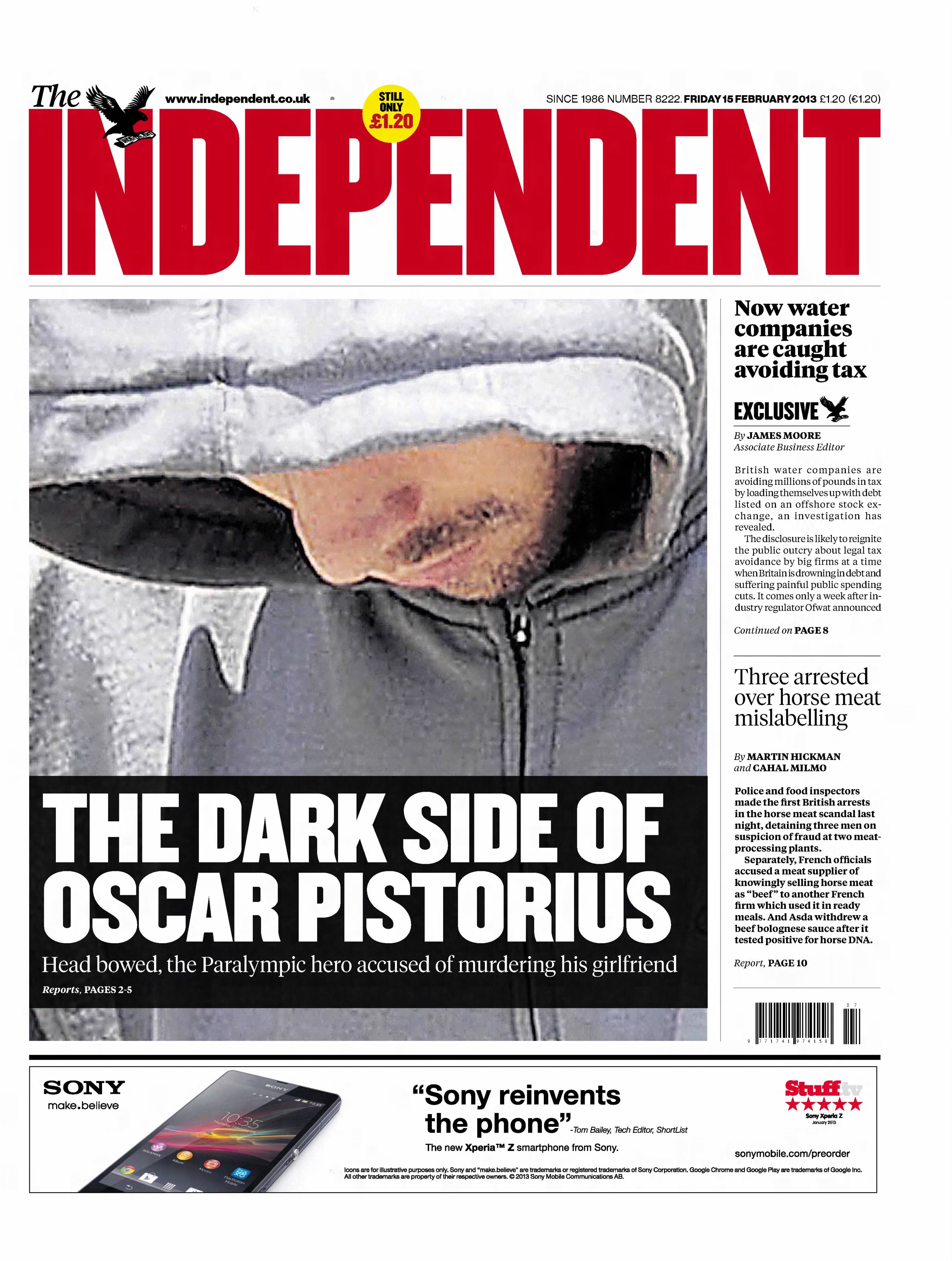
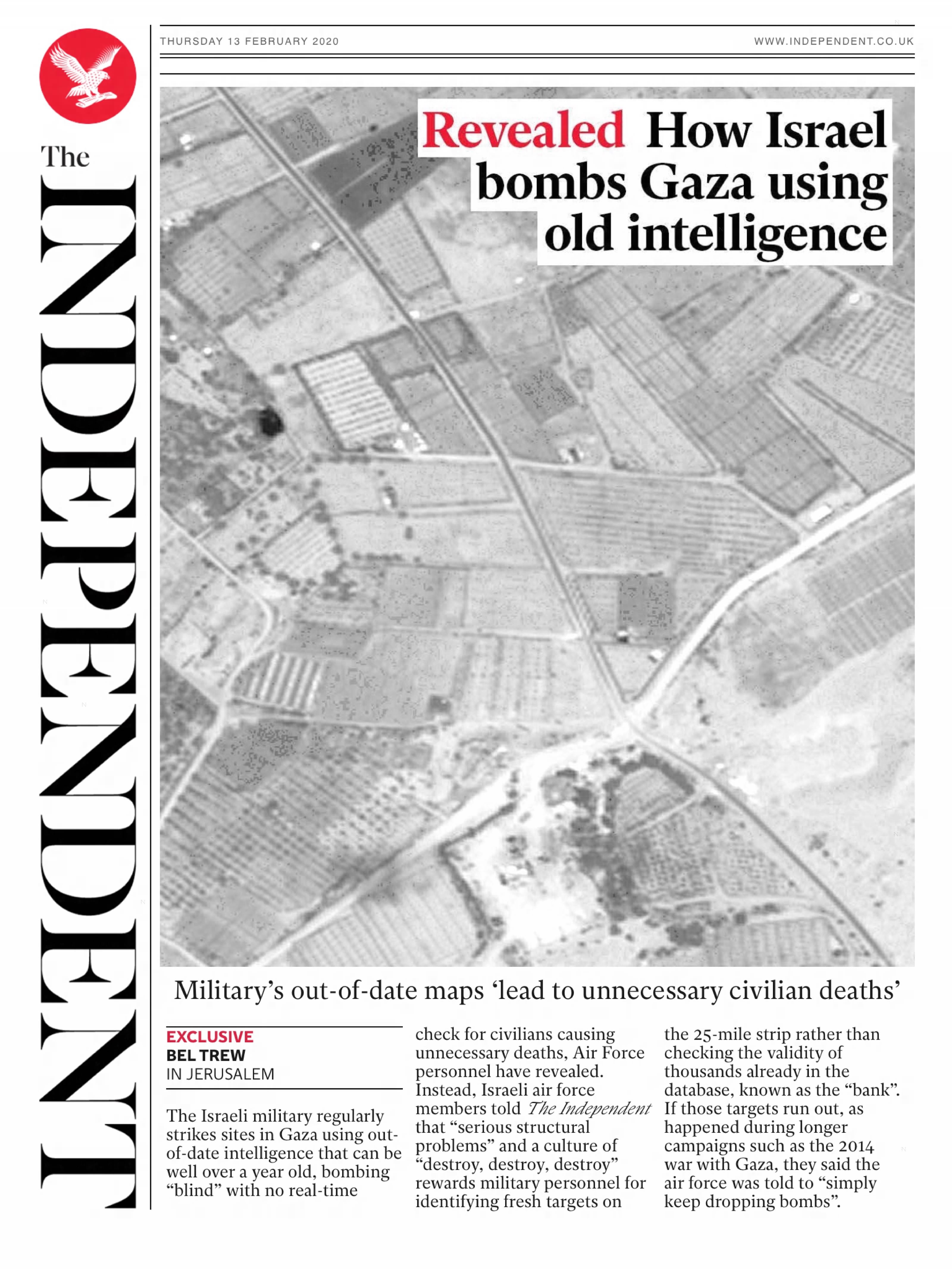
13 February 2020 – Report questions Gaza strike intelligence
The Independent features a front-page investigation reporting that Israeli air strikes on Gaza were carried out using outdated intelligence. Testimony from Israeli Air Force personnel describes serious structural problems and a culture of “destroy, destroy, destroy”, which they report led to unnecessary civilian deaths. The investigation adds to longstanding scrutiny of military conduct in Gaza and foreshadows similar criticisms raised during later rounds of air strikes post-October 7th.
Join our commenting forum
Join thought-provoking conversations, follow other Independent readers and see their replies
Comments
Bookmark popover
Removed from bookmarks