This Week in History: The Soviet ‘seductive bear’, Amazon’s Chernobyl, and the fall of a golfing icon
Explore how major events between 16 and 22 February were captured on The Independent’s front pages
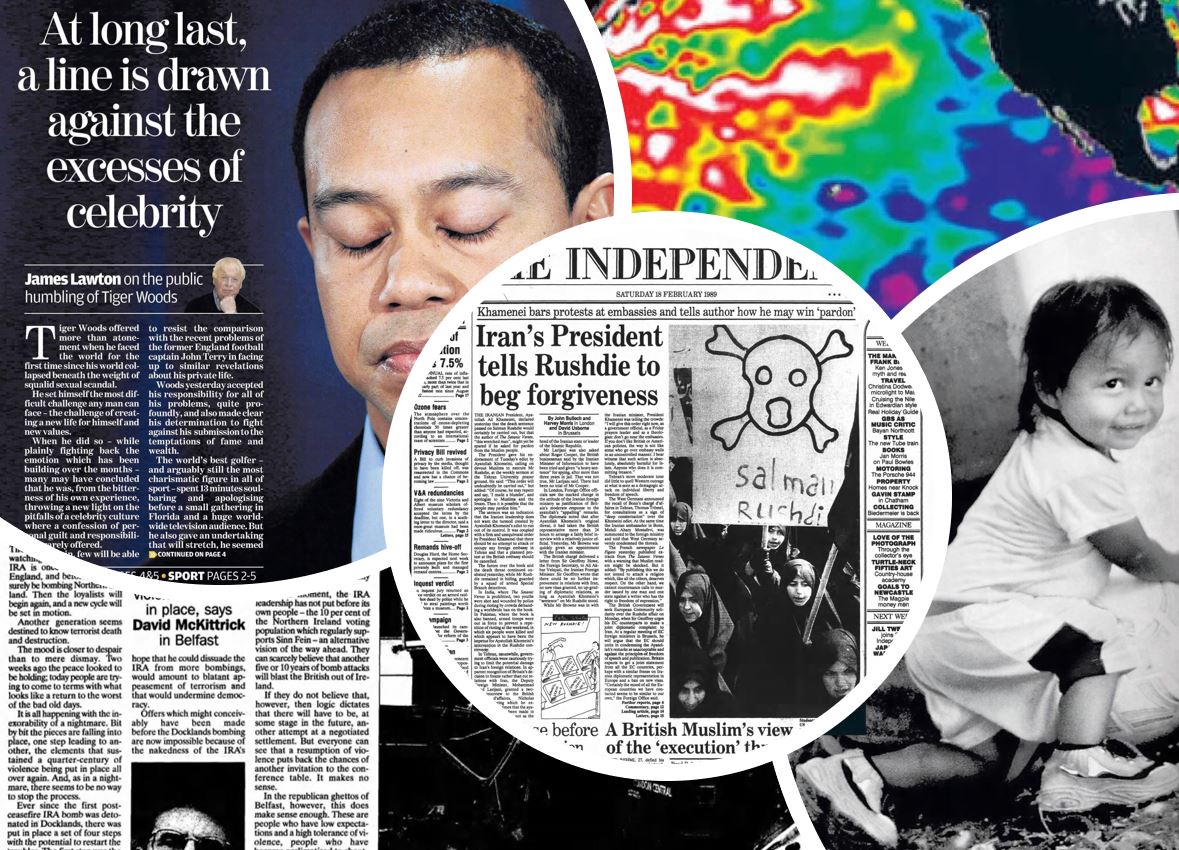
Scandal and tension run through the week’s headlines. Margaret Thatcher warns the West against the “seductive” Soviet “bear”, striking a cautious note as relations with Moscow begin to thaw. In the Middle East, Iranian leaders demand that novelist Salman Rushdie seek pardon in the fallout from the fatwa against him, while fresh IRA attacks raise fears of a return to violence in Northern Ireland. Environmental catastrophe also dominates, as Chevron (which acquired Texaco) faces accusations of a toxic dumping disaster in Ecuador, dubbed “Amazon’s Chernobyl”, and scientists in the mid-2000s present compelling evidence linking global warming to human activity. Meanwhile, in the world of sport, a very public scandal sees Tiger Woods “humbled” before the world’s press. Explore these stories and more through the historic front pages of The Independent.
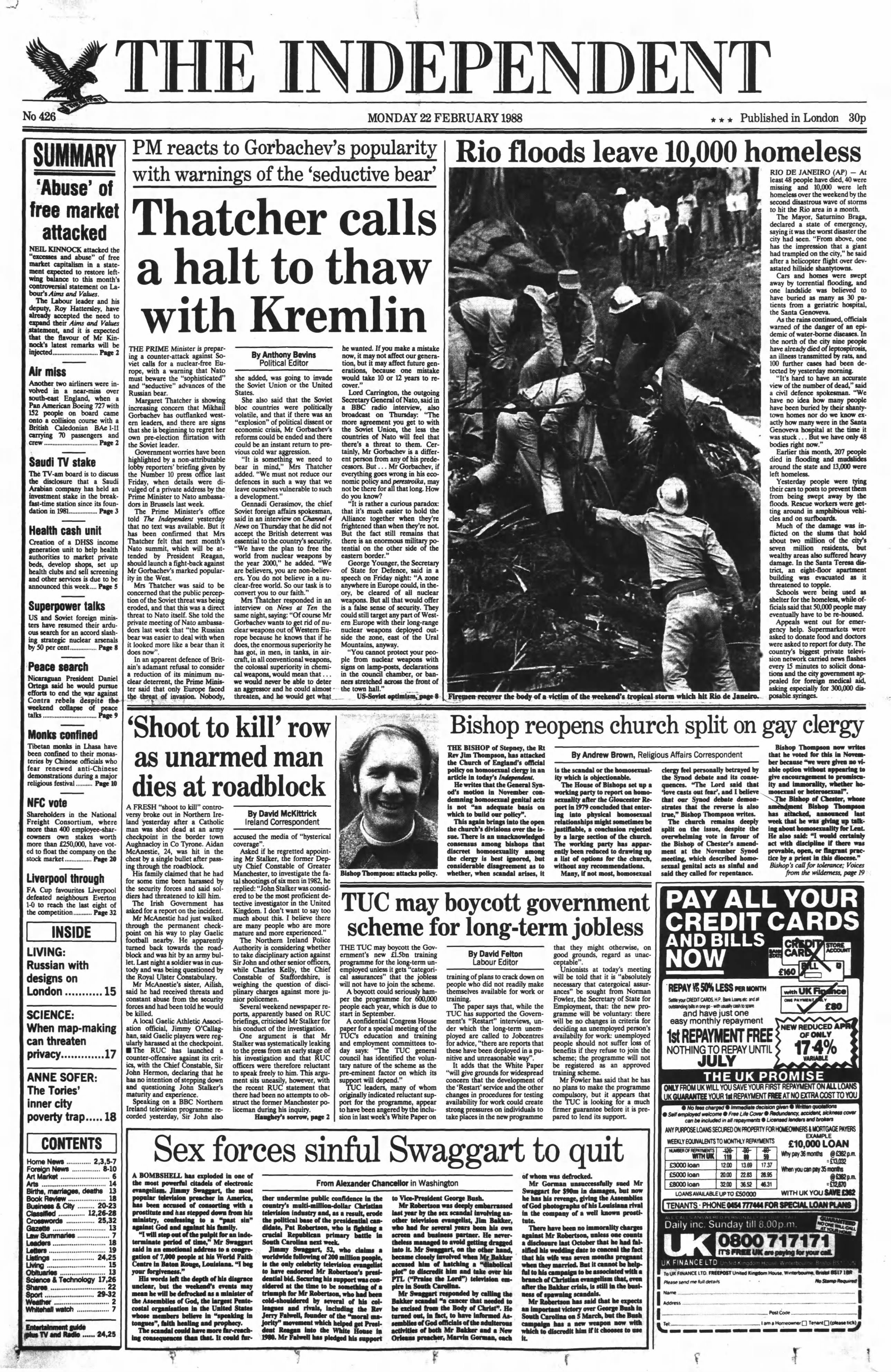
22 February 1988 – Thatcher warns against ‘seductive’ Soviet thaw
Margaret Thatcher cautions Nato allies against being swayed by Mikhail Gorbachev’s popularity, warning of the “sophisticated” and “seductive” advances of the Soviet “bear” as Moscow pushes proposals for a nuclear-free Europe. The prime minister signals a harder line after earlier engagement with the Soviet leader, reflecting Western uncertainty over whether reforms in the USSR mark genuine change or strategic manoeuvre near the end of the Cold War.
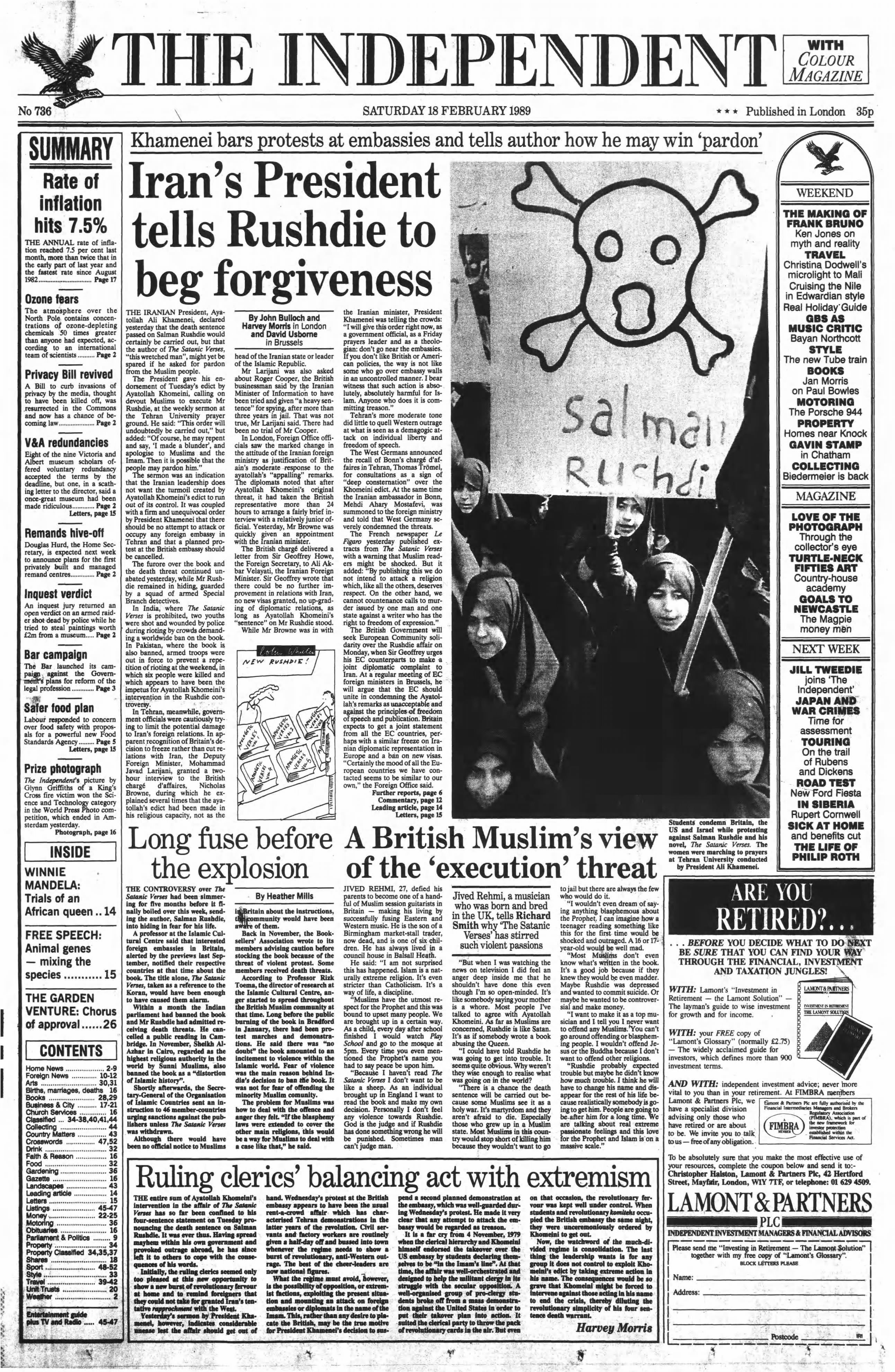
18 February 1989 – Iran orders Rushdie to seek pardon
Novelist Salman Rushdie continues to dominate headlines this week. Iranian president Ayatollah Ali Khamenei says the death sentence against Rushdie could be lifted if he asks forgiveness from Muslims, days after the fatwa over The Satanic Verses is issued. The remarks suggest unease within Iran’s leadership about the international fallout as protests and diplomatic tensions intensify. Rushdie remains under long-term police protection, and the dispute continues to strain relations between Iran and Western countries for years afterwards.
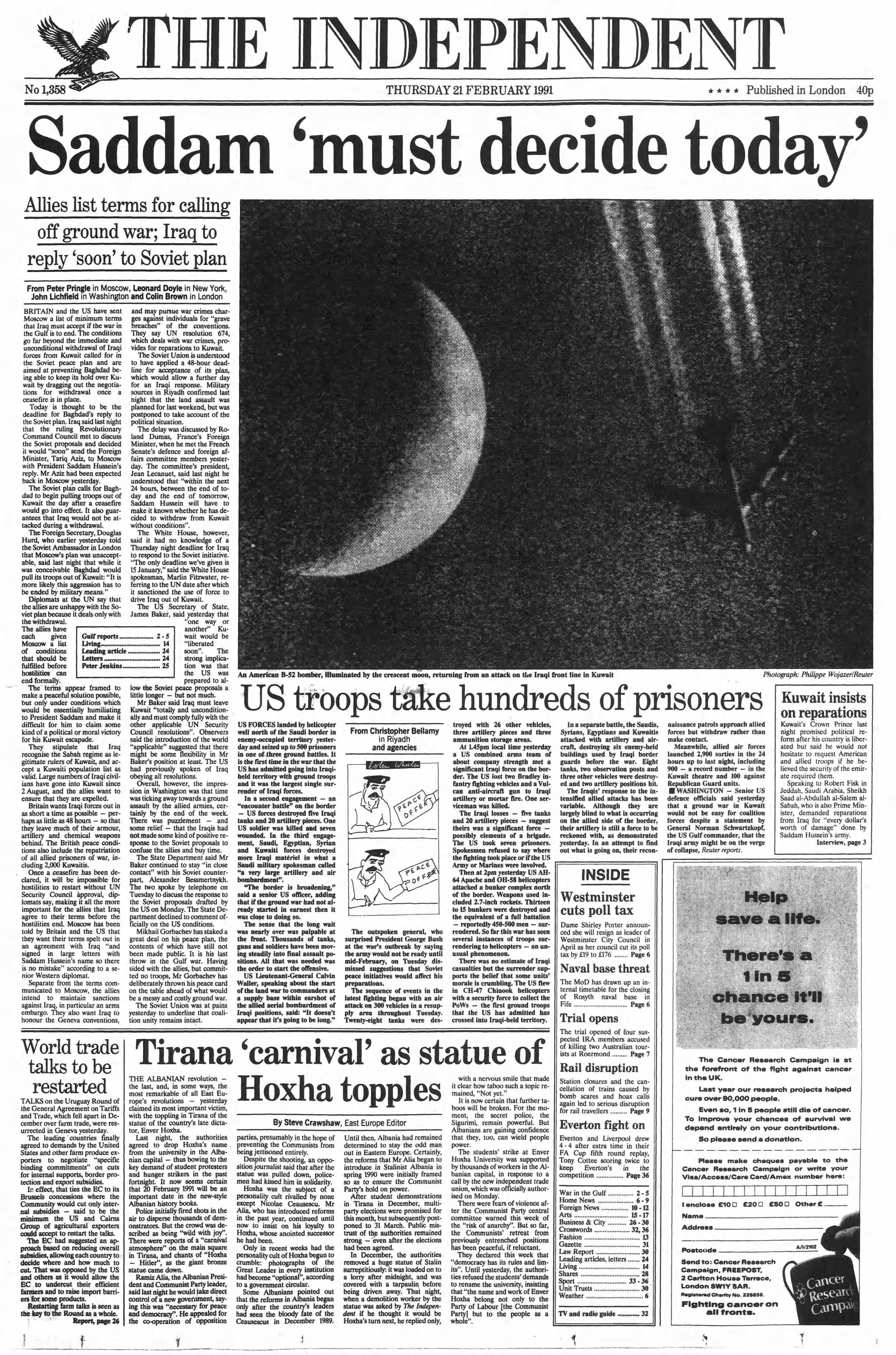
21 February 1991 – Deadline looms for Saddam over Kuwait
It’s 1991 and Kuwait is occupied. The US-led coalition sets out terms to halt a planned ground offensive in the Gulf War as Iraq weighs a Soviet-brokered peace proposal. Moscow signals optimism that a withdrawal could avert invasion, but the allies reject conditions allowing a delayed or negotiated pull-out. Within days, coalition forces launch their offensive, rapidly liberating Kuwait and bringing the conflict to a close later that month.
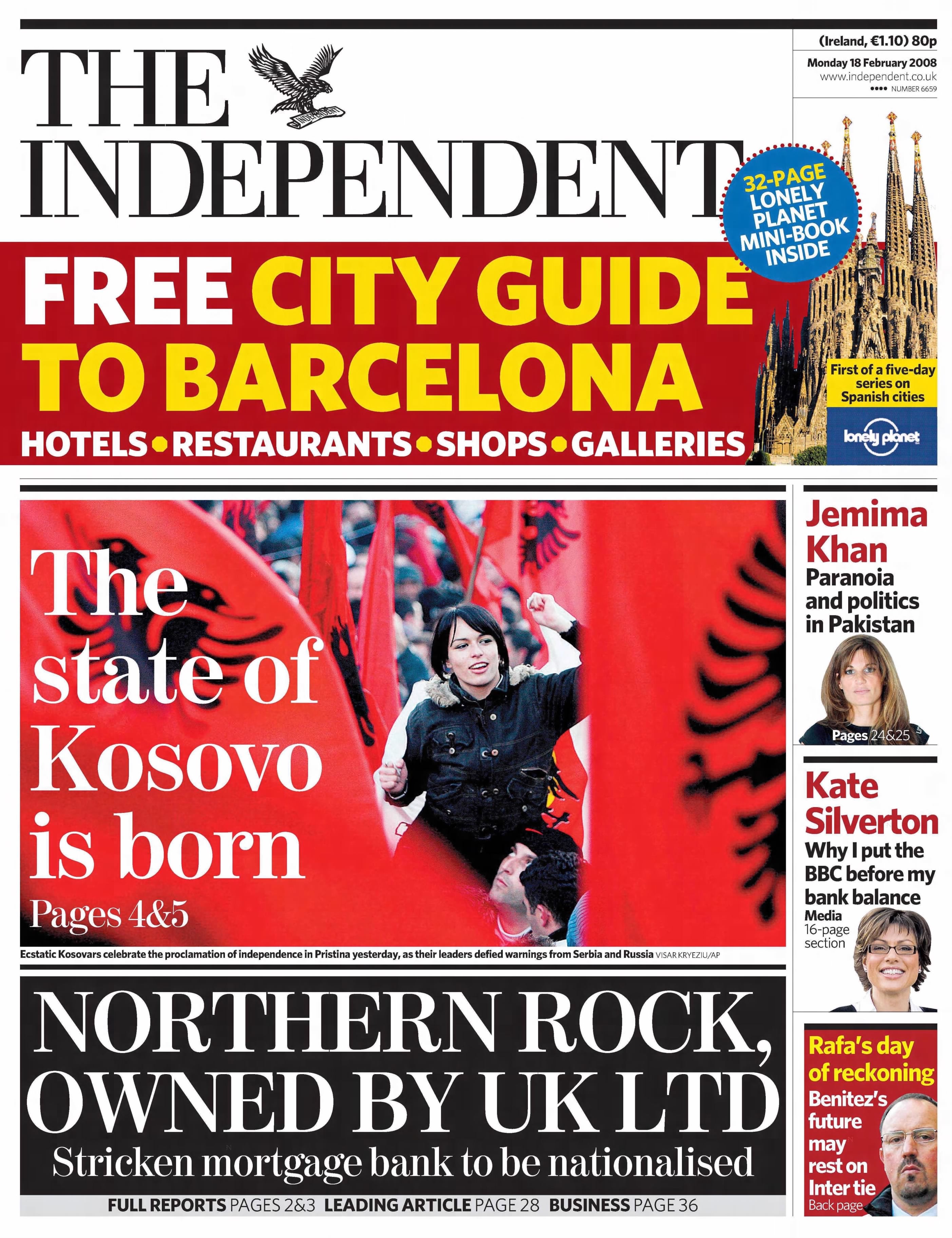
20 February 1996 – String of IRA attacks in London
Fresh IRA bomb attacks in London raise fears the Northern Ireland peace process is collapsing, with warnings of a renewed cycle of violence between republicans and loyalists after the end of the 1994 ceasefire. The explosions mark a tense return to uncertainty as negotiations stall and security is tightened across Britain and Northern Ireland. Despite the setback, talks resume the following year and culminate in the Good Friday Agreement of 1998.
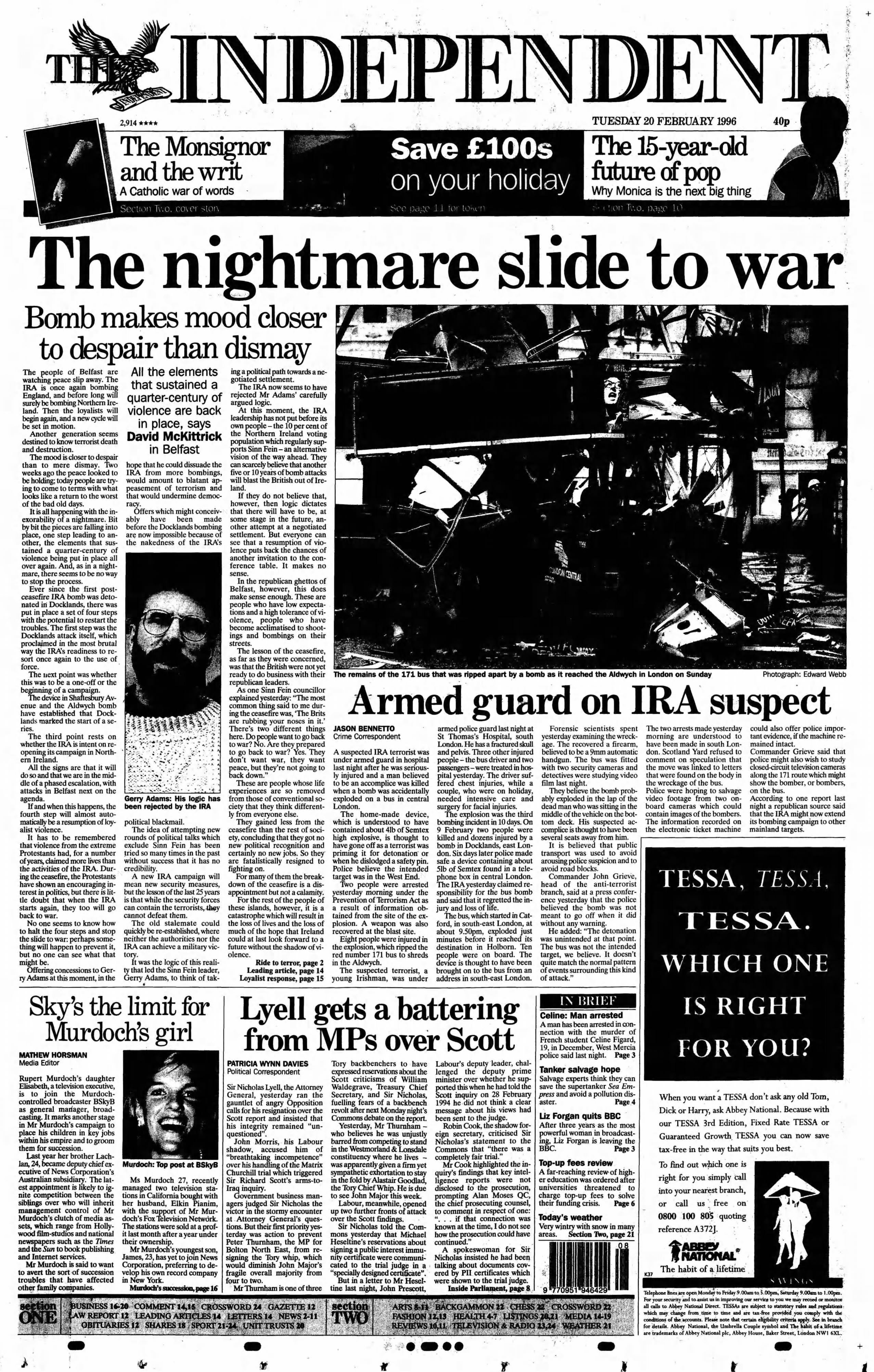
19 February 2005 – ‘Final proof’ that global warming is man-made
More than 20 years ago, The Independent leads with research that finds a clear connection between rising ocean temperatures and greenhouse gas pollution. “The final proof: global warming is a man-made disaster”, runs the headline, as scientists report an “unequivocal” correlation between four decades of ocean heating and atmospheric emissions. The findings add momentum to growing international pressure for action in the years that follow.
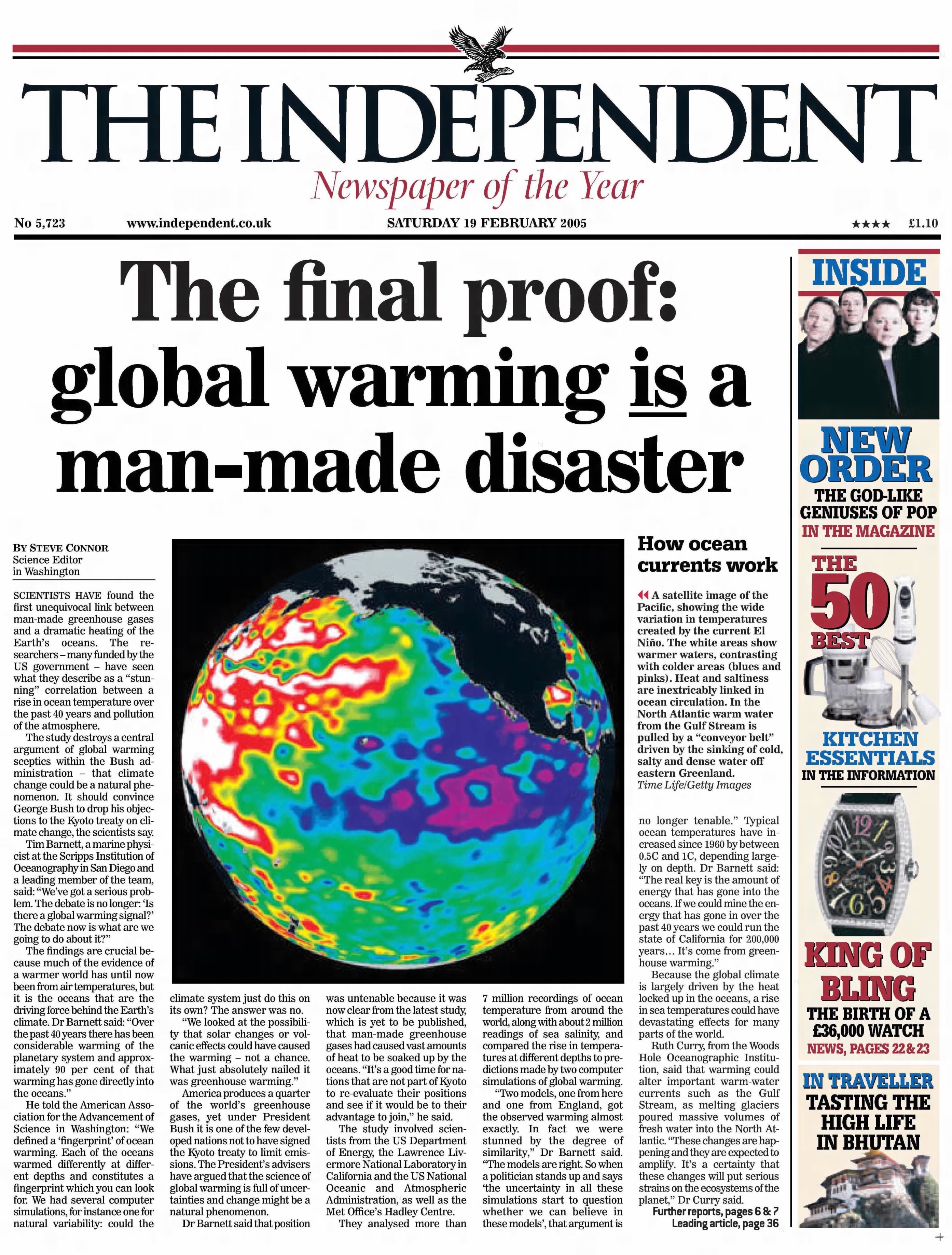
22 February 2005 – Fear and Loathing in Las Vegas author dies by suicide
Illustrator Ralph Steadman pays tribute to writer Hunter S Thompson after the gonzo journalist dies aged 67, recalling a life lived at relentless speed and creative intensity. Thompson, famed for Fear and Loathing in Las Vegas, had long spoken candidly about mortality and excess, shaping a persona that blurred performance and reality. His death is ruled a suicide, a conclusion reaffirmed by investigators years later in January 2026, after renewed scrutiny of the case.
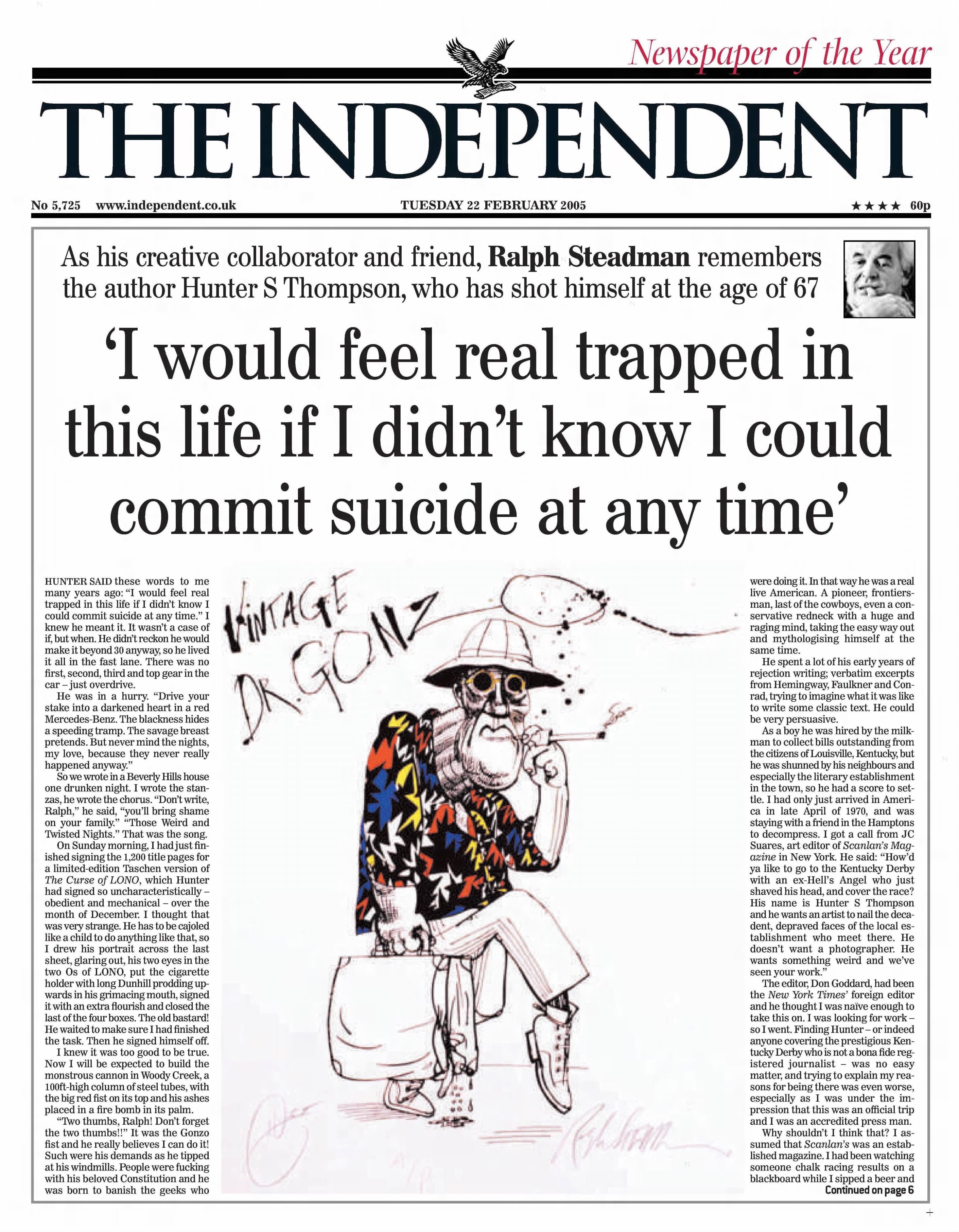
18 February 2008 – Kosovo is born
Crowds celebrate in Pristina as Kosovo proclaims independence from Serbia, a move backed by many Western nations but rejected by Serbia and Russia, highlighting new tensions in the Balkans. On the same day in Britain, the government nationalises the troubled mortgage lender Northern Rock after months of financial turmoil. The rescue becomes an early symbol of the deepening global financial crisis that unfolds later in 2008.
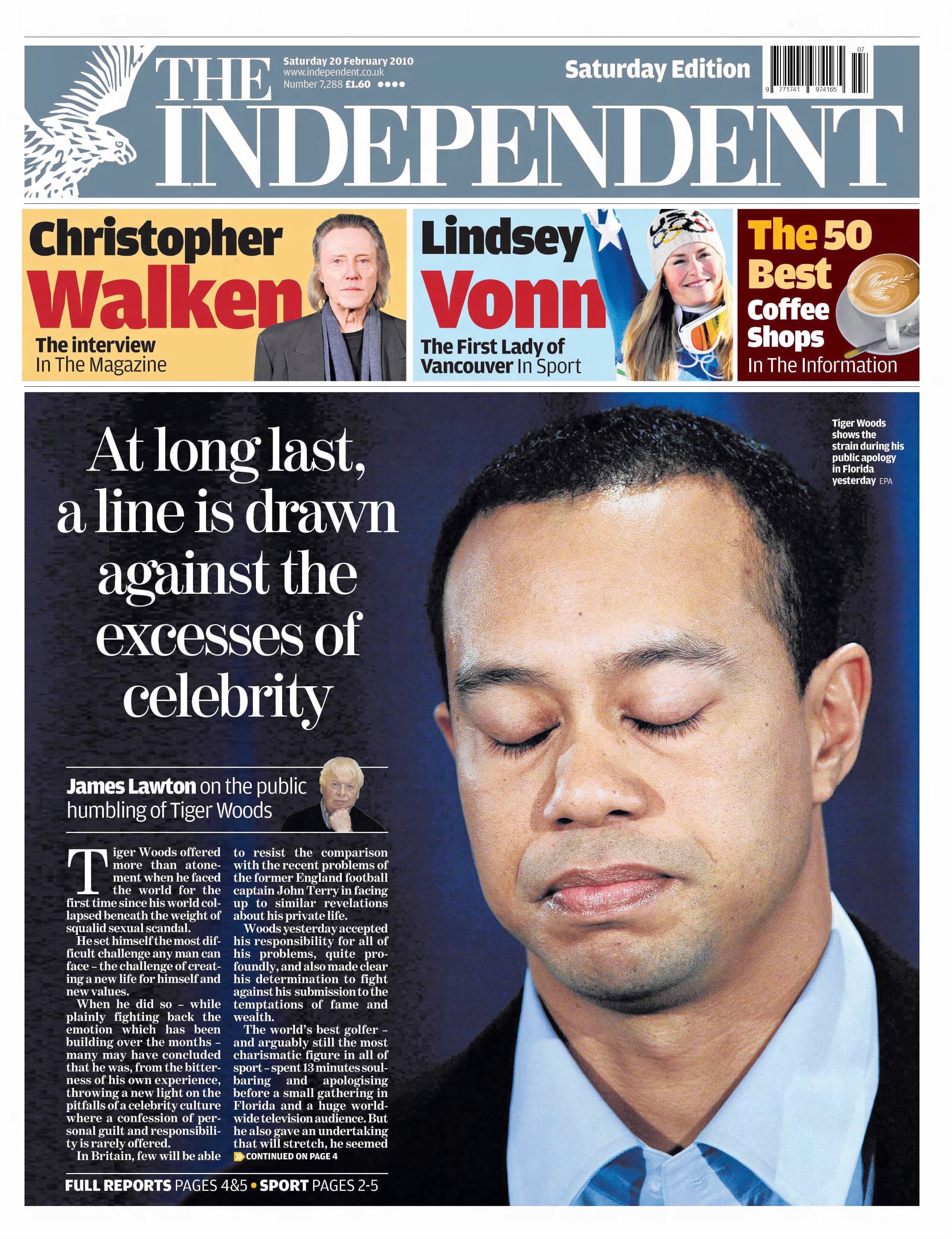
20 February 2010 – Tiger Woods makes public apology
Golfer Tiger Woods delivers a televised apology after revelations of multiple extramarital affairs shattered his carefully managed public image and led to a break from competition and lost sponsorships. Speaking for 13 minutes, he acknowledges personal failings following months of intense media scrutiny. In reaction to the “public humbling” of Woods, The Independent pithily comments “at long last, a line is drawn against the excesses of celebrity”.
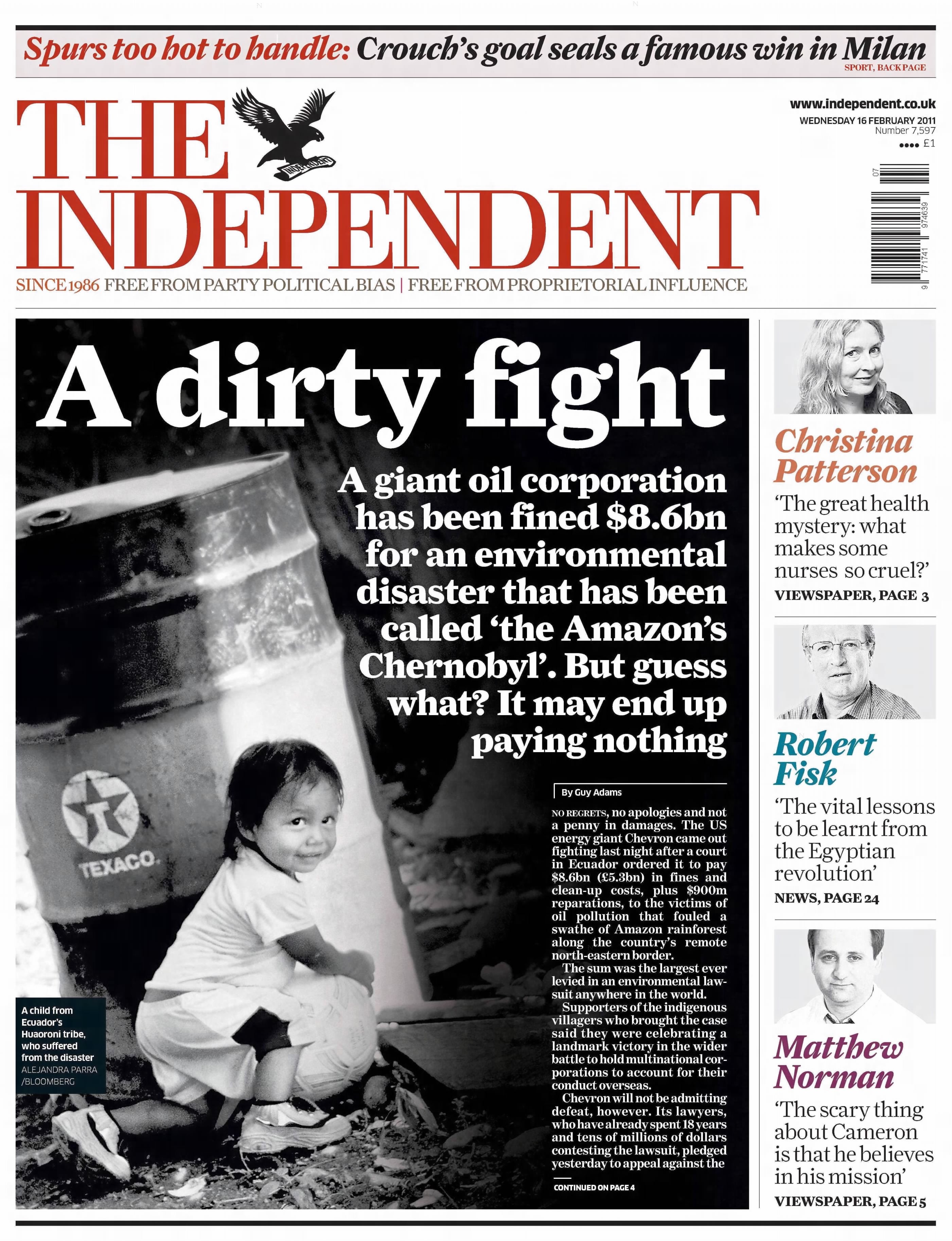
16 February 2011 – Chevron accused of environmental disaster
It’s not quite the plot of Erin Brockovich, but it’s not far off. An Ecuadorian court orders Chevron, which acquired Texaco, to pay billions in damages over decades of contamination in the Amazon, where indigenous communities accuse the company of dumping vast amounts of toxic waste that polluted land and water supplies. The ruling is hailed by campaigners as a landmark environmental judgment, though Chevron rejects the verdict and fights enforcement across multiple jurisdictions. Years of legal battles follow and, unlike a Hollywood ending, affected locals still struggle to secure compensation. In a bitter twist, Ecuador itself is later ordered to pay damages to Chevron after international arbitration rulings.
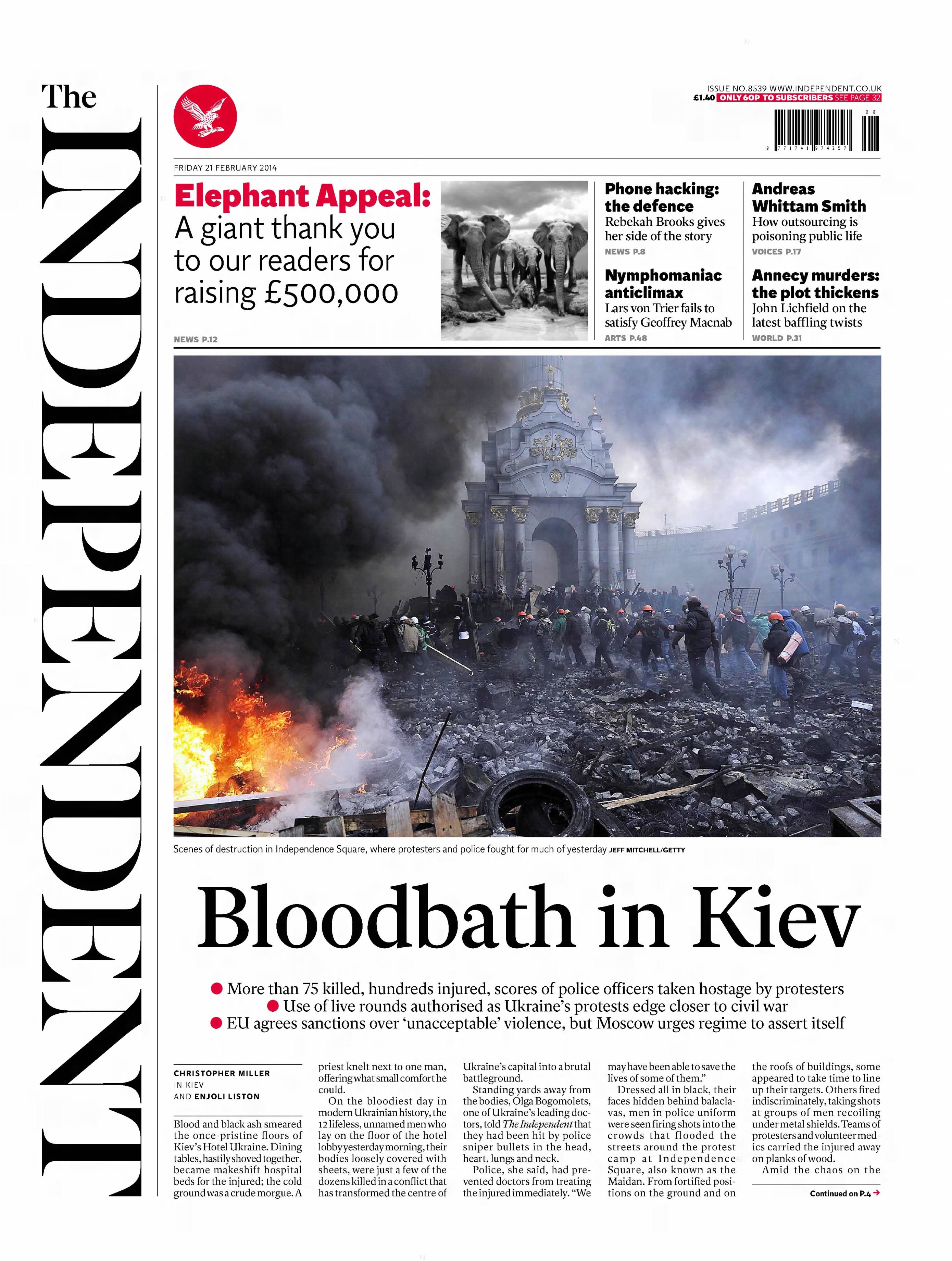
21 February 2014 – Deadly clashes in Kyiv during uprising
More than 75 people are killed as violence escalates in Kyiv during mass protests against President Viktor Yanukovych, with live ammunition authorised and hundreds injured amid fears the crisis could slide into civil conflict. The European Union moves toward sanctions while Moscow urges the government to restore order, exposing deep geopolitical divisions over Ukraine’s future. The unrest leads to Yanukovych’s removal days later and marks a turning point in tensions between Russia and Ukraine that later erupt into open war.
Join our commenting forum
Join thought-provoking conversations, follow other Independent readers and see their replies
Comments
Bookmark popover
Removed from bookmarks