The internet’s biggest troll was unmasked in 2025 – a man posing as a woman
Known as ‘the most hate-filled corner of the web’, Tattle Life is a platform where trolls go to take down, gossip about, and even issue death threats to some of the biggest online influencers. But finally, those hiding in the shadows have been exposed, writes Jessica Barrett


It was a moment cemented in pop culture legend when, in October 2019, Coleen Rooney uttered the immortal line, “It’s... Rebekah Vardy’s account”. The seismic tweet, heard around the world, was the culmination of Rooney’s internet sleuthing to deduce who had been trying to destroy her reputation, with the finger pointed firmly at her fellow footballer’s wife. It wasn’t, however, the only sleuthing scandal to cause a stir that year. A few weeks later, in November 2019, a group of mumfluencers, aka mummy bloggers, exposed a shocking story that laid bare a very toxic underbelly of influencer culture.
Blogger and midwife Clemmie Hooper, known on social media as “Mother of Daughters”, who at the time had 670,000 followers on Instagram, was revealed to have been using the message board forum Tattle Life to anonymously pull apart other online influencers – even her own husband Simon, aka Father of Daughters, whom she referred to as a “class-A twat”.
Using the pseudonym “Alice in Wanderlust”, she anonymously accused fellow content creator Candice Brathwaite, with whom she had recently recorded a podcast, of being “aggressive” and of using her “race as a weapon”. After being exposed, Hooper deleted her Instagram account and never returned.
That was the first time most of us had heard of Tattle Life, a site that existed simply to give internet trolls a platform to slag off, gossip about and even issue death threats to (mostly female) influencers and celebrities. It now attracts an astonishing 12 million visitors a month, and has caused untold misery to those who find themselves subject to its attacks, which often extend to victims’ families and friends, too.
But four years ago, two of its victims said enough is enough, and started their hunt to unmask the founder of Tattle Life.

_n_S1_E1_00_13_01_10.jpeg?quality=75&width=230&crop=3%3A2%2Csmart&auto=webp)

In June, Irish couple Neil and Donna Sands won £300,000 in libel damages after taking Tattle Life to court – a decision that led to a two-year legal battle that has cost them hundreds of thousands of pounds. The couple sued the site for defamation and harassment, claiming they were relentlessly targeted with nasty, abusive comments on vicious threads that filled 45 pages on the site.
They told the court of the barrage of false, damaging claims and personal attacks they had been subjected to, which included harassment and doxxing (exposing their home address). One troll even wrote that they were “watching you in real life”, implying that they were stalking the couple.
Donna described waking “every morning” and wondering, “What have they said in the last seven hours?” Her body would physically shake on seeing updates, and she struggled with confidence.
But, after two years of lengthy and expensive battles, Neil and Donna walked away with £150,000 each, plus legal costs, in a case they said was about standing up to online “hate speech”.
Until that moment, nobody had had any information on who ran the site, apart from a name, Helen McDougal, which was known to be a pseudonym. While no one had ever met her, she was often referred to on Tattle only as “Helen”, with users often claiming she had multiple accounts; she would shadow-ban her critics and dole out uneven moderation.

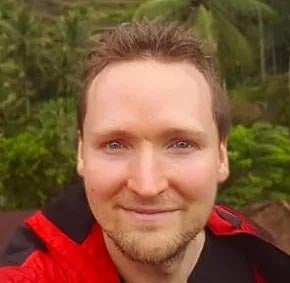
However, what people didn’t realise was that Helen was in fact a 41-year-old man, Sebastian Bond, who was exposed by a judge at Belfast’s High Court after reporting restrictions were lifted.
And Helen McDougal wasn’t his only pseudonym: he also used Bastian Durward, under which he operated a vegan cooking brand called Nest and Glow, which runs an Instagram account with around 135,000 followers (though it’s been inactive since 2020).
Bond had also set up multiple companies, including Yuzu Zest Ltd in the UK and Kumquat Tree Ltd in Hong Kong, through which he’s believed to have managed Tattle Life and channelled advertising revenue. The court froze more than £1m in assets tied to these companies alongside the £300k damages award. Reports have suggested that Bond, who has been dubbed “King of the Trolls”, has now fled to Asia; he is thought to be in Hong Kong. He has only commented on the legal drama in a Daily Mail interview in September.
That a man was behind a platform that encouraged (and profited from) such blatant hatred towards women and their children made it all the more outrageous, with one mumfluencer, who asked not to be named, saying, “The misogyny that Tattle has unleashed on innocent women is shocking. Women have had their addresses leaked, their homes visited and their children threatened. It’s one thing not to like an online influencer, but it’s another to wish illness or even death on them. This has to mark a turning point; it’s simply gone too far.”
Outside the court in June, Neil Sands said the case had been undertaken on behalf of others who have suffered serious personal and professional harm through anonymous online attacks – and there are certainly a lot of them.
-copy.jpeg)
Tattle Life has 374,000 current members, and the site has played host to more than 22 million messages on threads relating to specific – mostly female and mostly British – influencers and celebrities. It’s so full of overwhelmingly nasty content that it has been referred to as “the most hate-filled corner of the web”.
A 2023 report by Collabstr found that 79 per cent of influencers are female, and so the abuse and trolling of influencers is a problem that predominantly affects women. The thread titles are aimed at their subjects’ parenting choices, looks, and marriages, such as “We don’t care that you’re pregnant, hun” and “Ratty fringe, gifted cringe”.
Beauty writer Sali Hughes, who has been the subject of malicious threads for years, described the site as a place where users “screengrabbed every post, every article, scuttling back to their sewer to mock and belittle me”.
In 2020, Hughes took part in a Radio 4 documentary during which she highlighted how the site’s content veered into harassment, sparking a petition demanding its closure.
But why would anyone take the time to create a false identity to attack people they didn’t know in the first place? One Tattle reader, who stressed that she didn’t actively post herself, and asked to remain anonymous, explained that it felt “cathartic” to read negative takes on influencers who publicly receive such “outpourings of adoration”.
“These people are told every day how wonderful they are, how great they look, how perfect their homes are, and are earning 10 times what we do and getting endless freebies,” she said. “Influencers can be out of touch and really annoying. Why shouldn’t people share how that makes them feel?”
The argument that influencers, like celebrities, put their lives out there for consumption, meaning they are fair game, is a well-trodden one. But what happens when it crosses the line, pushing couples like Neil and Donna Sands to breaking point? What about when their children are discussed; when posters report seeing their subject in a doctor’s office and start to speculate about their health, or a countdown is set to when their marriage might end? All these things have been experienced by victims of the site.
Several creators, including Irish-born Eimear Varian Barry, have shared devastating Tattle experiences. Barry revealed that one thread had even contained the Rightmove link when her house was for sale, and that users had threatened to “pay her a visit”.
Another found that a thread had identified her children’s school. Influencer Vickaboox, real name Victoria Wright, was horrified to read malicious posts about her mother’s cancer, with one claiming that her boyfriend had left her as a result of it.
Abuse isn’t just happening on anonymous platforms, but in plain sight in the comment sections on social media. Earlier this year, Australian 27-year-old content creator Indy Clinton, who shares her life as a mum of three with more than 2 million followers on TikTok, revealed that she had taken action against anonymous online trolls by hiring a private investigator to unmask those who had been posting hateful comments about her.
She, too, wants the trolls to be held accountable, and has said she is planning to take legal action.
Psychologist Tara Quinn-Cirillo says that the very fact that sites like Tattle allow users to be anonymous makes them feel removed from the “subject” they are talking about, which leads to more intense and abusive commentary.
She explains: “If we feel disconnected, we can forget that there is a person with thoughts and feelings behind the public image. It is also easy for people to then follow suit and collectively snowball on comments and abuse.”
Of course, some may think that influencers can just ignore the trolls, or not read what is being written about them. But it’s not always so easy. Sometimes others will email or screenshot what is being said and send it to someone out of “concern”. If someone is making specific threats, others may assume that a person would want to know if they could potentially be in danger.
Stefan Michalak and his wife Hannah, who have two children, have been sharing their family life via their Instagram accounts and their YouTube channel for more than 10 years. They have had thousands of Tattle posts devoted to them.
“The handful of times I’ve looked [at Tattle] over the years, it felt like wading into something dangerously radioactive. It sticks with you,” says Stefan. He adds, “It would be great to see these people come out of the shadows and put their faces and names to their opinions, but I’m sure that won’t happen.”
The 2025 ruling has, however, changed things for Tattle Life and its users. Comments and threads are said to be in the process of being locked or deleted, and panicked users are deleting their accounts in fear that their own identities could be exposed and their employers notified.
Tackling online hate is a mammoth task, but with their court case, Neil and Donna Sands have taken some big steps towards it. As one influencer said yesterday, “It shouldn’t take the threat of being exposed to stop people being hateful to strangers on the internet. But if it stops even a few of them, fighting back will become worth it.”
Join our commenting forum
Join thought-provoking conversations, follow other Independent readers and see their replies
Comments
Bookmark popover
Removed from bookmarks