The Independent's journalism is supported by our readers. When you purchase through links on our site, we may earn commission.
Generation Monologue: How the voice note killed the art of conversation
This way of communicating took off during the pandemic and never left. But as broadcasting our thoughts becomes the norm, Helen Coffey wonders whether we’ve forgotten how to just talk to each other

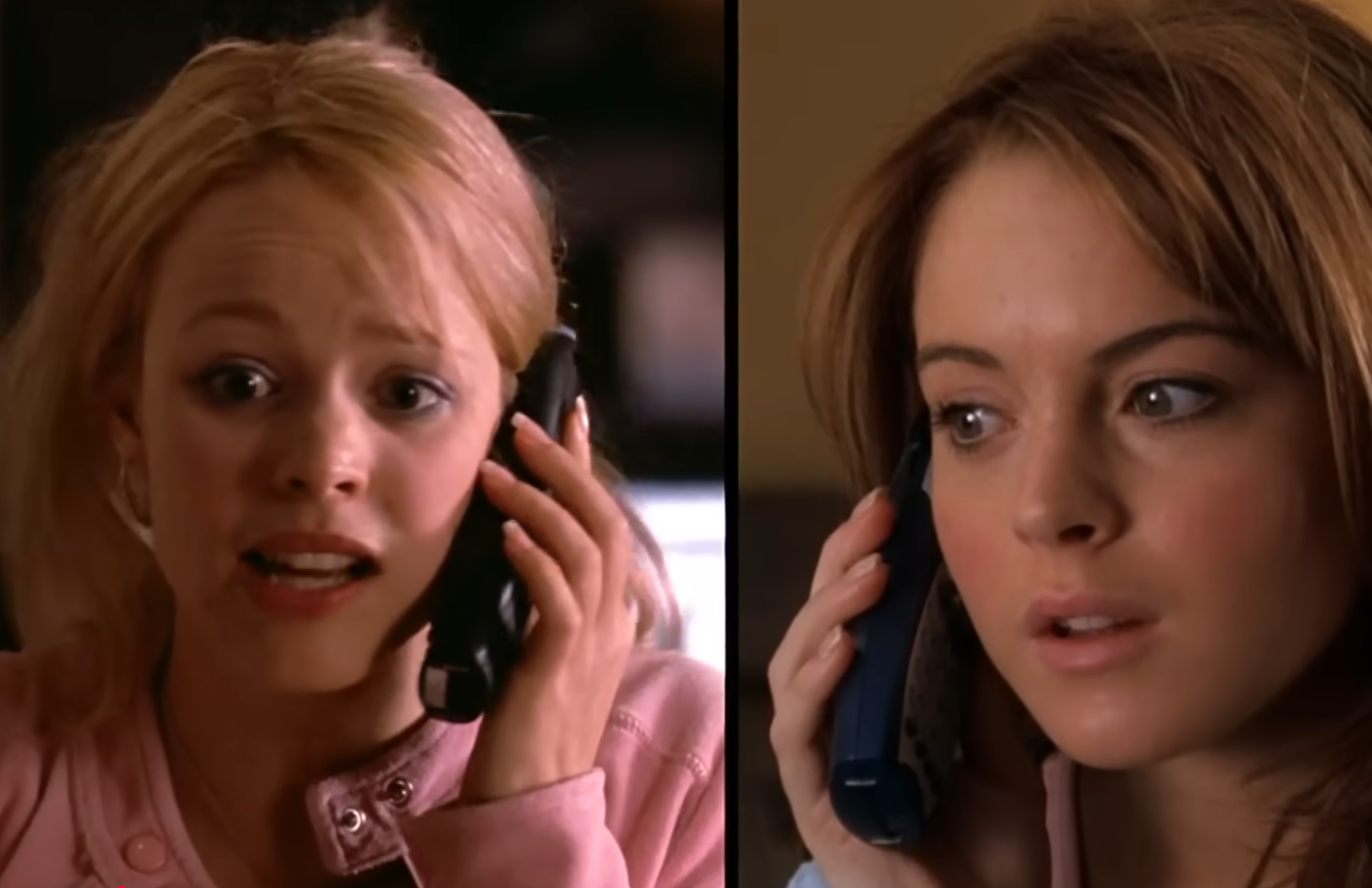
I still remember my first voice note. It was 2020, the year of fear and masks and lockdowns, and new mediums of communication were swiftly springing to the fore. Zoom had exploded in popularity as people strove to “hang out” while being unable to leave their homes; apps like Houseparty were taking off, aiming to create a more relaxed, recreational vibe than a video call in which to socialise.
Amid it all, I received a strange WhatsApp message from a friend. “I’ve got a few things to share with you – easier if I just vn,” read the text. Vn? What the heck did that mean? A few minutes later, a message popped up with a play button. What fresh wizardry was this?
Like many natural late adopters who are inherently hostile towards most technological advancements, to begin with, I was extremely suspicious of the voice note. It felt lazy on the part of the sender – they presumably couldn’t be arsed to type out their thoughts, and so they’d outsourced the time-consuming labour part to me, the listener. I would now be forced to filter through the waffle to find out what it was they actually wanted to say.
Recording my first ever “vn” was even worse – an excruciatingly self-conscious, garbled speech that I re-recorded about seven times. How was this better than, for instance, a phone call?
Skip ahead five years, and I’ve completely changed my tune. Leaving a breezy, eloquent voice note comes as easily as breathing. Sometimes I even listen back after pressing send, such is the narcissistic pleasure I derive from the sound of my own voice. They’ve become a primary comms channel among the majority of my circle, ranging from 30-second “I’m almost at the restaurant, just ran into so-and-so!” missives to 17-minute podcast episodes about the latest big life drama. Nine times out of 10, when I’m striding between my house and the station or the shops, I’ll either be catching up on inbound voice note correspondence or recording one of my own.

I’m not alone in this about-turn. While the voicemail has died a death, the voice note has gone from strength to strength. Data released in December revealed that nine billion voice notes are sent every day; global research from Statista, polling 14,000 respondents, showed that in just one year, the average person spends almost 150 hours sending and receiving voice notes. In the UK, a survey of 2,000 adults found that they record an average of six per day.
There are, undoubtedly, massive plus sides – hence the mass adoption. It’s a convenient way of keeping in touch, eliminating the ambiguity of tone that can lead to misunderstandings over text or email. And especially with friends and relatives that live far away, hearing someone’s voice, their intonation and laughter, rather than reading a string of vibeless characters, can make us feel more connected.
But as voice notes have surged in popularity, they have become more time-intensive and unwieldy. The research found that the frequency of voice note interactions has increased by 7 per cent year on year, while the length has risen by 8 per cent.
Engagement has suffered as a result. Some 55 per cent of those surveyed admitted that they “often” forget to listen to voice notes; 22 per cent said they’ve felt bored listening to a long one; and 15 per cent described the experience as a “chore”. There are practical drawbacks too: details of when and where a rendezvous is to take place, for example, are incredibly difficult to refer back to when buried under an extensive word salad that takes in minor work grievances and a benign anecdote about an online shopping mix-up.
They are a one-way form of communication – a soliloquy into the void
Fractured attention spans are also an obstacle. Of the 88 per cent of those surveyed who revealed that they frequently forget what was actually said during a message, 37 per cent had become distracted halfway through, while 30 per cent blamed the voice note’s length for not remembering the content.
This arguably wouldn’t present that much of an issue were it not for the fact that the voice note habit seems to be impacting real-world relationships. As the vn’s star has ascended, the phone call’s status has taken a nosedive, particularly with the younger generations. Research shows that Gen Z relies heavily on texting or sending voice notes as a primary means of keeping in touch, with a quarter of 18- to 34-year-olds admitting they never pick up inbound calls, according to a 2024 USwitch survey.
Meanwhile, over half (52 per cent) of those polled by Statista felt that voice notes were literally replacing IRL interactions, rising to 60 per cent of Gen-Zers. Case in point: nearly half (49 per cent) of respondents said they had sometimes spent an entire evening sending voice notes to a friend instead of meeting up. This, despite the fact that 54 per cent reported having their most fulfilling conversations in person.
Therein lies the problem. Unlike a phone call or face-to-face catch-up, voice notes are very much not a conversation. They are a one-way form of communication – a soliloquy into the void, a one-(wo)man show in which the sender plays the starring role. There is no place for the recipient to interject, react or respond in real time. Call it broadcasting, rather than conversing. It’s no wonder that 76 per cent of people say voice notes tend to be “self-involved”.
The real victim in all this may be our ability to hold a back-and-forth. Anecdotally, I’ve noticed when talking to acquaintances the increased tendency for them to monologue, rather than dialogue: to simply list out loud their key life bullet points or plans for the coming week, as if reading off a bulletin board or presenting a podcast, before asking me to do the same. The feeling is more akin to a transaction than a meaningful exchange. It’s a subtle but distinct shift from the more complex conversational dynamics that take place when there is genuine connection and curiosity happening between two people in real time.
There’s a reason we call it the “art” of conversation – because, done well, it is an art, a nuanced, skilful dance of communication. The IRL version of a voice note feels, by comparison, incredibly flat and drab. Science has shown that the more engaged we are during a discussion, the higher the perceived conversational quality. Speed daters who asked more follow-up questions were more likely to get a second date, according to research. For example, effective listening, which includes short gaps during conversations as participants really process what is being said before they respond, is linked to higher satisfaction and more feelings of connectedness.
Voice notes aren’t necessarily the enemy. They can be a wonderful tool for feeling closer to our loved ones. We just need to make sure they stay supplementary to real-life conversations: an “in addition to”, not an “instead of”. Either that, or accept the inevitable and all become professional podcasters. Might as well monetise those monologues...
Join our commenting forum
Join thought-provoking conversations, follow other Independent readers and see their replies
Comments
Bookmark popover
Removed from bookmarks