How locking chats on WhatsApp became a relationship red flag
Is the lesser-known lock chats feature on WhatsApp helping or harming us? Olivia Petter investigates how this extra security option is causing havoc in relationships

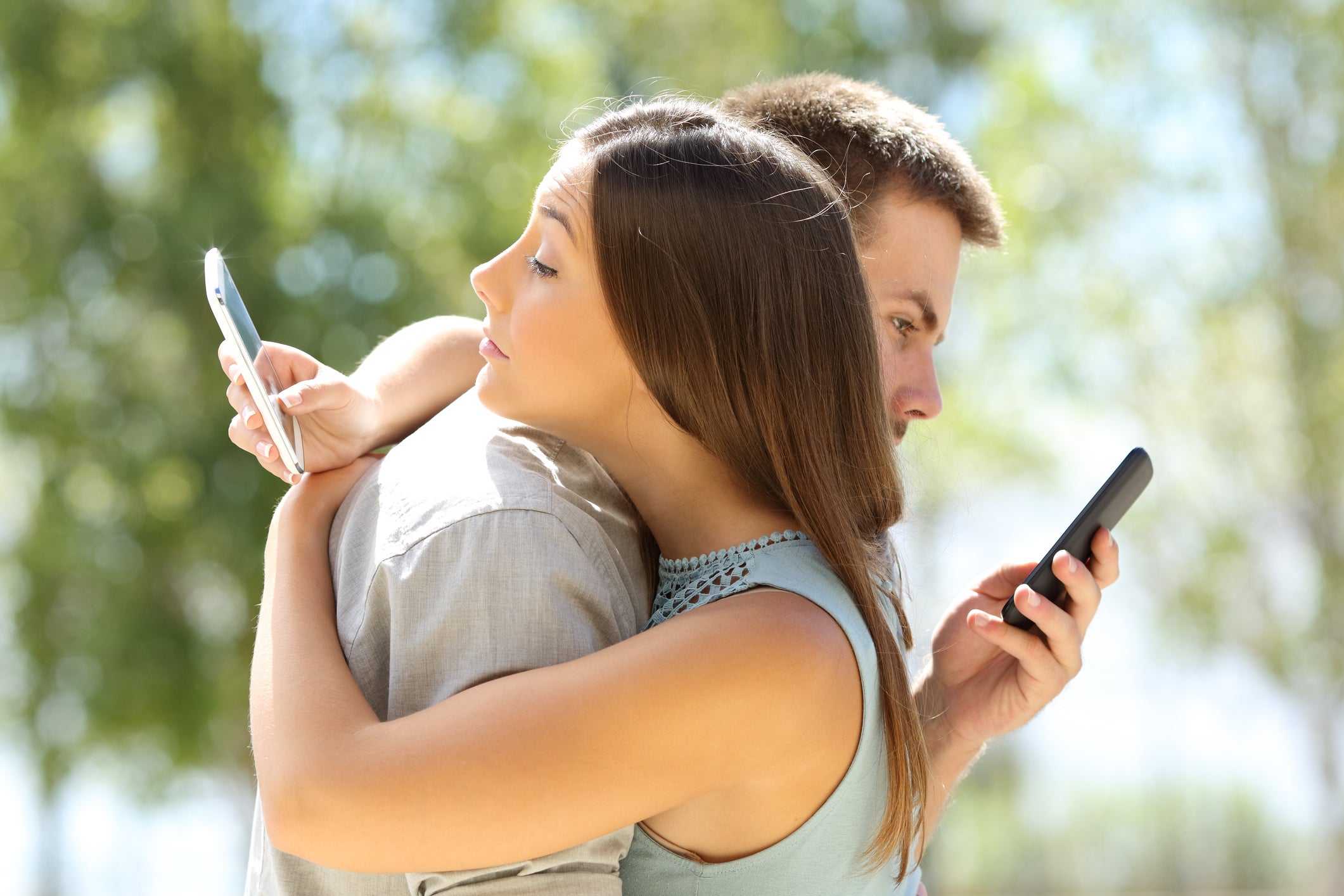
There were suspicions from the start. But it wasn’t until Alice*, 31, hacked her way into her boyfriend’s WhatsApp chats that she knew something was going on. “I felt terrible about it, but I also needed to know if he was hiding something from me,” she recalls. “And I knew his passcode.” She didn’t see any conversations that raised eyebrows.
Then she noticed “locked chats”, a feature that allows users to take a thread out of their WhatsApp inbox and put it into its own separate folder that can only be accessed via a device password or a biometric, such as a fingerprint. “There were all of these chats with his ex,” Alice sighs. “I didn’t even know that was a thing.”
Lots of people didn’t; WhatsApp quietly introduced the feature with a blog post, hailing it as a way of supporting those in need of a little extra privacy. “We think this feature will be great for people who have reason to share their phones from time to time with a family member or those moments where someone else is holding your phone at the exact moment an extra special chat arrives,” the post reads. “You can lock a chat by tapping the name of a one-to-one or group and selecting the lock option. To reveal these chats, slowly pull down on your inbox and enter your phone password or biometric.”
It might seem like an odd tool to introduce. After all, WhatsApp is already an encrypted platform, one that is often already locked behind a passcode on someone’s smartphone. Why the extra security? Are we all conducting clandestine affairs with exes that need to be hidden from prying partners? Are we living double lives that are now being encouraged by tech giants who want to make it easier for us all to lie to people? Or is it a case of responding to a world where it feels as if everyone is sharing everything, rendering our personal lives even more sacred and worthy of being protected as much as possible?
“In an era where digital communication is constant and often visible, locking a chat provides a sense of control over what others see, helping individuals protect personal boundaries,” says Hannah Lewis, a BACP-registered counsellor and psychotherapist. “People are increasingly conscious of surveillance from partners, parents, colleagues, or even social circles, and locking a chat creates a private space where they can communicate freely without external monitoring.”
Of course, in some cases, this can be weaponised to conceal illicit behaviour. “In professional investigations, we often encounter locked communications in cases involving infidelity, corporate espionage, or criminal activity,” says David Jones, a seasoned private investigator with more than a decade in covert surveillance and misconduct cases. “The lock itself does not prove wrongdoing, but it is frequently used to restrict access to conversations a person does not want others to see, whether those are personal, professional, or illegal.”
Examples of this that Jones has seen range from the coordination of fraud, hiding evidence of harassment, or concealing discussions about infidelity. “The psychological barrier created by locked chats can make it easier for someone to rationalise behaviour they would otherwise hesitate to engage in, knowing that their communications are obscured.”
A lot of the time, though, locked chats are used for more legitimate purposes, such as protecting sensitive business communications, personal health details, or financial information. In some cases, there may also be some conversations you want to keep a little bit more hidden for your own sense of security.
“I am probably quite boring in that I only have two locked chats on my WhatsApp, but I will put them up against anyone anywhere,” says Crawford, 48. “One is the naughty chat between my wife and I – it is locked for pretty obvious reasons because the kids sometimes use our phones, and because some things just need to be private – and the other is the thread that we have used when we’ve found out we are pregnant. That one is a lot more neonatal than naughty. For me, it’s not about keeping something private because it is a bit spicy, but because it is truly intimate, especially during the first trimester, where there are always worries around loss mixed with such hope.”
For many people, locking chats has simply become another way of communicating in the modern world. “It is not secrecy that drives me to lock them, but rather circumstances where interactions would not be helpful or comfortable if another person were to look at my phone,” says Paul, 39. “It is not about concealing anything but keeping the boundaries.”
There are other reasons why locked chats might serve a more positive purpose, too. As communications evolve, and there are more and more platforms at our disposal, there are also inevitably more notifications. The constant buzzing and dinging can easily become irritating; locking your chats can also be used to ameliorate this and implement one’s personal boundaries, particularly if it’s a conversation with someone you don’t feel totally comfortable having.
For me, it’s not about keeping something private because it is a bit spicy, but because it is truly intimate
“For me, it’s great because it’s the only way to stop seeing notifications that someone has messaged you,” says Maya*, 30, who frequently finds herself feeling overwhelmed by the deluge of notifications on her phone. “When you archive a conversation, you still see the ‘one’ at the top. But locking it means you have to actively search to see it, so it feels less toxic and I can just forget about it.”
This seems to be one of the most popular reasons for locking chats on WhatsApp, one that reflects the changing ways in which we use our phones. It’s a way of controlling what you see and when you see it, as opposed to simply allowing yourself to be bombarded, which can feel pressurising.
“In my experience, most people ‘lock chats’ as a way of managing boundaries rather than hiding something,” says Dr Nick Prior, a UK-based NHS psychiatrist and clinical doctor, mental health advocate and clinical lead at AI-guided therapy app, MindBay. “Phones can go from feeling like private objects to a public space – a phone these days is often shared with children, glanced at by partners or visible in public spaces. Locking a chat can therefore reduce background anxiety and give people a sense of control over what feels like an increasingly exposed digital life.”
Perhaps in 2026, privacy has become one of our most valuable commodities, especially in light of how often we’re encouraged to dismiss it: Share a story to tell everyone you’re engaged – or make a reel about your 30th birthday party! And so on. The advent of social media has transformed the way we share information, inviting all of us to behave like the stars of our own reality shows. While there will always be those who abuse features like this that enable secrecy, for the most part, they might be a net-positive that allows us to use technology the way we want to, rather than in ways dictated by a group of quarter-zip fleece-wearing Silicon Valley CEOs.
Alice and her boyfriend broke up shortly after she discovered the locked chats with his ex-girlfriend. “I’m grateful I saw them, to be honest,” she says on reflection. “I’ve started using it myself, locking my chat with him so that whenever he messages me, I don’t have to see his name popping up unsolicited. It’s great.”
*Names have been changed
Join our commenting forum
Join thought-provoking conversations, follow other Independent readers and see their replies
Comments
Bookmark popover
Removed from bookmarks