Sun, sea and… Slack? Why you working on holiday is harming your health
Emails in the morning, Aperol in the afternoon? If you’ve tried to take a holiday but never quite managed to switch off, you’re not alone, writes Anna Hart. But taking semi-working breaks might be the worst of both worlds – for your wellbeing and your work life
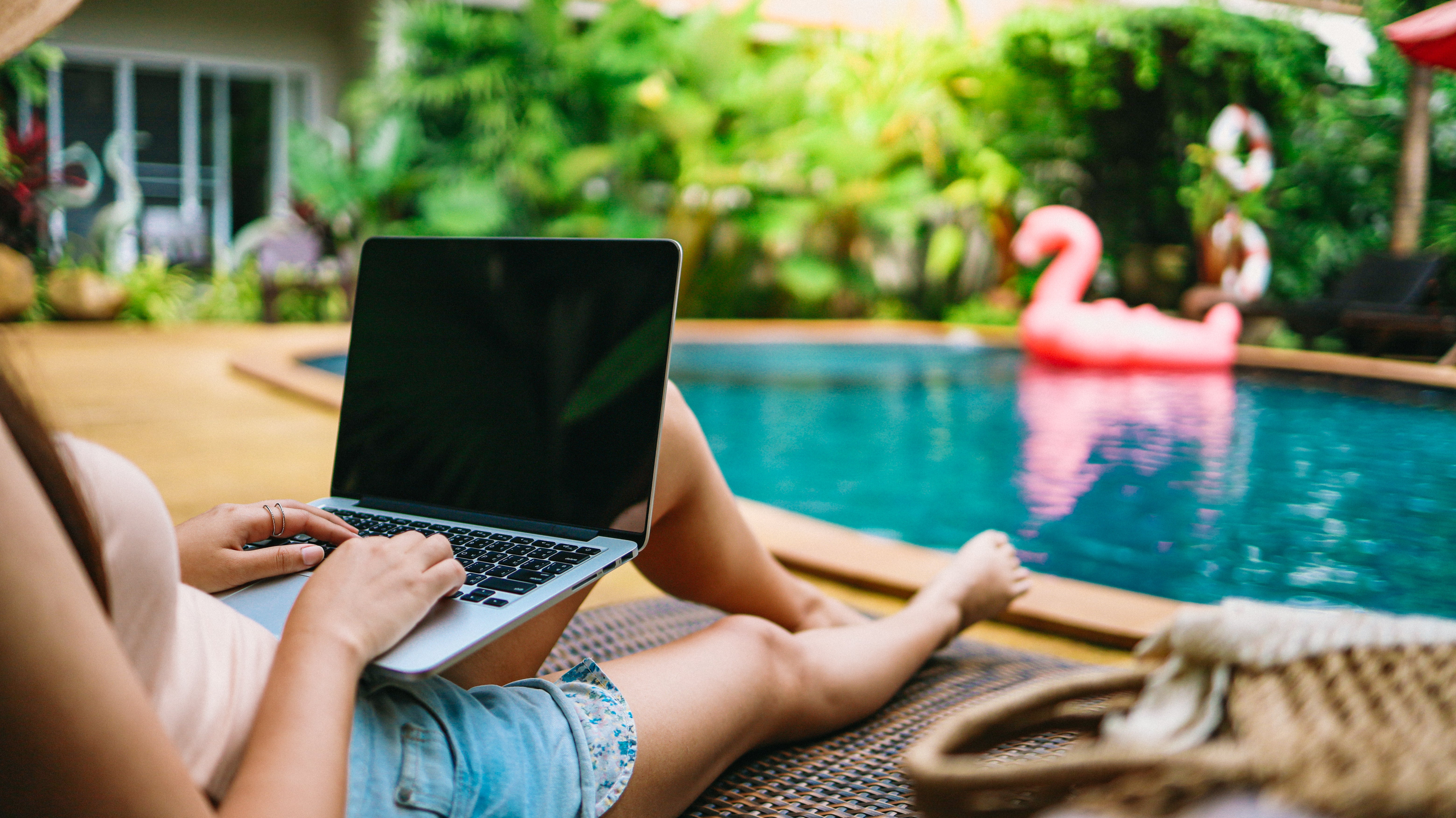
When Dolly Parton sang about working nine to five, she never imagined that by 2025, these working hours would sound positively luxurious. Today, work-life boundaries are so blurry that nearly half of UK employees respond to work messages while on annual leave. Thousands of travellers are spending money on on-call-cations, only to check our emails every day, and complain about feeling short-changed because our summer break hasn’t delivered the physical and mental recuperation we longed for.
Are we really getting value for money from our holidays if we’re still mentally in the office?
“Working on holiday is like smoking on a treadmill – it defeats the entire point,” says psychotherapist Julia Samuel MBE, host of the Therapy Works podcast. “Answering emails on holiday is not a sign of dedication. It’s a sign you need firmer boundaries. Or a therapist. Possibly both.”
It sounds like I need both. Until this summer, I had never been on holiday without my laptop. (With the obvious exception of music festivals, not because I wanted to be “in the moment”, but because I didn’t want to get my MacBook nicked from my tent.) I was less relaxed, less observant, less engaged with my travel companions. But I still thought it was worth it.
Like many Millennials, back in my twenties, I 100 per cent bought the digital dream that “flexible working” gives workers more freedom, and that allowing work to creep into our weekends and holidays is simply the price we pay for this precious perk.

As a young journalist, I was on a modest salary, and by working for an hour or two every day, I could offset the price of my holiday and feel less guilty about a splurge. I also didn’t need to worry about preparing co-workers or editors for my absence.
In fact, the thought of being truly out-of-office made me panicky. What if an editor got back to me with urgent questions about a story I’d filed? What if an event unfolded around me and I was asked to file a dispatch? What if a time-sensitive opportunity to write about something important to me presented itself? These are specific to journalism, but in every profession, we have our bespoke list of “what ifs” that keep us travelling with our laptops or checking our emails on a smartphone or iPad.
As every workcation taker knows, there are rock-solid reasons it’s difficult to digitally step out of office. Many workplaces and entire industries still exploit workers through a toxic culture that defines “commitment” as the hours we spend at work, and “dedication” as our inability to step away. I agree wholeheartedly with Samuel that maintaining boundaries at work is a sign of professional strength, not weakness.
But I also know that people in junior positions or anyone with unsupportive co-workers probably don’t feel empowered enough to do so. People who run their own businesses, and people in the creative sector or healthcare industry, also might feel it’s risky to be 100 per cent unreachable for a week.
And our near-universal digital addiction has only exacerbated any anxiety about switching off from work. Every half-a-holidayer will be familiar with this mantra: what if we miss an amazing opportunity? What if we get in trouble? What if we let people down?
“Even on holiday, checking our devices can feel like an itch we need to scratch,” says Dr Kelly McGonigal, a health psychologist and lecturer at Stanford University and author of The Willpower Instinct, which explores digital addiction. “What if there is something important you don’t know because you haven’t checked? What if someone at work needs you? Checking our devices becomes a way to assure ourselves that we are caught up, on top of things, and not left out.”
Many workplaces and entire industries still exploit workers through a toxic culture that defines ‘commitment’ as the hours we spend at work, and ‘dedication’ as our inability to step away
If we struggle to go on holiday without our smartphones and laptops, it’s not without good reason. Distancing ourselves from our devices is a privilege and practice we have to fight for.
It started to become clear that this wasn’t working for me after Covid. When I was able to see my nephews in California after a two-year separation, work suddenly seemed incredibly low priority. All my holiday hours seemed more precious, and time with friends and family a gift that I didn’t want to sabotage.
I wish I could say this adorable post-Covid epiphany cured my habit quickly, but no, I stubbornly carried on travelling with my laptop for another two years. I just found it a lot more stressful and emotionally galling to tear myself away from friends and family to work. And then I began missing deadlines, and leaving important emails unanswered – when I hadn’t set an “out-of-office”, because I never considered myself out-of-office.
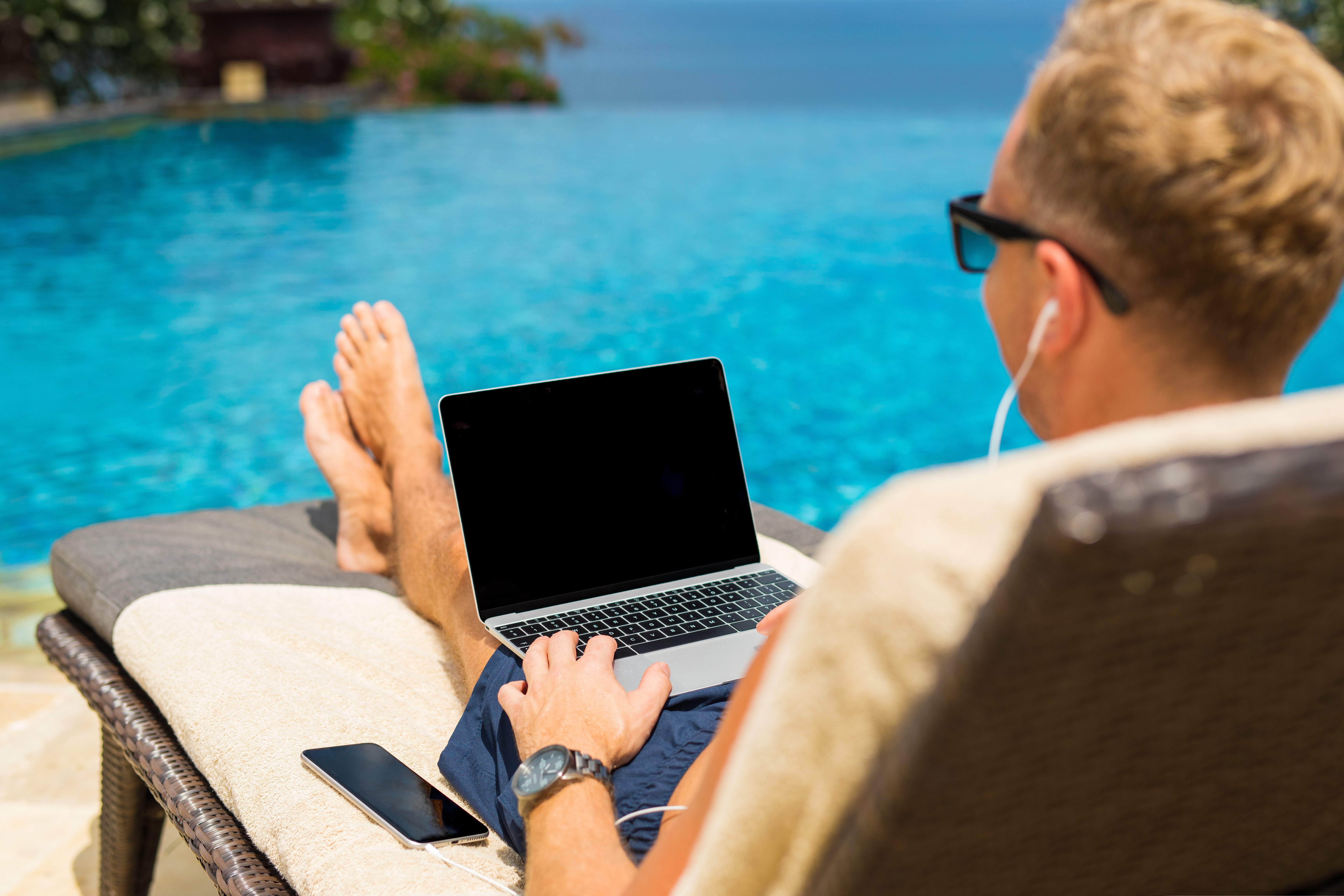
After two summers of this, it finally hit home that working on holiday simply doesn’t work for me anymore. It wasn’t just my personal obligations that woke me up to this; it was my professional ones. Working on holiday was making me a less committed and less reliable employee. By not fully relaxing, I felt my creativity and productivity nosedive as well. And let’s face it, are any of us at our professional best when we’re resentful and distracted, tapping away at our laptops in a hot hotel room?
I’m not yet aiming for a 100 per cent digital detox on every holiday. This is a lofty ambition, but I’m not quite there yet (don’t feel bad if you aren’t, either).
Celebrities and CEOs can only boast about “not having a smartphone” because they have an assistant with a smartphone. But leaving my laptop at home when I go on holiday is a decisive stride in the right direction. I can definitely switch my phone off for 24-hour blasts of serenity, only occasionally checking emails or resending a document. Now I’m able to say no to writing anything lengthy, preparing a presentation, touching spreadsheets.
This summer, I’m choosing a smaller number of short-and-sweet holidays where I am fully in holiday mode. I’m done with half-a-holidays where I clumsily juggle work and play – letting myself and everyone else down in the process.
Join our commenting forum
Join thought-provoking conversations, follow other Independent readers and see their replies
Comments
Bookmark popover
Removed from bookmarks