Bitcoin price tumbles as Trump tariff threats push investors to safe havens
European currencies also rose against the dollar after Trump announced sweeping import tariffs
The dollar weakened on Monday, as investors flocked to safe havens like the Swiss franc, after Donald Trump's latest tariff threats against Europe over Greenland sparked a broad risk-averse move across markets.
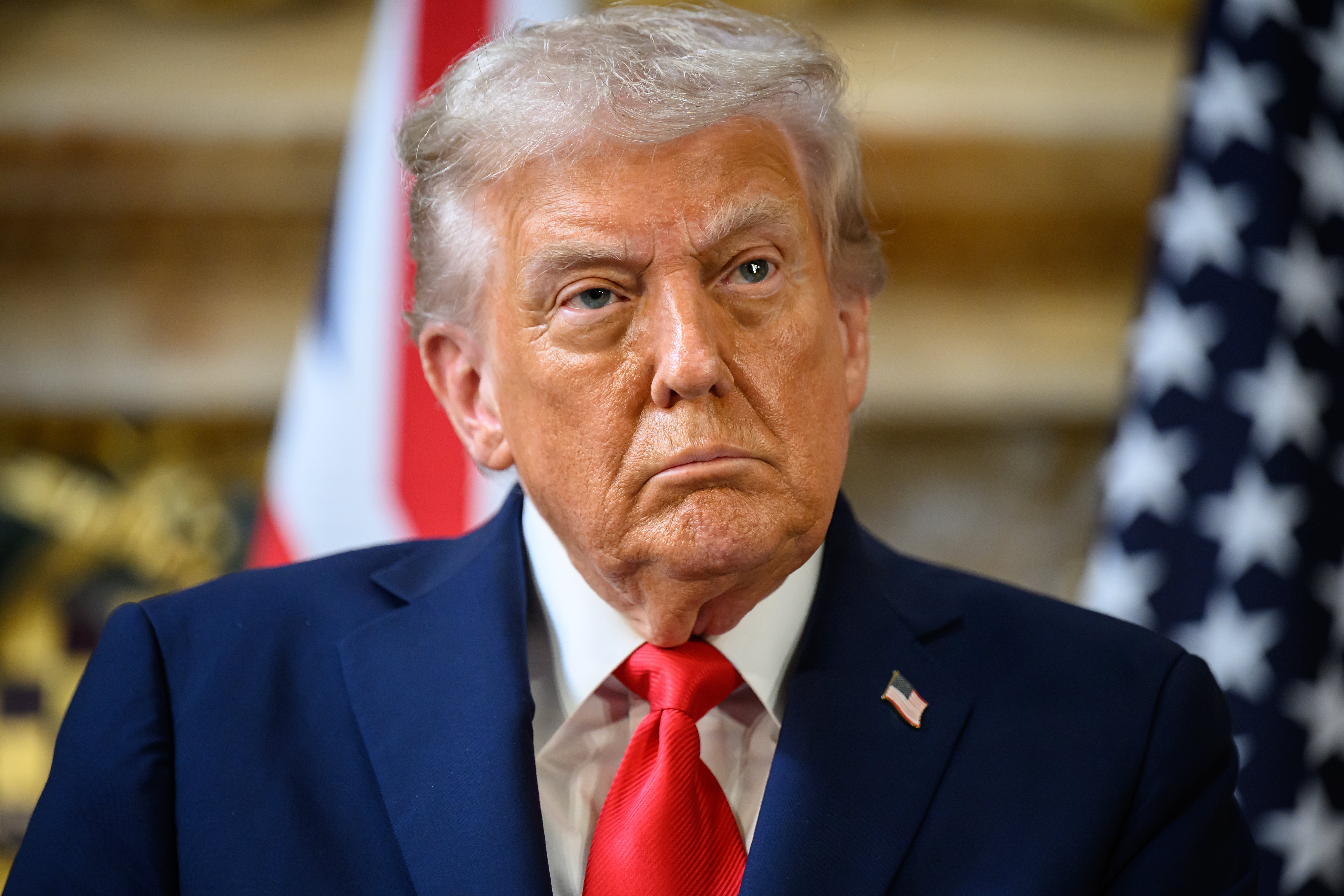
Mr Trump announced over the weekend he would impose an additional 10 per cent import tariff from 1 February on goods from Denmark, Norway, Sweden, France, Germany, the Netherlands, Finland and Britain, until the US is allowed to buy Greenland.
European leaders were scrambling to avert a trade war and on Sunday agreed to intensify their efforts to dissuade Mr Trump from imposing tariffs, while also preparing retaliatory measures should the duties go ahead.
After dropping briefly in overnight trading, European currencies including the euro, pound and Scandinavian crowns rose. The Swiss franc, a classic safe-haven, headed for its largest daily rise against the dollar in a month.
Euro benefits from dollar aversion
The euro was up 0.3% at $1.163 around midday in Europe, while the pound was up 0.27% to $1.3415.
"Typically you would think tariffs being threatened would lead to a weaker euro," said Khoon Goh, head of Asia research at ANZ. "
But, as we've seen last year as well, when the 'Liberation Day' tariffs were getting put in place, the impact in FX markets actually has been more towards dollar weakness every time there is heightened policy uncertainty emanating from the United States."
Investors dumped the dollar after Trump unveiled sweeping tariffs on the world last April, triggering a crisis of confidence in U.S. assets.
While some movement of capital out of the dollar was evident on Monday, most notably with the Swiss franc's gains, analysts said a further escalation in tensions could see investors flock back to the U.S. currency.
"The market has been understandably anxious about the dollar's decline in value since last April. But I would really caution against assuming that the dollar's safe-haven status is gone," Rabobank chief currency strategist Jane Foley said."

Get a free fractional share worth up to £100.
Capital at risk.
Terms and conditions apply.
ADVERTISEMENT
Get a free fractional share worth up to £100.
Capital at risk.
Terms and conditions apply.
ADVERTISEMENT
Even if non-U.S. investors decided to take their money out, where would they go? Other markets aren't big enough to maintain that. The sheer size of the (U.S.) market means that there is always going to be some safe-haven value associated with U.S. assets," she said.
Yen still in intervention zone
The dollar was down 0.5% on the day at 0.7984 Swiss francs, and a fraction lower against the Japanese yen, another non-U.S. safe-haven, at 158 yen.
Domestic Japanese politics have hampered the yen in recent weeks, with a looming snap election raising expectations of greater fiscal stimulus. With the yen trading around its weakest since mid-2024, the risk of official intervention is high, not least because of the verbal warnings from Tokyo in the last couple of weeks.
"We still remain sceptical of intervention being successful on a sustained basis and would need fundamental supportive yen factors to play out as well. Moves in yen today are certainly more contained," Derek Halpenny, MUFG's head of research for global markets EMEA, said in a note.
Cryptocurrencies, often a barometer of investor risk sentiment, tumbled. Bitcoin was down 2.5% at $93,011, while ether fell 3.5% to $3,223.
Data on Monday showed China's economy grew 5.0% last year, meeting the government's target by seizing a record share of global demand for goods to offset weak domestic consumption.
The onshore yuan climbed to a 32-month peak of 6.9630 per dollar, shrugging off the mixed data, after China's central bank set its strongest daily fixing in more than two years.
Join our commenting forum
Join thought-provoking conversations, follow other Independent readers and see their replies
Comments
Bookmark popover
Removed from bookmarks