Average UK house price at near standstill month-on-month in November – Halifax
The typical property value edged up by £138, although this still took it to a new record high, Halifax said.
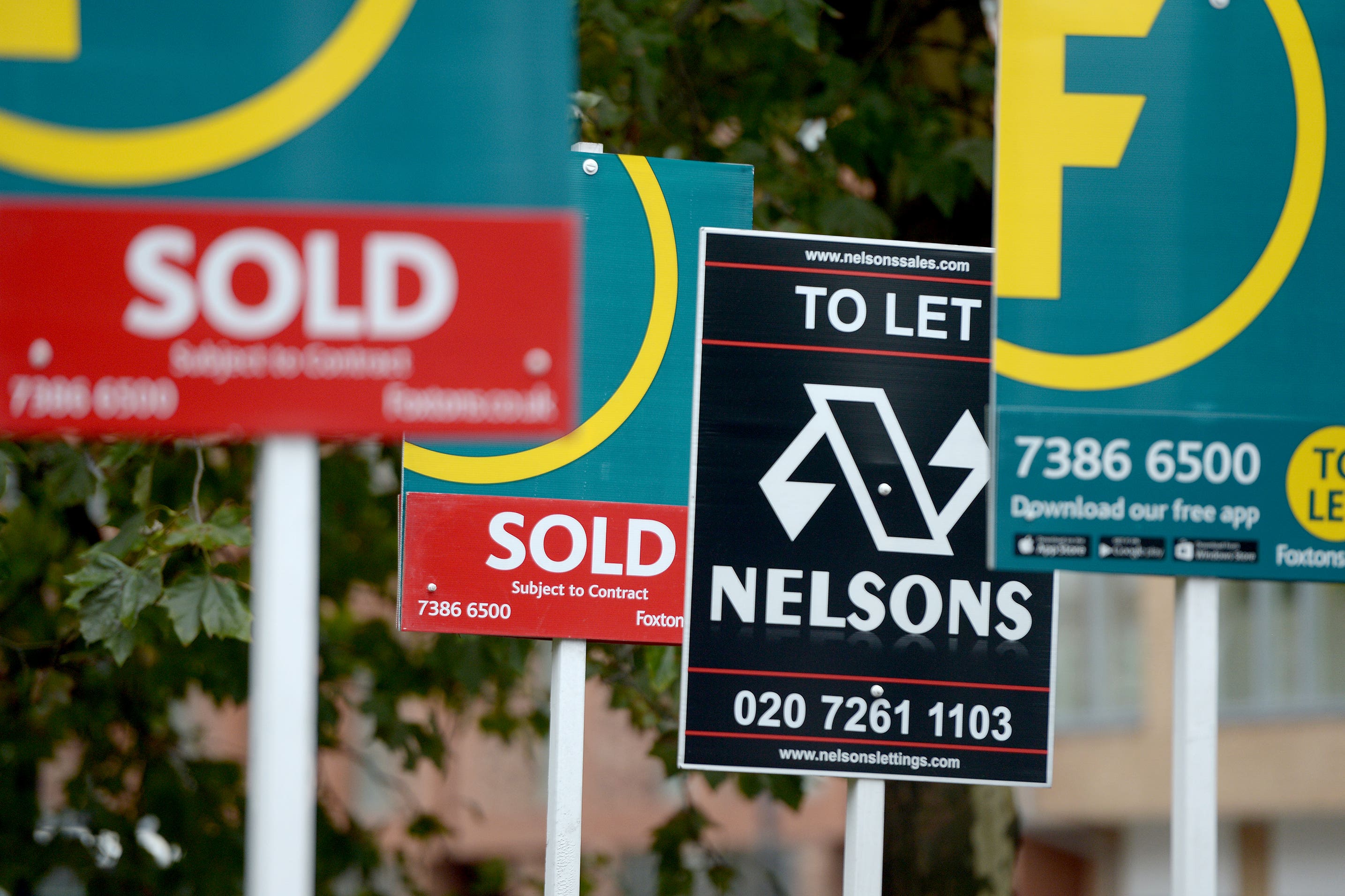
House prices stalled month-on-month in November, although a slight increase of some £138 in the average property value was still enough to push it to a new record high, according to one index.
Halifax recorded a 0.0% month-on-month change in the average house price in November, following a monthly increase of 0.5% in October.
In cash terms, the average house price crept up by some £138 month-on-month, which took the average house price to £299,892 – a new record.
Annual growth in property values slowed sharply to 0.7%, down from 1.9% in October.
Amanda Bryden, head of mortgages, Halifax, said: “Average house prices were broadly unchanged in November, edging up by £138 compared to October, with the typical property now costing £299,892.
“Annual growth has slowed to 0.7%, the weakest rate since March 2024, though this largely reflects the base effect of much stronger price growth this time last year.
“This consistency in average prices reflects what has been one of the most stable years for the housing market over the last decade. Even with the changes to stamp duty back in spring and some uncertainty ahead of the autumn Budget, property values have remained steady.
“While slower growth may disappoint some existing homeowners, it’s welcome news for first-time buyers. Comparing property prices to average incomes, affordability is now at its strongest since late 2015.
“Taking into account today’s higher interest rates, mortgage costs as a share of income are at their lowest level in around three years.
“Looking ahead, with market activity steady and expectations of further interest rate reductions to come, we anticipate property prices will continue to grow gradually into 2026.”

Get a free fractional share worth up to £100.
Capital at risk.
Terms and conditions apply.
ADVERTISEMENT
Get a free fractional share worth up to £100.
Capital at risk.
Terms and conditions apply.
ADVERTISEMENT
Northern Ireland remains the strongest performing nation or region in the UK, with average property prices rising by 8.9% over the past year, Halifax said. The typical home in Northern Ireland costs £220,716, according to the report.
Annual house price growth of 3.7% was recorded in Scotland in November, with the average property value at £216,781. In Wales, average property values rose by 1.9% year-on-year to stand at £229,430.
In England, the North West recorded the highest annual growth rate, with property prices rising by 3.2% annually to £245,070.
In parts of southern England there were some price falls, with 1.0% annual decreases recorded in London and Eastern England, and a 0.3% annual fall in the South East.
London remains the most expensive part of the UK, with an average property price of £539,766.
Jason Tebb, president of OnTheMarket, said the housing market had shown “considerable resilience” in 2025, but added: “National average figures conceal significant regional differences, with the market performing stronger in the north than the more expensive south, where affordability is more of an issue.”
Iain McKenzie, chief executive of The Guild of Property Professionals, said: “What continues to shape conditions on the ground is the higher supply of homes on the market compared to last year. Buyers have more choice than they’ve had in years, and that increase in supply is naturally keeping a lid on price growth in the short-term.”
Karen Noye, a mortgage expert at wealth manager Quilter, said: “The dust has now settled post-Budget, giving borrowers a clearer view of what the early months of 2026 may look like.
“Affordability remains the biggest hurdle. Inflation has eased and there is growing expectation of a first rate cut in December, but mortgage pricing is still sensitive to shifts in swap rates (which lenders use to price mortgages) and global pressures.
“Fixed rates have dipped, yet progress is gradual and high living costs continue to limit how far borrowing power can stretch, particularly for first-time buyers.
“Mortgage activity shows a market that wants to move but is still cautious. Lenders are competing harder at lower loan-to-value bands, while higher LTV (loan-to-value) deals remain expensive.
“Remortgagers rolling off old fixed rates are opting for shorter terms as they wait to see how borrowing costs evolve in 2026.”
In the Budget, the Government announced a high-value council tax surcharge in England on homes above £2 million from April 2028.
There will be four price bands with the surcharge, starting at £2,500-a-year for properties worth more than £2 million, and rising to £7,500 for properties worth more than £5 million.
Ms Noye said: “The new mansion tax was only announced last week, so it has had no bearing on this month’s figures and its wider impact is likely to be limited.
“It may, however, create pressure for some older homeowners who are asset rich but not cash rich and now need to factor in an annual charge.”
Sarah Coles, head of personal finance at Hargreaves Lansdown, said: “House prices haven’t been going anywhere fast for a while, and in November, they almost stood still.
“We’re set for a particularly sluggish year for property overall, with average prices up just 0.7% over the year so far – well behind inflation.
“The stagnation owes a great deal to uncertainty. It’s not just the pre-Budget jitters that pervaded the market and persuaded buyers to wait things out, it’s also the weakening of the labour market that’s making some people worry about taking on new financial responsibilities.
“The new year could see things pick up a little. There’s a decent chance of a (Bank of England base) rate cut later this month, and mortgage rates have continued to fall. Given that wages are rising faster than both inflation and house prices, it could help bring properties within reach. Coupled with the renewed enthusiasm we often see in January, this could be enough to perk the market up.”
Jonathan Handford, managing director at estate agent Fine & Country, said: “For sellers, stability is not a bad result. We’re seeing strong interest where homes are priced realistically and presented well, but buyers are more discerning than in previous years.
“With greater stock levels in many areas, there is increased competition among sellers to attract the right buyers, so presentation, value and transparency matter more than ever. The homes that shine are still attracting quality leads.”
Here are average house prices and the annual change, according to Halifax (regional annual change figures are based on the most recent three months of approved mortgage transaction data):
East Midlands, £246,002, 1.4%
Eastern England, £334,795, minus 0.1%
London, £539,766, minus 1.0%
North East, £180,939, 2.9%
North West, £245,070, 3.2%
Northern Ireland, £220,716, 8.9%
Scotland, £216,781, 3.7%
South East, £388,207, minus 0.3%
South West, £306,271, 0.3%
Wales, £229,430, 1.9%
West Midlands, £261,420, 1.3%
Yorkshire and the Humber, £216,159, 1.8%
Bookmark popover
Removed from bookmarks