Waspi women denied compensation for second time
Pat McFadden said advertising campaigns at the time meant ‘the vast majority of 1950s-born women already knew the state pension age was increasing’.
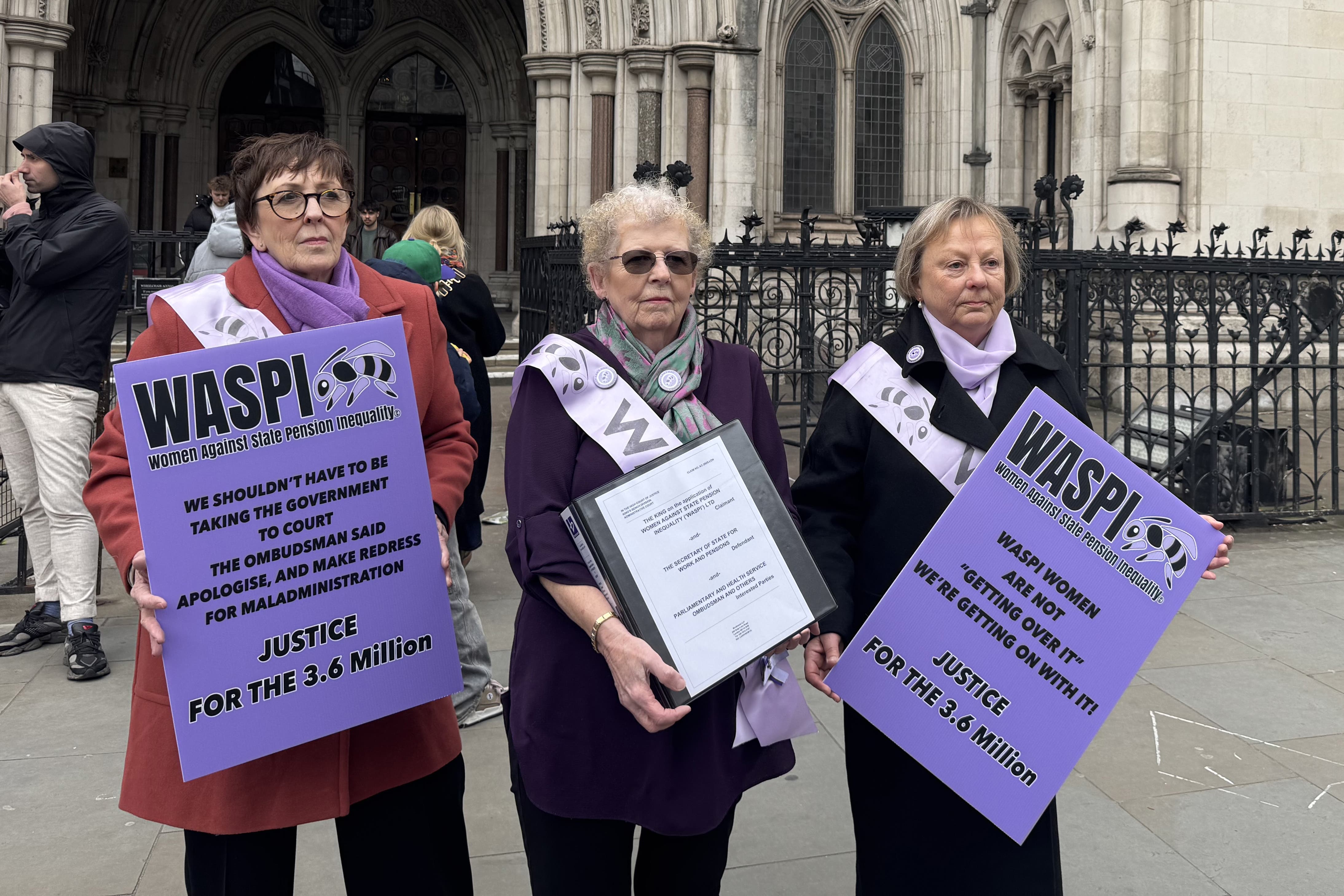
Women affected by the way changes to the state pension age were communicated have been told for the second time they will not receive compensation.
Labour’s previous policy not to offer redress was reviewed after the rediscovery of a 2007 Department for Work and Pensions evaluation, which at the time led to officials stopping sending automatic pension forecast letters out.
Work and Pensions Secretary Pat McFadden told the Commons a targeted compensation programme would “not be practical”, with a wider flat-rate scheme costing up to £10.3 billion.
Women Against State Pension Inequality (Waspi) has long-campaigned for compensation.
Its chairwoman Angela Madden accused the Government of treating 1950s-born women with “utter contempt”, branding the decision a “disgraceful political choice by a small group of very powerful people who have decided the harm and injustice suffered by millions of ordinary women simply does not matter”.
“Waspi is taking legal advice and all options remain on the table. We stand ready to pursue every avenue in Parliament and in the courts to secure the justice that has been so shamefully denied,” Ms Madden added.
In a statement, Mr McFadden said: “The evidence shows that the vast majority of 1950s-born women already knew the state pension age was increasing thanks to a wide range of public information, including through leaflets, education campaigns, information in GP surgeries, on TV, radio, cinema and online.
“To specifically compensate only those women who suffered injustice would require a scheme that could reliably verify the individual circumstances of millions of women.”
A wider flat-rate scheme “would simply not be right or fair, given it would be paid to the vast majority who were aware of the changes”, he added.
The Government came to the same conclusion as was previously announced by then-secretary of state Liz Kendall in December.

Get a free fractional share worth up to £100.
Capital at risk.
Terms and conditions apply.
ADVERTISEMENT
Get a free fractional share worth up to £100.
Capital at risk.
Terms and conditions apply.
ADVERTISEMENT
Mr McFadden added: “We accept that individual letters about changes to the state pension age could have been sent earlier. For this, I want to repeat the apology that (former work and pensions secretary Ms Kendall) gave on behalf of the Government.
“And I am sorry that those letters were not sent sooner.
“We also agree with the (Parliamentary and Health Service) Ombudsman that women did not suffer any direct financial loss from the delay.”
Mr McFadden continued: “The evidence, taken as a whole, including from 2007, suggests the majority of 1950s-born women would not have read and recalled the contents of an unsolicited pensions letter, even if it had been sent earlier.
“Furthermore, the evidence also suggests that those less knowledgeable about pensions, the very women who most needed to engage with a letter and where it might have made a difference, were the least likely to read it, so an earlier letter would have been unlikely to make a difference to what the majority of women knew about their own state pension age.”
The Secretary of State faced a backlash in the Commons from his own backbenchers, many of describing the news as “disappointing”.
Labour MP Rebecca Long-Bailey, who chairs the All-Party Parliamentary Group (APPG) on State Pension Inequality for Women, said: “It is frankly wrong that the Government has once again chosen to reject compensation for the 1950s women affected by state pension age changes.
“The Parliamentary and Health Service Ombudsman stated maladministration and injustice had occurred and they recommended compensation.
“The advice to Government was clear, and blatantly ignoring those recommendations not only undermines the authority of the Ombudsman, it sends a damaging message about how the state responds when it gets things wrong.
“Put simply, it will not right historical wrongs even when its own independent advisers tell it to.”
A report by the Parliamentary and Health Service Ombudsman has previously suggested compensation ranging between £1,000 and £2,950 could be appropriate for each of those affected by the way state pension changes had been communicated.
Shadow Treasury minister Mark Garnier said campaigners are understandably angry, adding: “The people who used to stand beside them have turned against them. If the Government really believed that these women had faced a great injustice, they would have found a way to compensate them.”
The Liberal Democrats said the issue had been put in the “too-hard-to-do file”.
Steve Darling, the party’s work and pensions spokesman, said: “There are more than 3.6 million Waspi women across the UK who will feel this as if it were a punch in the stomach.
“They will feel utterly betrayed, and they will feel betrayed because false hope was given to them in the autumn, and so that hope has been dashed.”
Plaid Cymru spokeswoman Ann Davies said Labour has “turned its back” on Waspi women and “played with people’s emotions”.
“An apology without compensation is not justice and these women deserve far more than words, they deserve a fair redress to right this injustice once and for all,” she added.
Bookmark popover
Removed from bookmarks