Heathrow’s third runway plan is wrong – and not just because of noise and pollution
Why should an airport so easily crippled by neglected infrastructure be placed at the heart of Britain’s economic strategy, asks Chris Blackhurst

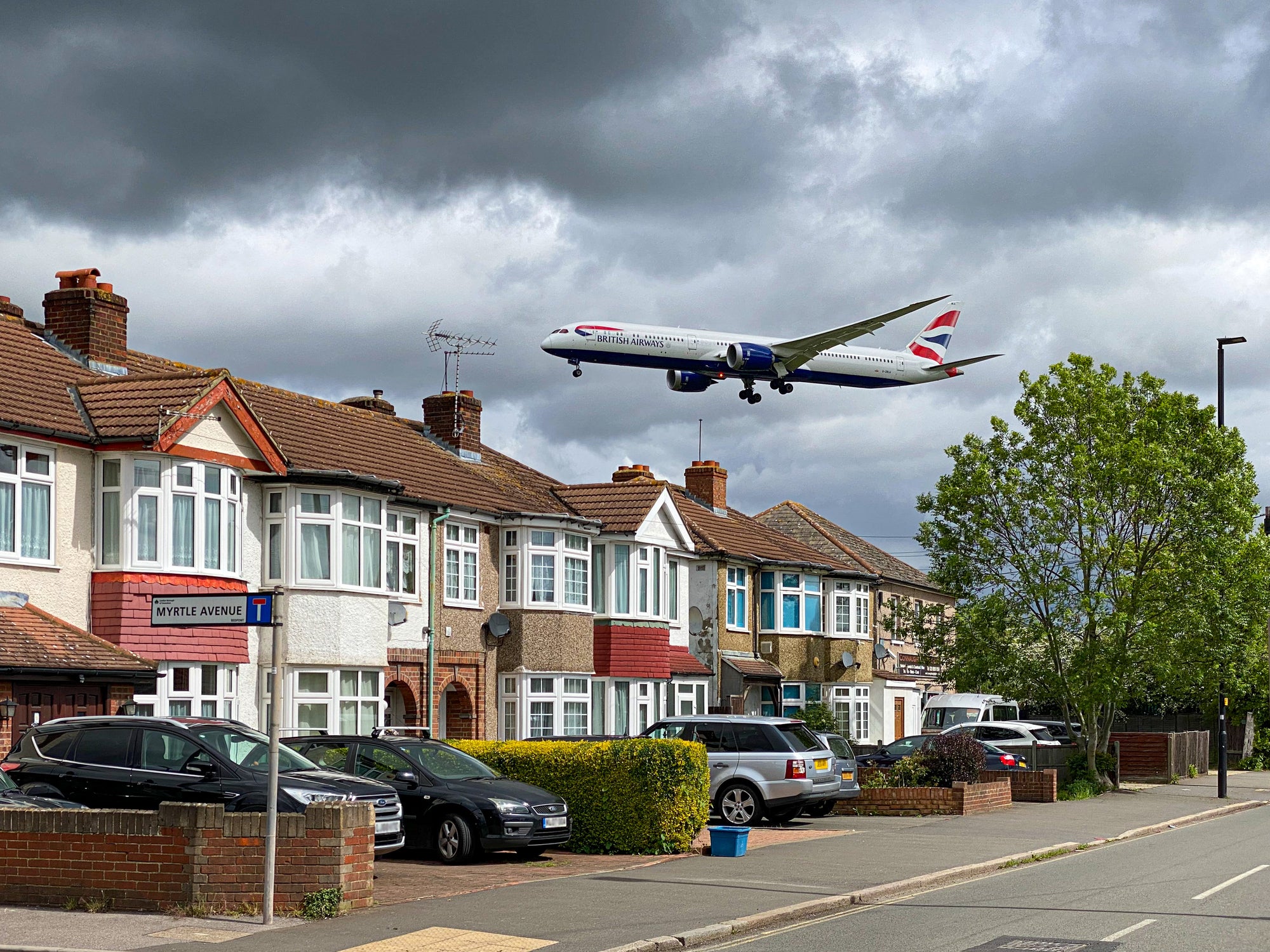
Here we go again. To say there is a deja vu aspect to the latest proposal to build Heathrow’s third runway is an understatement.
For reasons that are not clear, Sir Keir Starmer has determined the airport’s expansion to be a key plank in the government’s economic growth strategy. Seemingly, he did not take into account the issues that grounded the plans in the past, as far back as 1968 – namely, Heathrow’s unfortunate and unavoidable proximity to the M25, the rivers and their valleys that cross that part of west London, the additional noise pollution, and the need for improved and costly transport links to and from the centre of the capital that will result from the vast uplift in passengers.
On the constant sound from the increased number of planes landing and taking off, the prime minister will insist that great technological strides have been made in curbing the din. It is true that new aircraft are less noisy. However, they are still extremely audible, there will be more of them, and they will be flying over a heavily residential area.
As for the rest, nothing has altered fundamentally, environmentally and logistically, since Heathrow last submitted a scheme, pre-Covid. Inflation means the bill is now an eye-watering £49bn. The bill, ultimately, will be borne by the air passenger, and Heathrow is already the most expensive airport in the world. Will the airlines and their customers stomach at least a doubling in charges?
There is the thorny problem, too, of public transport to and from London. The London mayor will be expected to find a way to enable an extra 60 million people a year to use Heathrow. Transport for London is strapped for cash, struggling to upgrade the Tube network. How the additional demand will be met is not clear.
What has shifted as well is the nature of air travel. Post-pandemic, business travel is down and looks unlikely to recover – that, certainly, is what the industry is saying. During the outbreak, holding meetings remotely came into its own and employers took a hard look at their budgets – Zoom or Teams often represent a better alternative in executive time and expense.
That therefore raises a major doubt about one of the main claims made for Heathrow’s extension. It is said to be necessary to enhance London and the UK’s standing in the business world, but how, if the commercial users are not there?
There has been movement too, and not of the positive kind, in attitude towards Heathrow the operator. The power outage that shut down the plum in Starmer’s vision for resurgence and global acclaim was a shocking episode; it not only highlighted a neglected infrastructure but also a failure of management. Thomas Woldbye, who is seeking permission to build this national project, is the same boss who slept through the night as Britain’s busiest airport ceased to function. Heathrow’s reputation in the sector was already poor, but this took it to a new low.
Woldbye has an idea that is different from the one previously suggested, which is to build the third runway over the M25, taking the motorway underneath – and all without any disruption to road users. This is fanciful even without a track record that hardly inspires confidence.
Which raises another question. Why? Why should Heathrow as a company get to preside over the airport’s improvement and reap the benefits? If we’re all agreed that it is a vital national asset, holding a pivotal place in the economy, then why should the incumbent be in charge, not to mention entrusted, with its development?
Those who wax lyrical about Heathrow’s importance like to reminisce about how Britain led the transformation of international aviation. Boosting the airport is seen as completing that journey. It is the case that we once did. That was in the Margaret Thatcher era, when British Airways was freed from the shackles of state ownership. Thatcher did more than that, though. She enabled and encouraged competition, giving a steer to the challengers and disruptors, notably to Richard Branson at Virgin and Michael Bishop at British Midland. The newly privatised BA was forced to raise its game, and together, these three set new standards.
There appears to be an assumption that Woldbye’s company must be given the job. But there is another option. Surinder Arora, the self-made billionaire who has masterminded the building of leading hotels at Heathrow and other airports and is a substantial Heathrow landowner, has his own remedy. His is much cheaper, envisaging a shorter runway that does not affect the M25.
It is easy to dismiss Arora. But he is popular with the airlines, he rails rightly against Heathrow’s pricing, and he knows a thing or two about customer service. He also possesses heavyweight advisers in the shape of Bechtel, the US engineering, construction and project management giant.
He deserves to be taken seriously. Heathrow needs a competitor. Likewise, if neither the airport operator nor Arora is selected and the third runway is again kiboshed, then surely serious thought must be given to expanding rival airports.
Heathrow has been resting on its laurels for too long. As for Starmer, he perhaps should ask himself how it is that someone who professes to be forensic legally is so capable of displaying rushes of blood to the head politically. Giving Heathrow such prominence smacks of impetuousness. He’s done it and has been left with an almighty headache.
Join our commenting forum
Join thought-provoking conversations, follow other Independent readers and see their replies
Comments
Bookmark popover
Removed from bookmarks