UK economic growth slows ahead of Budget after JLR shutdown
The Office for National Statistics said UK gross domestic product grew by 0.1 per cent between July and September
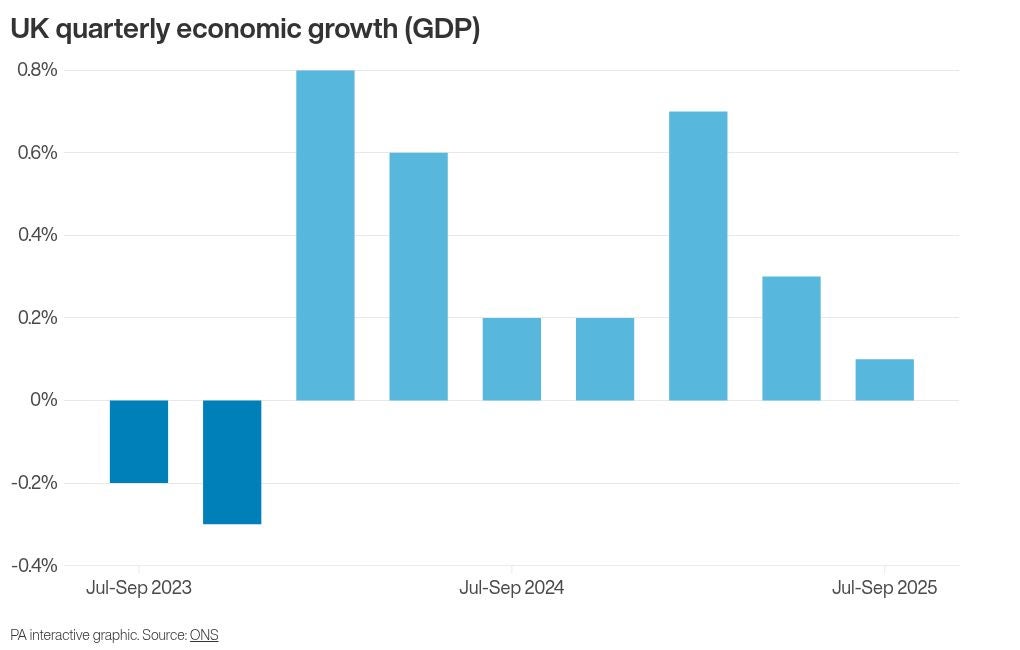
UK economic growth slowed to 0.1 per cent in the last three months, in a blow to the chancellor ahead of the forthcoming Budget.
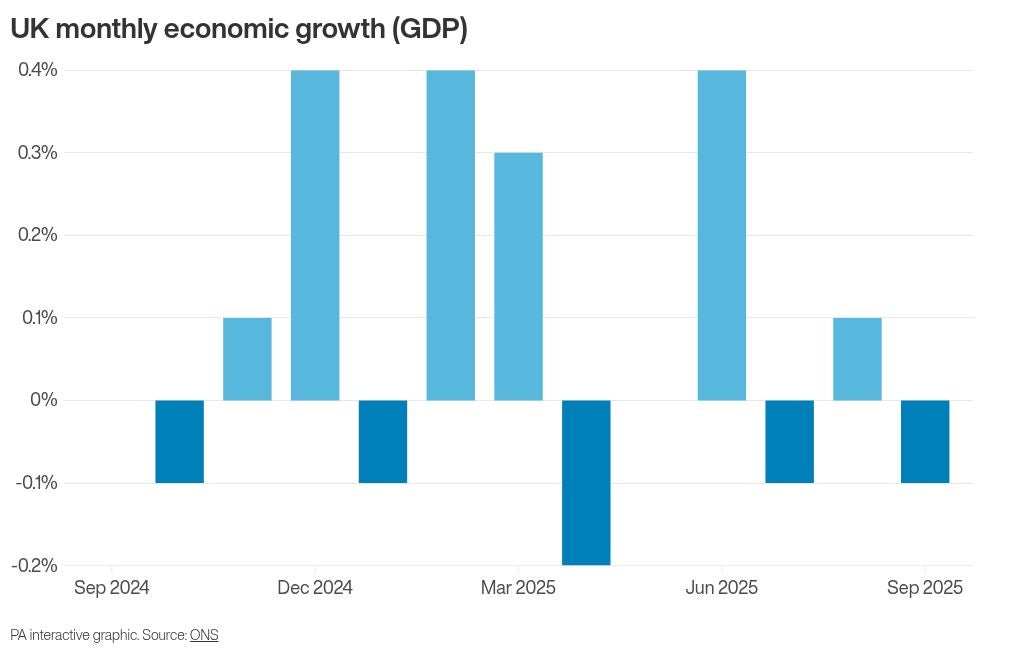
Official figures also showed that the economy declined by 0.1 per cent in September after the cyber attack on Jaguar Land Rover hit activity in the manufacturing sector.
The Office for National Statistics (ONS) said UK gross domestic product (GDP) grew by 0.1 per cent between July and September, following a 0.3 per cent increase between April and June.
The readings were weaker than expected, with economists having predicted growth of 0.2 per cent for the quarter amid expectations that September would show zero growth.
Weakness in September was particularly linked to a tumble in motor manufacturing, as Jaguar Land Rover’s factories halted production in the face of a damaging cyber attack.
UK production output dropped by 2 per cent for the month, with car and trailer manufacturing plunging by 28.6 per cent – its sharpest fall since the height of the coronavirus pandemic in April 2020.
The ONS said the drop in car manufacturing, which was linked to the cyber attack as well as to a broader decline in commercial vehicle volumes, knocked 0.17 of a percentage point from GDP for the month.
This also represented a 0.06 percentage point knock for the quarter.
Meanwhile, activity in the services sector slowed to 0.2 per cent for the quarter, from 0.4 per cent in the previous period.
ONS director of economic statistics Liz McKeown said: “Growth slowed further in the third quarter of the year, with both services and construction weaker than in the previous period.
“Across the quarter as a whole, manufacturing drove the weakness in production.
“There was a particularly marked fall in car production in September, reflecting the impact of a cyber incident, as well as a decline in the often erratic pharmaceutical industry.”
It is the latest set of disappointing economic data for the government, after the ONS revealed earlier this week that UK unemployment had risen to 5 per cent, its highest level for four years.
Statistics point towards a weakening economic backdrop ahead of the chancellor’s Budget on 26 November.
Growth in the latest quarter marked the weakest quarterly performance since the economy slipped into a mild recession at the end of 2023.
Rachel Reeves had been hopeful that stronger economic growth could help increase tax revenues and support government spending plans.
In response to the latest data, Ms Reeves said: “We had the fastest-growing economy in the G7 in the first half of the year, but there’s more to do to build an economy that works for working people.
“At my Budget later this month, I will take the fair decisions to build a strong economy that helps us to continue to cut waiting lists, cut the national debt, and cut the cost of living.”
Bookmark popover
Removed from bookmarks