How a junior trader paid for the banking crisis – while the big bosses never joined him in the dock
The Libor scandal, more than 10 years ago, saw Tom Hayes being found guilty and sentenced to 14 years. As his conviction is quashed, Chris Blackhurst looks at how he was made an example of for a much bigger problem, where most got off scot-free


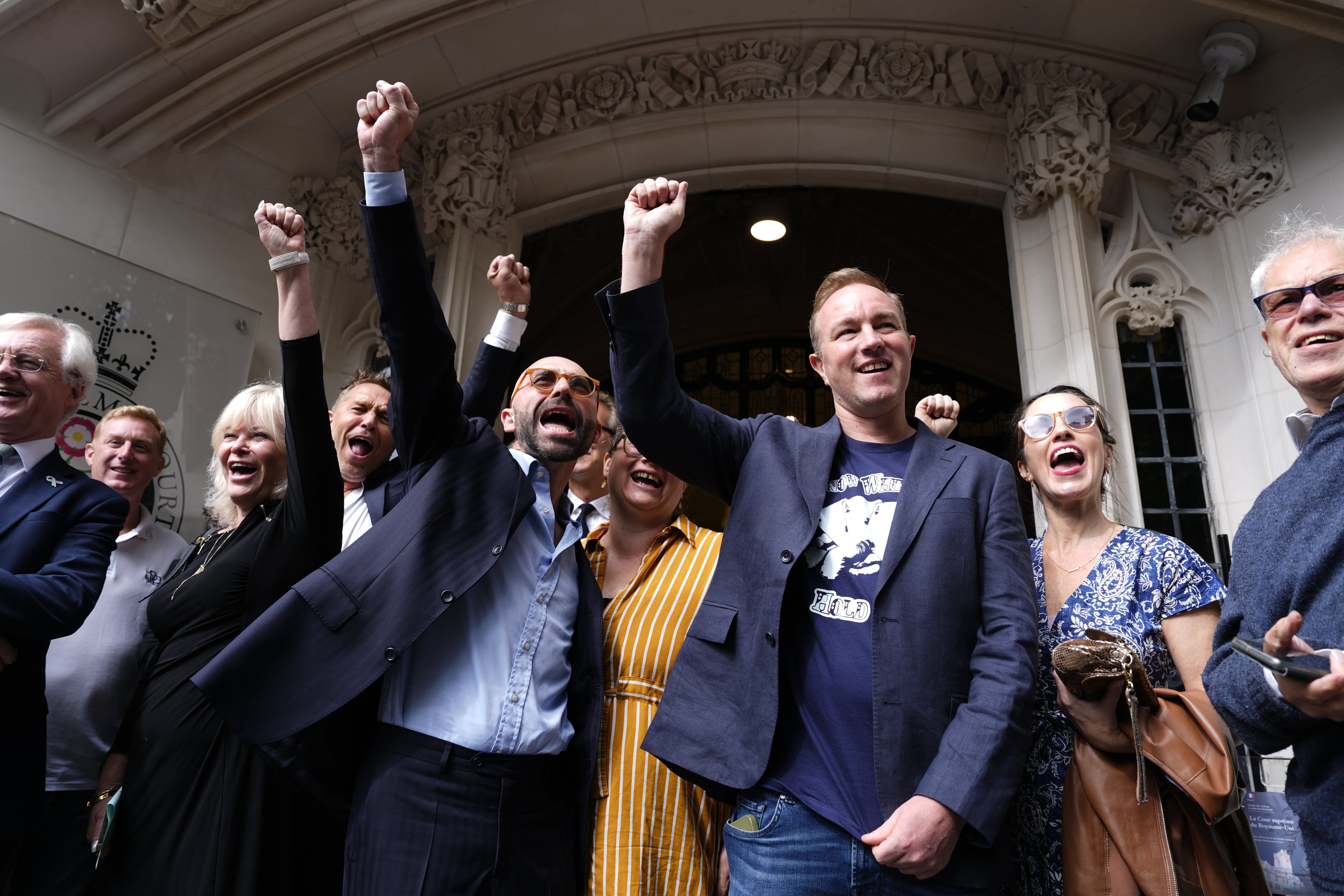
The wheels of British justice are appallingly slow. Back in 2016, I wrote that the conviction of Tom Hayes, the bank trader jailed for conspiring to manipulate the London Interbank Offered Rate (Libor), was unsafe. Today, finally, the Supreme Court has agreed to quash his conviction.
The case of Carlo Palombo, the other trader who had his conviction quashed today, was not linked to Hayes. Palombo received four years in 2019. When ex-Citi and UBS banker Hayes was found guilty in 2015, he was sentenced to 14 years, an astonishingly long term for a white-collar criminal in this country. That was reduced to 11 years on appeal, but as I remarked at the time, you get less for killing someone.
There is no doubt he was being made an example of. There was considerable public anger at the way bankers had walked scot-free from the financial crisis – still is – and Hayes was seen as a case that could discourage others.
He was portrayed as being at the centre of a web, setting the benchmark rate used for millions of personal loans; he was, therefore, the worst of the worst, an arch-villain who profited from ordinary folks; he, everyone seemed to agree, deserved every moment spent inside.
But in his case, there literally were no others. A year later, in a blow to the Serious Fraud Office (SFO), which brought the prosecutions, six brokers were acquitted of conspiring with him to fix the interbank rate. On their acquittals, in his cell at HMP Lowdham Grange, Hayes could be forgiven for raging against the iniquity of a system that saw his life ruined.


Particularly, as in the professional hierarchy, Hayes was a junior. We were supposed to believe that others never condoned what he did. It simply never rang true that he was able to act without anyone above him at the bank knowing and agreeing. That unease only increased with details emerging about his personality.
He was a bit of a geek, as many are in his area of work. He learned by heart the Highway Code from cover to cover when he was learning to drive. It was one of the traits that earned him his nicknames of “Rain Man” and “Kid Asperger’s”. But, as he explained, it also meant he was ideally suited to futures trading. “The success of getting it right, the success of finding market inefficiencies, the success of identifying opportunities and then when you get it right, it’s like solving that equation,” Hayes said in court. “It’s ‘make money, lose money’ and it’s just so pure.”
Symptomatic of an underlying condition, he was also open and personable, not sophisticated at keeping something secret. Indeed, that was his defence, that what he did was common; he was encouraged to do what he did and he did not believe he was acting dishonestly.
It would have been more reassuring if his bank bosses had joined him in the dock. But they never did. Nevertheless, the promise of the subsequent trial of his alleged co-conspirators did provide some comfort. Then they were acquitted. Hayes said he was delighted with the outcome. He was “thrilled that the brokers can return to their families and their lives” but was “bewildered” that he was left “in a situation where he [was] convicted of conspiring with nobody”.
Originally, there were 22 names on the draft indictment, including the six found innocent. At Hayes’ trial, most of the evidence presented against him was in relation to those six – hence the SFO’s decision to pursue only them. Most of the other names were thought to be peripheral. Hayes said he had never met or even spoken to them; there were some he’d been in touch with via email or other messaging, but just a few times.
Ahead of Hayes’ trial, the judge, Mr Justice Cooke, decided to separate his hearing from that of the brokers and his alleged co-conspirators. Their statements were not allowed to be submitted in Hayes’ trial. Presumably, if they had been, given the jury’s conclusion in their trial, this may have assisted his defence. Critically, his jury was unaware of evidence relating to whether or not an agreement between the co-defendants was ever reached.
After their acquittals, David Green, then head of the SFO, said: “The key issue in this trial was whether these defendants were party to a dishonest agreement with Tom Hayes. By their verdicts, the jury have said that they could not be sure that this was the case.” It was an odd use of words from Green. He was trying to justify the prosecution by saying that in the end, the jury could not be certain, so therefore they acquitted. Where, though, does the jury say that? Equally, the jury could surely have been certain there was no agreement – Green simply did not know.
In Hayes’ earlier trial, however, without the evidence from his alleged co-conspirators, the jury was certain there was a conspiracy. Later, with those not guilty verdicts, that did not seem right or fair.
During his closing speech to the jury at Hayes’ trial, Mukul Chawla QC for the prosecution was keen to point out that Hayes was the first but would not be the last. Again this was a reference to the six. But look what happened. In light of their acquittals and the non-submission of their statements in his trial, Hayes deserved a fair hearing. Shamefully, it’s taken nine further years for that day to arrive.
Join our commenting forum
Join thought-provoking conversations, follow other Independent readers and see their replies
Comments
Bookmark popover
Removed from bookmarks