Another country agrees to ban social media for children under 15
It wasn’t immediately clear how such a ban would be enforced
Denmark has announced a landmark agreement to prohibit social media access for children under the age of 15, a move designed to intensify pressure on major tech platforms amid escalating global concerns over the influence of harmful content and commercial exploitation targeting young users.
While the new legislation would permit parents, following a specific assessment, to grant their 13- and 14-year-olds access, significant questions remain regarding the practical enforcement of such a sweeping ban.
Many tech companies already impose age restrictions on their platforms, yet officials and experts widely acknowledge that these measures are frequently circumvented by pre-teens, rendering them largely ineffective.
This measure represents one of the most far-reaching steps taken by a European Union government to curb social media use among younger demographics.
Caroline Stage, Denmark's minister for digital affairs, highlighted the pervasive nature of online platforms among children, revealing that 94 per cent of Danish under-13s and over half of those under 10 already maintain social media profiles.
"The amount of time they spend online. the amount of violence, self-harm that they are exposed to online, is simply too great a risk for our children," Ms Stage stated.
She further criticised tech giants, adding: “They have an absurd amount of money available, but they’re simply not willing to invest in the safety of our children, invest in the safety of all of us.”
No rush to legislation, no loopholes for tech giants
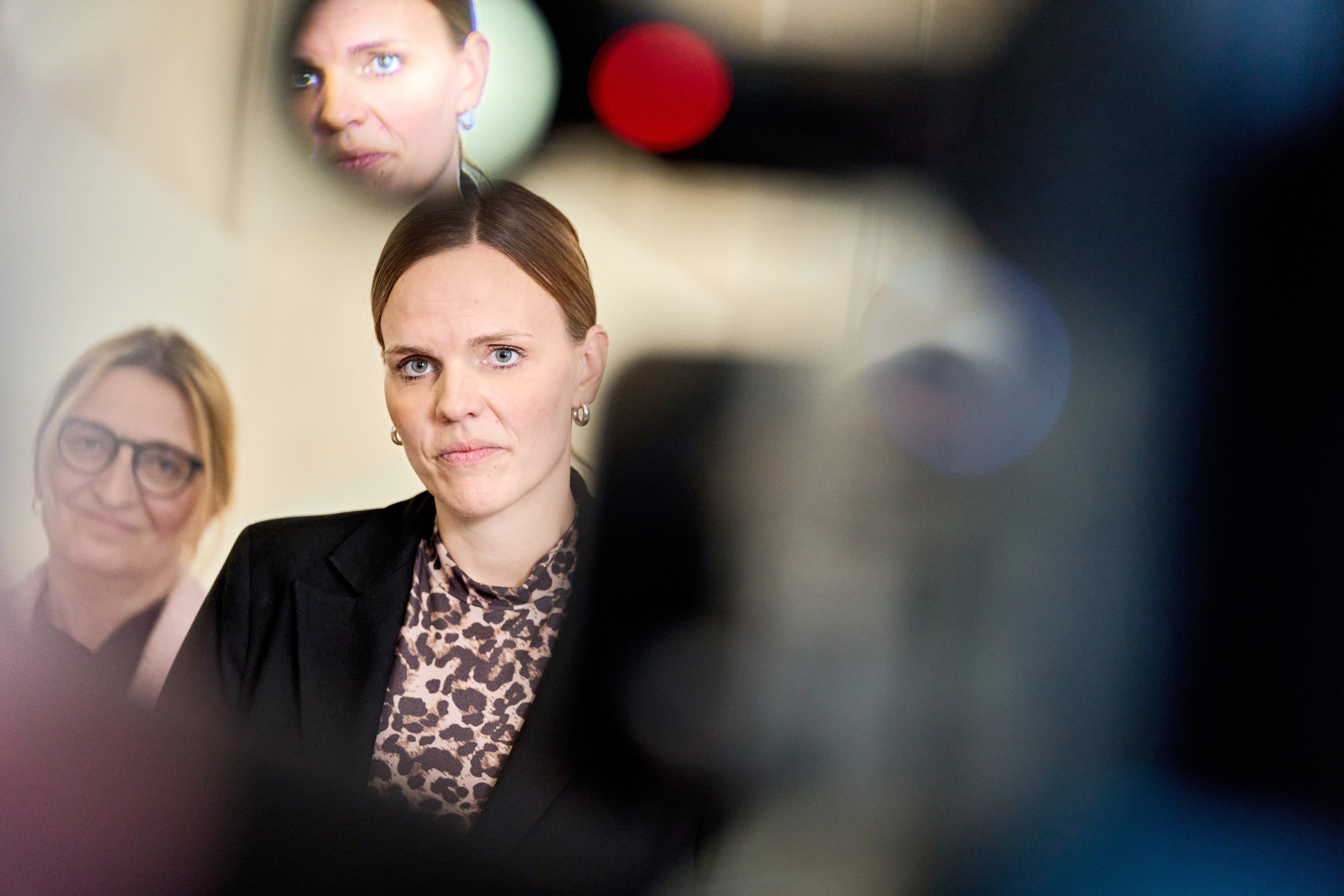
Ms Stage said a ban won’t take effect immediately. Allied lawmakers on the issue from across the political spectrum, who make up a majority in parliament, will likely take months to pass relevant legislation.
“I can assure you that Denmark will hurry, but we won’t do it too quickly because we need to make sure that the regulation is right and that there are no loopholes for the tech giants to go through,” Ms Stage said. Her ministry said pressure from tech giants’ business models was “too massive”.
It follows a move in December in Australia, where parliament enacted the world’s first ban on social media for children, setting the minimum age at 16.
That made platforms including TikTok, Facebook, Snapchat, Reddit, X and Instagram subject to fines of up to 50 million Australian dollars (£25m) for systemic failures to prevent children younger than 16 from holding accounts.
Officials in Denmark didn’t say how such a ban would be enforced in a world where millions of children have easy access to screens.
But Ms Stage noted that Denmark has a national electronic ID system – nearly all Danish citizens over the age of 13 have such an ID – and plans to set up an age-verification app. Several other EU countries are testing such apps.
“We cannot force the tech giants to use our app, but what we can do is force the tech giants to make proper age verification, and if they don’t, we will be able to enforce through the EU commission and make sure that they will be fined up to 6 per cent of their global income.”
Aiming to shield kids from harmful content online

Many governments have been grappling with ways of limiting harmful fallout from online technologies, without overly squelching their promise. Ms Stage said Denmark’s legislative push was “not about excluding children from everything digital”, but keeping them away from harmful content.
China – which manufacturers many of the world’s digital devices – has set limits on online game time and smartphone time for kids.
Prosecutors in Paris this week announced an investigation into allegations that TikTok allows content promoting suicide and that its algorithms may encourage vulnerable young people to take their own lives.
“Children and young people have their sleep disrupted, lose their peace and concentration, and experience increasing pressure from digital relationships where adults are not always present,” the Danish ministry said. “This is a development that no parent, teacher or educator can stop alone.”
The EU’s Digital Services Act, which took effect two years ago, forbids children younger than 13 from holding accounts on social media like TikTok and Instagram, video-sharing platforms like YouTube and Twitch, and sites like Reddit and Discord, as well as AI companions.
Many social media platforms have for years banned anyone 13 or under from signing up for their services. TikTok users can verify their ages by submitting a selfie that will be analysed to estimate their age. Meta Platforms, parent of Instagram and Facebook, says it uses a similar system for video selfies and AI to help figure out a user’s age.
Meta and TikTok didn’t respond immediately to requests for comment from the AP.
“We’ve given the tech giants so many chances to stand up and to do something about what is happening on their platforms. They haven’t done it,” said Ms Stage. “So now we will take over the steering wheel and make sure that our children’s futures are safe.”
Bookmark popover
Removed from bookmarks