Dogs could slow down biological ageing in women, study finds
Spending one hour a week with dogs can also show benefits to improving psychological stress

Dogs may be able to slow down biological ageing in middle-aged women, a new study has suggested.
New analysis of female military veterans in the US found that one hour a week session with dogs improved overall cellular health and showed “promising” biological benefits to those suffering with PTSD.
The research, led by a team of scientists from Florida Atlantic University, analysed 28 female veterans who had volunteered to train service dogs, which would later be used to help wounded soldiers.
To assess if the contact with dogs had benefits, researchers looked at the length of telomeres of participants to determine their biological speed of ageing.
They also recorded data from saliva samples and heart rate variability (HRV) and asked participants to wear monitors on participants. Those that took part were separated into a service dog training group, or a group that watched dog training videos.
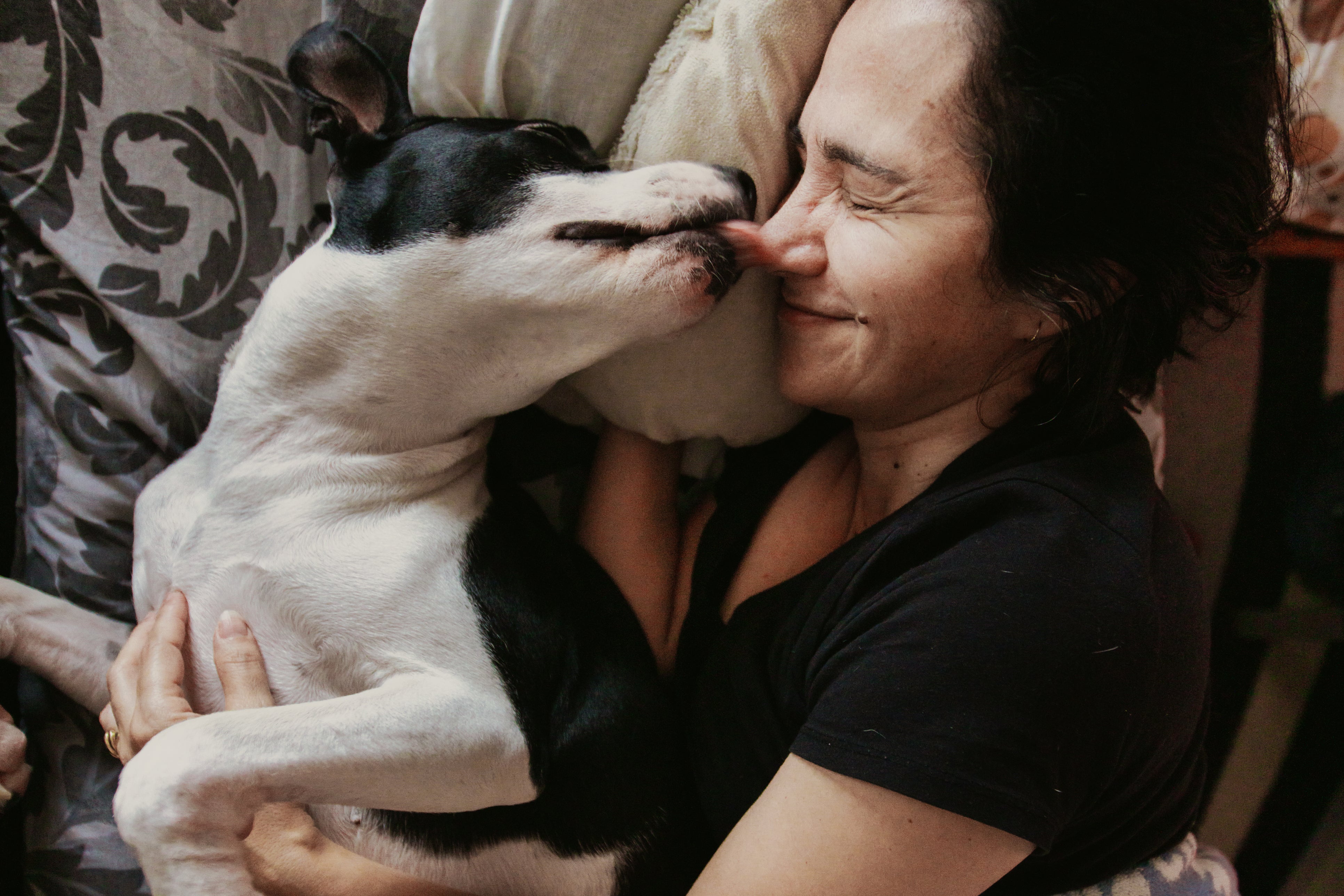
The findings, which were published in the journal Behavioural Sciences, found that veterans who participated in the dog-training programme showed an increase in telomere length.
Those watching the videos showed a decrease in telomere length, indicating accelerated ageing.
Mental health improvements were similar across both groups, while the findings showed that service dog training could be particularly beneficial for those suffering psychological stress or with combat experience.
Professor Cheryl Krause-Parello, the associate vice-president for FAU research and first author of the study, said: “Female veterans face unique reintegration challenges that are often overlooked, and traditional PTSD treatments don’t always meet their needs.
“Non-traditional approaches like connecting with animals can offer meaningful support.
“These relationships provide emotional safety and stability, which can be especially powerful for women.”
Join our commenting forum
Join thought-provoking conversations, follow other Independent readers and see their replies
Comments
Bookmark popover
Removed from bookmarks