A tampon could help improve early diagnosis of ovarian cancer
Currently more than 50 per cent of women are diagnosed with ovarian cancer at an advanced stage when fewer treatment options are available
A specialist medical tampon could be used to help diagnose ovarian cancer earlier, researchers believe.
In the UK about 7,500 women are diagnosed with ovarian cancer each year. If the cancer is caught in the early stages a woman has a 95 per cent chance of surviving the disease.
But only around one third of women are diagnosed at the earliest stages with more than 50 per cent diagnosed when the disease is at an advanced stage when fewer treatment options are available, according to Ovarian Cancer Action.
A study, launched by a team of researchers in Southampton, will use the specialist medical tampon, plus other methods of sample collection, to look for the earliest clues that cancer may be present.
Researchers will also focus on women at a higher risk of developing the disease, such as women with a mutation in specific genes, including the BRCA gene.
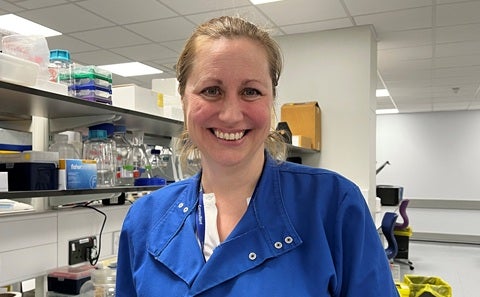
“There is currently no screening programme available for ovarian cancer, and women with recognised genetic mutations, such as BRCA, may opt to have surgery to remove their ovaries and fallopian tubes to reduce their risk of developing the disease,” Dr Jemma Longley, a consultant medical oncologist at University Hospital Southampton, who is leading the clinical trial.
“However, this can have significant long-term health effects by putting younger women into a surgical menopause,” she added.
The trial is being led by teams from the Southampton Clinical Trials Unit and the Centre for Cancer Immunology at the University of Southampton and was funded by a grant from The Eve Appeal.
Dr Longley explained for the study the researchers will take samples of vaginal fluid from women who are undergoing surgery to reduce their ovarian cancer risk. To do this they will use diagnostic tampons and vaginal swabs.
These swabs along with tissue samples from the removed ovaries and fallopian tubes, will be compared to samples from women with the earliest signs of ovarian cancer to those without cancer. Researchers are looking to pinpoint the biological markers that indicate a patient may have the early signs of ovarian cancer.
“If we find changes to biomarkers called microRNAs, tiny biological signals that are present in both the ovarian cancer cells and the vaginal fluid, this could indicate a way to predict ovarian cancer in the future,” she added.
The special tampons are created by a company called Daye and are a commercially available product, which can be used to test for STDs and human papillomavirus (HPV) a common cause of cervical cancer.
The tampon only needs to be worn for 20 minutes and can be used at any point in a woman’s menstrual cycle, unlike current cervical screening.
Now the research team in Southampton will see if the product can collect swabs for ovarian cancer.
“We really believe that the diagnostic tampon can be a real game changer because you can use it at home and some women may feel uncomfortable with a speculum based examination,” Dr Victoria Goss co-investigator on the study told the Independent.

65-year-old Dr Alison Farmer knows only too well the importance of early diagnosis. The retired psycho-oncology nurse from Southampton, was diagnosed with ovarian cancer when she was 40 after experiencing unusual bleeding.
“I immediately went to see the GP but was told that many women get unexpected bleeding. Perhaps due to my background and my job, I asked to see a gynaecologist and a cyst was found which turned out to be cancer. It was a surprise to pretty much everybody, partly because of my age. I think if I hadn't been a nurse and pushed for further tests, I probably wouldn't be here today.”
Dr Farmer’s cancer was caught at an early stage and she underwent surgery to remove her ovaries and had chemotherapy to treat the cancer. But she is very aware that too many cases of ovarian cancer are diagnosed late.
“Research into screening and earlier diagnosis is absolutely vital. Far too many women are still diagnosed too late. I've lost friends, sadly, who were diagnosed at stage 3 and 4. So, something like this new study with the tampon is very exciting,” she added.
Join our commenting forum
Join thought-provoking conversations, follow other Independent readers and see their replies
Comments
Bookmark popover
Removed from bookmarks