A new stem cell treatment could offer hope for people living with Parkinson’s
More than 1 million Americans live with the neurodegenerative brain disorder – and that number is expected to climb
Researchers say that a new type of stem cell therapy could help treat people with Parkinson’s disease, slowing down tremors and other motor impacts that greatly affect daily life.
The treatment works by implanting specialized stem cells into the brain, replacing cells damaged by the disease and helping to produce the feel-good hormone dopamine.
Many of the symptoms of Parkinson’s are caused by the loss of brain cells that produce dopamine, which also regulates movement and helps nerve cells communicate, the researchers at the University of Southern California’s Keck Medicine explained.
“If the brain can once again produce normal levels of dopamine, Parkinson’s disease may be slowed down and motor function restored,” Dr. Brian Lee, a neurosurgeon with Keck Medicine, said in a statement.
The researchers tested a new type of lab-made stem cells called induced pluripotent stem cells, or iPSCs.
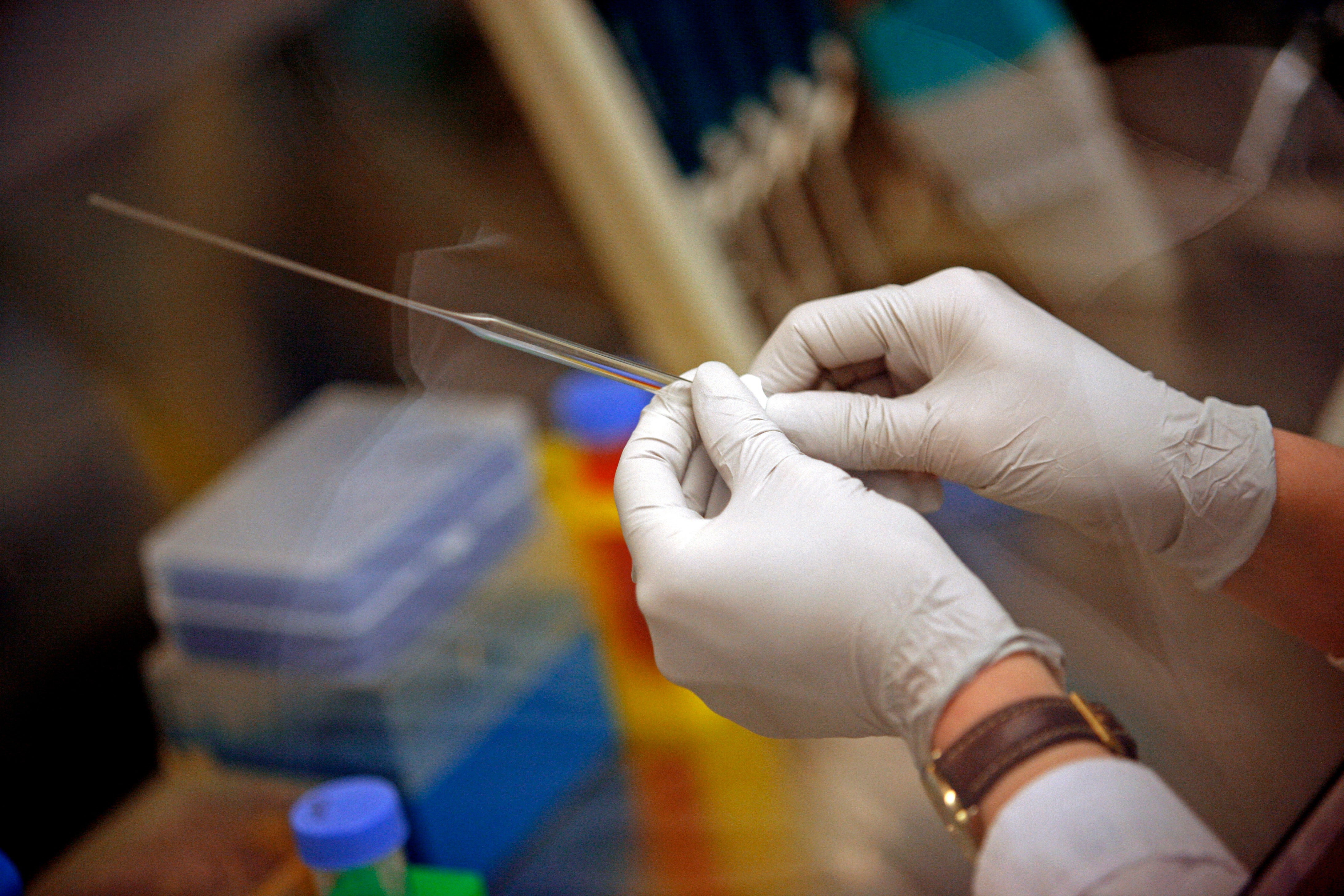
These stem cells are adult skin or blood cells that scientists inject with viruses and genes that act to reprogram the cells into a “blank state.”
Then, the cells are capable of evolving into any type of cell, the researchers said.
“We believe that these iPSCs can reliably mature into dopamine-producing brain cells, and offer the best chance of jump-starting the brain’s dopamine production,” Dr. Xenos Mason, a neurologist at Keck Medicine who specializes in Parkinson’s disease and other movement disorders, said.
To implant the stem cells, the doctors drill a small hole in the skull.
They insert the cells into the basal ganglia, a part of the brain that controls movement, and watch the process using an MRI.
After the surgical procedure, people are monitored for changes in their symptoms and any excess movements or infection.
Patients will typically be monitored for up to five years.

So far, the Keck Medicine trial includes 12 patients with moderate or moderate-to-severe Parkinson’s disease.
This could be a major breakthrough for the one million Americans living with Parkinson’s.
Although there are treatments available to manage symptoms, there is no cure or therapy to slow the disease as it progresses.
And, the number of people living with Parkinson’s is expected to rise to 1.2 million by 2030, with 90,000 new cases diagnosed every year, according to Northwestern Medicine.
“Our ultimate goal is to pioneer a technique that can repair patients’ motor function and offer them a better quality of life,” Lee said.
Join our commenting forum
Join thought-provoking conversations, follow other Independent readers and see their replies
Comments
Bookmark popover
Removed from bookmarks