Takeaways from The Associated Press report on Myanmar's crackdown on cyberscam centers
Myanmar’s military leadership has vowed to crack down on cyberscam centers, starting with the notorious KK Park
Myanmar’s military government has announced a new “zero tolerance” policy against the industrial-scale cyberscam centers that have taken root in the country. As a sign of commitment, they raided and bombed KK Park — a notorious compound that has become a symbol of impunity in the battle against one of the most lucrative criminal industries in the world.
New visual analysis raises questions about whether KK Park will ultimately be abandoned, repurposed or rebuilt. Faced with growing international pressure in the run-up to national elections later this month, Myanmar’s leaders have been trumpeting their scam-busting credentials. But interviews with current and former scammers indicate that the crackdown may not turn out to be as deep or long-lasting as the government would like it to appear.
Here are takeaways from reporting by The Associated Press:
Was KK Park really demolished?
Government officials said that by Dec. 13, 413 buildings in KK Park had been “demolished” and the remaining 222 would be cleared as well. Detailed analysis of the first wave of demolition, which the government says is complete, shows that 31 structures were flattened. At least 78 more were partially damaged, according to the Center for Information Resilience (CIR), a London-based nonprofit focused on exposing human rights violations.
More than half the buildings were damaged by heavy machinery, which often left roofs, ceilings and layers between floors intact, said Guy Fusfus, an investigator at Myanmar Witness, a CIR project. “There may be an intention to reconstruct and reuse these buildings,” he said.
New satellite imagery shows that most buildings in KK Park appeared wholly or partially intact on Dec. 4, even as demolition had spread to other sections of the compound.
Will the raids make a difference in the long run?
Myanmar’s track record of lasting enforcement is poor. Raids in response to Chinese pressure earlier this year failed to contain the growth of scam compounds, according to C4ADS, a U.S.-based nonprofit that takes a data-driven approach to conflict analysis. Over 7,000 scam center workers were released as part of that purge, according to the U.N. Office on Drugs and Crime, but the scams kept on running.
C4ADS examined satellite imagery of 21 known scam compounds in Myawaddy Township and found that 14 of them — including KK Park — had shown construction or expansion since January.
“This continued growth of scam compounds is emblematic of the junta’s inability to rein in the industry within Myanmar,” said Michael Di Girolamo, a C4ADS analyst.
Where did all the scammers go?
Since the raid on KK Park, the Thai military said around 1,500 people who worked there have made it out through official channels in Thailand — a fraction of the total workforce, estimated to be in the tens of thousands.
The whereabouts of the rest are unknown. Telegram is popping with job ads for newly displaced workers. Some followed company bosses to other locations, four workers who fled KK Park told AP.
One person trapped at a nearby compound called Hengsheng Park 4 told AP that more than a hundred KK Park workers stayed for a week before moving on. “I heard that most of them went to Cambodia, Mauritius and Africa,” he said, on condition of anonymity, fearing for his safety.
KK Park is just one of around 30 scam compounds along Myanmar’s border with Thailand. The government says it has also raided additional sites, including Shwe Kokko — another notorious compound in the crosshairs of U.S. authorities. But scammers have continued to work uninterrupted, and people trafficked from around the world still wait to be rescued, people now trapped in scam centers and activists trying to free them told AP.
“It’s not a real crackdown yet,” said Jay Kritiya, the coordinator of the Civil Society Network for Human Trafficking Victim Assistance.
Are scammers in Myanmar still using Starlink to get online?
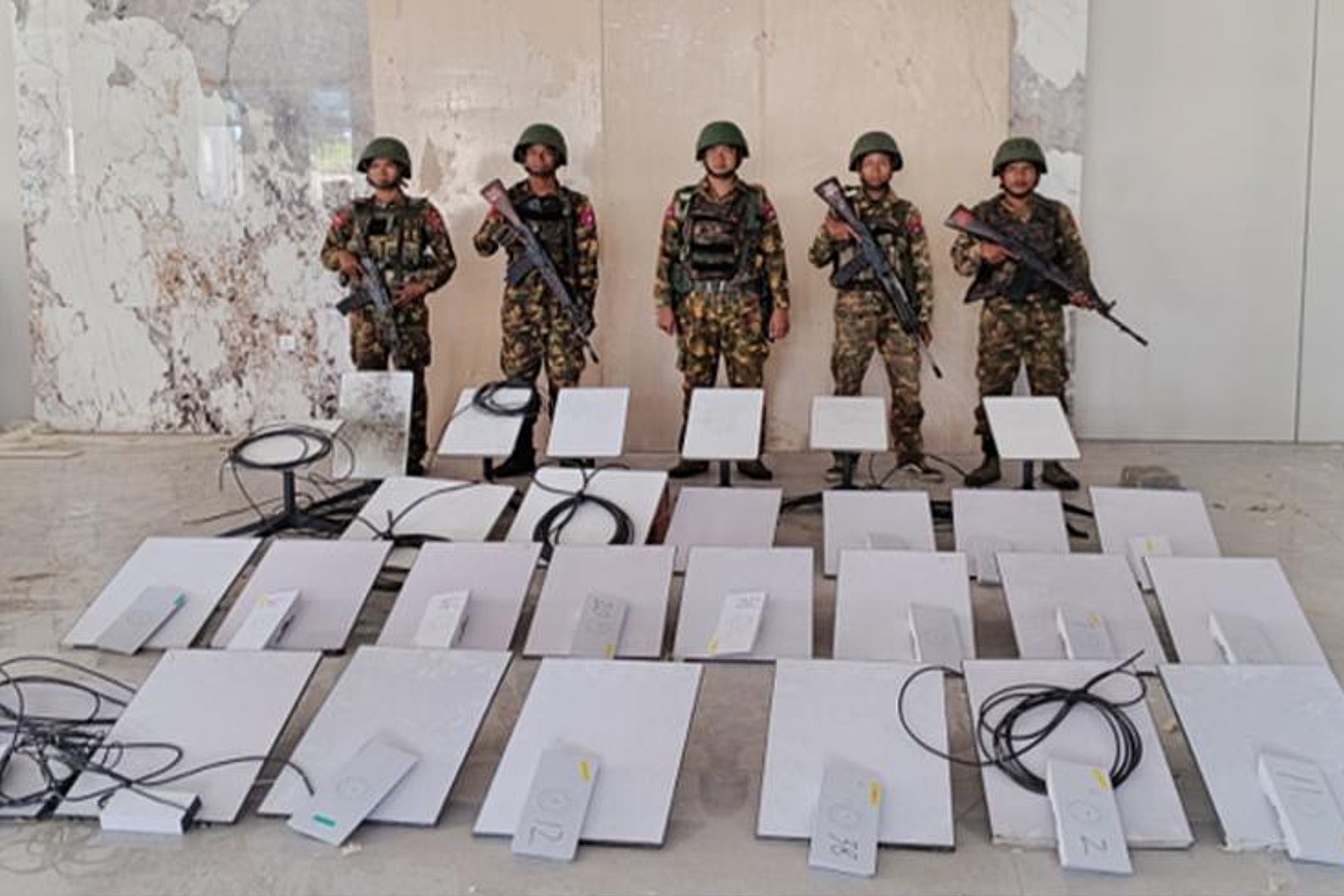
Myanmar state media broadcast images of dozens of seized Starlink units, and SpaceX announced it cut off access to more than 2,500 Starlink units in Myanmar.
But the man at Hengsheng Park 4 told AP they are still using Starlink — three units stopped working after SpaceX’s crackdown, but a fourth still functions.
Starlink is also still up and running at the Deko Park compound, 35 miles (56 kilometers) south of KK Park, according to a worker trapped there.
AP asked SpaceX for comment and provided the locations of both compounds, but the company did not reply.
---
This story is part of an ongoing collaboration between The Associated Press and FRONTLINE (PBS) that includes an upcoming documentary.
—-
Associated Press reporter Huizhong Wu contributed from Bangkok, Thailand.
—-
Contact AP’s global investigative team at Investigative@ap.org or https://www.ap.org/tips/.
Bookmark popover
Removed from bookmarks