Prince William is desperate to connect with a new generation – but it’s not working
In a Radio 1 interview this week, the future king hoped by talking about his mental health he could connect to a new audience. But, as Andrew Mountbatten-Windsor is arrested and the Epstein scandal continues to engulf his family, he looked more remote and out of touch than ever, writes Chloe Combi


It is not an exaggeration to say that the Epstein story is shaping up to be one of the most shocking scandals of the modern age. It is a story reaching the highest offices across continents – spreading from the White House to royal palaces – and exposing a deep and rising global anger over what many see as a two-tier system of law, justice and accountability.
For the majority of “us”, there is an expectation that laws must be obeyed, we pay our taxes and face consequences if we do not. For “them” – the wealthy, the connected, the powerful and the titled – it feels to many that there is a different set of rules, where taxes can be avoided and laws seemingly broken with impunity, even in cases involving the most serious crimes.
We have watched, aghast, as powerful and wealthy men (and some women) continued to associate with Epstein long after his conviction for procuring a minor for prostitution. While the Clintons have agreed to sit for sworn testimony before the House Oversight Committee as part of its probe into the convicted paedophile, few others who may hold vital information have offered to cooperate. Platitudes have been issued about “thinking of the victims”, yet many of those victims have repeatedly pleaded for anyone with relevant information to come forward and largely been met with silence.
It was in this atmosphere that Prince William, our future king, made a surprise appearance on BBC Radio 1. Despite the scandal engulfing his family, he was neither asked about it nor volunteered any thoughts. Instead, he stuck firmly to the script: he was there to talk about men’s mental health. He spoke candidly about his own, including about the need to “understand his own emotions”. What his emotions were the morning after the arrest of his uncle, Andrew Mountbatten-Windsor on suspicion of misconduct in public office, we will probably never know.
Until now, we have been simply served up a two-line statement on his thoughts on the whole Epstein scandal. Following the release of the latest tranche of Epstein files, which included a picture of Andrew crouching on all fours over a woman splayed on a carpet below him, the statement from Kensington Palace simply read: “I can confirm The Prince and Princess have been deeply concerned by the continuing revelations. Their thoughts remain focused on the victims.” There was no direct reference to Epstein, to Andrew, or to his former wife, Sarah Ferguson, who has also faced renewed scrutiny following the document release.



Prince William kept his counsel during his interview with Greg James, too, and we can presume, the Radio 1 interviewer was under strict instructions not to raise the Epstein scandal either. Yet speaking to the audience of Radio 1’s Life Hacks, who the future king was desperately trying to connect with, there is a growing sense that the appearance felt tone-deaf and was a serious misfire from a Prince struggling to read the room.
Many members of Gen A and Gen Z I have spoken to say that it came across that Prince William, like the rest of the royal family, is more concerned with self-preservation than with the wellbeing of his so-called “subjects”.
It is a difficult line to walk. While William was discussing the challenges men face in talking about mental health, his message landed awkwardly at a time of rising inequality – with 33 per cent of children in the UK now living in poverty – and as the misconduct of the rich and powerful dominates headlines.
Olivia, 15, listened with her mother, who had just completed a 14-hour hospital shift. “There are loads of doctors and nurses whose mental health is awful,” she said, “but they don’t have a few palaces to retreat to. He didn’t mention Epstein’s victims or how frightening things feel for so many people. It sounded like ‘poor me’. I feel disgusted by the royal family.”
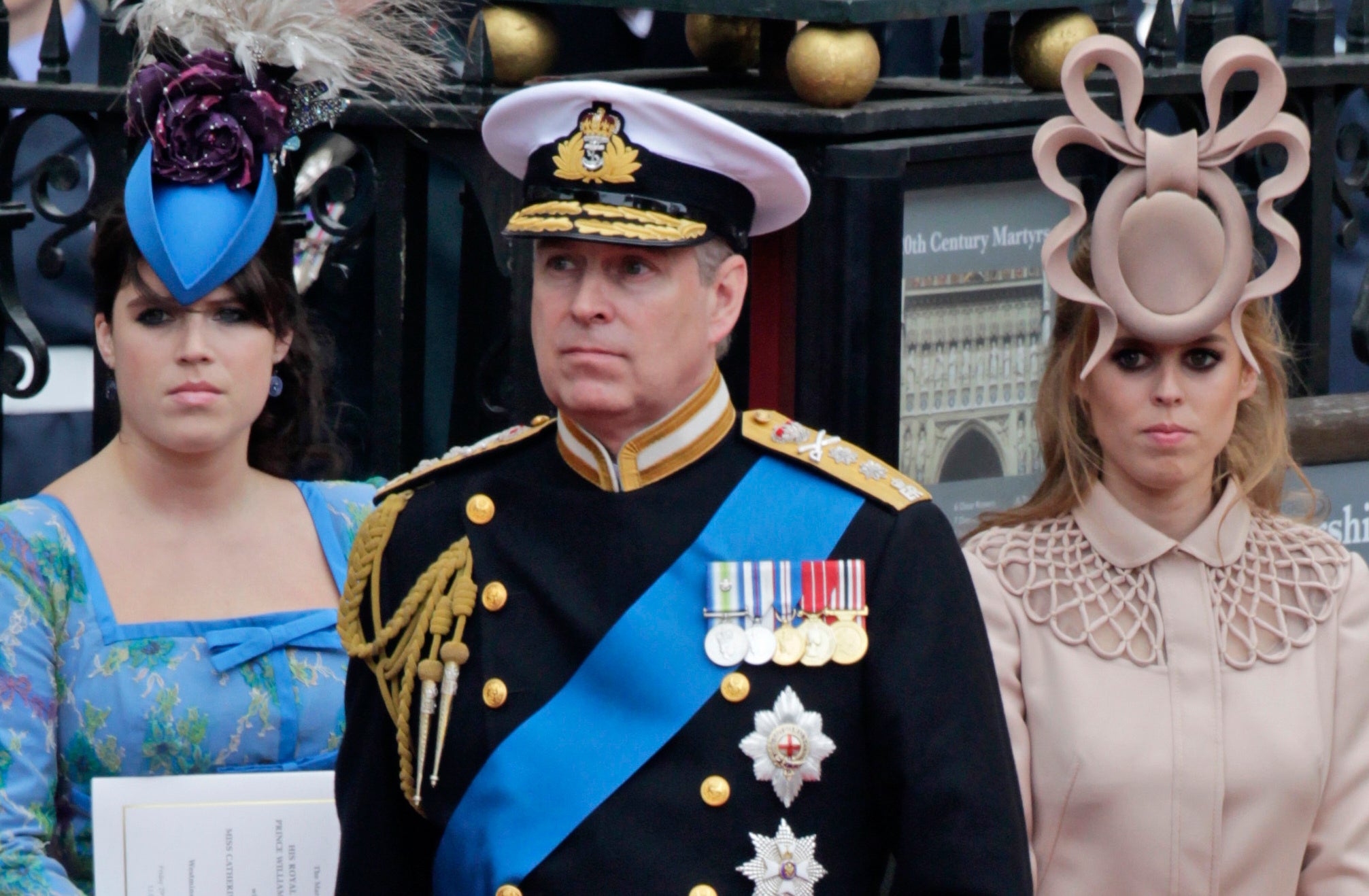
Her sentiment reflects wider generational attitudes. Only 30 per cent of 18- to 24-year-olds believe the monarchy is “good for Britain”, compared with 77 per cent of over-65s, according to YouGov – and that was before the Epstein/Andrew Mountbatten-Windsor scandal escalated. While the Prince and Princess of Wales remain the most favourably viewed royals, with roughly three-quarters of Britons holding positive views, support among younger generations is far weaker.
Having grown up amid a cost-of-living crisis, Gen Z and Gen A tend to have little patience for unearned privilege. They do not see William and Kate as the dynamic future of the monarchy, but as beneficiaries of inherited status, like Harry, Beatrice and Eugenie, they are all “nepo babies” living in taxpayer-funded palaces while their own peers struggle to secure housing and employment.
Clint, 18, says: “There were days my mum didn’t eat so we could. We were evicted twice, once at Christmas. William can shove his ‘woe is me’ routine. Try living like the rest of us.”
The long-running rift between William and Harry has unfolded like a national soap opera. Older generations may view Harry as a shirker who retained his titles while stepping back from duties. Many younger Britons, however, describe William as “cold” and “unkind”.
There is also a perception among some young people that Harry paid a heavier price for his actions than Andrew did, at least until recently, and that stripping Andrew of titles and turfing him out of his Windsor home was a case of too little, too late. Oliver, 19, says: “Andrew was bringing Epstein to Buckingham Palace. Come on.”
Complicating matters further, Epstein’s network has now intersected with one of William’s flagship initiatives. Sultan Ahmed bin Sulayem, the Emirati businessman and former CEO of DP World, has appeared in the Epstein files as someone who corresponded with Epstein, including in emails referencing a “torture video”. His company was a founding corporate partner of William’s Earthshot Prize, to which he donated at least £1m.

There is no evidence that William had any knowledge of those connections. But for conspiracy-loving younger generations already suspicious of elite networks and institutional protection, these associations simply add to their mistrust.
It has not gone unnoticed that Prince Harry was the first royal to publicly criticise Andrew, highlighting what he saw as hypocrisy in the family’s treatment of different scandals. In his memoir Spare, he wrote that despite the allegations against Andrew, “no one had even suggested removing his security”. Indeed, even yesterday as he left the police station after being arrested, two royal protection officers were in the car with him.
Anger is running high, and much of it is directed at what feels like entrenched inequality and institutional protection of the powerful. If William’s interview this week was intended to humanise him, to suggest “I’m just like you”, it appears to have had the opposite effect among the younger listeners he is so desperate to connect with.
Grace, 24, says: “I don’t think the elite understand how angry people are. It feels like they’ve shown us that some lives matter less.”

The royal family may feel bruised and embarrassed by association with the Epstein scandal. But their discomfort is negligible compared with that of the victims, who, alongside their lawyers, have repeatedly called for Andrew to testify under oath before Congress. The fact that the King or Prince William have remained silent on the matter has also not gone unnoticed.
With multiple UK police forces now reviewing aspects of the Epstein-related material connected to Andrew, events may yet develop further and that might change. If Prince William hopes to steward a modern monarchy sustained by the consent of younger generations, he may need to recognise a simple truth: whatever personal struggles he faces, millions are facing far greater ones – and they expect accountability from those at the top.
Bookmark popover
Removed from bookmarks