This mountainside is covered in thousands of mysterious ancient holes. Scientists now believe they know why
Early aerial photographs first highlighted the scale of Peru’s Monte Sierpe monument. Almost a century later, scientists have worked out what it might have been used for

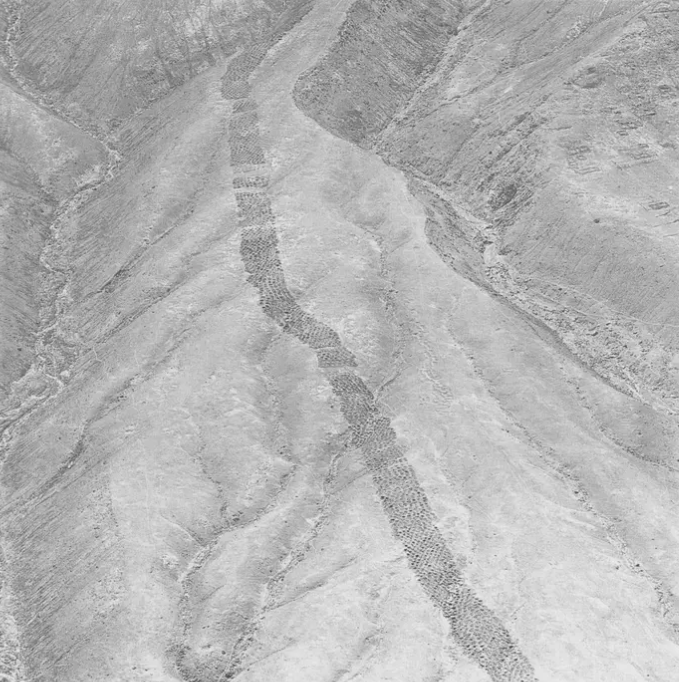
One of the world’s most unique archaeological sites – a band of thousands of holes snaking their way over a mountainside in the Peruvian Andes – has long remained a mystery, with no clear indication of who made it or what it was originally used for.
The site, known in Spanish as Monte Sierpe (Serpent Mountain), first came to broader attention after an aerial photograph of the stone-lined holes was taken in the 1930s and published in National Geographic. At the time, it was hypothesised that the holes were unused pre-Inca civilisation graves.
But now, scientists believe they have compelling evidence to suggest that the mystery of what the holes were used for has been solved.

The research team used drones to map the site, and discovered numerical patterns in the layout of the holes, which they said “hint at an underlying intention in the site’s organisation”.
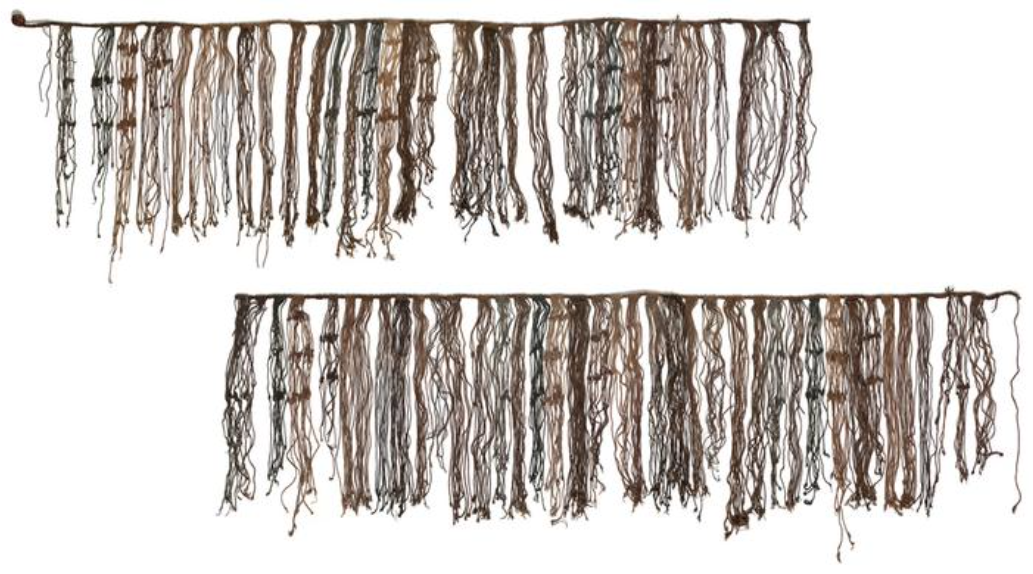
To their surprise, the team also discovered that the arrangement of Monte Sierpe is similar to the structure of at least one Inca khipu (an ancient knotted-string accounting device) that was recovered from the same valley.
Meanwhile, their analyses of soil taken from the holes uncovered ancient pollen from maize, one of the most important staple crops in the Andes, as well as reeds, which have traditionally been used over millennia for making baskets.
The team said their “unexpected findings importantly indicate that people deposited plants in the holes, using woven baskets or bundles”. This led them to suggest that the site was a pre-Inca marketplace, and eventually became a large-scale accounting system.
“Why would ancient peoples make over 5,000 holes in the foothills of southern Peru?” asked Dr Jacob Bongers, lead author and digital archaeologist at the University of Sydney.
“Were they gardens? Did they capture water? Did they have an agricultural function? We don’t know why they are here, but we have produced some promising new data that yield important clues and support novel theories about the site’s use,” he said.
Dr Bongers explained that the soil analysis was “very intriguing”.
“Perhaps this was a pre-Inca marketplace, like a flea market. We know the pre-Hispanic population here was around 100,000 people. Perhaps mobile traders (seafaring merchants and llama caravans), specialists (farmers and fisherfolk), and others were coming together at the site to exchange local goods such as corn and cotton.
“Fundamentally, I view these holes as a type of social technology that brought people together, and later became a large-scale accounting system under the Inca empire.”
He said that despite the new discoveries, there remain “many more questions”.
“Why is this monument only seen here and not all over the Andes? Was Monte Sierpe a sort of ‘landscape khipu’?” Dr Bongers asked, adding: “We are getting closer to understanding this mysterious site. It is very exciting.”
The results are published in the journal Antiquity.
Join our commenting forum
Join thought-provoking conversations, follow other Independent readers and see their replies
Comments
Bookmark popover
Removed from bookmarks