Police stumble upon ancient Roman shipwreck while on routine patrol
The ship is about 1,600 years old
Italian police have revealed they discovered an ancient Roman cargo ship lying on the seabed – a find kept secret for months over fears looters would target its treasures.
The wreck, laden with dozens of preserved amphorae, was located during a routine patrol near Gallipoli in the Apulia region.
Experts believe the vessel dates from the late Roman period, potentially the 4th Century AD, and is thought to have sailed from North Africa.
Its cargo included garum, a fermented fish sauce crucial to Roman cuisine and a significant trade commodity, transported in the ceramic amphorae still visible on the seabed.
In a statement, the GdF confirmed it had “identified the remains of a large Roman-era ship” in the Ionian Sea.
The discovery was made in June 2025 when the Guardia di Finanza, Italy’s financial and customs police, were carrying out a routine maritime patrol in the Ionian Sea, on the edge of the Gulf of Taranto.
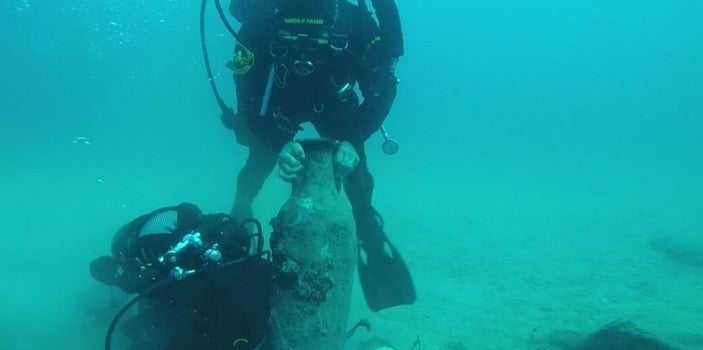
Officers noticed an anomaly on the seafloor using onboard detection equipment and decided to investigate further.
Divers were sent down to examine the site and confirmed the presence of a large Roman oneraria – a merchant ship designed to transport bulk goods across the Mediterranean.
Archaeological authorities were alerted soon afterwards.
Italian officials said the wreck is exceptionally well preserved, with parts of the hull still intact alongside a largely undisturbed cargo.

Following the discovery, the area was placed under continuous but discreet surveillance to ensure the site remained protected.
A strict confidentiality agreement was put in place between police and cultural heritage authorities while the importance of the find was assessed.
Oversight has been coordinated by the regional archaeology authority responsible for the provinces of Brindisi, Lecce and Taranto.
That period of secrecy has now ended after Italy’s Superior Council for Cultural Heritage approved funding of €780,000 (£670,000) to support a full scientific investigation and long-term protection of the site.
In the coming months, archaeologists will begin a detailed, non-invasive survey of the wreck.
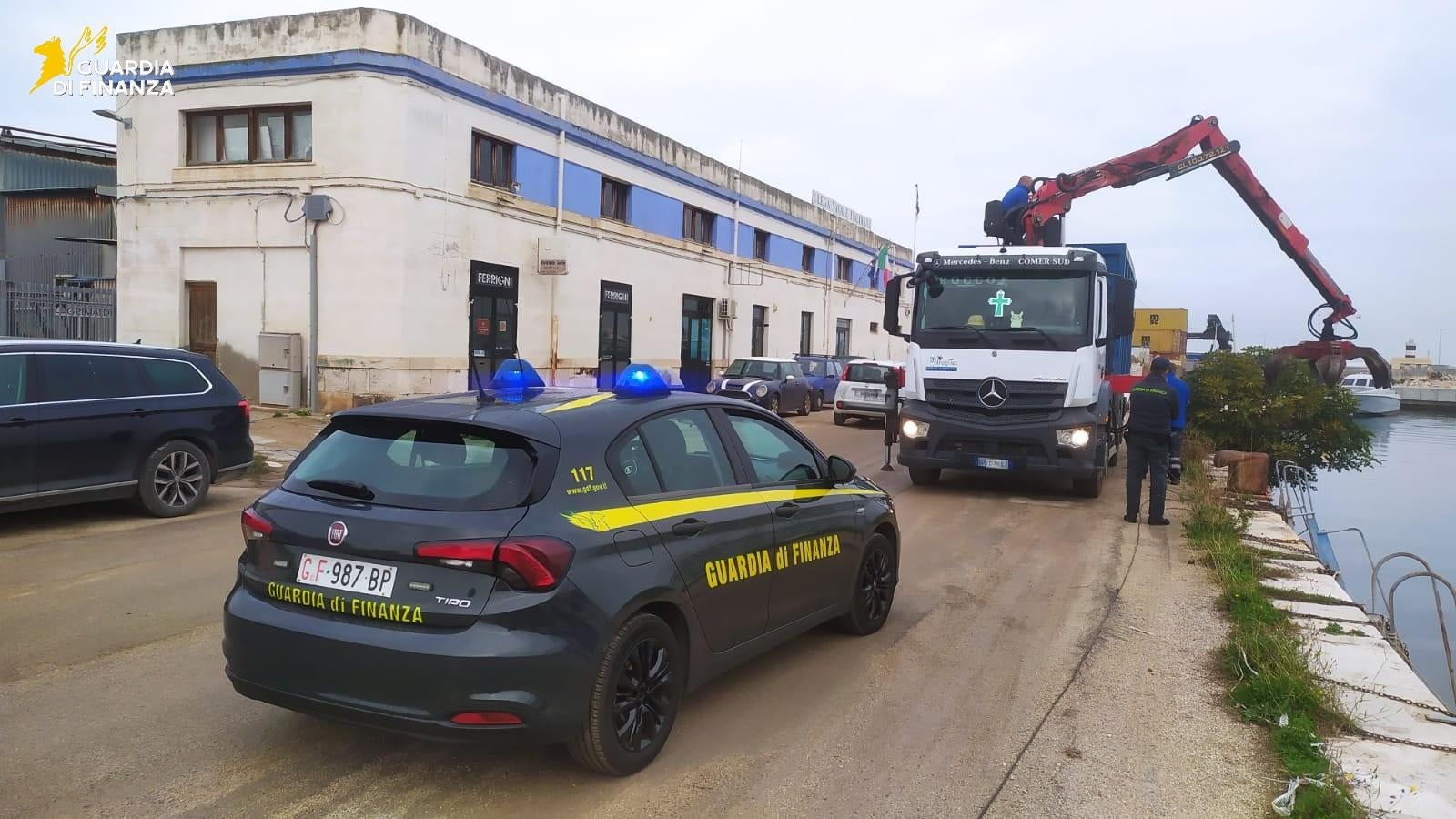
Using photogrammetry and laser scanning, researchers plan to create a precise three-dimensional digital model of the ship and its cargo. This will allow the site to be studied in detail without disturbing it.
The amphorae and the structure of the ship will then be analysed to identify production areas, trade routes and shipbuilding techniques used during the late Roman Empire.
Any markings or inscriptions could provide further clues about the movement of goods across the Mediterranean.
Only at a later stage will officials decide whether some of the amphorae should be recovered for conservation and possible public display.
For now, archaeologists describe the Gallipoli wreck not as a buried treasure, but as a rare underwater archive that could offer new insight into Roman trade, diet and daily life nearly 1,600 years ago.
Join our commenting forum
Join thought-provoking conversations, follow other Independent readers and see their replies
Comments
Bookmark popover
Removed from bookmarks