Scientists identify key tipping point when bird flu could cause a pandemic in humans
Simulation finds quarantining is most effective in controlling human spread as long as it is done when number of infected people is as low as two
It’s one of the worst nightmares facing epidemiologists: that the bird flu virus rampaging through poultry farms around the world could make the leap to human hosts.
Now, researchers in India have created modelling to estimate how long authorities would have to shut down such a mutated virus before it were to cause another pandemic. The answer? About two days.
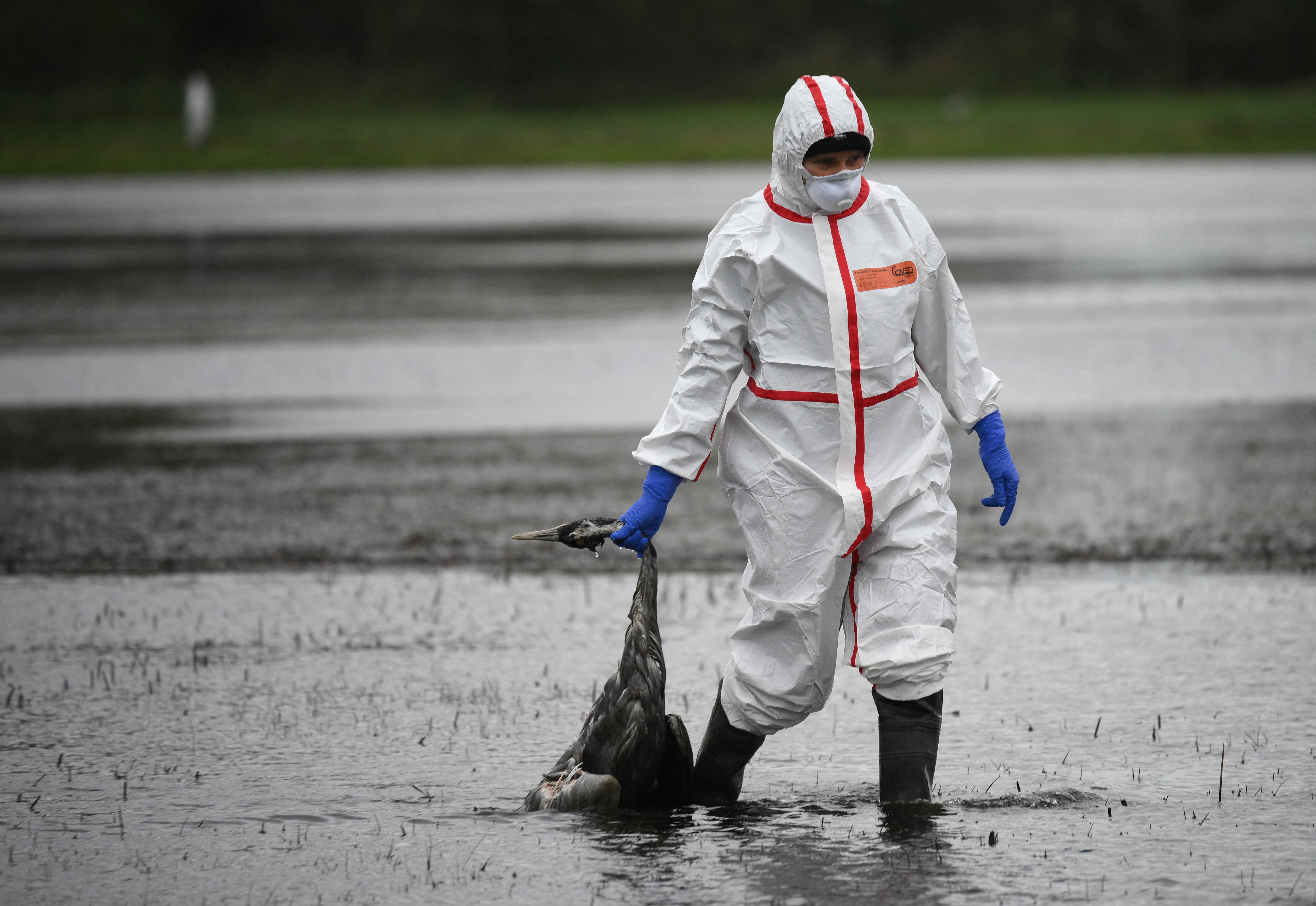
Europe is seeing an unprecedented spread of the highly pathogenic avian influenza virus, prompting the culling of hundreds of millions of farmed birds, disrupting food supplies and prices.
While human infections have been rare, researchers have expressed concern that potential mutations in the bird flu virus could make it a top candidate for causing a future pandemic.
Researchers at Ashoka University have developed a computer simulation to assess how an H5N1 outbreak could start, spread and be controlled in a population after the virus has jumped from birds to humans.
Researchers used a computer model called BharatSim, which simulates how people interact with each other in households, workplaces and markets, to help map how a virus could spread in real life.
They modelled the interactions of nearly 10,000 people in south India’s Namakkal district, a major poultry hub housing over 1,600 poultry farms and a likely location where the virus could spill over to humans.
In the simulation, the virus first jumps from birds to people who work in a mid-sized farm or wet market. These primary contacts infect their family members, who make up secondary contacts that spread it to tertiary contacts through broader interactions.
Researchers also simulated various interventions to curb the spread of the virus such as culling of birds, a quarantining of infected people, and a targeted vaccination drive.
Culling could cut transmission of the virus but only if done within 10 days of outbreak detection, before peak infection spread in the bird population.
Delayed culling would dramatically increase the risk of human infections, researchers found.
“The earlier birds are culled, the larger the probability a spillover can be prevented,” they said.
Quarantining was found in the simulation to be the most effective step for controlling human-to-human spread but had to be done when the number of infected people was as low as two.
Assuming that people move between their homes and workplaces or schools every 12 hours, researchers predict the virus can start spreading to tertiary contacts after only two days.
And once the virus starts spreading in the community, the outbreak can slip out of control.
“It is in the very early stages of an outbreak that control measures make the most difference,” researchers noted. “Once community transmission takes over, cruder public health measures, such as lockdowns, compulsory masking, and large-scale vaccination drives are the only options left.”
Researchers hope to finetune the computer model as more information is collected about the virus and its spread.
“Our simulations can be run in real time, responding to initial reports of cases,” they wrote.
Join our commenting forum
Join thought-provoking conversations, follow other Independent readers and see their replies
Comments
Bookmark popover
Removed from bookmarks