Magic mushroom compound found to break depression spiral
Findings confirm that psilocybin can rewire brain circuitry
A compound found in magic mushrooms can treat depression by cutting brain activity that gets people stuck in loops of negative thinking, a new study revealed.
Hundreds of millions of people worldwide struggle with depression, with women likelier than men to live with the condition.
It differs from a regular gloomy mood fluctuation as patients tend to feel a loss of pleasure or any interest in activities for most of the day, nearly every day, for weeks together.
While talk therapy and antidepressants are generally prescribed for patients dealing with the condition, research suggests they may not work for everyone.
But exactly what causes people struggling with depression to spiral into such long-lasting bouts of the ailment remains unclear.
In recent years, the psychedelic compound psilocybin found in magic mushrooms has been widely tested for its antidepressant properties as it appears to have long-lasting effects on the brain after just one dose.
Now, a new study has revealed exactly how psilocybin breaks loops of negative thinking to stop depression.
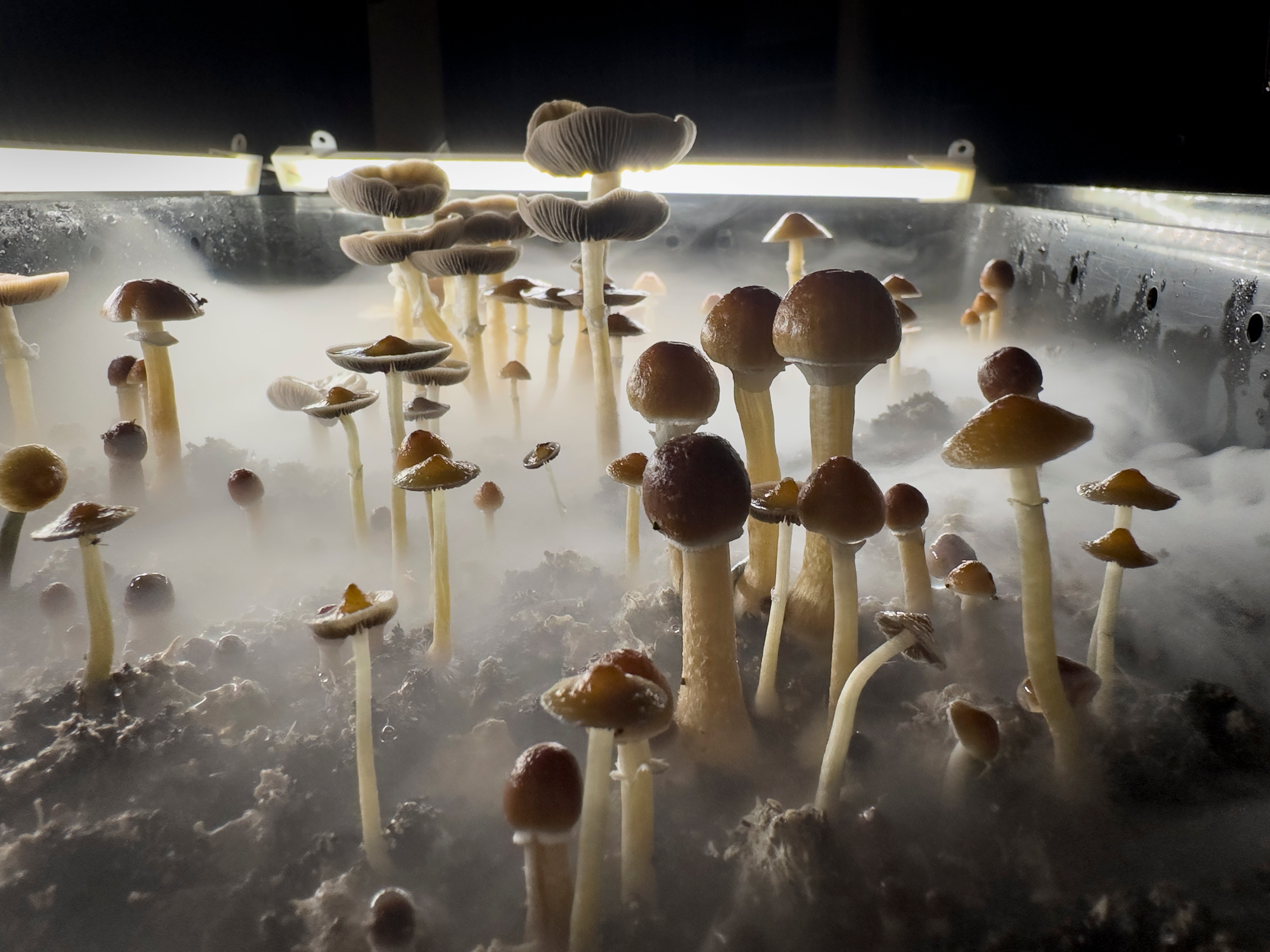
Scientists from Cornell University showed that psilocybin weakens brain activity loops that can lock people into ruminations.
“Rumination is one of the main points for depression, where people have this unhealthy focus and they keep dwelling on the same negative thoughts,” said Alex Kwan, an author of the study published in the journal Cell.
“By reducing some of these feedback loops, our findings are consistent with the interpretation that psilocybin may rewire the brain to break, or at least weaken, that cycle,” Dr Kwan said.
In the study, scientists paired the magic mushroom compound with an unlikely companion – the rabies virus.
Researchers used a lab-made form of the rabies virus to chart how psilocybin moves through the brain.
“Here we use the rabies virus to read out the connectivity in the brain, because these viruses are engineered in nature to transmit between neurons. That’s how they’re so deadly. It jumps a synapse and goes from one neuron to another,” Dr Kwan explained.
Scientists injected a single dose of psilocybin into the forebrain of mice.
A day later, the mice were injected with a variant of the rabies virus that could transmit across nerve cells and label connected neurons with fluorescent proteins.
After the mice had incubated the virus for a week, researchers imaged and compared the brains of mice that received only the virus versus those that received psilocybin plus rabies.
The imaging comparison revealed that psilocybin weakened recurrent connections in the mice’s forebrain.
This means the magic mushroom compound can stop the formation of loops that cause depressed people to fixate on negative thoughts.
The findings confirm that psilocybin can rewire brain circuitry linked to depression.
“That opens up many possibilities for therapeutics, how you maybe avoid some of the plasticity that’s negative and then enhance specifically those that are positive,” Dr Kwan said.
Join our commenting forum
Join thought-provoking conversations, follow other Independent readers and see their replies
Comments
Bookmark popover
Removed from bookmarks