Breakthrough study finds subtle new early symptoms of Parkinson’s to watch out for
Behaviours like rearing, walking, and hunching were found tied to loss of neurons associated with Parkinson’s
Chinese scientists have discovered subtle new earlier signs of Parkinson’s in mice, an advance that may help diagnose the debilitating condition much sooner in humans.
Researchers from the Chinese Academy of Sciences found that behaviours such as rearing, walking, and hunching in mice, associated with the loss of a specific type of midbrain dopamine (DA) neurons, are linked to Parkinson's disease.
The earliest known signs of Parkinson’s can include pain, anxiety, balance issues, stiffness, loss of smell, sleep problems and depression.
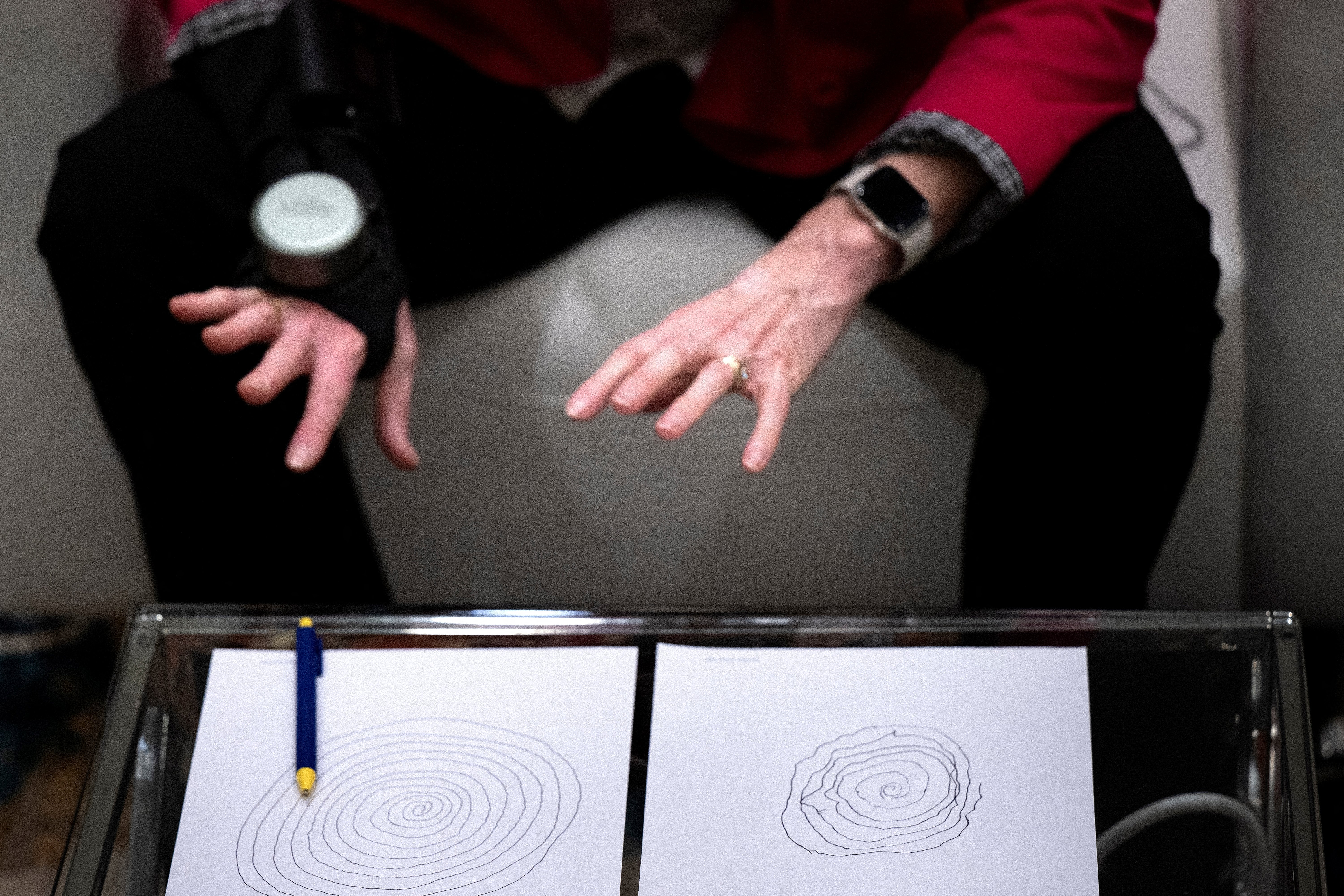
Other signs like tremors, handwriting changes, and diminished facial expressions, appear later as the disease progresses.
Gradually, patients may experience severe movement issues, highlighting the importance of early diagnosis and treatment for the condition.
Until now, research has mostly focused on the functions of the DA neurons in mood regulation and reward mechanisms.
These nerve cells are located in the midbrain regions substantia nigra pars compacta (SNc) and the ventral tegmental area (VTA), are essential for regulating movement, emotion, and reward processing
But the roles of the DA neurons in more subtle and spontaneous behaviours remain poorly understood, scientists say.
In the latest study, researchers discovered that behaviours like rearing and hunching are associated with the loss of one type of SNc DA neurons, but not those in VTA.
These subtle behaviours could serve as key markers of SNc DA neuron loss, and enhance our understanding of Parkinson’s, the study found.
Scientists used an advanced artificial intelligence behaviour analysis system to examine the movement of two mouse models with a dopamine neuron depletion.
Using this approach, researchers could capture detailed and nuanced behavioural features that traditional methods may overlook.
The study found reductions in rearing and hunching behaviour in the PD model, which correlates directly with the loss of DA neurons in the SNc but not the VTA.
Another behaviour in the mouse models called climbing, which is similar to rearing, was also found to be strongly linked to the loss of DA neurons in the midbrain’s SNc area.
The findings underscore the need for monitoring rearing behaviour as potential behavioural markers in tracking the progression of Parkinson’s disease, scientists say.
"Connecting behavioural changes with targeted neural damage advances the understanding of PD progression and offers valuable insights into improving treatment strategies," said Xuemei Liu, an author of the study from the Chinese Academy of Sciences.
Join our commenting forum
Join thought-provoking conversations, follow other Independent readers and see their replies
Comments
Bookmark popover
Removed from bookmarks