Scientists detect hidden plastic clouds hovering over Chinese cities
Previous studies have underestimated amount of plastic in atmosphere, scientists say
Chinese scientists have detected plastic particle clouds hovering in the air over two large cities indicating that these potentially toxic particles are far more abundant than previously thought.
Over the last two decades, researchers across the globe have come to recognise tiny microplastic and nanoplastic particles as a growing form of pollution.
These tiny plastic particles have now been detected in soils, life forms, and even in the atmosphere in almost all parts of the world, including in the Arctic and Antarctic.
A growing body of studies implicates them in health conditions ranging from hormonal disruption, cancer, heart ailments, impaired reproduction, as well as neurological damage.
However, several questions remain, including how many of these tiny plastic particles exist, where they come from, how they change over time, and where they ultimately end up.
Due to the high prevalence of these human-made chemicals, researchers suspect they may even be present across components of the planet’s water cycle.
Researchers are also studying how climate change influences these particles and their spread.
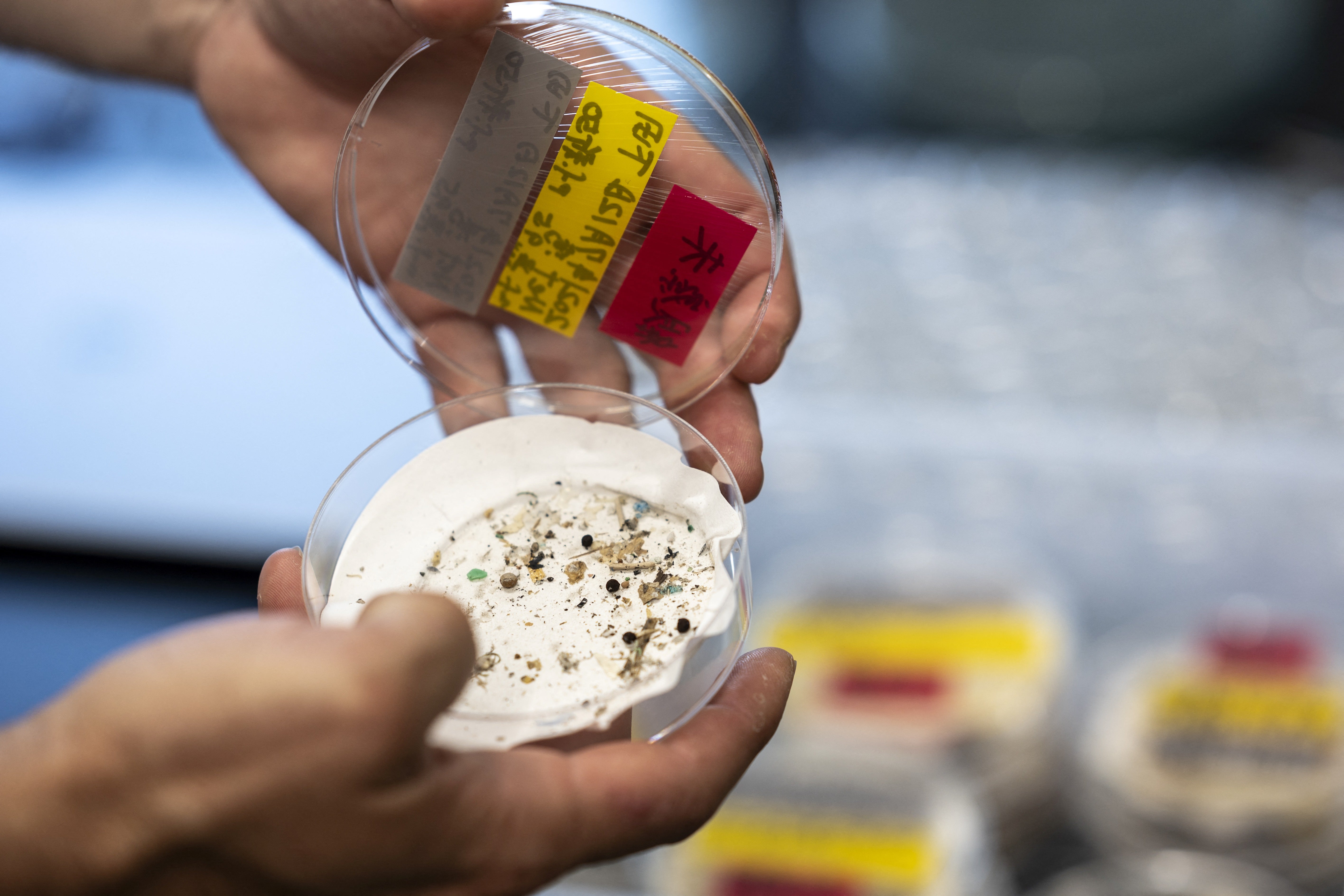
Now, in a new study, scientists assessed the spread of microplastic (MP) as well as nanoplastic (NP) particles – several times smaller than the width of a single human hair – over two large Chinese cities, Guangzhou and Xi’an.
They found that previous studies have significantly underestimated the amount of plastic present in the atmosphere.
Scientists found that these tiny plastic particles are small enough to remain suspended for long periods and can even act as triggers of cloud formation.
By being part of cloud formation, the particles can again deposit back onto Earth as rain, far from where they were originally released, the study suggests.
“Using an innovative method capable of detecting plastic particles as small as 200 nanometers, we quantified MPs and NPs in aerosols, dry and wet deposition, and resuspension in two Chinese megacities, Guangzhou and Xi’an,” scientists wrote in the study.
“Estimates revealed a variation of two to five orders of magnitude in MP and NP fluxes across major atmospheric compartments,” they wrote.
These changes were dominated by plastic from road dust and rainfall-driven deposition, scientists explained.
The findings, according to researchers, represent the most detailed measurements to date of plastics in the atmosphere, which remains the least understood part of the global plastic cycle.
While the study falls short of claiming that the plastic particles are changing the global climate in a measurable way, it concludes that they dominate cloud formation.
“These results provide an integrated assessment of MPs and NPs in urban atmospheric processes and offer critical insights into their transformation, fate, and potential implications for climate, ecosystems, and human health,” scientists wrote.
Join our commenting forum
Join thought-provoking conversations, follow other Independent readers and see their replies
Comments
Bookmark popover
Removed from bookmarks