How to see the first supermoon of 2025
The first supermoon of the year will be seen in the skies on Monday
Monday night brings a supermoon, appearing slightly larger and brighter, the first of three this year.
It occurs when a full moon is closer to Earth in orbit.
NASA says it looks up to 14 per cent bigger and 30 per cent brighter than the year's faintest moon.
This subtle difference occurs a few times annually, sometimes coinciding with lunar eclipses.
“It's not really very unusual,” said Derrick Pitts, chief astronomer with the Franklin Institute in Philadelphia.
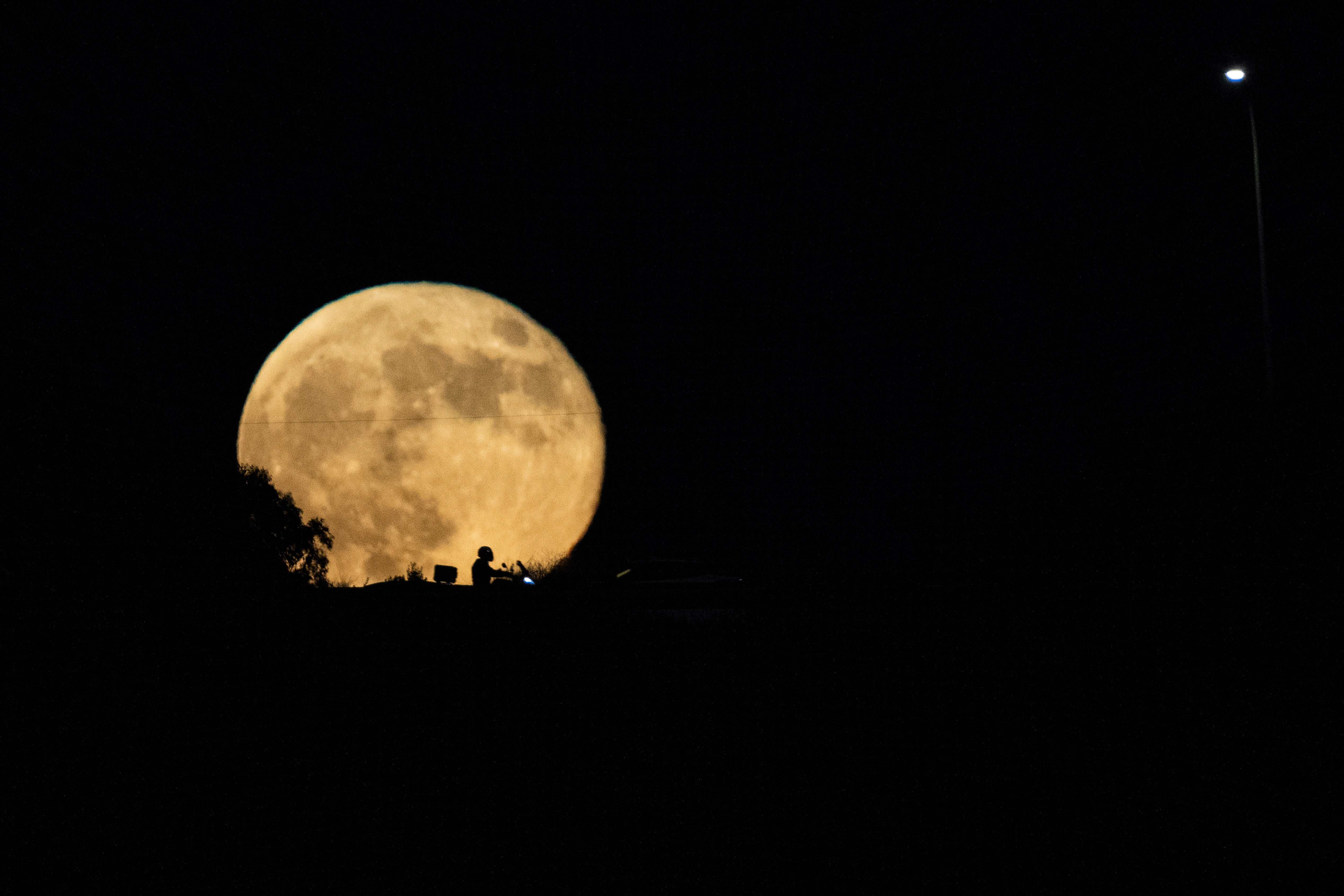
Everyone in the world can see a supermoon without special equipment if clear skies permit. But the difference can be tough to discern, especially if people haven’t observed the regular moon on the nights leading up.
“If you go out and just look at the moon when it’s very high in the sky, there is nothing relative to it to give you an idea of how big it looks,” Pitts said.
The full Harvest Moon will rise at around 18:20 GMT in the UK this evening.
In the latest viewing, the moon will pass within about 224,600 miles (361,459 kilometers) of Earth.
The closest supermoon of the year is slated for November, followed by another in December.
The spectacles continue in 2026 with two lunar eclipses: a total eclipse across much of North America, Asia and Australia in March, and a partial one in August across the Americas, Africa and Europe.
The last supermoon in the UK was the Beaver Moon, which was rising just after 3.30pm on November 15. It was the fourth of the year, though smaller than its earlier predecessors.
Dr Edward Bloomer, senior astronomy manager at Royal Observatory Greenwich, said: “The supermoon definition is not particularly strict.
“The general rule that most people adhere to, although astronomers like to argue about this, is that it is within 10 per cent of its closest approach to Earth.”
Another definition for a supermoon is that it has be within 360,000 kilometres of Earth.
Bookmark popover
Removed from bookmarks