Rights group warns on failure to deliver justice after sectarian killings in Syria's Sweida
Human Rights Watch criticizes the Syrian government for lacking accountability in sectarian violence
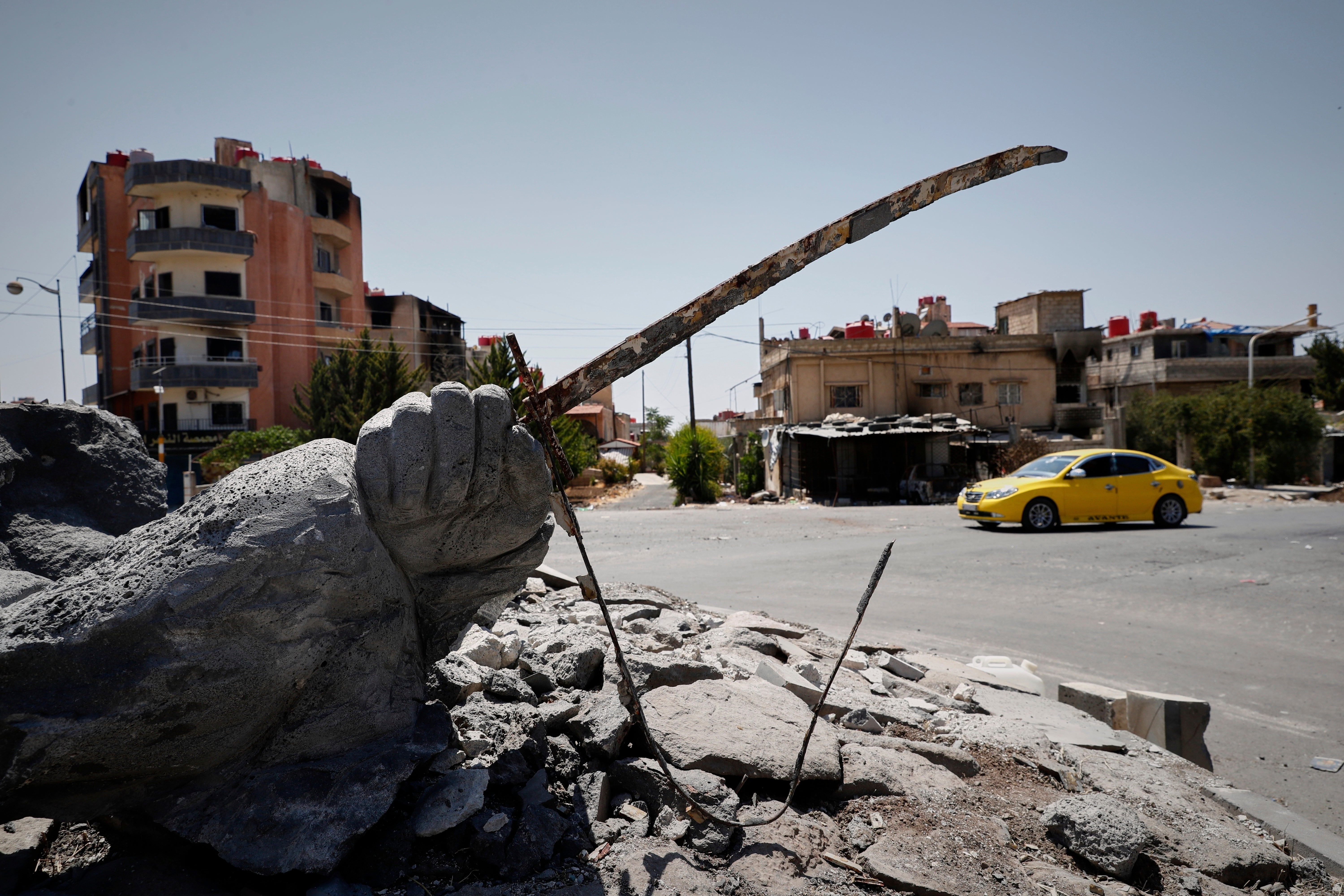
Human Rights Watch on Thursday criticized the Syrian government for what it says is the lack of accountability on perpetrators of sectarian violence and killings on all sides in clashes between government-backed armed Bedouin clans and Druze militias in a southern province in July that killed hundreds of civilians.
In its report, the rights group said it documented 86 “apparently unlawful killings” of civilians in Sweida province, of which 67 were Druze and 19 were Bedouin.
Human Rights Watch said it interviewed eyewitnesses and survivors, who said that government forces destroyed civilian property and committed summary killings.
They said the armed Bedouin groups backed by the government looted homes and kidnapped people, while Druze militias attacked and detained Bedouin civilians in a series of revenge raids.
The clashes in the southern province of Sweida marked another setback for President Ahmad al-Sharaa, who has been struggling to assert his government's full authority across the war-torn country and appeal to Syria's minorities, which are largely skeptical of his Islamist-led rule.
Under the autocratic leadership of Bashar Assad, the Druze had a degree of autonomy during the conflict as they largely stayed away from the fighting. Since his fall in December 2024, members of the small religious sect have been navigating a new, uncertain Syria.
In mid-July, armed groups affiliated with Druze spiritual leader Sheikh Hikmat al-Hijri clashed with local Bedouin clans, spurring intervention by government forces who effectively sided with the Bedouins. Hundreds of civilians, mostly Druze, were killed, many by government fighters. The United Nations estimates that 187,000 people were displaced by the end of the month.
The majority of the Druze community in Syria live in Sweida province. Since then, a large group of the militias banded together under al-Hijri, creating a de facto anonymous area in large swaths of the province, backed by neighboring Israel.
“The government’s acknowledgment of atrocities isn’t enough if those leading and directing abusive forces are shielded from justice,” deputy Middle East Director of Human Rights Watch Adam Coogle said in the report. “Without senior-level accountability and structural reform of the security sector, Syria will continue to face cycles of violence and reprisals.”
Damascus is now gearing up for a possible military escalation with the Kurdish-led Syrian Democratic Forces, which still controls large swaths of northeastern Syria, after intense clashes in two contested neighborhoods in the northern city of Aleppo. The SDF for years has been Washington’s key ally in combating the Islamic State group.
In Aleppo trials continued Thursday of defendants accused of attacking civilians during clashes in March in Syria's coastal provinces, where a counteroffensive against an insurgency by Assad loyalists spiraled into sectarian revenge attacks.
It led to the massacre of hundreds of civilians from the Alawite religious minority, who largely live along the coast. Assad and his family are Alawites.
The government said it was investigating the sectarian violence in Sweida, announcing in September that it had detained several members of the military and security forces. Damascus tasked a government body to report on abuses within three months, but in mid-November, the committee requested a two-month extension to publish its findings by the end of the year.
However, the investigation is apparently ongoing. Damascus has not said when the report's findings will be published, nor whether a trial, similar to one related to the violence along the coast, will take place.
While the government said it is investigating the incidents, no trial has yet begun for the clashes in Sweida.
Bookmark popover
Removed from bookmarks