Lost Alan Turing papers, rediscovered in loft, to go under the hammer
The archive includes the World War II codebreaker’s personal copy of his PhD

Lost scientific papers of World War II codebreaker Alan Turing, rescued from a loft and then nearly destroyed, are set to go under the hammer in June.
The archive, expected to fetch thousands of pounds, offers a glimpse into the mind of the brilliant mathematician.
Among the rediscovered treasures is a signed personal copy of Mr Turing's 1939 PhD dissertation, Systems Of Logic Based On Ordinals, a work exploring the foundations of mathematical logic.
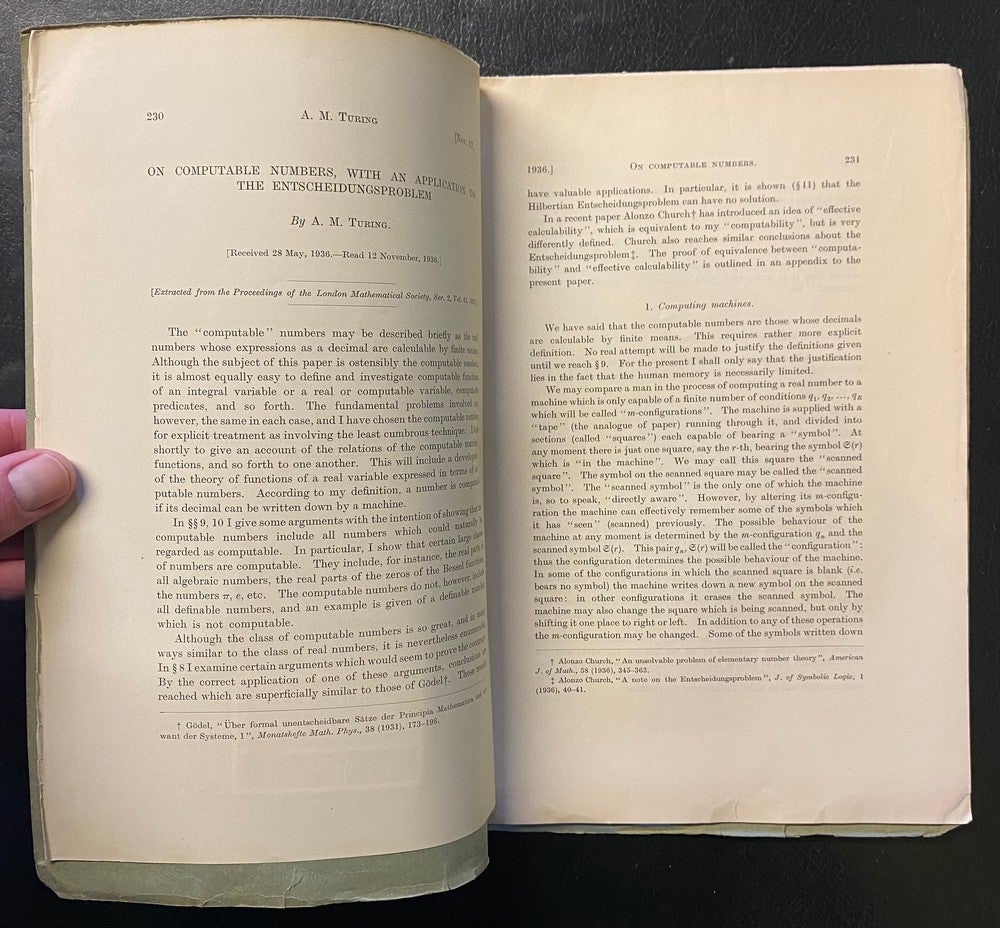
The archive also contains On Computable Numbers from 1937, a paper considered by many to be the first programming manual of the computer age.
Rare Book Auctions in Lichfield, Staffordshire, which is managing the sale, revealed the provenance of the papers.
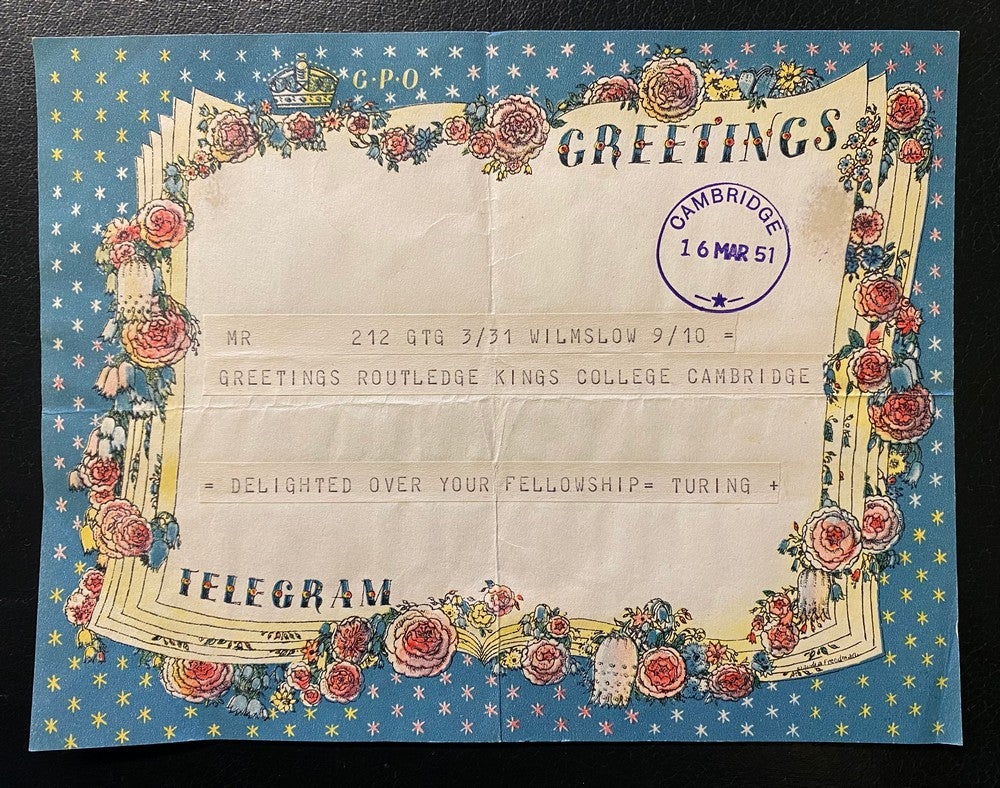
Originally gifted to Mr Turing's friend and fellow mathematician Norman Routledge by Mr Turing's mother, Ethel, the collection became a hidden gem, tucked away for decades.
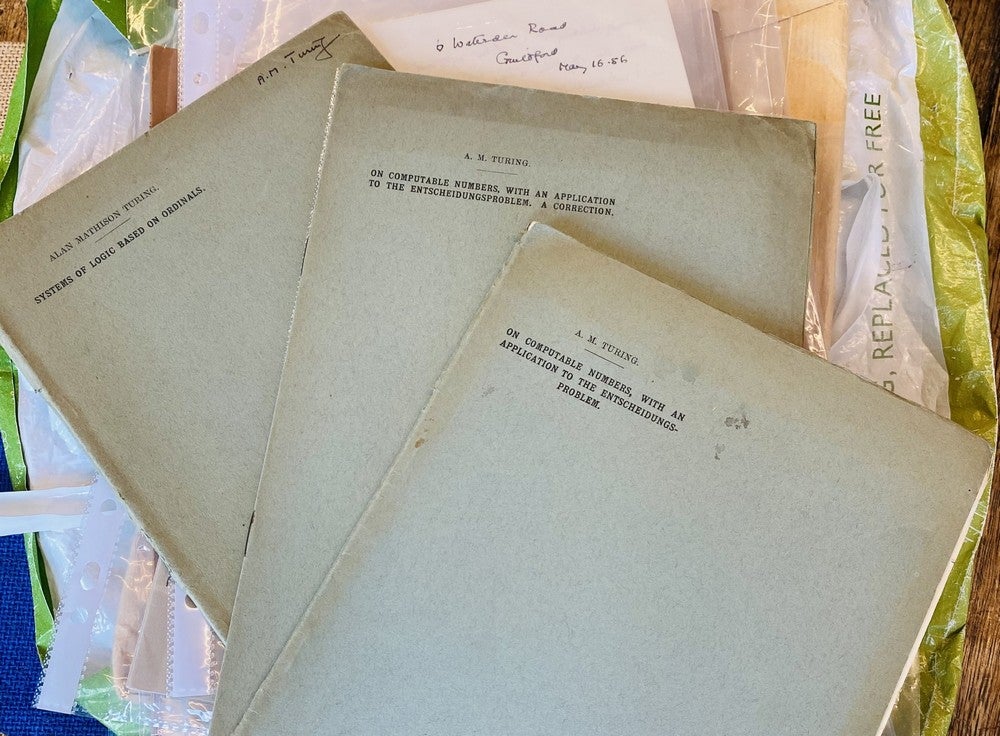
These “offprints”, as they are known, were academic papers produced in limited numbers for circulation within scholarly circles.
Mr Turing's PhD dissertation alone carries a pre-auction estimate of £40,000 to £60,000.
The collection also includes correspondence from renowned novelist E.M. Forster.
Following Mr Routledge's death, the papers were moved to a relative's loft after his Bermondsey home was cleared, narrowly escaping destruction.
One of Mr Routledge’s nieces said: “When he died in 2013, two of his sisters had the unenviable task of sorting through and emptying the contents.
“There were lots of personal papers which one sister carted away and stored in her loft. The papers lay dormant until she moved into a care home almost a decade later.
“Her daughters came across the papers and considered shredding everything. Fortunately, they checked with Norman’s nieces and nephews because he’d always been a presence in our lives.
“Norman was an amazing man who showed genuine interest in everyone he came into contact with. His family were very important to him. He kept in regular contact and was interested in what each one was doing.
“We finally had an opportunity to see Norman’s papers when the family hosted a ‘Routledge Reunion’ weekend in November 2024.”
The papers were brought along in a carrier bag, the woman said.
“One cousin felt the Turing and Forster papers might be of interest to collectors.”
Jim Spencer, director of Rare Book Auctions, described the collection as “the most important archive I’ve ever handled”, adding: “Nothing could’ve prepared me for what I was about to find in that carrier bag.”
He said: “These seemingly plain papers – perfectly preserved in the muted colours of their unadorned, academic wrappers – represent the foundations of computer science and modern digital computing.
“Literature has always been my forte, not mathematics, so the past few months of intensively researching and cataloguing these papers has left me feeling that Alan Turing was superhuman.”
It was like “studying the language of another planet, something composed by an ultra-intelligent civilisation”, Mr Spencer said.
“It’s at least comforting to know that he lives on through his work. He survives through his legacy.”
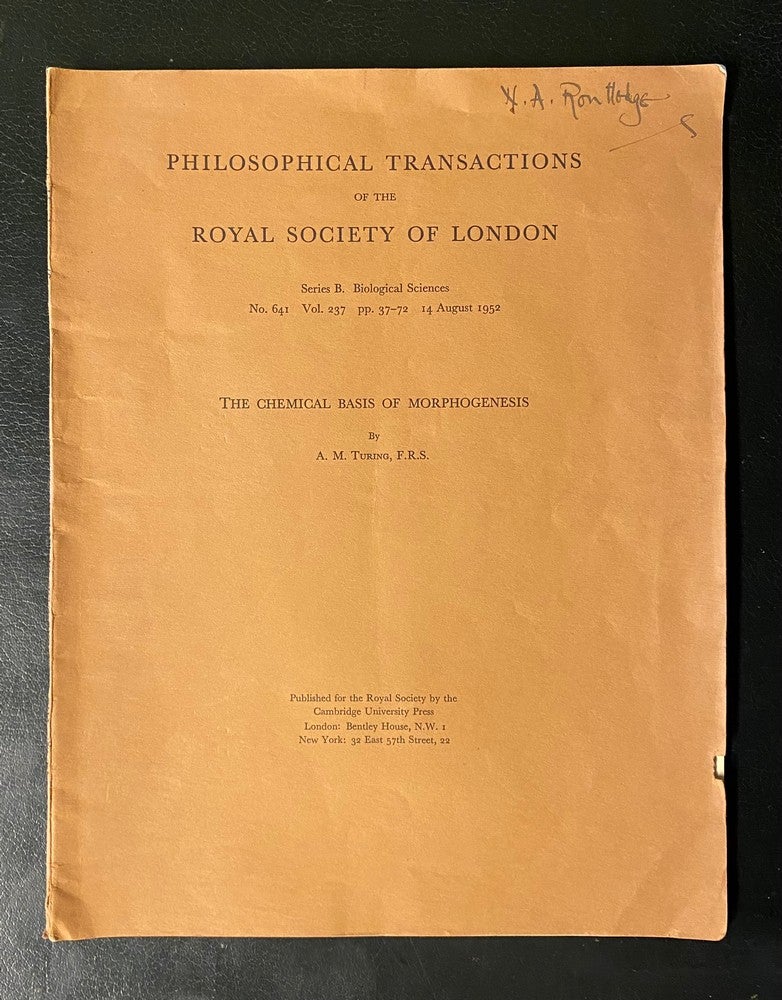
The collection also includes The Chemical Basis Of Morphogenesis.
Dating from 1952, it is Mr Turing’s lesser-known masterpiece of mathematical biology, and his last major published work.
A single piece of paper which was Mr Turing’s first published paper in 1935, Equivalence Of Left And Right Almost Periodicity, also forms part of the archive.
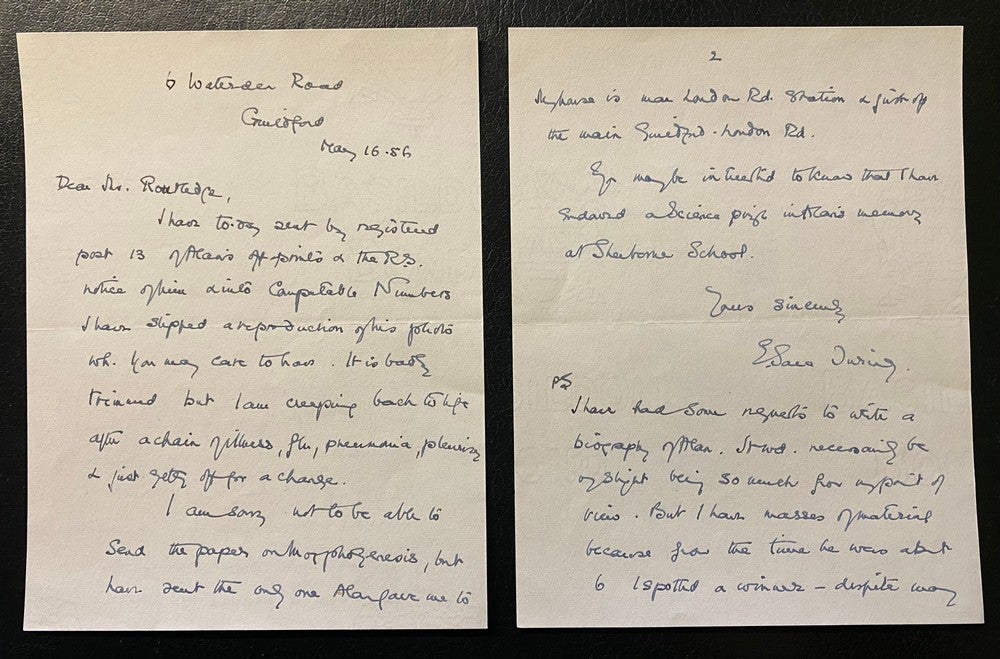
It was gifted to Mr Routledge by Mr Turing’s mother Ethel and her handwritten letter dated 16 May 1956 is also included.
The letter reads: “I have to-day sent by registered post 13 of Alan’s off-prints…I have had some requests to write a biography of Alan…I have masses of material because from the time he was about 6 I spotted a winner – despite many detractors at school – and kept many papers about him.”
Mr Spencer added: “This fascinating letter is a golden thread that neatly ties up and seals the authenticity of everything being offered.”
The Alan Turing Papers: The Collection Of Norman Routledge (1928-2013) will be held on 17 June by Rare Book Auctions, Lichfield. Bidding will be available worldwide.
Join our commenting forum
Join thought-provoking conversations, follow other Independent readers and see their replies
Comments
Bookmark popover
Removed from bookmarks