Darts pro who sought ‘unnecessary’ leg amputation denied £1m payout
Secretly filmed video showed him walking ‘normally’ before the operation
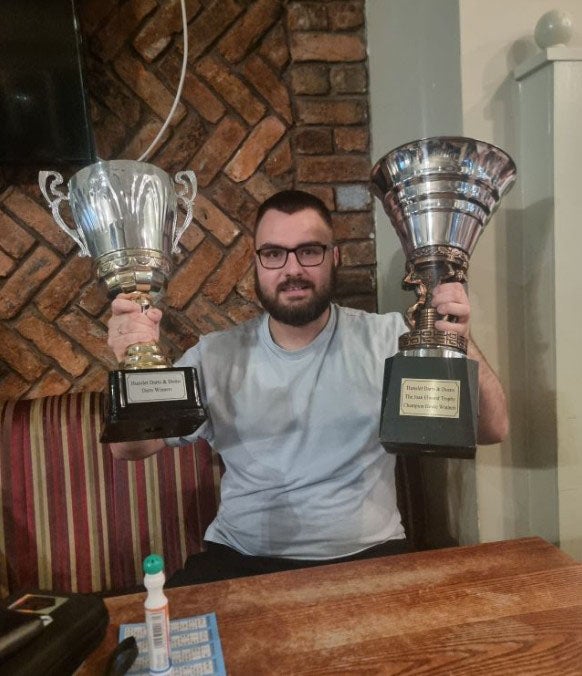
A disabled darts player has been unsuccessful in a compensation claim exceeding £1 million, after a judge determined he requested the amputation of his leg without a good medical reason.
Aaron Haley, who competes professionally as Aaron 'The Rattler' Haley, suffered a severe crushing injury to his foot in March 2019.
The incident occurred when he was hit by a forklift while employed by Wakefield-based cold storage company Newcold Ltd.
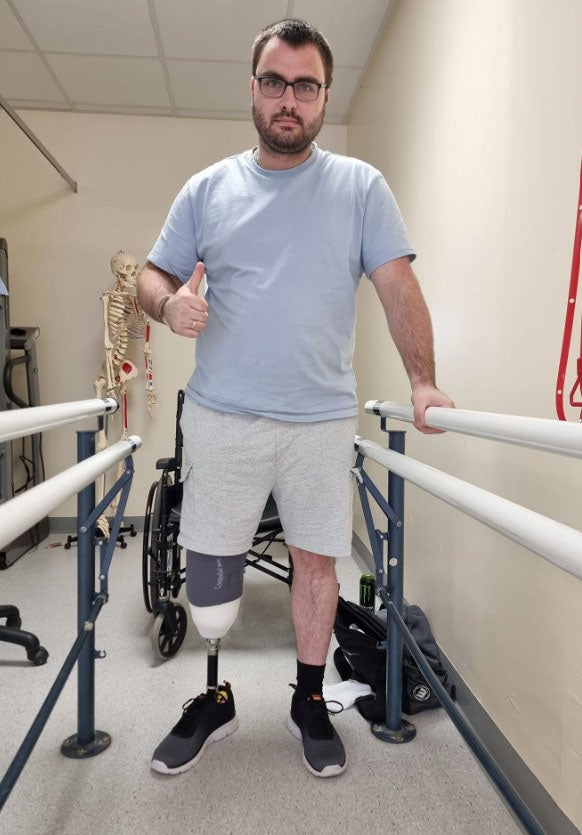
Mr Haley's former employer had initially agreed to pay compensation for the injury. However, his potential damages payout escalated from around £500,000 to over £1 million after he underwent surgery in 2024 to have his leg removed below the knee.
Newcold Ltd subsequently challenged the increased claim, arguing that the amputation was unnecessary as Mr Haley's pain or disability did not warrant such a drastic measure.
The company presented secretly filmed footage showing Mr Haley walking “normally” before the operation, and he himself admitted to regularly playing Airsoft, a combat simulation game, in the weeks leading up to his surgery.
Judge Darren Walsh has now ruled that Mr Haley cannot be compensated for the amputation as it was “unnecessary on clinical grounds” and it was his own choice to have his leg removed.
Despite being secretly filmed several times, it was only on the day that Mr Haley was due to see a doctor relating to his damages claim that he was seen to use a crutch and even then held it in the wrong hand at times, said the judge.
However, the question as to why he had his leg removed is still a mystery, the court heard.
“I accept that the elephant in the room, of course, is quite why the claimant would undergo a procedure that was not necessary,” said the judge.
“However, the defendant has not pleaded a positive case as to the claimant's motivation. Accordingly, beyond that it was not motivated by pain and function as asserted, I make no finding as to the claimant's motivation.”
The decision means Mr Haley is not entitled to a £1m-plus payout for the amputation, but is still entitled to damages for his initial injury, which according to court papers his lawyers claimed should be around £500,000 after a reduction for his own part in the accident.
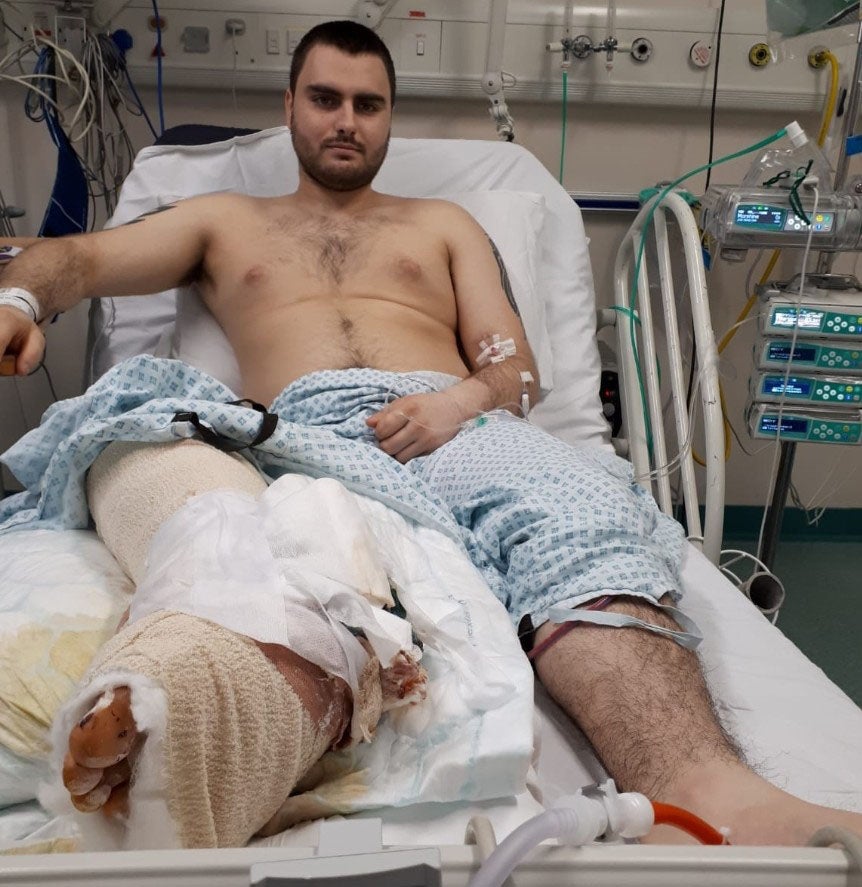
During a three-day trial earlier this year, Wakefield County Court heard that Mr Haley had suffered a serious crushing injury to his foot when hit by a forklift at work.
The accident resulted in “significant degloving and a burst fracture to the calcaneus”, said the judge, and necessitated a skin graft and lengthy hospital stay.
Although the risk is low, the court heard that experts agree that there is a small chance that an injury like Mr Haley's could result in an amputation.
“It is the claimant's case that, in short, as time moved on, that low risk materialised,” said the judge.
“He asserts that the extent and frequency of pain, which at times, had become 'unbearable', along with restriction of movement or lack of function, and consequent restrictions in his social and work life, rendered the amputation necessary.”
The judge said Mr Haley was due to have his amputation in March 2024, but only two weeks before that lawyers for his former employer disclosed secretly shot surveillance evidence, which they said cast doubt on the ongoing impact of his injury.
They asked that the footage be shown to Mr Haley's treating consultants and the amputation delayed, but he refused and it went ahead as planned on 13 March.
The case then went to court, with his former employers asking Judge Walsh to rule that, even though they have agreed to pay damages for the initial injury, they should not be held liable for the amputation as well.
They claimed that the operation was not clinically necessary and that it had been a voluntary, as opposed to involuntary, choice of Mr Haley's to go ahead with it.
Mr Haley however insisted that he felt the amputation was necessary, explaining the footage showing him walking “normally” as being on good days when his symptoms are less apparent.
In a witness statement, he said he had been “really struggling”, that it was affecting every aspect of his life and that the pain had become so permanent that he “really felt like I had no choice at all” but to undergo the amputation.
But giving his judgment, Judge Walsh said one video filmed just over two months before the operation showed Mr Haley walking “casually and normally” on a trip to Leeds Police Station.
One filmed in 2022 showed him playing crazy golf and “moving freely”, while another showed him carrying, but not using, a crutch on the way to a medical appointment.
“Moreover, save for one day, at no point in all the surveillance taken pre-amputation, which started in July 2022 and ceased in October 2024, was the claimant captured using a crutch,” he continued.
“That one day happened to be on 21st November 2023, and on the day that the claimant travelled from Dewsbury to Manchester...for the purposes of medicolegal examination.”
On that day, he had used a single crutch in a way that “was not what would be expected”, holding it in his right hand when it would be more logical to use his left to balance out with his injured right foot.
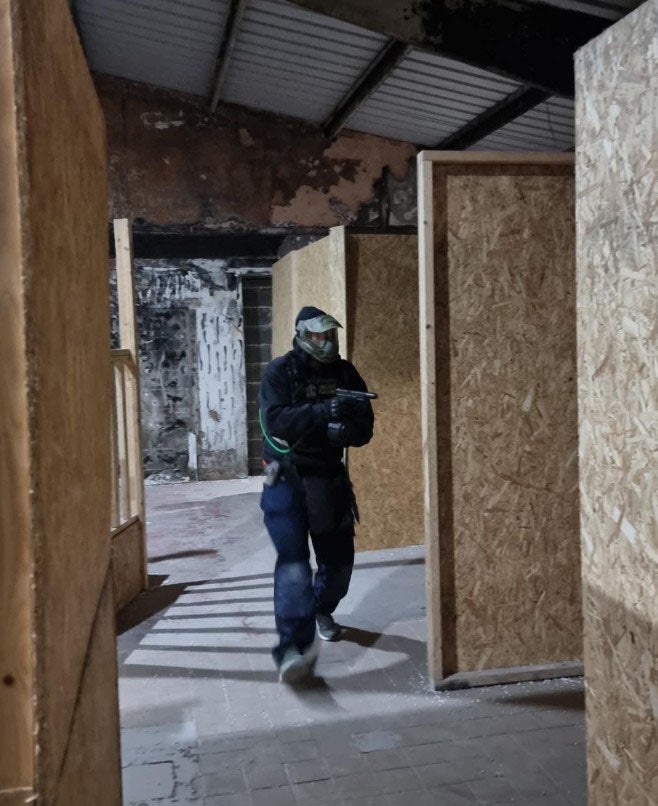
The judge said Mr Haley had also admitted that he kept on playing Airsoft – a physical combat simulation game where players shoot each other with pellets using replica firearms – right up until his surgery, something experts said would be an “unusual” hobby for someone requiring an amputation.
“Furthermore, the claimant engaged in a variety of leisure activities throughout the period between [the] medical report in December 2021 and the amputation in March 2024,” he said.
“Such activities included tenpin bowling, crazy golf, snooker, darts and Airsoft. All these activities required the claimant to be on his feet and...all were undertaken voluntarily for recreation.
“Moreover, the claimant accepted that he had engaged in darts very regularly - up to five times per week and competitively - and Airsoft on a weekly basis in the run up to the amputation into March 2024, and within a fortnight of the same.
“In his witness statement, dated 21st June 2023, the claimant confirms that the overall game time for Airsoft was up to four hours, with each game lasting about 30 minutes before a rest period of about 15 minutes.
“The claimant also accepted during cross-examination that the players move quickly from room to room, that he does a quick walk on the front part of his foot, that he turns and pivots, and that he has to do the same quickly.
“While the claimant stated that, 'Sometimes I can manage it. Sometimes I have to sit it out or even stop', even if correct, given he would naturally be on his feet while playing and, at times, having to change directions, I accept the joint expert opinion that the playing of Airsoft was an 'unusual hobby' for someone considering amputation.
“The claimant also accepted that, since approximately October 2019, he was able to drive a non-adapted manual motor vehicle, asserted over short distances only, with an ability to use his right foot for an emergency stop. No doubt if the claimant had any doubts about his ability to use his right foot in an emergency he would not drive.
“I consider that none of this fits well with someone who is experiencing ongoing 'unbearable' or chronic pain and altered function in their foot.
“I reject, therefore, in the lead up to amputation, the claimant's evidence that for most of the time he was in 'too much pain to be able to do much', and that the 'days when I could do things were quite few and far between'.”
.jpeg)
He said it was also a significant factor that Mr Haley, and not his doctors, had first mentioned amputation and he had begun to request it during NHS appointments.
It was also a “curious feature” that he had proceeded to amputation without first exhausting all other treatment options and had refused to even try using a hot water bottle to relieve his pain.
Concluding, he accepted that Mr Haley had not made a complete recovery and that he did suffer some ongoing pain and needed to use mobility aids while abroad in May 2022 due to the longer walking distances.
However, he found that Mr Haley's condition had improved to the extent that he was “effectively functioning normally” in the months and weeks prior to his amputation.
“The claimant's action of amputation, therefore, was deliberate and was not involuntary in the sense of being caused as a consequence of the position in which the defendant's negligence had left him,” he continued.
“Accordingly, I am satisfied that the effective cause of the amputation was not the accident but the claimant's own conduct, which I consider amounts to a supervening event.
“Put a different way, given that I am satisfied that the claimant had improved and was effectively functioning normally in the months and weeks prior to amputation, his conduct in seeking amputation is so wholly unreasonable and/or of such overwhelming impact, that it eclipses the defendant's wrongdoing and breaks the chain of causation.”
Before having his amputation, Mr Haley's lawyers estimated his claim to be worth about £700,000 in court papers, but that would have been reduced by 20 per cent to reflect his contributory negligence to the accident.
Had he been allowed to claim compensation for the amputation, his total claimed payout would have totalled well over £1 million.
Join our commenting forum
Join thought-provoking conversations, follow other Independent readers and see their replies
Comments
Bookmark popover
Removed from bookmarks