Drones and sniffer dogs deployed in fight against tiny beetle threatening UK forests
Government scientists are using drones and sniffer dogs to seek out a beetle which feeds off conifer trees

The government is using drone and sniffer dogs to fight back against a beetle which is threatening to destroy trees across the UK after wreaking havoc in Europe.
The spruce bark beetle, also known as Ips Typographus, is just 5mm long and feeds on conifer trees, a move which has left forests across the continent devastated. The species was first detected in the UK in 2018 after being carried across the English Channel by winds.
Now, in a bid to ensure the creature does not have the same impact in the UK, government scientists are using sniffer dogs and drones to identify any contaminated spruce trees and remove them before the pest can spread.
Andrea Deol, from the UK government's Forest Research, told the BBC: "What we are doing is having a positive impact and it is vital that we continue to maintain that effort. If we let our guard down we know we have got those incursion risks year on year.
"We have 725,000 hectares of spruce alone. If this beetle was allowed to get hold of that, the destructive potential means a vast amount of that is at risk.”
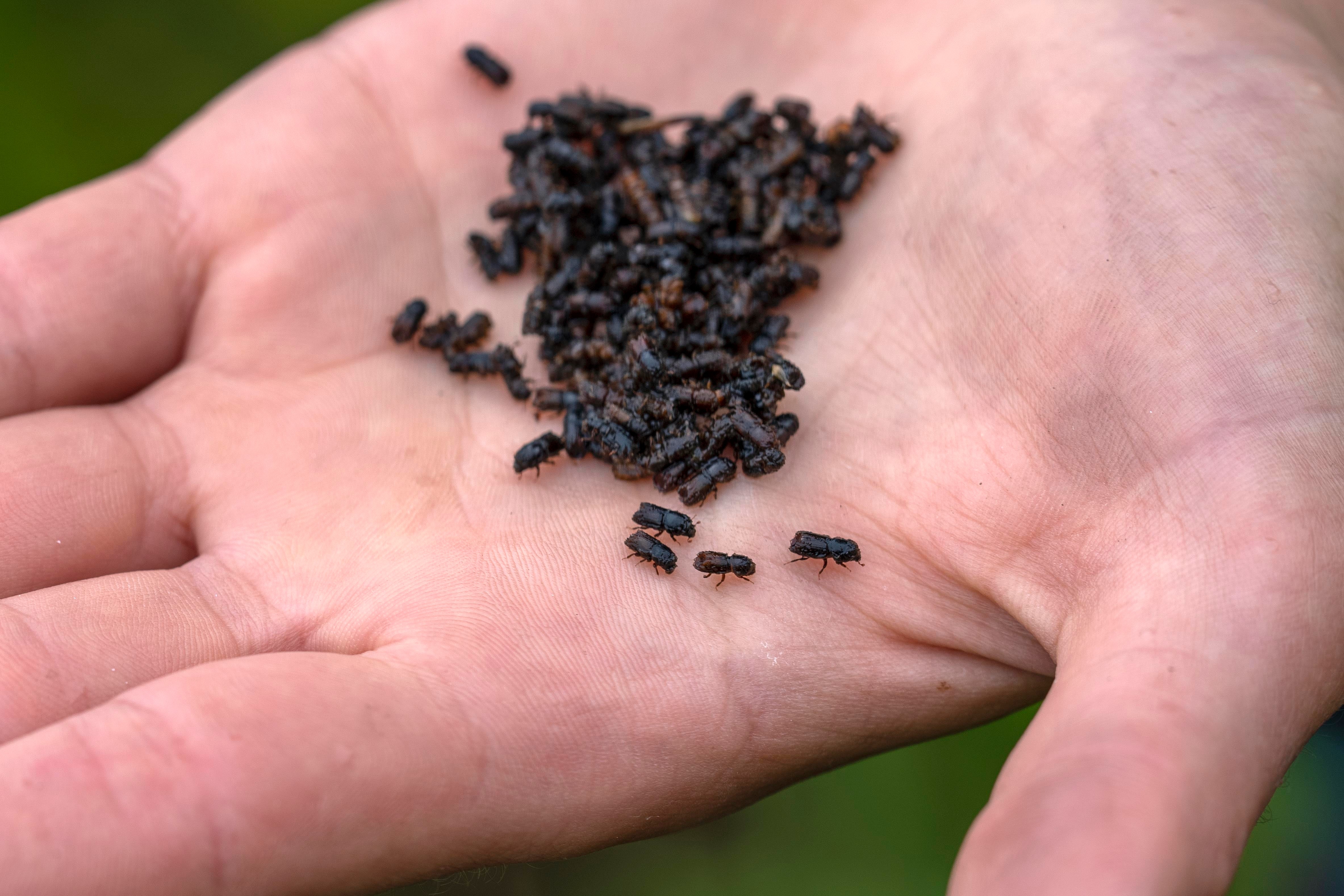
The government had hoped to stop the beetle at the border by inspecting imported wood products at ports, but realised winds were carrying it straight over the Channel.
It claims the new line of defence has been successful so far and that officials have been able to remove the pest from at-risk areas in the east and south east, making the UK the first country to have eradicated the beetle in controlled areas.
It has launched drones to scan hundreds of hectares of woodlands to seek out any signs of infestation, which become visible as the trees begin to die off, allowing entomologists to then go and inspect the site on foot. Bug traps fitted with cameras are also scanning daily for any sign of activity.
Deol said: "They are looking for a needle in a haystack, sometimes looking for single beetles - to get hold of the pioneer species before they are allowed to establish.”
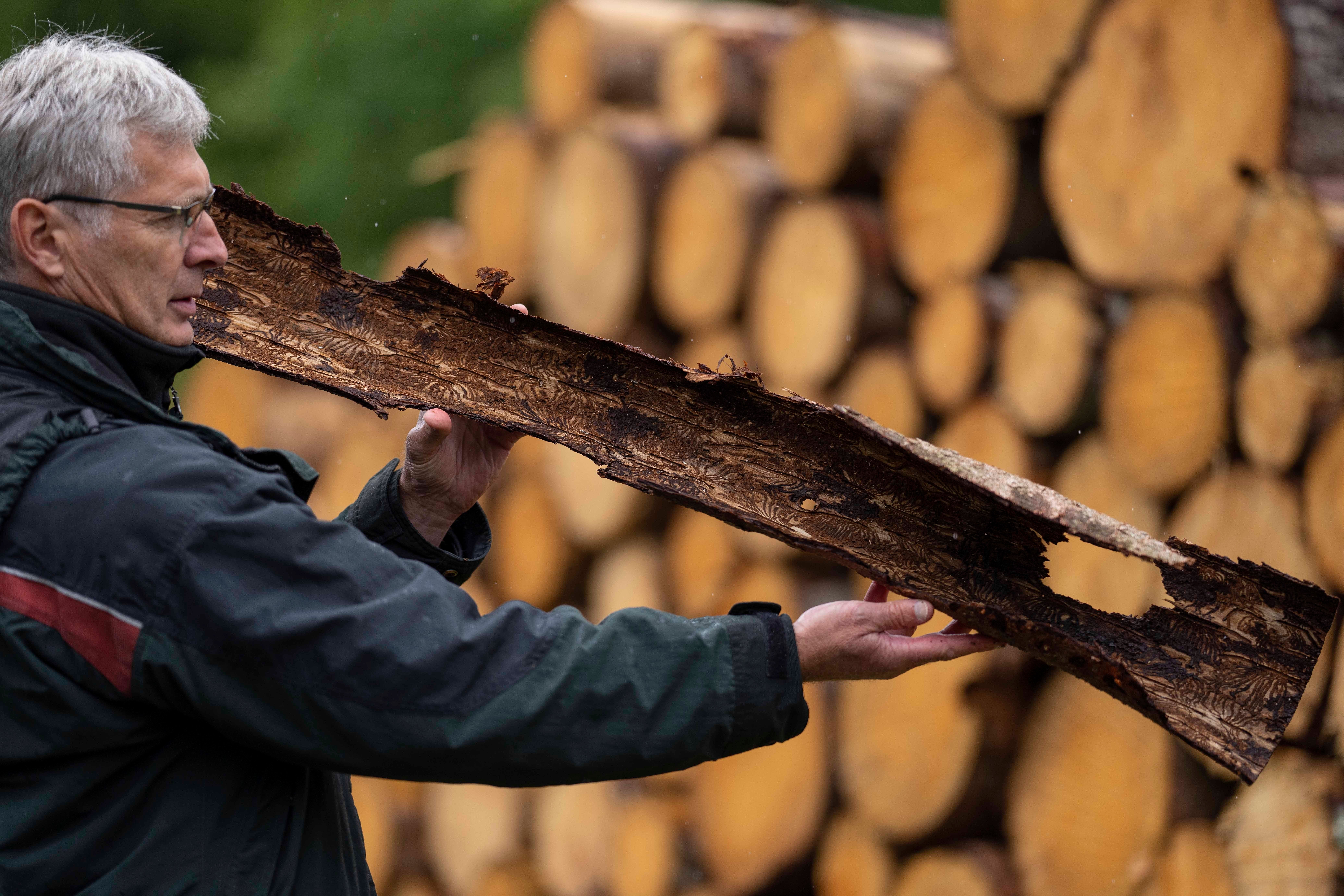
As part of the strategy to eradicate the pest, officials also identify the areas of contamination by using sniffer dogs, which can smell the pheromones the beetle releases to attract other beetles and establish a colony, as well as the insect’s poo.
Despite there being more than 1,400 pests and diseases on the government’s plant health risk register, the bark beetle is deemed the biggest enemy.
In Norway, it has destroyed 100 million cubic metres of spruce trees over the past ten years, according to Rothamsted Research.
Join our commenting forum
Join thought-provoking conversations, follow other Independent readers and see their replies
Comments
Bookmark popover
Removed from bookmarks