Henry Marsh: To admit failure as a doctor is incredibly painful, but honesty is what our patients need the most
As a brain surgeon, Henry Marsh knows every choice carries risks. Here, he tells Zoë Beaty what happens when the doctor survives and the patient does not, how his own cancer diagnosis made him see things differently, and why more medical professionals need to face up to their mistakes and say sorry

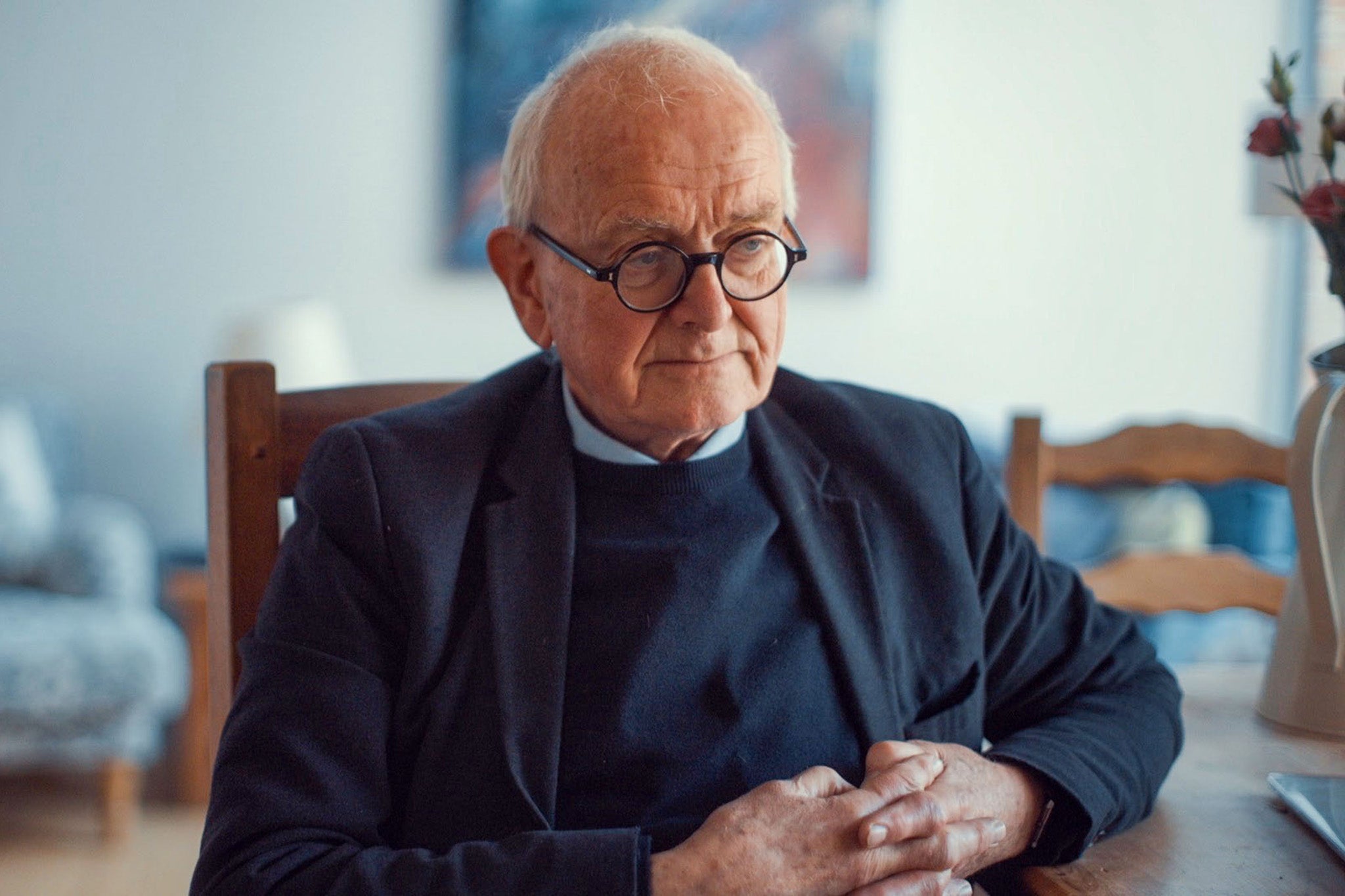
One afternoon not so long ago, I was cycling home from the hospital when my bike chain snapped. I had been teaching that day – a regular occurrence with a regular route home that, on this particular day, I then had to change. I don’t believe in providence, but what happened next was certainly quite the coincidence: I heard my name called and turned around to see Tina, the mother of a patient I had once treated. A patient that I failed.
It was the sort of encounter that most doctors might dread. We had first met 29 years prior, when her son, Max, came into my care. He had a brain tumour that I thought was benign and that if I removed it successfully, it wouldn’t come back.
But after I successfully operated, Max became ill once more. I refused to believe I was wrong – a combination of wishful thinking and denial – so it wasn’t until 12 weeks later when I gave the go-ahead for Max to have another scan. The tumour had grown back; it was very aggressive, and it probably shouldn’t have been touched in the first place. I should have asked for help, but I was arrogant and believed in myself too much. Max died six days after his fifth birthday.
For decades, I had carried the weight of that mistake in silence, one of the many names etched into the private “inner cemetery”, as I call it, that every surgeon carries within themselves.
Yet, as we spoke, something unexpected occurred for both of us: relief. Tina told me that her anger for Max’s death had, for years, been directed at me; I was able to see her face to face to acknowledge what had happened and say the words I needed to, too: I am sorry.


That conversation will always stay with me. Because, although it’s our patients who suffer most when doctors prove, which they often do, that they are fallible human beings, we too are left to live with the consequences. To admit failure as a doctor is incredibly painful. But honesty is what the medical profession – and our patients – need the most.
For most of my career as a neurosurgeon, I wore the mask expected of me: calm, confident, expert. I hadn’t always intended to pursue this path – in fact, I dropped out of the University of Oxford, where I was studying philosophy, politics and economics, due to depression.
I then worked as a porter at a hospital for a while before settling on studying medicine at University College London. My decision to become a neurosurgeon came when my son, William, was diagnosed with a brain tumour as a young boy, which was successfully removed.
I quickly learnt that operating on the brain requires a strange balancing act. You must be compassionate enough to care, but detached enough to cut. Too much feeling and you cannot function, but too little and you risk becoming severe. The technical part of surgery – the incision, the stitching – is the easy part. It’s the decision-making and the enormous responsibility for each one that make surgery difficult. Probabilities cannot be precise: every choice carries risks.
It’s why everyone in healthcare talks about “learning from error”, but the reality of that is quite different. There’s a tendency to see doctors as heroes or villains. And there are a few heroes, like my friend David Nott, who is quite extraordinary – and there are villains, like that surgeon Ian Paterson, who is now in jail. But most of us are in between these two extremes. We’re ordinary people. We make mistakes. But when that happens, we survive and the patient does not.
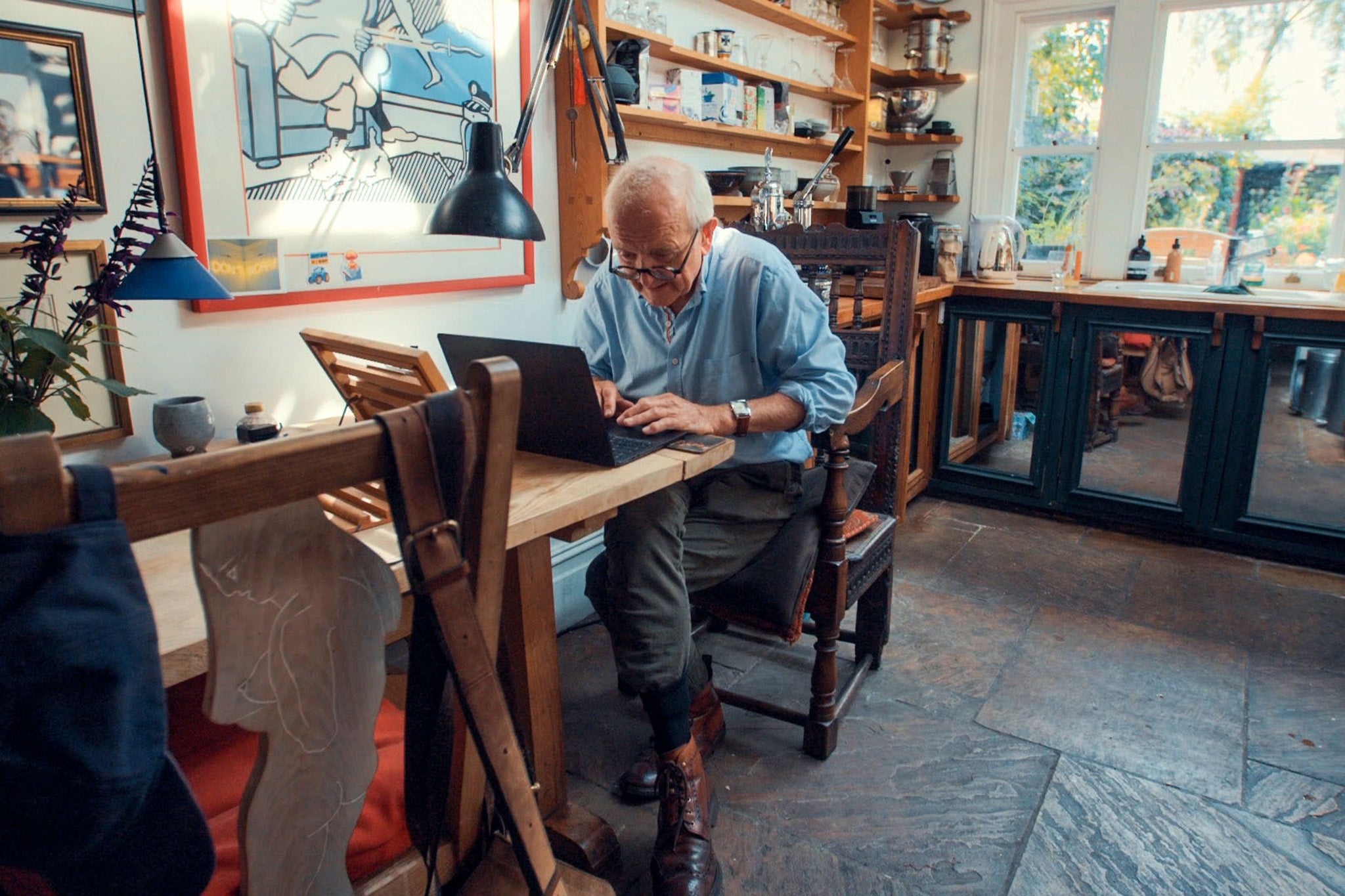
That’s why I still remember the faces of the patients whom I feel I let down. During my 40 years in surgery I achieved quite a bit – pioneering the awake craniotomy (as it sounds – brain surgery while the patient is still awake, in order to allow us to monitor brain function in real time as we operate), and introducing many modern neurosurgery practices to Ukraine, where I’ve volunteered for more than 25 years.
But really, it’s only the failures I remember on a day-to-day basis. Not every bad outcome was a mistake, but they haunt me all the same.
Still – while I’m remorseful of being somewhat of an absent parent (and grateful that my relationships with my children and grandchildren are now good) – I don’t regret my career at all now. And there are achievements I hold dear beyond the operating theatre. The hospital gardens I fought to build outside the neurosurgical wards at St George’s Hospital in Tooting, London, where I worked for many years, are one of them.
It took seven years of battling contractors and managers to turn an unused balcony into a green refuge, but the result was transformative for patients in my care. The gardens were a step away from ward beds, meaning patients attempting to recover could shuffle outside, feel the air on their faces, listen to the birds and remember they’re a person, not a diagnosis, in the midst of all that miserable business of being a patient.
Medicine is not Michelangelo at his easel, a solitary genius at work. It should be a collective. A good colleague will see your blind spots better than you can, and you can repay the favour
It wasn’t surgery but it was certainly healing, and an important part of care, rather than treatment – both of which are important.
I know that most especially now, since, at 75, I am glimpsing at medicine from the other side of the curtain. I am a patient with prostate cancer. I knew what it was like to some extent – how utterly helpless and vulnerable we are as patients – because of my son William’s illness.
I knew how much small gestures like smiling or holding a hand matter in that experience, though an awful lot of doctors never realise. But I was actually very annoyed with myself that, when it was my turn to get potentially fatal cancer, I was scared stiff. I was very, very upset: I was a normal human being. Old age and illness, I often remind myself, come for us all. I expected to be more accepting.
What of death? I’ve seen more of it than most, but there’s death – which doesn’t bother me at all – and then there’s dying, which can be unpleasant, even despite good palliative care. Which is why I’ve been an advocate of assisted dying for many years now, long before I was diagnosed with cancer. I believe more fervently than ever that patients deserve a choice about how they leave the world.
We supposedly still have one of the best palliative care systems in the world, but the NHS, for all its brilliance, still too often reduces people to cogs on an assembly line. What’s missing is honesty. I broke the mould in terms of medical memoir when I wrote my first book, Do No Harm, because to write about error while you are still in the thick of it was, at the time, almost unheard of.
My sister once joked that I have always been a “confession-seeking” nuisance, but I have felt a duty. Medicine has always been built on silence and hierarchy. But junior doctors cannot be expected to speak openly about their mistakes if their seniors pretend they never make them. If we want a better NHS, the obligation of truth falls first on those at the top.
Despite all of this, I remain convinced that medicine is one of the most wonderful professions that one could choose. Neurosurgery demanded everything from me, but in return, it gave me purpose, excitement, a sense of privilege. I cannot imagine living a more meaningful life.
What have I learnt from it? Know your limitations – a lesson that, as my meeting with Tina taught me, I learnt too late. Ask for help. Do not believe your own performance of certainty. Medicine is not Michelangelo at his easel, a solitary genius at work. It should be a collective. A good colleague will see your blind spots better than you can, and you can repay the favour.
Pretending to be infallible serves no one. Doctors make mistakes; I made mistakes. To admit them is agonising at times, but necessary. Only by telling the truth – to our patients, to each other and to ourselves – can we hope to deserve the trust that is placed on us.
*As told to Zoë Beaty
‘Confessions of a Brain Surgeon’ is on BBC Two and iPlayer from 9pm, 18 Monday August
Join our commenting forum
Join thought-provoking conversations, follow other Independent readers and see their replies
Comments
Bookmark popover
Removed from bookmarks