‘Precious little’ to suggest change at infections row health board, inquiry told
The Scottish Hospitals Inquiry also heard NHS Greater Glasgow and Clyde’s delayed acceptance of issues had made the inquiry’s work more difficult.
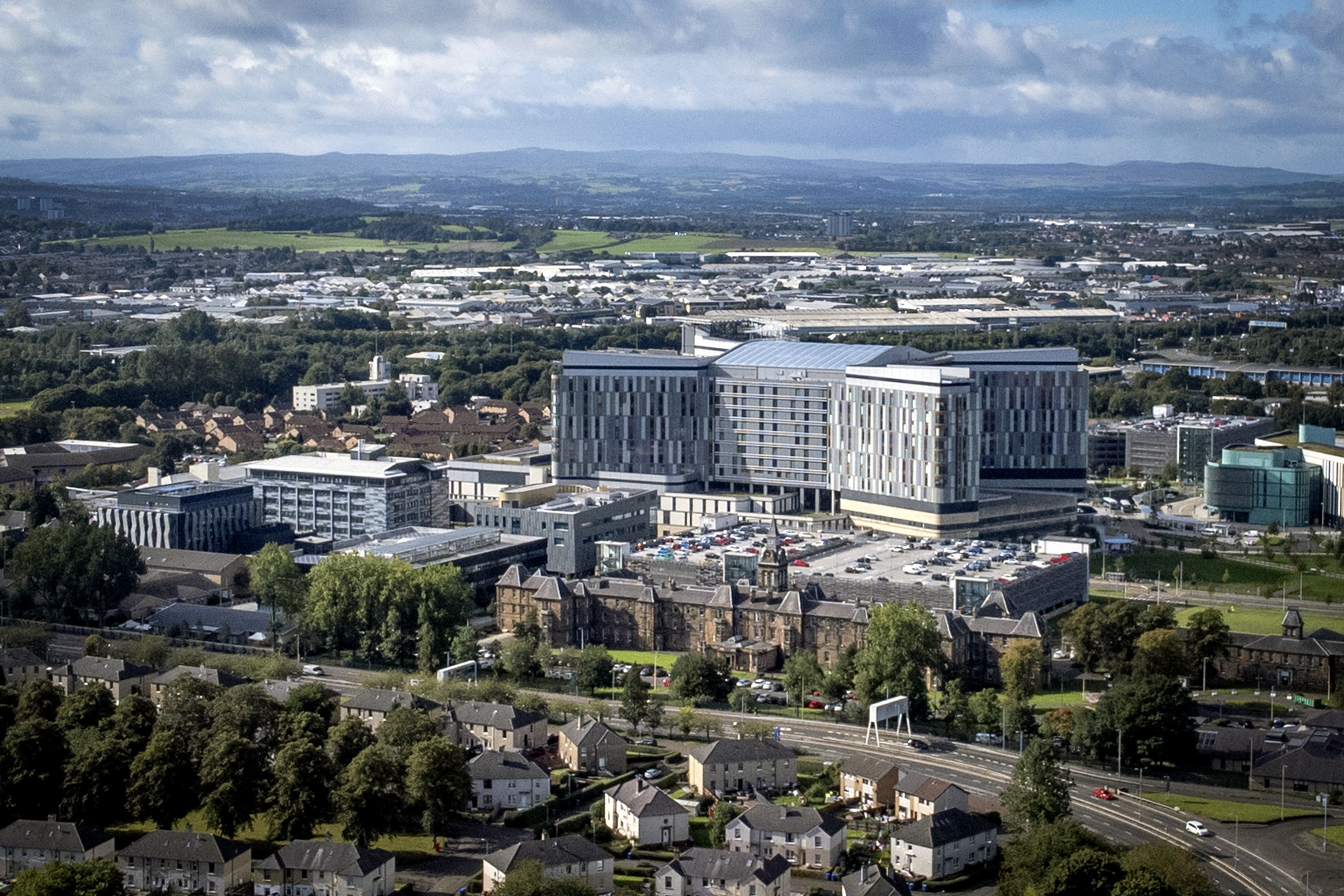
There is “precious little” to show that a health board has learned what needs to change following infections at the flagship hospital in Glasgow, an inquiry’s senior counsel has said.
On the final day of hearings in the Scottish Hospitals Inquiry, Fred Mackintosh KC said there needs to be clear evidence of change implemented at NHS Greater Glasgow and Clyde (NHSGGC).
He also said the health board’s delayed acceptance of infection problems with the Queen Elizabeth University Hospital (QEUH) had made the task of the inquiry more difficult.
The inquiry has been examining the design and construction of the QEUH and the Royal Hospital for Children (RHC), which are on the same campus.
It was launched in 2020 in the wake of deaths linked to infections, including that of 10-year-old Milly Main in 2017.
Totals costs for the inquiry have reached more than £31 million.
In written closing submissions, the health board accepted there was probably a “causal connection” between infections suffered by patients and the hospital environment, in particular the water system.
NHSGGC has offered a “sincere and unreserved apology” to the patients and families affected, and said the QEUH and RHC are safe today.
It also admitted three whistleblowers were not treated “as they ought to have been” and “the process had a significant impact on their wellbeing”.
During the final day of the inquiry’s hearings on Friday, Mr Mackintosh sought to challenge the “bald, unsupported assertion” from NHSGGC that it had learned lessons from the issue.
He said: “There is precious little to suggest the board has really changed.
“The words are there, we’ve yet to see any real action to suggest anyone other than its chair and chief executive – who I would definitely except from the criticism I’ve just made – there is any real appreciation of what needs to change.
“Let alone real change in both the culture of the organisation and how it has responded to the evidence laid before it over the last decade.”
The board should not wait for inquiry chairman Lord Brodie’s report before making the changes, he said, calling for members of the corporate management team to be retrained.
Mr Mackintosh had earlier said the inquiry’s task had been made “more difficult” as “NHS Greater Glasgow and Clyde have long insisted that there is no evidence to back up the concerns over patient safety at the Queen Elizabeth that caused the inquiry to be established”.
He continued: “Much of the work of the inquiry team has been spent attempting to work out whether there was a link between patient infections and identified, unsafe features of the water and ventilation system.”
The health board has now reached a “delayed acceptance” in relation to paediatric infections likely being linked to the water system, he said.
The inquiry’s senior counsel went on to say that managers at the health board had failed to ask questions about the hospital building and had instead showed a “wilful blindness”.
As the hearings in Edinburgh drew to a close, Lord Brodie said he still had “much work” to do before he submits his final report.
He thanked the inquiry team for their work, noting 186 witnesses have given evidence.
On Thursday, a joint statement from families affected by hospital infections said flaws in the building’s environment had “killed and poisoned our loved ones”.
It said: “We trusted the hospital and the health board.
“Instead, we were left at the mercy of a hospital with a defective ventilation system and a defective water system.
“We were at the mercy of what we now know to be a deceitful and dishonest health board.
“We have been devastated. Some of our loved ones have died. Some are left with very serious lifelong consequences.”
The group called on politicians to act and said the building remains unsafe.
NHS Greater Glasgow and Clyde said on Friday: “We must respect the integrity of the ongoing inquiry and legal processes which need to be allowed to reach their conclusions before we can provide further comment.
“We would in the meantime like to reiterate our sincere and unreserved apology to the patients and families affected.
“We want to reassure patients, families and staff that the QEUH and RHC are safe today. Ensuring the safe care of our patients is our key priority at all times.
“Comprehensive steps have been taken to address past physical defects in the building, and a significant and ongoing programme of maintenance and monitoring is in place. Our staff are committed to providing safe, high-quality care.
“In our closing statements we have acknowledged issues with past culture and communication and we are committed to learning and continuing to improve our approach.
“We have outlined the significant improvements undertaken as an organisation during this time to improve governance and oversight, and that issues are being addressed both proactively and reactively, and in a timely manner.
“We encourage any employee to get in touch directly to discuss concerns they may have to allow us to address directly.”
Bookmark popover
Removed from bookmarks