Home Office admits failings after Julian Assange’s friend dies in Belmarsh prison following deportation threat
Exclusive: Manoel Santos had lived in the UK for 20 years and was kept in high-security prison on immigration powers
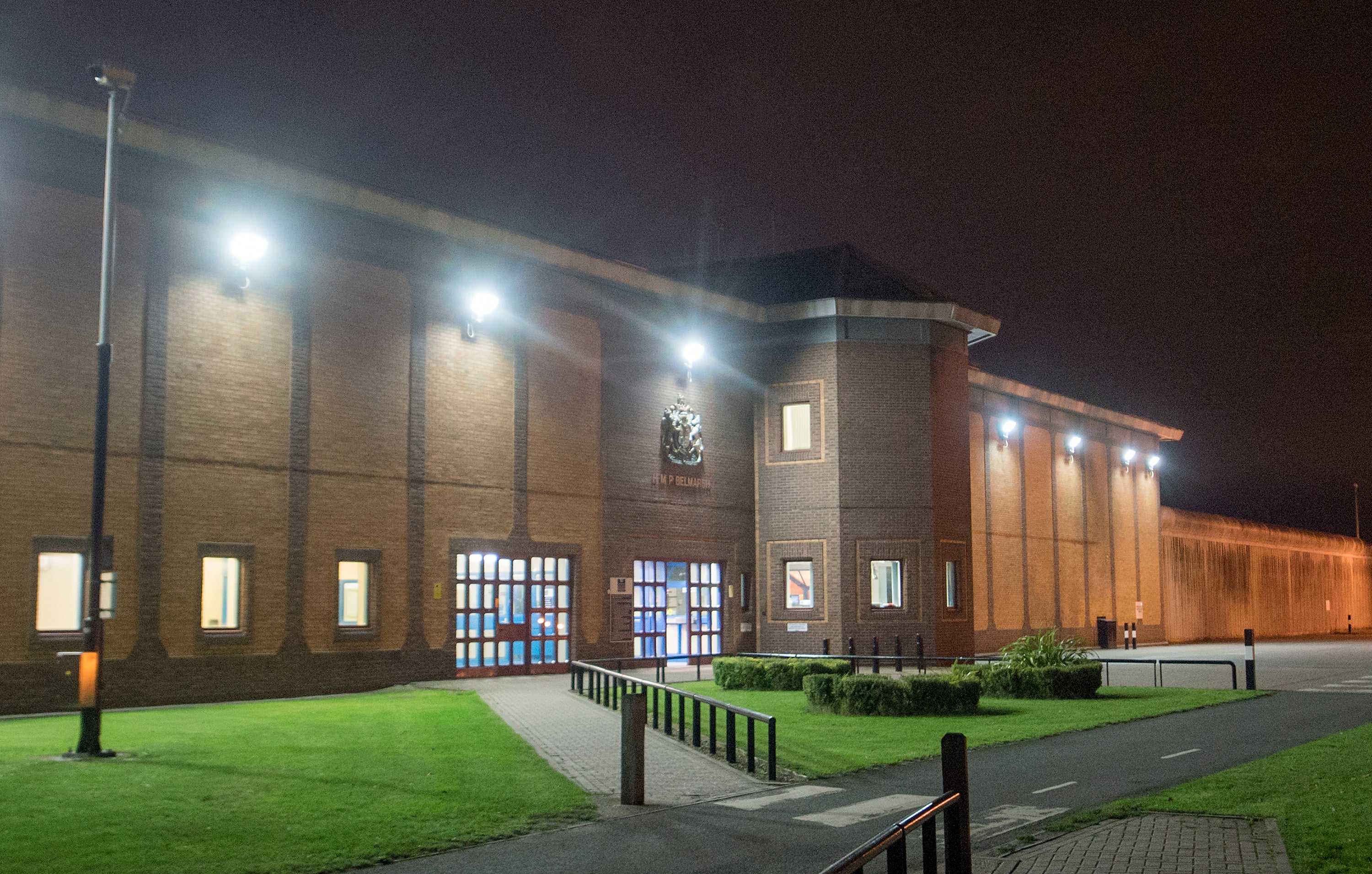
The Home Office has admitted failings after a Belmarsh inmate and friend of Julian Assange killed himself in prison after being kept behind bars, despite his custodial sentence coming to an end.
Manoel Santos, who came to Britain from Brazil in 1997, had been due for release from jail on 27 October but the Home Office ordered the prison to keep him in custody while they decided whether to deport him.
An inquest heard Santos, who said he was gay and had been disowned by his family because of his sexuality, became like a “man on death row” after he learnt he would be made to stay in prison while his immigration case was processed.
He took his own life days later on 2 November 2020.
Julian Assange’s wife Stella said at the time of Santos’s death that the Wikileaks founder was “devastated” by the death. “Julian tells me Manoel was an excellent tenor. He helped Julian read letters in Portuguese and he was a friend. He feared deportation to Brazil after 20 years, being gay put him at risk where he was from,” she said.


Santos, who had been in prison for six months for arson, had broken down in tears at the prospect of going back to Brazil, fellow prisoner Andrew Bayne told the court.
He had an ongoing human rights claim that was being heard at an immigration tribunal, with a case management hearing listed for 26 January 2021, the court heard, meaning he would not have been able to be deported until this court case was resolved.
Despite this, officials obtained an order for Santos’s ongoing detention in prison, saying he was likely to abscond if granted immigration bail and arguing that his release was “not conducive to the public good”.
The Home Office admitted to the inquest that there were a series of failings in the processing of Santos’s deportation case, but said these did not contribute to Santos’s death.
Jane Sutton, head of foreign national offenders at the Home Office, told the court that it had missed two chances to process and serve Santos’s deportation notice; once in 2019 following an offence for criminal damage and breach of a restraining order, and another time in 2020 following his imprisonment for arson.
She also admitted the department should have asked for up to date medical information before deciding to keep Mr Santos in prison pending a deportation decision.
A charity worker who knew Santos told the court that he was “a happy individual, open to learning more, inquisitive about the world”. She recounted that during a visit on 14 October, “he was concerned about being returned to Brazil, which no longer felt like home”.
Another fellow prisoner said that after Santos was told he would be kept in Belmarsh under immigration powers “he was like a man on death row.” He added: “Santos just got down and down. He was OK until that letter, that letter come, and then he went down.”
Santos’s prison offender manager told the court that “throughout September 2020 the prison was under the impression that Santos would be released on 27 October 2020.”
Referring to the order keeping him in prison, the manager said: “I had no idea that this was about to be served on him. The prison was very limited in what they could do save help him complete the bail forms and check he was OK.”
Belmarsh staff also raised Santos’s “significant mental health issues” in emails to the Home Office, according to evidence presented to court. In another email from an immigration officer to prison staff, government officials acknowledged that Santos had taken the news of his detention badly.
He had been taking medication for psychosis and was afraid he would not be able to get his medication in Brazil, the inquest heard.
A jury found that Santos had died by suicide and that his understanding of his immigration position at the end of his custodial sentence had made a material contribution to his death.
They wrote: “The jury know that in the days immediately prior to his death, Santos told a fellow prisoner that he believed he was about to be placed in immigration detention and deported within days. Confusion amongst the agencies involved in communicating with Santos is likely to have played a vital role in this change in understanding.”
A Home Office spokesperson said: “The health and wellbeing of people detained under immigration powers is of the utmost importance. Our thoughts and condolences remain with the family and friends of Santos.
“Any death in immigration detention is subject to investigation by the police, the coroner and the independent Prisons and Probation Ombudsman.
“Recommendations made as a result of these investigations are thoroughly examined to see how they can be used to help learn lessons.”
If you are experiencing feelings of distress, or are struggling to cope, you can speak to the Samaritans, in confidence, on 116 123 (UK and ROI), email jo@samaritans.org, or visit the Samaritans website to find details of your nearest branch.
If you are based in the USA, and you or someone you know needs mental health assistance right now, call the National Suicide Prevention Helpline on 1-800-273-TALK (8255). This is a free, confidential crisis hotline that is available to everyone 24 hours a day, seven days a week.
If you are in another country, you can go to www.befrienders.org to find a helpline near you.
Join our commenting forum
Join thought-provoking conversations, follow other Independent readers and see their replies
Comments
Bookmark popover
Removed from bookmarks